Airspeed fixes FCF failures at FRC SW
An Airspeed team at Fleet Readiness Center Southwest has solved a longstanding problem of C-2 and E-2 functional check flight (FCF) failures following depot level maintenance, saving an estimated $180,000 annually in fuel and labor costs and speeding up delivery back to the fleet.
The basic problem was that the C-2 and E-2 turboprops were repeatedly failing angle of attack FCFs. “One had to fly five times before it passed,” said Black Belt Cmdr. Doug Lucka, the team leader. Each flight costs $4,500 in fuel and labor.
The team found the root cause of the failures to be inaccurate measurements of airspeed and the angle of attack (AoA) - the angle between the wing and the relative wind required to generate lift.
It wasn’t obvious at first why the planes were failing, so an early step in the process was for the team to look at historical data and try to identify all possible root causes. “We got together for a big brainstorming session,” said Brian Pilgrim, Master Black Belt at North Island.
In Airspeed terms, the team created a “fishbone,” a diagram of potential root causes and their effects on AoA check flight failures.
Analyzed data back to 2002
Team members analyzed data culled from reports going back to 2002. They found that 16 of 28 E-2s and 5 of 9 C-2s failed the functional check flight procedures for angle of attack.
“People had the data,” Lucka said, “but nobody had put it into this format before. Airspeed gave us the Lean Six Sigma tools to analyze it.”
During AoA functional check flights, pilots fly the planes according to a chart and procedures laid out in the Naval Air Training and Operating Procedures Standardization (NATOPS). The chart specifies numerical targets for airplane speed and angle of attack for a range of aircraft weights.
The more weight carried, the higher the airspeed, and the greater the AoA needed to stay aloft. Beyond a certain AoA, air stops flowing smoothly over the upper curve of the wing and breaks up into turbulence. The wing stalls, and lift drops precipitously.
Pilots dump fuel to reach the weight specified for the functional check flight. They then try to match the airspeed and AoA targets that correspond to their weight.
The AoA functional check flights for the E-2 and C-2 consist of three separate test procedures. Each procedure must be successfully completed before going on to the next.
“More than half the planes were failing at least one of the three tests,” Lucka said. “And when they fail, they have to come back for troubleshooting and repair before you can proceed to the next airborne test.”
Gauge-reading problems
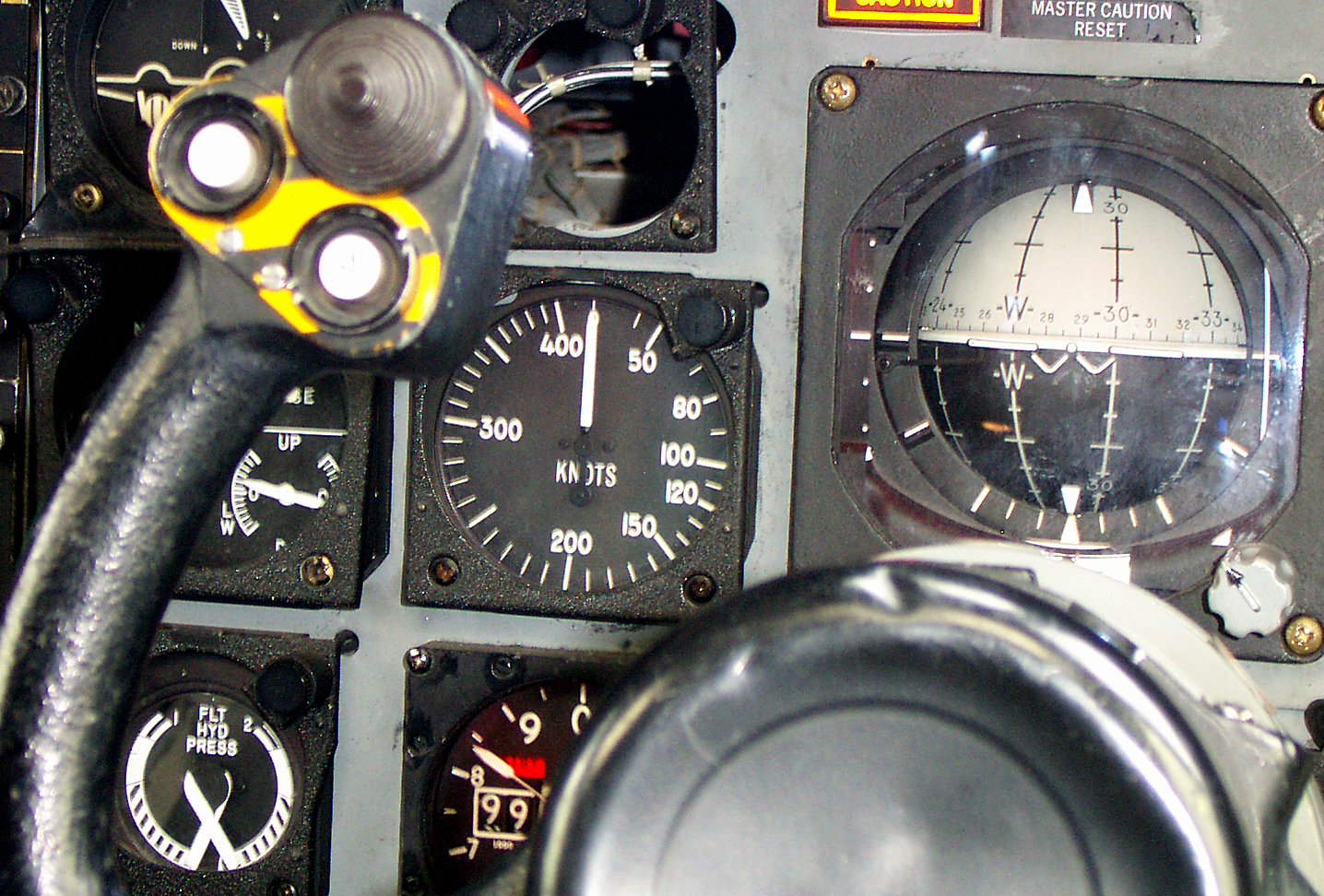
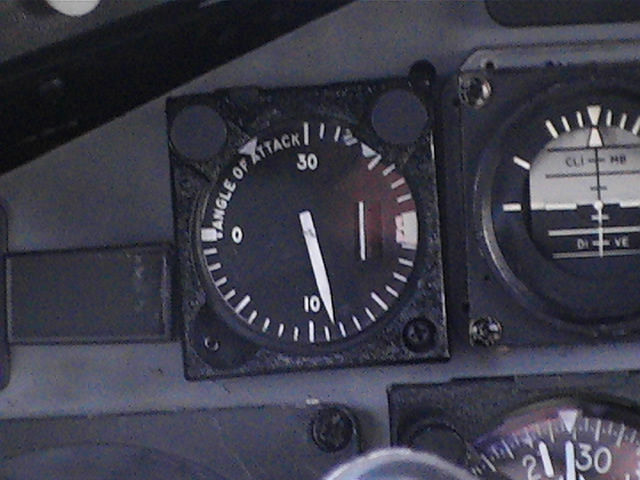
Part of the difficulty lay with reading the gauges. The NATOPS target values for airspeed and angle of attack are given in tenths, Lucka said, but the gauges are too coarse to be read that precisely.
The AoA gauge is marked in whole number units. The airspeed gauge is marked at 10 knot intervals. To read tenths, the pilot has to interpolate between two marks at the same time he’s trying to fly the plane, Lucka said.
“We have a saying,” he said, “ ‘Interpolation equals variation’.“
Lucka included pictures of a pilot’s-eye view of the gauges in a brief he put together. Over the images of the gauges, he wrote “Can you read 102.5 knots +/- 7 knots?” and “Can you read 16.3 units AoA +/- .5 units?”
It’s clear from the pictures that the answer is “no.”
Incorrect index setting
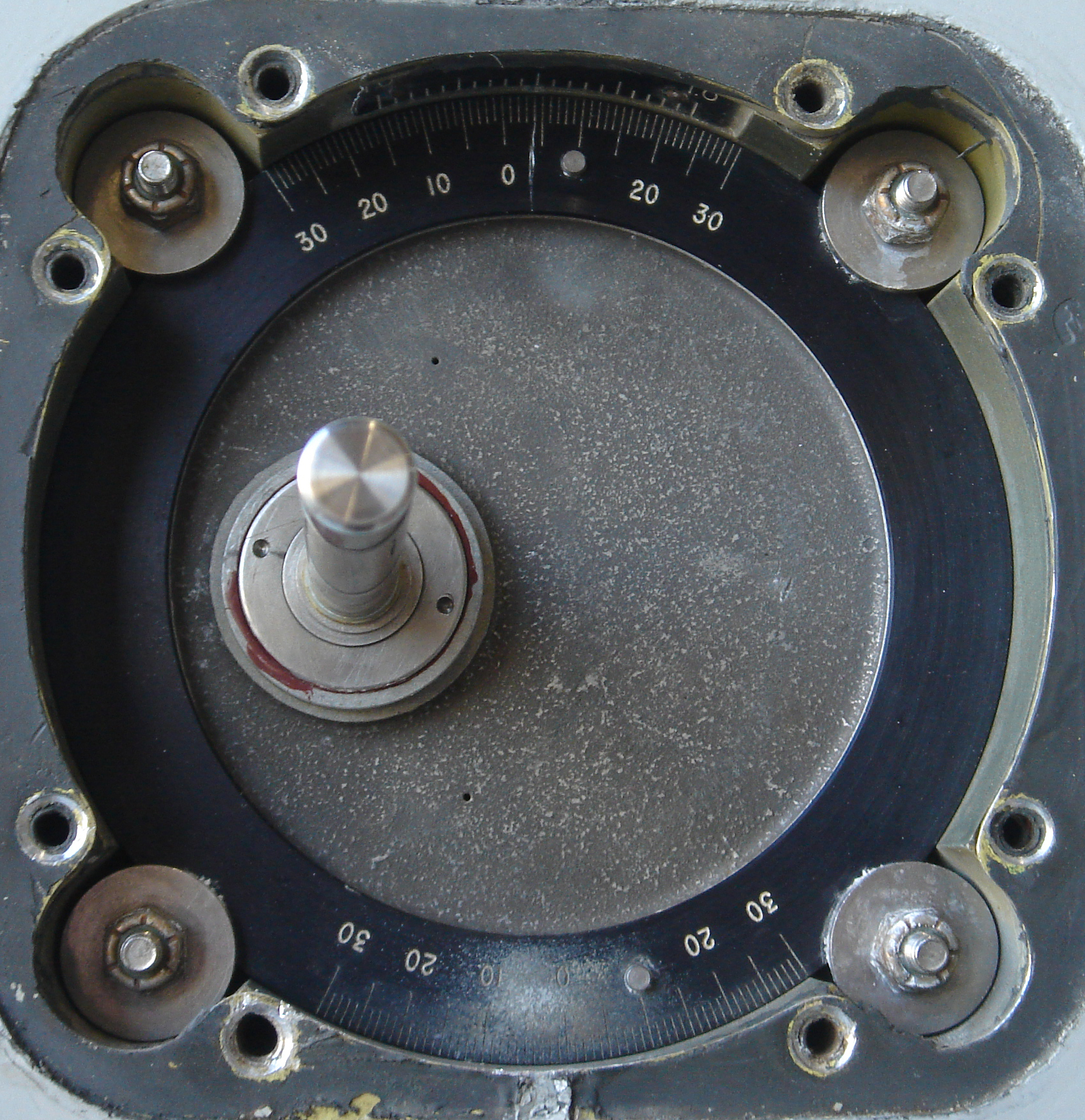
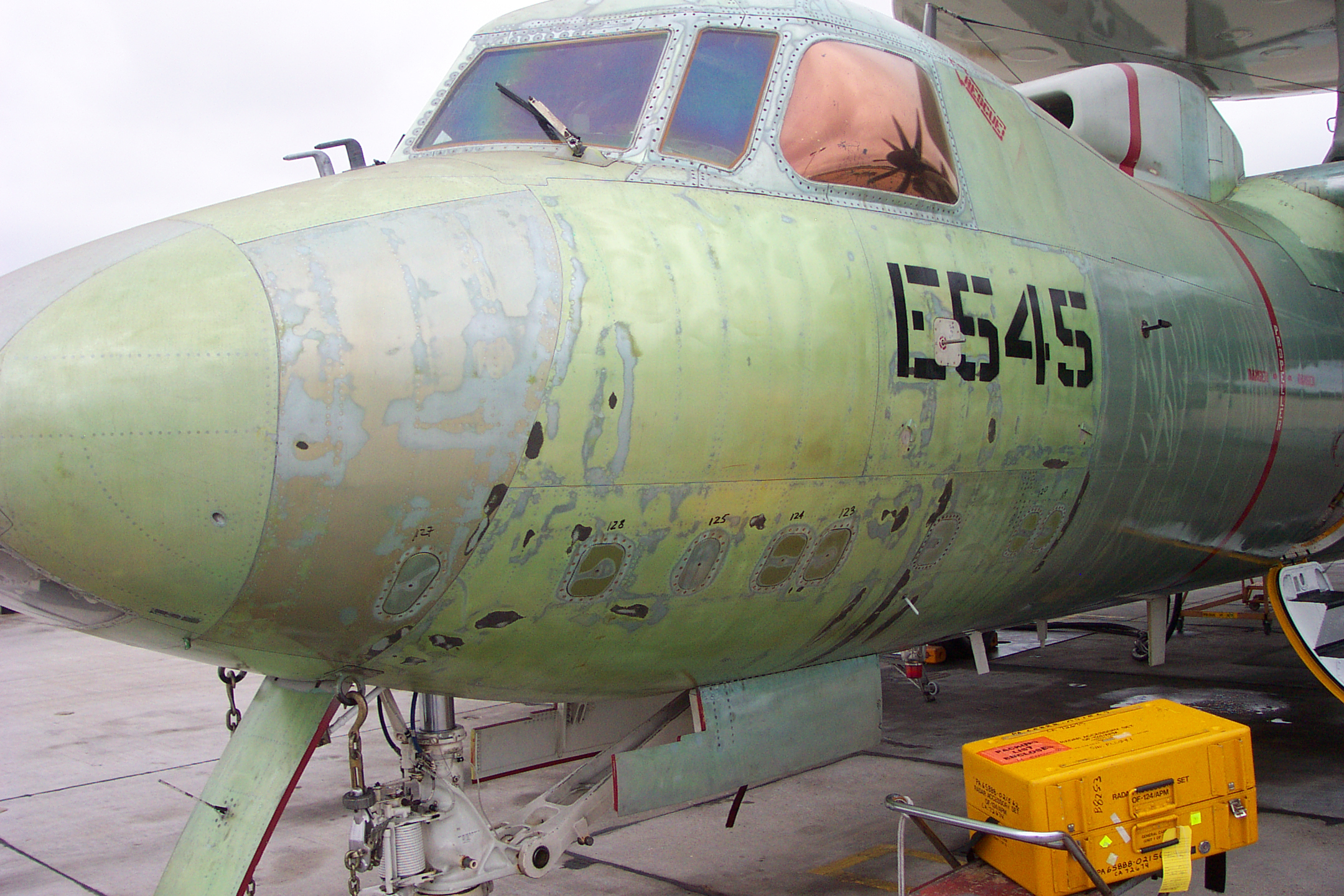
As if imprecise gauges weren’t problem enough, the project also discovered that the AoA sensing unit on the side of the fuselage had an incorrect initial index ring setting. The unit protrudes into the airstream and senses variations in the angle of attack, which are displayed on the AoA gauge in the cockpit.
The sensing unit is designed so it can be adjusted, or indexed, to align it with the fuselage. But if it’s incorrectly indexed, the value shown on the AoA gauge is going to be wrong to begin with, whether or not the pilot is able to read it precisely.
Troubleshooting and repair eventually got the aircraft through the three tests, but it was time-consuming and costly, Lucka said. “There used to be a lot of trial and error prior to this project, particularly with airspeed and AoA indicators,” he said, “a lot of removing and replacing instruments.”
“There was a disconnect between the depot maintenance specifications and the functional check flight procedures,” he said. “The specifications said to look for corrosion, look for holes, look for this, this and this, but they didn’t say anything about checking the instruments.”
The maintenance specs were designed for limited troubleshooting at the squadron level, he said. But at the depot, aircraft are completely disassembled and put back together. A new set of procedures was required.
“We couldn’t buy new instruments,” Lucka said. “That was outside the scope of this project.”
Calibration first
Instead, the team members concentrated on making the existing instruments as accurate as possible and making it easier for the pilots to read them. They started by calibrating the AoA and airspeed instruments while the aircraft was undergoing maintenance.
“Instead of taking them off the aircraft and putting them on a shelf for storage - which was acceptable according to the depot maintenance specification - we sent them to the component evaluation shop to check them,” he said. “That way we would know for sure we had accurate instruments re-installed in the aircraft before the test flight.”
The results were revealing. On one C-2 and an E-2, the airspeed gauge was off by 10 knots on a 400 knot scale. The error in the AoA gauge was even worse - two full units on a scale of only 30 units.
With instruments now known to be accurate, the team tackled the index ring settings on the AoA transmitters. They changed them from the conventional “book” values to settings that the engineering department had been using for troubleshooting.
“Engineering had that data all along,” he said. “It took the Airspeed process to bring the information to light and apply it across the board on all our E-2’s and C-2s.”
Reducing reading errors
The team then moved on to improving the accuracy of the readings the pilots make during check flights. They selected gross weights for the aircraft that would make airspeed and AoA targets fall directly on the gauge marks rather than between them so pilots would no longer have to interpolate.
“We put the needle right on the hash mark,” Lucka said. “The more we can do procedurally to minimize interpolation, the better.”
To reduce pilot bias while reading the gauges, the team changed cockpit communication procedures so that the co-pilot no longer told the pilot what AoA and airspeed readings to look for.
“If it was close, there was a temptation to see whatever the target number is supposed to be,” Lucka said. “Now the co-pilot doesn’t verbalize it. He makes the pilot read whatever he’s seeing.”
When all the changes had been implemented, AoA functional check flight failures – which had been over 50% - dropped to just one out of the last six C-2s tested and one of the last five E-2s.
The team published the new index ring settings as a Local Engineering Specification, an engineering-approved technical directive, Lucka said. And they’re working to get the cockpit techniques incorporated into NATOPS Flight Manual and FCF Checklists.
“Angle of attack has been a thorn in the Depot’s side for a long time,” he said. But he noted that the Airspeed tools the team used in the project, Lean Six Sigma, allowed FRC Southwest to bring this complex process under control.
“Anytime you can measure a process’s pass or fail percentage,” he said, “the Lean Six Sigma tool set can get into the process’s failures and improve the first pass yield.”
Photo Cutlines - top to bottom
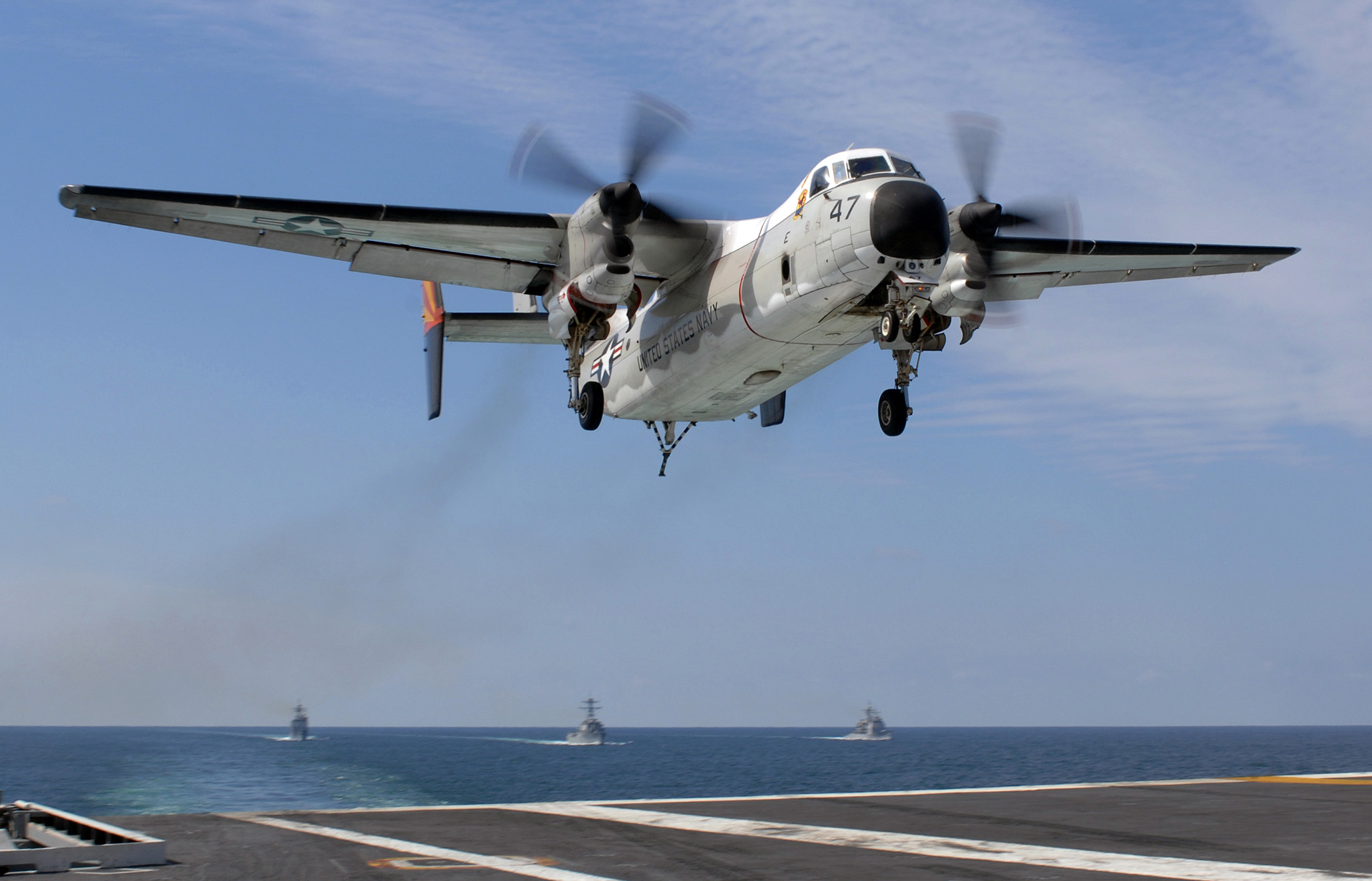
C-2 Greyhound from the "Rawhides" of Carrier Logistics Squadron (VRC) 40 approaches the landing area of Nimitz-class aircraft carrier USS Harry S. Truman (CVN 75) U.S. Navy photo.
AoA sensing unit with cover plate removed. It is indexed by loosening the nuts around the rim and rotating it. The index setting on this one is minus 4 units. Photo – Cmdr. Doug Lucka
Airspeed gauge marked in 10 knot increments. Photo – Cmdr. Doug Lucka
AoA gauge marked in whole number units. Photo – Cmdr. Doug Lucka
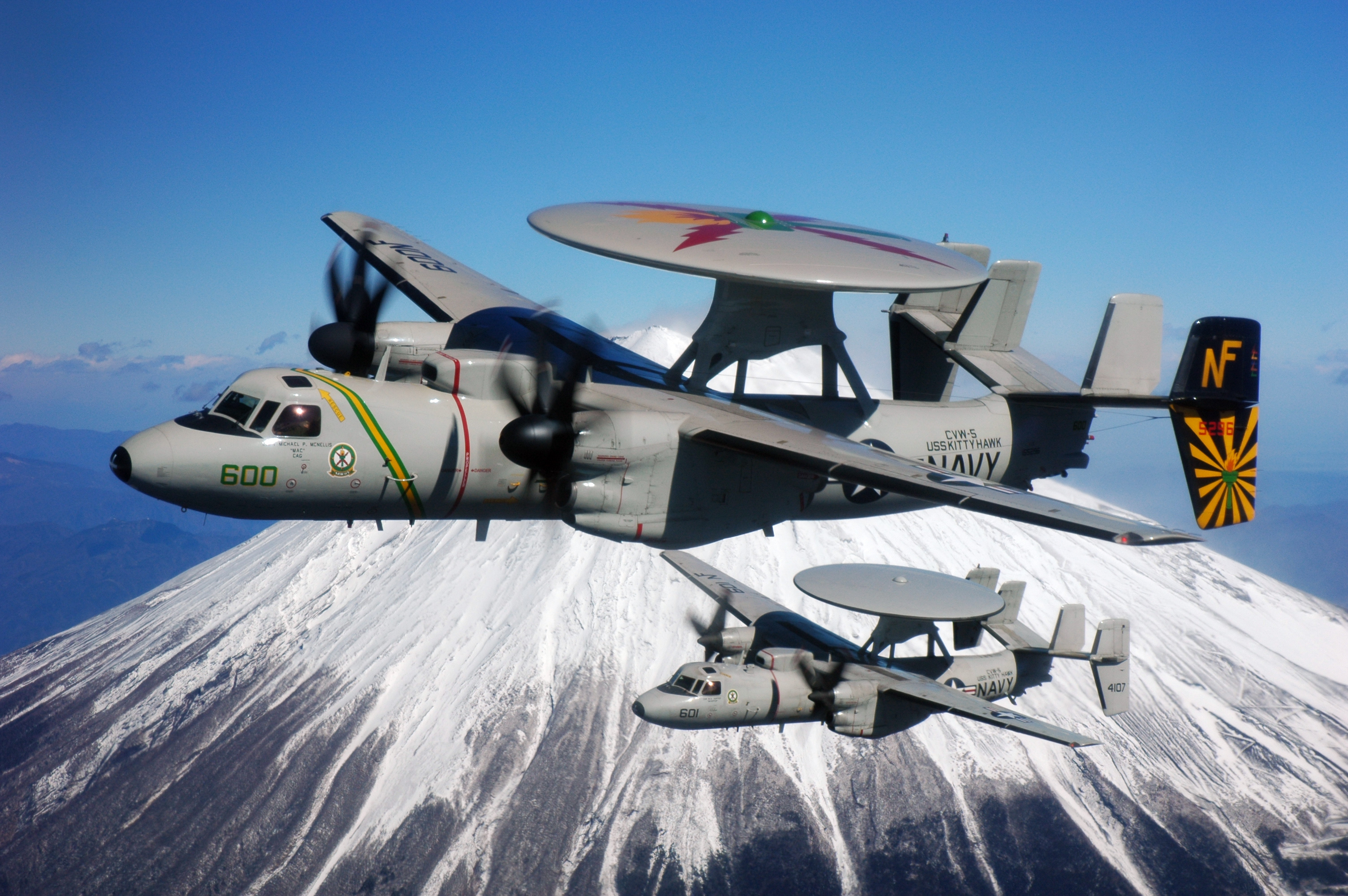
Two E-2C Hawkeyes assigned to the “Liberty Bells” of Carrier Airborne Early Warning Squadron (VAW) 115 fly by Japan’s Mount Fuji. U.S. Navy photo
This E-2’s AoA sensing unit is between the “E” and the “5” on the left side of the fuselage. Photo – Cmdr. Doug Lucka