
“Boots on Deck” - USS Theodore Roosevelt (CVN 71)
By Annette Barnhart
My alarm sounds at 0530 and, as is typical of most mornings, I hit the snooze alarm. Not being a morning person, I am not one to leave the comfort of my bed the minute the alarm goes off, even with the requisite eight hours of sleep. Eventually I manage and get my act together. Once I arrive at my climate-controlled work place, I turn on my computer and start my day. While the Navy Marine Corps Internet (NMCI) is sometimes slow, there is connectivity on most days and I can use this tool to research Government regulations, communicate via e-mail, or take mandatory training online. As challenging as my work is, I find that working in a comfortable environment enables me to perform my job better without the added stress of lacking basic necessities.
Not everyone who works for the Navy is as fortunate as I am. Consider our sailors and marines who work on any one of the Navy’s twelve carrier groups. The average age of a sailor or marine is 19 years, each with enormous responsibilities, working under tough circumstances with some nights allowing only four or five hours of sleep. During full operations some areas on the ship average over 100 degrees Fahrenheit. Most sailors work roughly 50 or 60 hours per week. The task of ensuring successful launch, recovery, repair, flight, and maintenance of our nation’s assets is a huge stressor both physically and mentally. I can not imagine having to perform this type of work daily for an extended period of time on a carrier where it is extremely hot and you are working on limited rest. In my opinion that kind of work environment does not enable us to take care of our Fleet now, build our Fleet for the future, nor does it help us build future leaders for Naval Aviation.
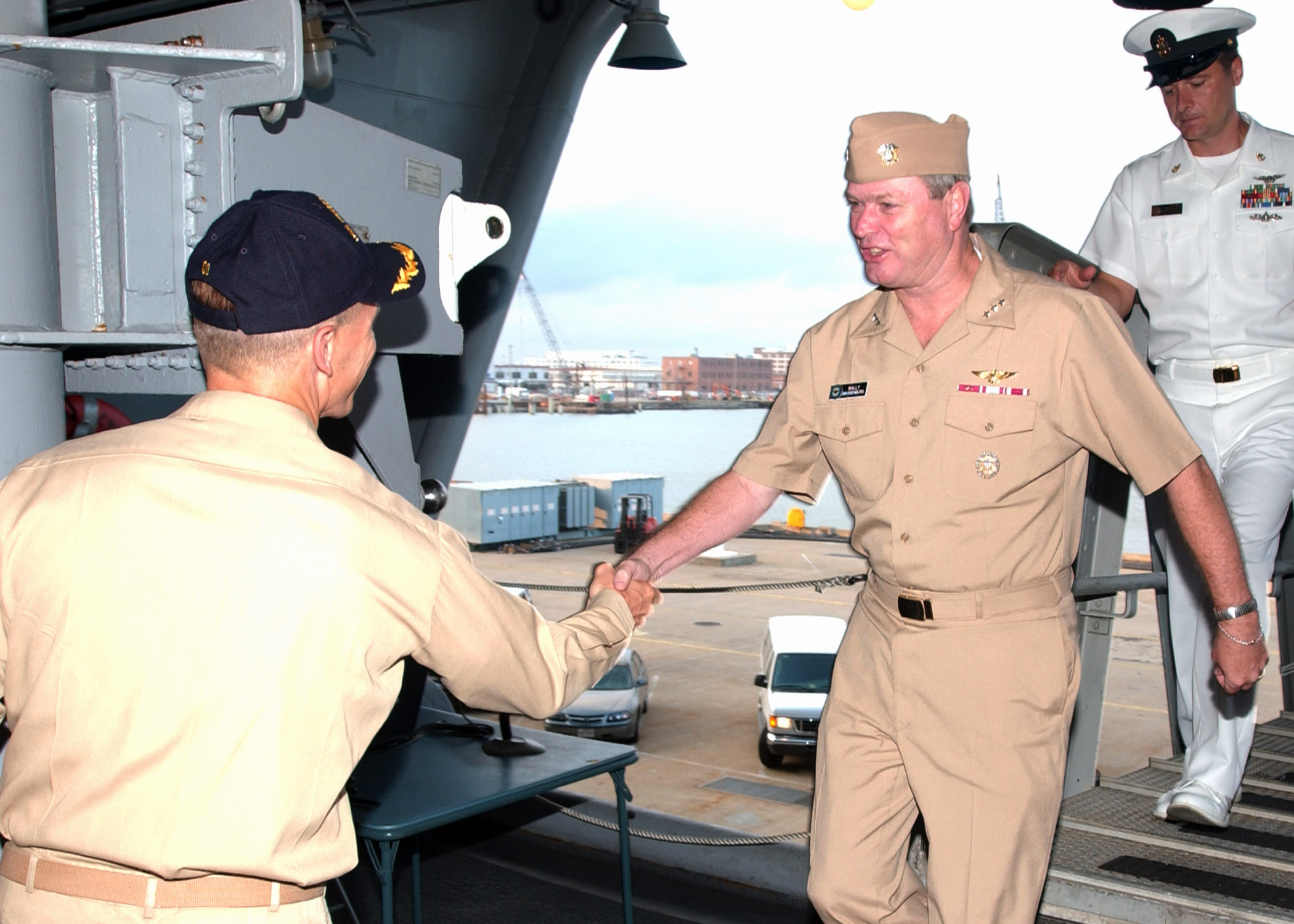
On 17 August 2006, I took the opportunity to shadow Vice Admiral Wally Massenburg for” Boots on Deck” visit onboard the USS Theodore Roosevelt while it was docked at the Naval Air Station, Norfolk, Virginia. After requesting permission of the Commanding Officer (CO) to board the ship, I enjoyed breakfast with the Admiral and the CO. I quickly heard first hand how the leader of the Naval Air Systems Command (NAVAIR) is facing major challenges to manage and overcome reductions to appropriated funding to support the requirement for a 313-ship Navy.
This is reality. This is also the impetus for the Command’s focus on AIRSpeed projects that enable more efficiency and yield productivity. AIRSpeed incentives are not about saving money as much as they are about saving time. Admiral Massenburg fully believes that if the Navy takes this journey, we will save time. Wouldn’t we all appreciate some extra time at the end of the day to further our education or spend with our families?
Admiral Massenburg realizes this need for NAVAIR to change the manner in which we do business and has taken on the huge challenge to change the culture of the Command. Like me, he learned to value working in an environment where expending dollars was the measure of success and was rewarded for such performance. It was considered sacrilege to return dollars and no program manager would do so because that behavior assured a funding cut in future fiscal years. This kind of value system is dangerous. It is not the right approach for the Naval Aviation and if NAVAIR does not change its culture and perform work based upon requirements, we are doing a disservice to our sailors and marines.
After breakfast we received several AIRSpeed briefings from the maintenance officers who have initiated process improvement initiatives by identifying barriers and implementing solutions that result in time savings and greater productivity. Despite the unreliable internet system, they obtained AIRSpeed courseware from Ft. Belvior and the vast majority has taken the mandatory training. This process improvement philosophy and mentality is becoming a daily part of their work onboard the carriers as they share lessons learned with other carrier groups.
Subsequent to the briefings, we toured maintenance shops, tool rooms, arresting gear engine room, and the magazines. During the tour we witnessed first hand all the great work that has occurred. We also learned about areas for improvement. There were many opportunities for dialogue and Admiral Massenburg asked the sailors for thoughts on improving their current processes. He received quite an earful from the men and women and several program managers, who were also in attendance, took many action items. While the Fleet is taking steps to improve, there remains much work to be done.
It is the vision of the Naval Aviation Enterprise (NAE) to deliver the right force, with the right readiness, at the right cost, at the right time. Each person within the NAE is accountable to evaluate process improvement opportunities, eliminate stovepipes, and bring stakeholders together to solve issues for the greater good of Naval Aviation. There are many opportunities for each of us to get involved.
Many NAVAIR employees have been accepted to the Navy Leadership Development Program (NLDP), which requires completion of an AIRSpeed project. Excited about the opportunity to learn and the opportunity to make a difference, some have expressed frustration because there does not seem to be any process improvement projects to pursue. After my day on the USS Theodore Roosevelt, I learned of many opportunities for AIRSpeed projects that could be completed onboard the carrier. From cannibalization issues, to publication improvements, to internet connectivity improvements, to weapons build up processes, these are some areas in which NLDP participants could contribute. By taking on such a project, they could directly improve a process that would become consistent across all carrier groups and make a positive difference in Naval Aviation. Understanding the day-to-day challenges of the fleet, our customer, would prove invaluable throughout one’s career.
At the end of the day, I often ask myself, “What have I done for the Fleet today?” After being there with “Boots on Deck”, I have an entirely new appreciation of how my work directly impacts our sailors and marines.