
Online database for facilities planners debuts next month
by Robert Kaper
NAVAIR Public Affairs Office
Facilities planners will be able to start practicing at the end of January with a searchable, online database designed to provide the information and specifications needed to plan buildings and support equipment for Naval Air Systems Command (NAVAIR) programs.
The new database will replace the cumbersome Facilities Requirement Document (FRD) with a user-friendly, central data repository, said Steve Achekian, Facilities Support Lead of the Facilities Enterprise Leadership Team (FELT) “We took the paper product and converted it into a standardized, web-based tool with templates for the information needed,” he said.
Program managers will enter data about their new or expanding programs into the database, and facilities planners will extract the information to build the facilities they need. “There are categories such as dimensional – how big is the airplane, how heavy is it, electrical requirements, and many others,” Achekian said.
“It’s like one of those web sites with auto comparison shopping charts,” he said. “You can call up data on gas mileage, acceleration, turning radius, cargo capacity, length, width, weight – whatever you want. We’ll be able to do the same thing for Navy and Marine Corps aircraft.”
The database is the most visible part of a larger effort by the FELT to streamline and coordinate design and construction activities so that hangars, shops, housing, training and other support facilities are ready when a new aircraft comes off the production line. It also offers the potential for more efficient facilities layout with better space utilization for less money, Achekian said.
FELT comprises representatives from NAVAIR organizations, Naval Facilities Engineering Command (NAVFAC), Commander Fleet Readiness Center Command (CFRC), Commander Naval Installations Command (CNIC) and the logistics managers from the program offices needing the new facilities.
The FELT membership is planning to develop a three-day training course to help programs navigate “the myriad of process and timelines needed to identify and execute facility requirements,” Achekian said.
“What we’re trying to avoid is a situation where someone says, ‘In 2012 we’re going to deliver our first warplane, and by the way we don’t have a building project yet’,” said LT (j.g.) Michael Parks of AIR 7.10, Infrastructure Business Operations.
FELT meets regularly with program managers to make sure all facilities contingencies are being properly addressed, Achekian said. “In the past it was done on an ad hoc basis with no standardized format. One person would ask another, ‘who did you contact?’ but there was no organized information-sharing. Now we get everyone in a room once a month and work it out.”
Parks noted that FELT’s goal goes beyond land-based facilities. “We want to integrate the process for ship and shore facilities, wherever there is commonality and it makes sense. Both ship and shore planners struggle constantly with identification of initial requirements.”
The current Facilities Requirement Document (FRD) that the database will replace has many drawbacks, Parks said. “It’s a massive paper document prepared by contractors. You get the first draft about a year after the contract is awarded, and it’s usually pretty useless for a facilities planner, because the contractor doesn’t know much about the aircraft yet.”
The paper FRD has no standardized format and usually requires many costly revisions, Achekian said. “You’ll still be working on comments to the second draft when a third draft shows up.”
All that will be ancient history when the database goes into operation. “There’s no document,” Parks said. “It’s all data. You don’t waste your time reading verbiage. Just punch in the information you want and the database rounds it up.”
“Not only have we eliminated the middleman,” he said, “we’ve provided a standardized template so that everyone inputs the same information and everyone has access to the same information.”
The initial version of the database will be “read-only,” Parks said. It will have real data already entered on six aircraft: F/A-18 E/F, Joint Strike Fighter, E-2D, V-22, MH-60 and H-53.
He estimated it would be six months before the appearance of the fully functional version that will allow program managers to enter their own aircraft data. “We wanted to put the limited version up as soon as possible so that people can use it and see its value,” he said.
But he noted that from the facilities planner perspective, the read-only version will be fully functional for the six aircraft already entered. “Anyone who’s going to build a ship or shore facility for one of those aircraft will find everything he needs there.”
The JSF program has briefed the FELT on its facilities requirements, and the Team’s subject matter experts have provided guidance on resolving issues of concern, Achekian said. But the first program to benefit fully from the database and FELT will be EP-X, the planned replacement for the EP-3.
“Since we’re a new team, we weren’t able to help previous programs when they stood up,” Achekian said. “But when a program starts from scratch, like EP-X, we can help them from the beginning and make their lives easier.”
The EPX program already has determined its short-term, intermediate and long-term facilities requirements at NAS Patuxent River for Testing and Evaluation, said Curtis Ayers, EPX Deputy Assistant Program Manager for Logistics. “FELT has been tremendously helpful to me and our program office as a whole with facilities-related support,” Ayers said.
One of FELT’s biggest challenges is aligning the schedules for aircraft program development with facilities construction, Parks said. “Weapons system acquisition program milestones are event-driven. Construction milestones are calendar-driven.”
Schedule alignment takes place in the back and forth of meetings – face to face and via video teleconference. The main goal of the meetings is to get the various organizations involved to use the same terminology and agree on a timeline, a basic policy and deadlines, Parks said. “We bring everyone to the table and give everyone a voice.”.
The basic procedure is to start with the projected date of IOC - initial operating capability, he said. “Everybody knows what that is, and then we work backward. We’ll say, ‘OK, back up six years, or five or three. Here’s where you have to be.”
The FELT plans eventually to migrate facilities construction program schedules to Microsoft Project software. If the Project timeline shows that the facilities are behind schedule, Parks said, “we can tell them you either need to back up your IOC or look into alternatives such as conducting initial training at the contractor’s facilities.”
“Ultimately,” said Achekian, “we want to integrate processes and develop tools that all Navy facilities and logistics professionals - inside and outside NAVAIR - can use to provide logistics support to aviation programs. We all have the same goal: to make sure that Navy and Marine Corps operational, testing, training and maintenance activities have the facilities they need to accomplish their mission.”
-30-
Photo cutlines (top to bottom)
EP-3 – Facility planning for its replacement, EP-X, will be guided by FELT from the beginning
(Photo credit - US Navy)
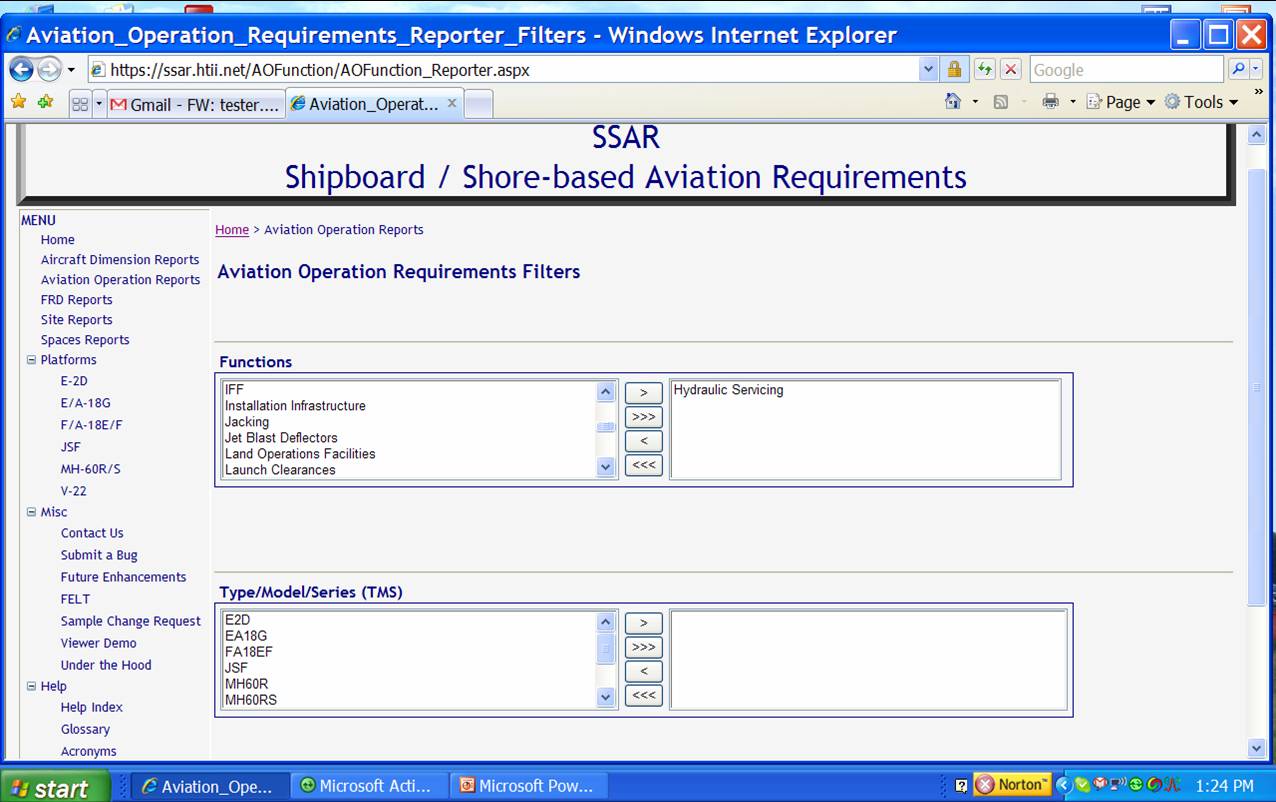
Online database requirements selection screen – type of information desired and aircraft
(Photo credit – Facilities Enterprise Leadership Team)
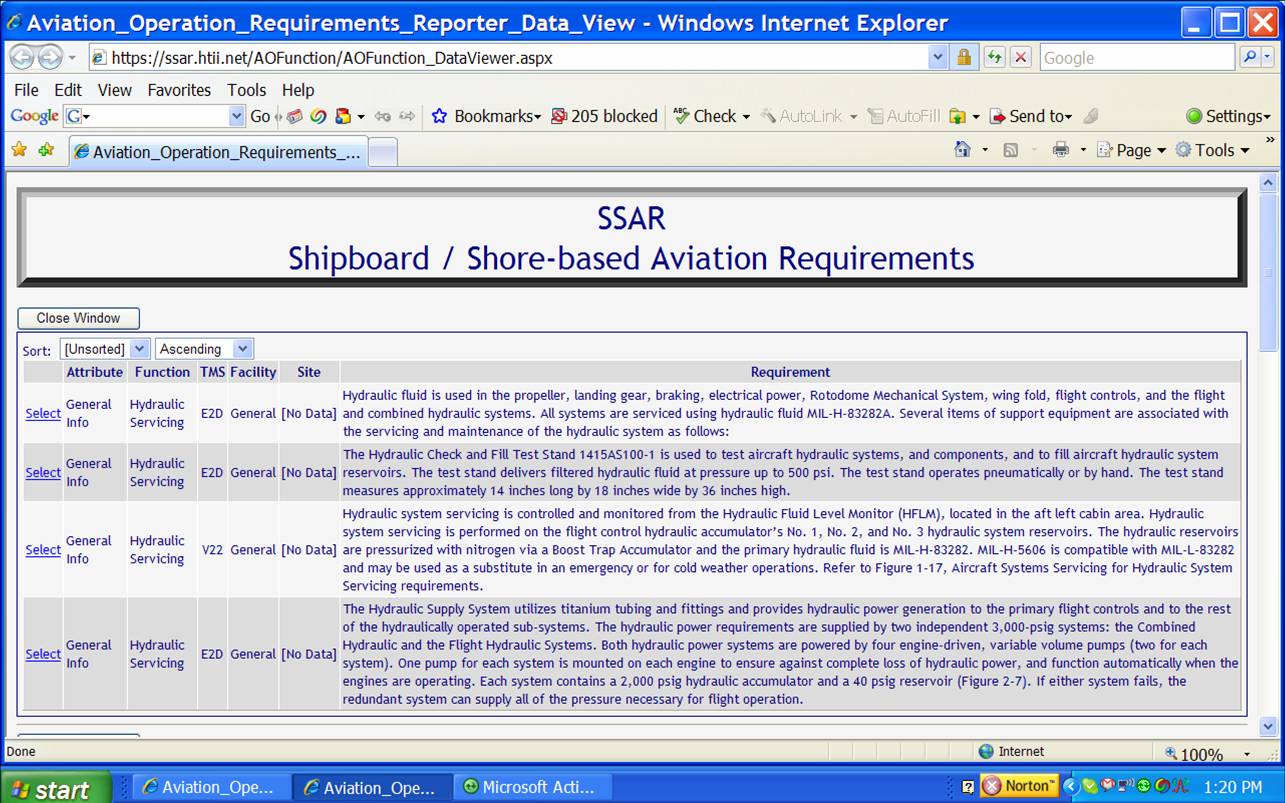
Online database general information screen – verbal descriptions of functional areas
(Photo credit – Facilities Enterprise Leadership Team)
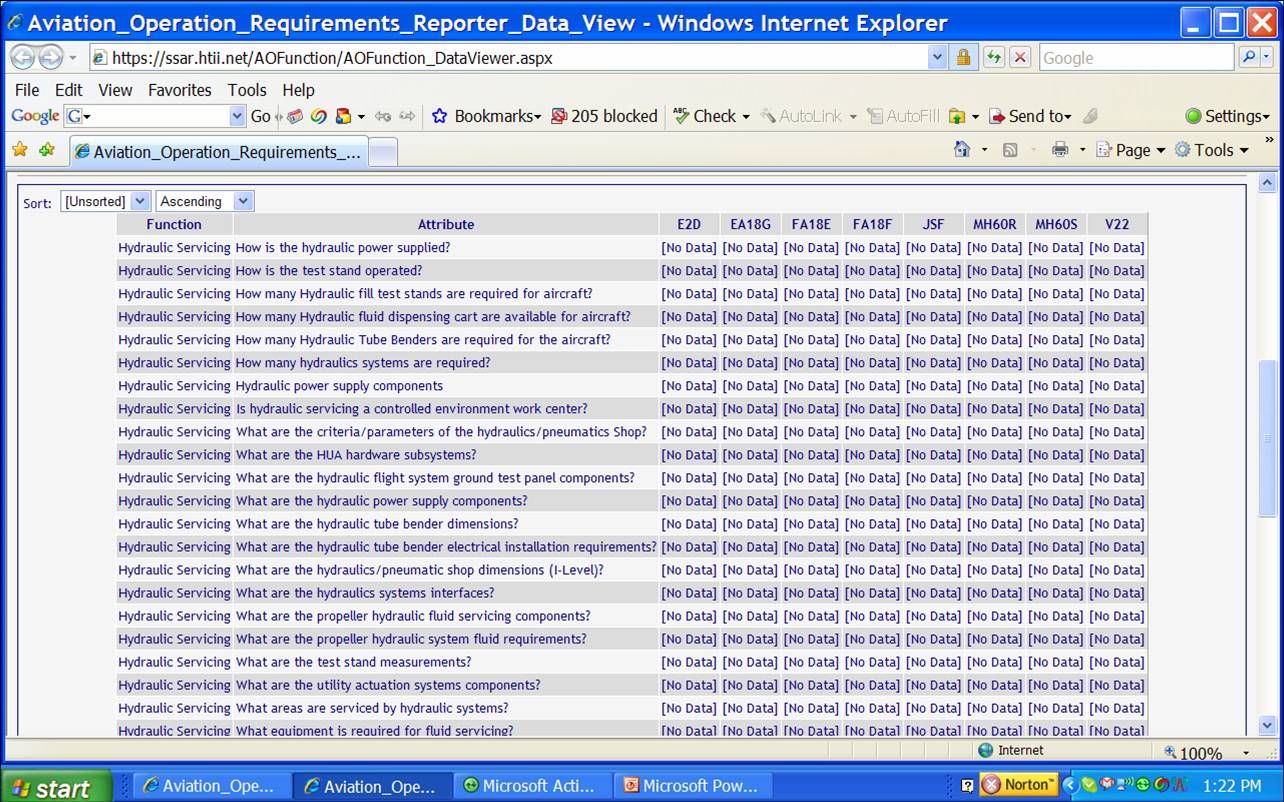
Online database data screen – mix of numerical data and verbal information
(Photo credit – Facilities Enterprise Leadership Team)
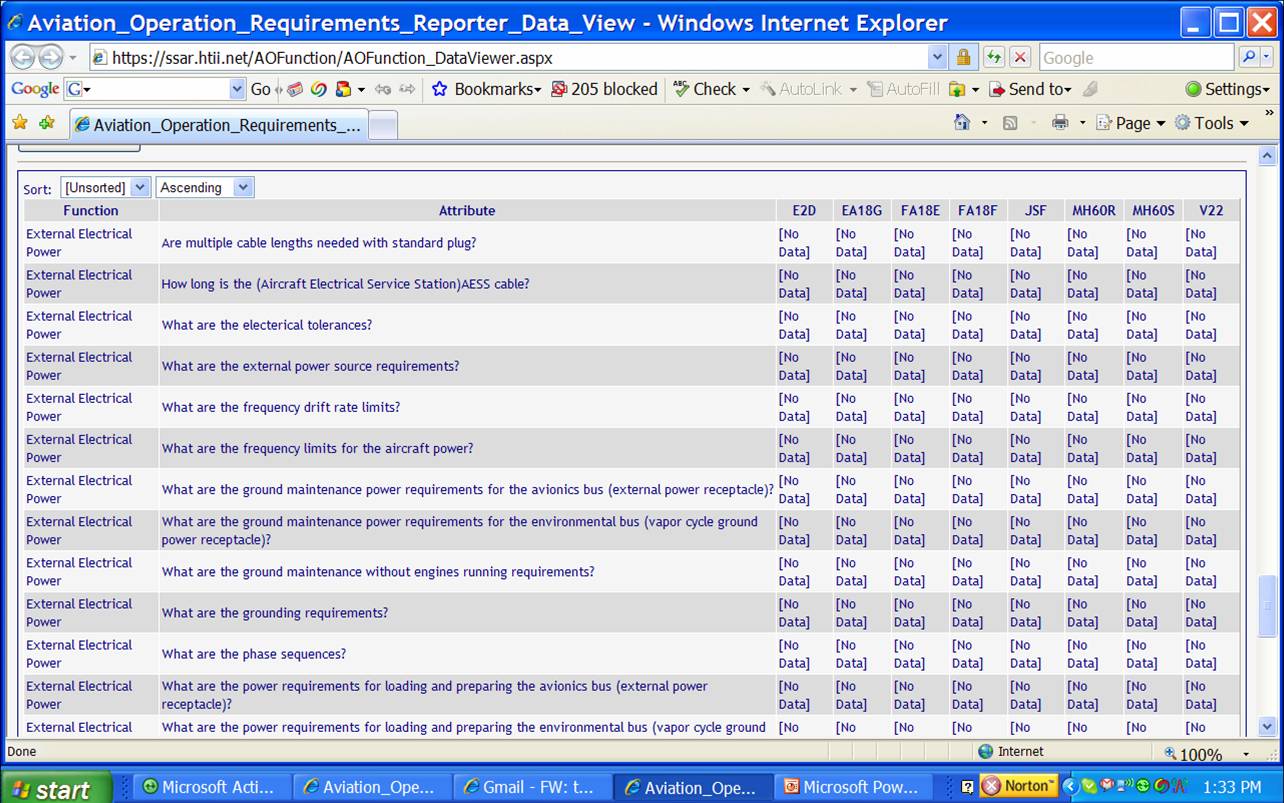
Online database data screen for electrical functional area
(Photo credit – Facilities Enterprise Leadership Team)
JSF - FELT has aided facilities planning for this program, now well underway
(Photo credit - US Navy)