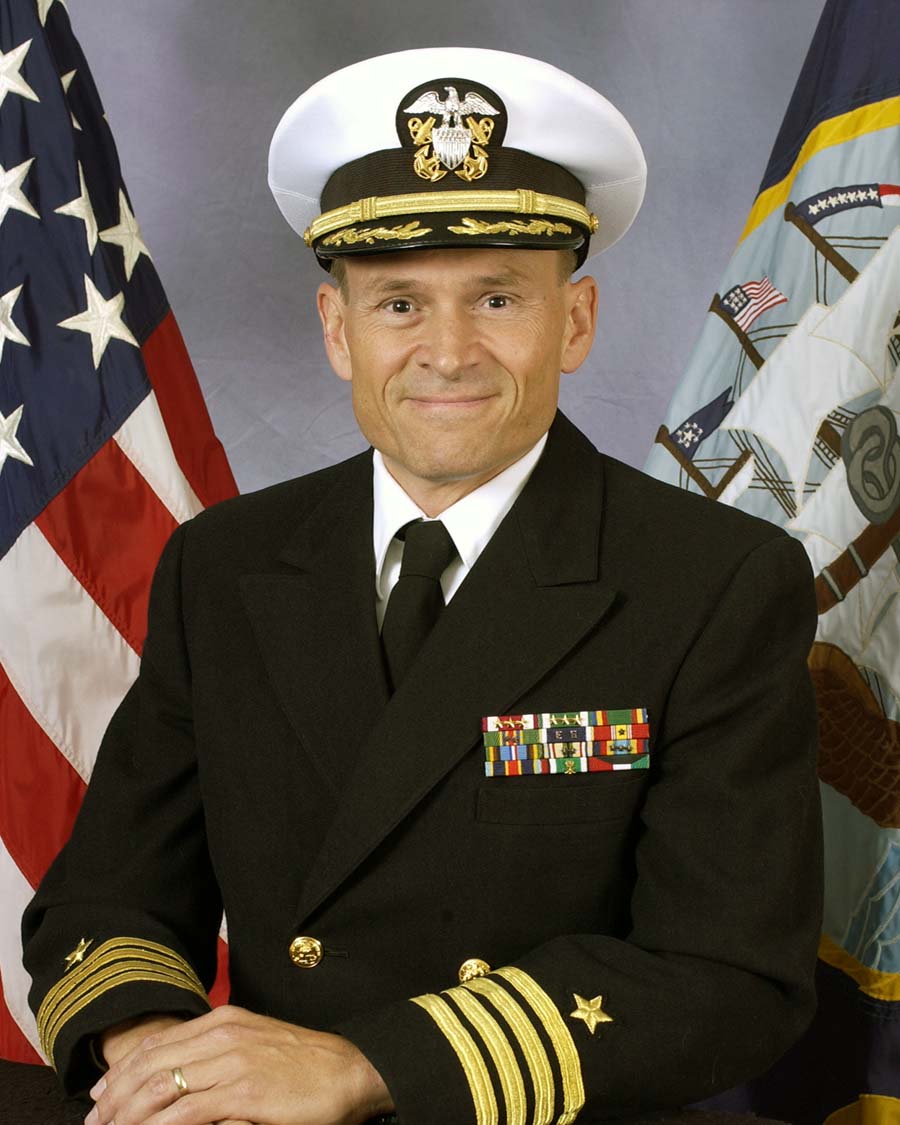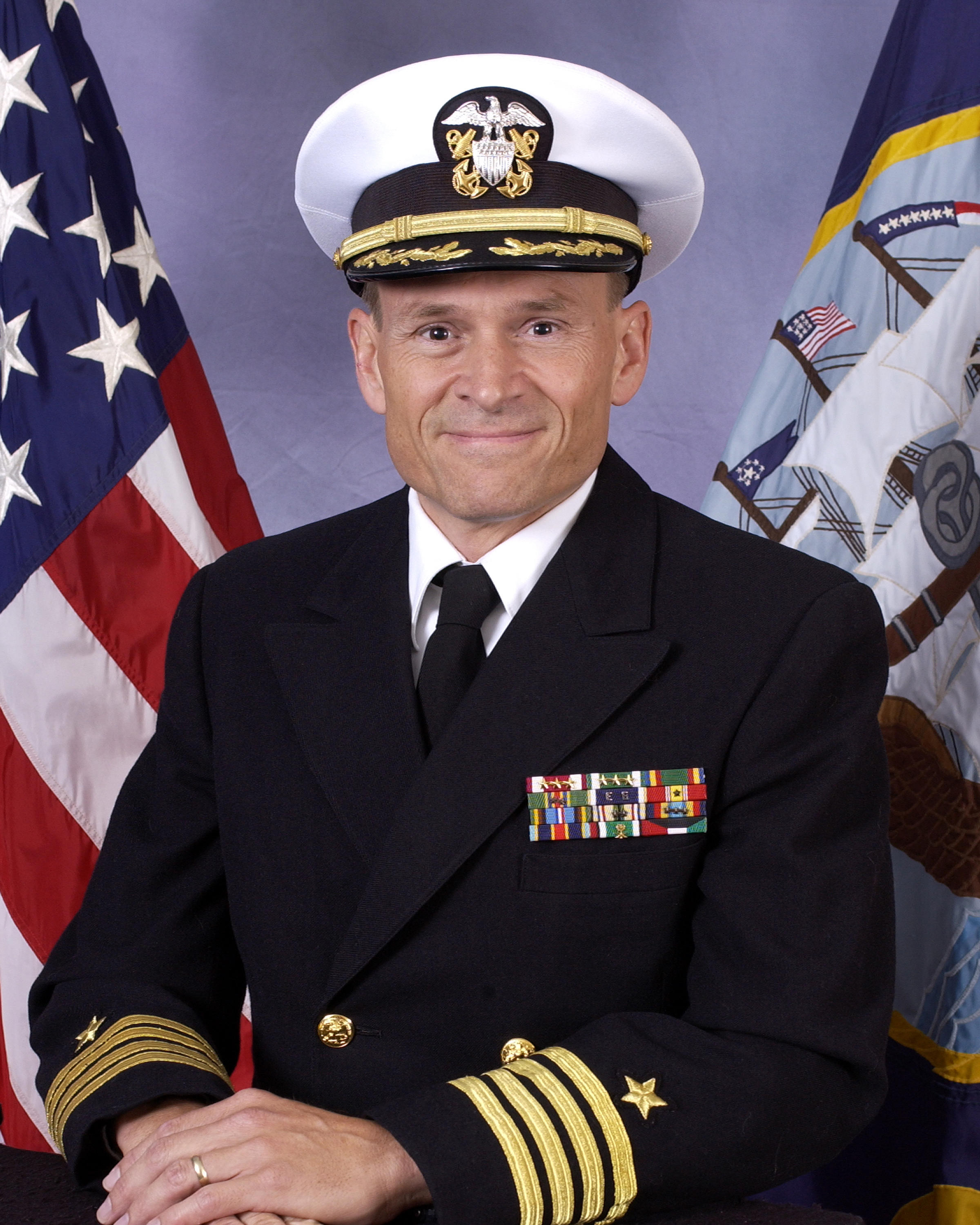
Captain Matthews to assume command of Fleet Readiness Center Southeast
In a time honored ceremony Friday, August 17, Captain Timothy Matthews, USN, will assume command of Fleet Readiness Center Southeast (FRCSE), when he relieves Captain John Scanlan II. During the ceremony scheduled for 9 a.m. in Hangar 1000, Captain Matthews will become the second commanding officer of FRCSE and the 37th commanding officer since the command was established in 1940. The guest speaker for the change of command will be Vice Admiral Thomas Kilcline, Commander Naval Air Forces.
Captain Matthews began his tour as the Command Executive Officer in August 2005. He was born in Zurich, Switzerland, and grew up in Chevy Chase, Maryland, and various overseas locations. He attended the University of Colorado and received a Bachelor of Science Degree in Aerospace Engineering in 1980. Captain Matthews was commissioned in August 1982, and was designated an Aeronautical Maintenance Duty Officer in 1983. He reported onboard the USS John F. Kennedy (CV-67) in March 1984. In December 1986, he was reassigned to Fleet Air Reconnaissance Squadron TWO (VQ-2), Rota, Spain. In January 1990, Captain Matthews reported to Tactical Electronic Warfare Squadron ONE THREE TWO (VAQ-132) in Naval Air Station (NAS) Whidbey Island, Washington. While with VAQ-132, he served as Assistant Maintenance Officer and Maintenance Material Control Officer supporting the EA-6B aircraft on board the USS Saratoga (CV-60).
From 1993 to 1995, Captain Matthews attended the Naval Postgraduate School, Monterey, California, where he received his Masters Degree in Aeronautical Engineering. In 1995, Captain Matthews assumed the duties of Air Wing Maintenance Officer with Carrier Air Wing FOURTEEN (CVW-14), Miramar, California. He was reassigned in 1997 to the Support Equipment Program Office (PMA-260), Naval Air Systems Command.
Captain Matthews was Officer-in-Charge of the Aircraft Intermediate Maintenance Detachment, NAS Whidbey Island, Washington, where he served from June 1999 to April 2002. In May 2002, Captain Matthews reported to the Naval Air Depot, Jacksonville, Florida, as Quality Assurance Officer and Production Officer. From September 2004 until July 2005, Captain Matthews held the position of Director, Joint Depot Maintenance Activities Group, Wright Patterson Air Force Base, Ohio.
Captain Matthew’s career highlights include participation in Operation Desert Storm supporting the EA-6B aircraft aboard the USS Saratoga (CV-60), winning the Captain Virgil Lemmon Award for Maintenance Management Excellence while serving in the Support Equipment Program Office at the Naval Air Systems Command in 1999, and winning the Secretary of Defense Maintenance Award while assigned to Aircraft Intermediate Maintenance Detachment (AIMD), NAS Whidbey Island, Washington, in 2000. Captain Matthews received the Meritorious Service Medal (4), the Navy Commendation Medal (4), the Admiral Stan Arthur Logistics Award (Team Award), the Virgil Lemmon Award for Maintenance Excellence, the Secretary of Defense Maintenance Award (Command Award), the Association of Old Crows’ Maintenance Award, and the Commanders Award, Naval Air Systems Command (Team Award).
Captain Scanlan’s most notable achievement while performing his duties as commanding officer of FRCSE has been to change the corporate culture of the command from business as usual, to delivering aircraft ahead of schedule and at a reduced cost to the customer or delivering to promise. Changing corporate culture is one of the hardest objectives to achieve in an organization, because it requires the respect and buy-in from personnel of leadership and the commitment and dedication to the mission and values of an organization. It can take years to change corporate culture and then successes are sometimes small and may be almost non-existent. This is not the case for FRCSE. Under the leadership of Captain Scanlan using innovation, change in business practices, constant promotion and support of continuous process improvement tools, and holding all personnel accountable, while treating them with dignity and respect, FRCSE is now delivering its products to the Fleet under costs and ahead of schedule. The following is a review of the successes for FY07:
• The F/A-18 Center Barrel Replacement program achieved a 15-day pulse for 13 consecutive aircraft and is expected to deliver “Sweet 16”, the nickname for the 16th F/A-18 to be produced this year, while reducing the average cost per aircraft by $700K.
• The EA-6B program achieved a 90 percent on-time delivery.
• The P-3 program reduced the average Turn-Around-Time (TAT) by 14 percent.
• The H-60 program reduced TAT by 26 percent and expects to reach a 41 percent reduction by mid-September.
• The TF34 Engine program reduced TAT by 43 percent.
• The J52 Engine program developed a 4-day pulse and has met the pulse schedule for 23 consecutive engines.
• The F414 Engine program reduced TAT by 29 percent.
Each of the above successes is impressive in their own right, but the cumulative sum of these accomplishments is the proof that Captain Scanlan’s leadership and innovation made a lasting transformation on FRCSE by changing corporate culture and “delivering to promise.”
Captain Scanlan, who assumed command in August 2005, will retire from active duty and begin his new career as Chief Operations Officer of the Oklahoma City Public Schools District.