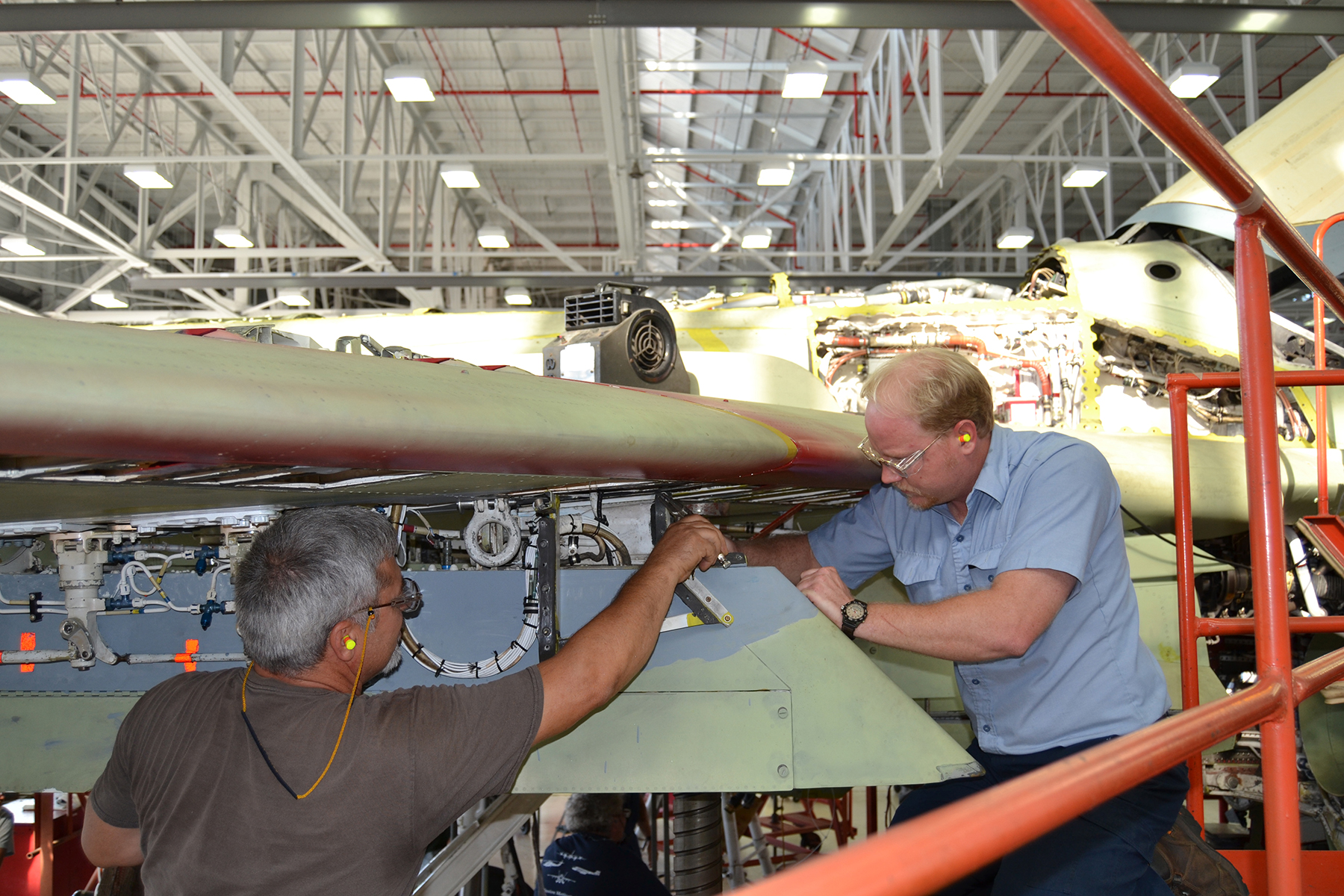
Fleet Readiness Center Southeast Sheet Metal Mechanics Gregg Dispoto, left, and Adam Edens drill a fiberglass panel to fit a wing pylon on the last EA-6B Prowler to undergo maintenance at the military depot Sept. 22. (U.S. Navy Photo/Released)
FRCSE artisans work on final ‘Flying Frying Pan'
JACKSONVILLE, Fla. – As the sun sets on the EA-6B Prowler’s service life, artisans at Fleet Readiness Center Southeast (FRCSE) Hangar 124 are diligently repairing their final aircraft before transitioning to trainer aircraft.
Since Oct. 3, 1994, FRCSE employees have kept the venerable Prowlers in the fight.
From scrambling radars for surface-to-air missile sites in Vietnam to jamming cell phones and garage-door openers used to detonate improvised explosive devices in Iraq in Afghanistan, Grumman’s Prowler has stood the test of time.
“It’s been an extremely durable aircraft,” said Lt. Cmdr. Richard Ulloa, EA-6B and trainer aircraft production officer.
The Prowler is so durable that it earned the unglamorous but affectionate moniker, “The Flying Frying Pan.”
Ulloa flew the Prowler with the Navy fleet from 2004-07. “The fact that the Prowler has lasted this long in the fleet is a testament to how well it was designed and all the artisans and Sailors who’ve maintained it through the years,” he said.
First flown in 1968, it entered service with the Navy in 1971. In November, the last Navy Prowlers returned from their final deployment with Electronic Attack Squadron 134 at Naval Air Station Whidbey Island, Washington. The Navy is moving on to the EA-18G Growler, but the Marines will continue to field the Prowler – including the last one at Hangar 124 – until 2019.
The job of maintaining the gray-bearded birds hasn’t gotten easier.
“The Prowler’s logistics footprint is not as robust as it once was,” Ulloa said. “As the program has been winding down, you start having a harder and harder time finding parts."
The Prowlers began giving way to trainers at Hangar 124 more than three years ago, he said. Now, the process is nearly complete. “At its peak, we were producing several Prowlers per month,” Ulloa said. “By the time I got here three years ago, we were down to about one per quarter.”
With advanced planning, Ulloa said, the transition of artisans to the T-6, T-34 and T-44 trainers has gone smoothly. “You have your normal attrition process, and many of our more experienced senior workers on the Prowler are retiring, so the transition has been pretty seamless,” he said.
One of those artisans nearing retirement is Aircraft Work Leader Joe Ferrante who grew up in Long Island, New York near the “Grumman Iron Works” plant that churned out the EA-6B and, its forefather, the A-6 Intruder. “I used to hear those A-6s flying over the house all the time when I was growing up,” Ferrante said. “Two of my brothers-in-law worked at the plant.”
After a 20-year Navy career, Ferrante joined FRCSE and its F/A-18 line in 1988 before moving over to the Prowlers six years later. “There are three of us who have been here since the beginning,” Ferrante said with a grin. “It’s sad to see them go, but it’s been a lot of fun working on these aircraft.”
For many of the artisans who’ve painstakingly kept the planes prowling for all these years, the bruised knuckles and sweat-soaked shirts were more than just means to a paycheck. They were the workers’ contribution to something much larger.
Sheet Metal Mechanic Gregg Dispoto came to FRCSE just months after the 9/11 attacks. “I had just retired from the Air Force in 2000 – then 9/11 happened,” he said. “I was working at U.S. Airways at the time, but I just wanted to do something for the country again. So I came here.”
“The final Prowler is expected to be completed in December,” said Ulloa. “It’s the end of an era for FRCSE. This was a great aircraft and I think the artisans will miss working on it but we are moving ahead to the future.”
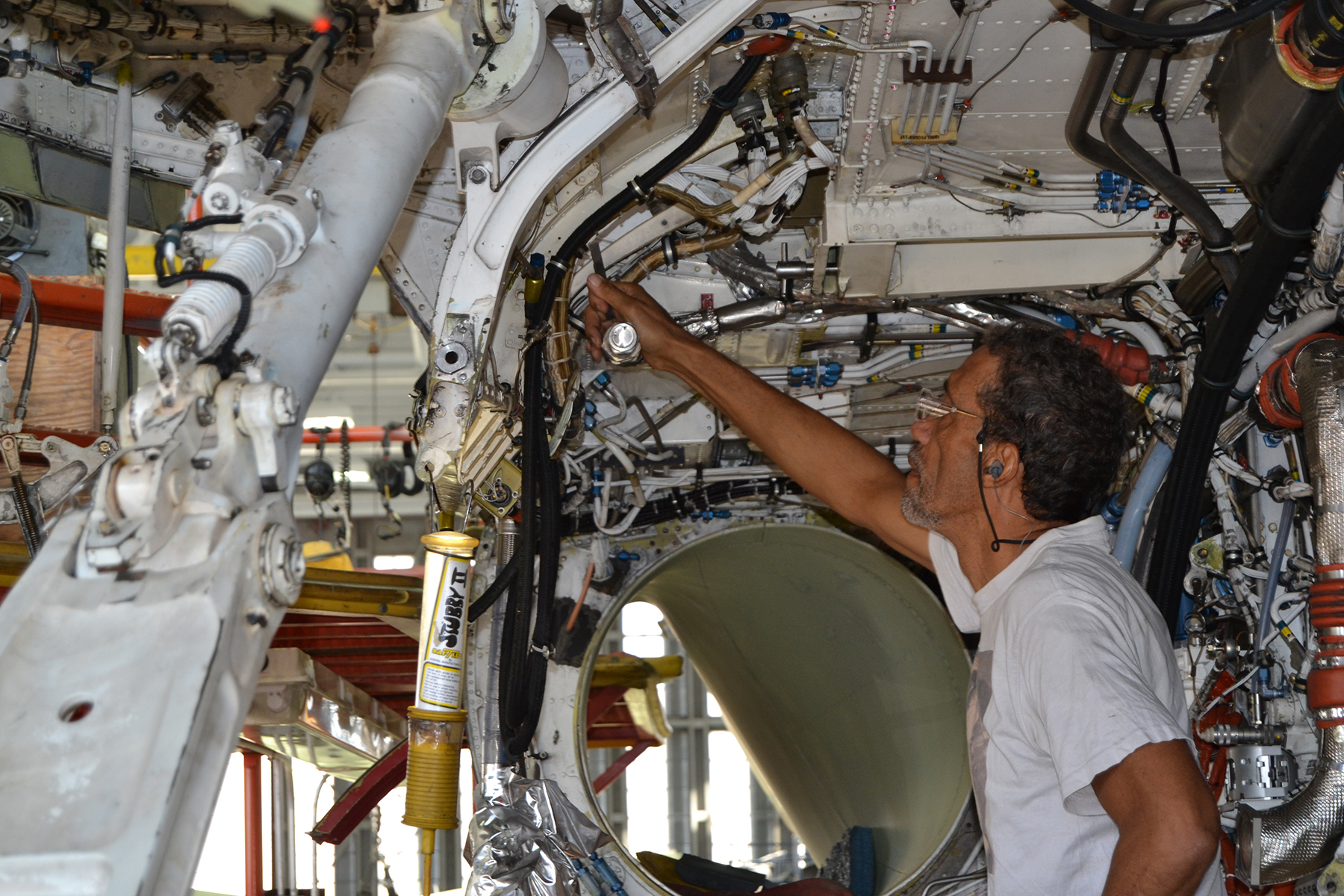
Bruce Wingate, an aircraft mechanic at Fleet Readiness Center Southeast (FRCSE), inspects the main landing gear on the last EA-6B Prowler undergoing repairs at FRCSE Sept. 22. (U.S. Navy Photo/Released)
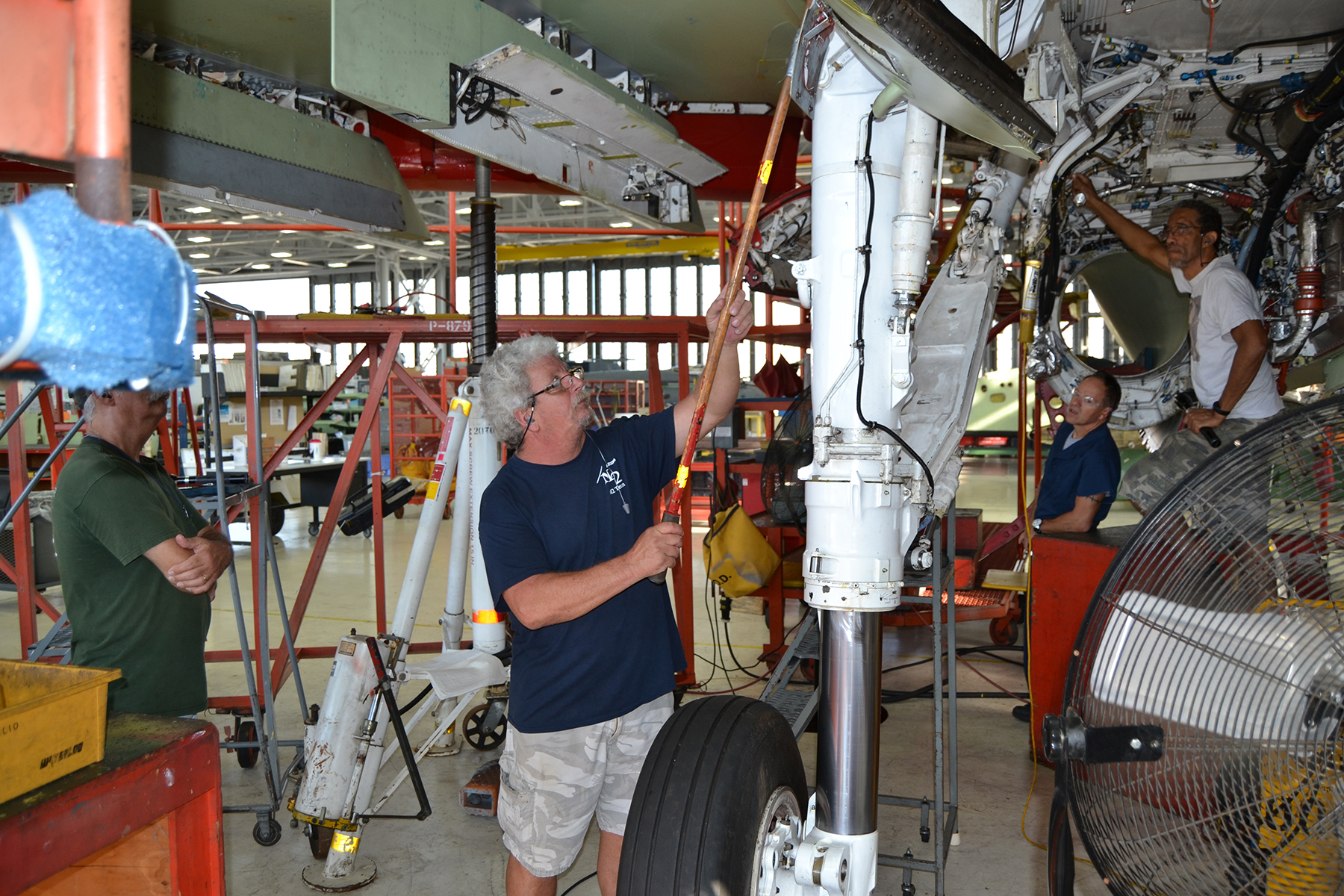
Fleet Readiness Center Southeast Aircraft Mechanics Dan Woodard, center, Mark Gilbert, near right, and Bruce Wingate rig the main landing gear of the last EA-6B Prowler undergoing maintenance at the military depot Sept. 21. (U.S. Navy Photo/Released)
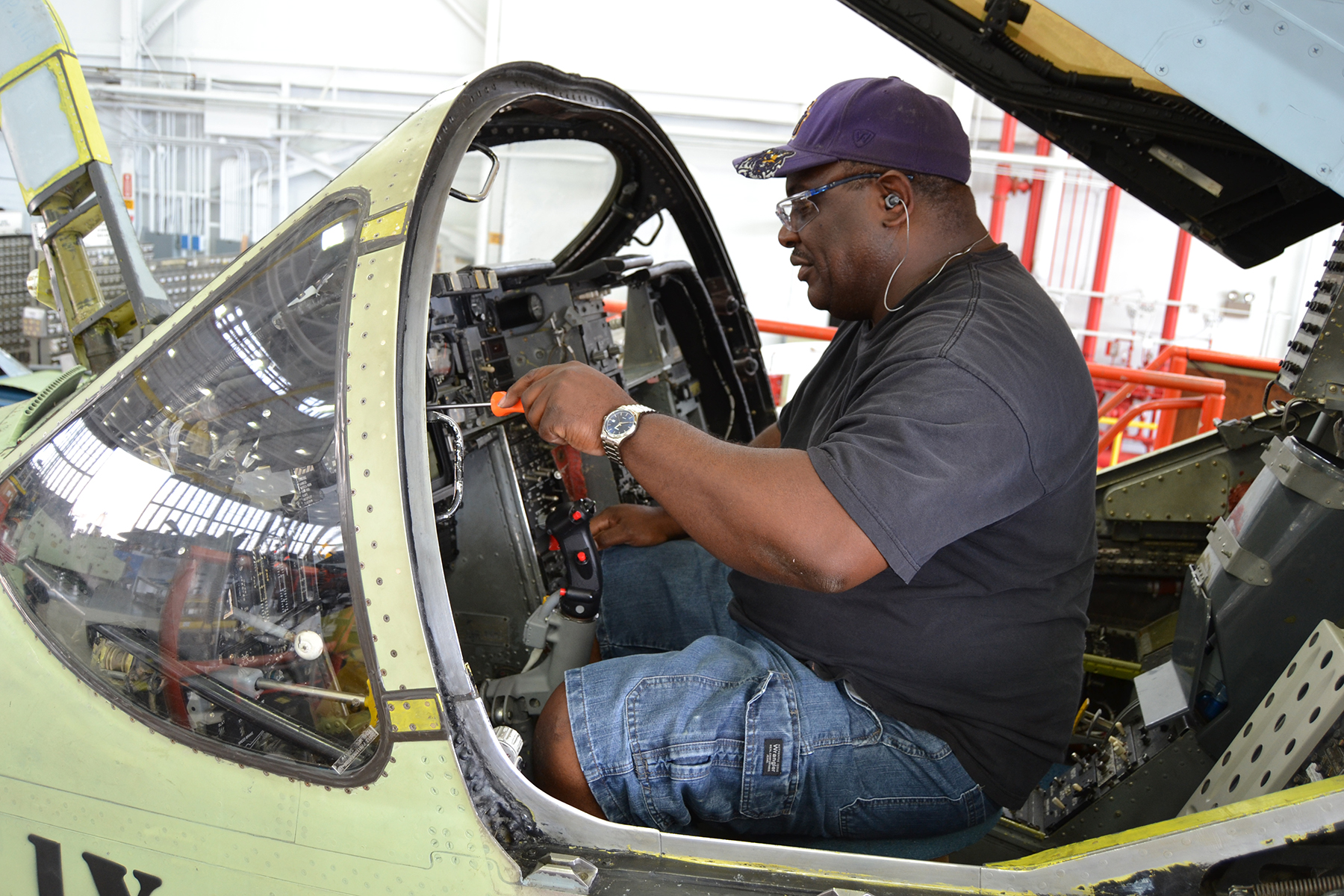
Robert Dewberry, an electrician at Fleet Readiness Center Southeast installs an altimeter in the cockpit of an EA-6B Prowler aircraft Sept. 21. The Prowler is being sundowned so this is the last EA-6B that artisans at the military depot are working on. (U.S. Navy Photo/Released)
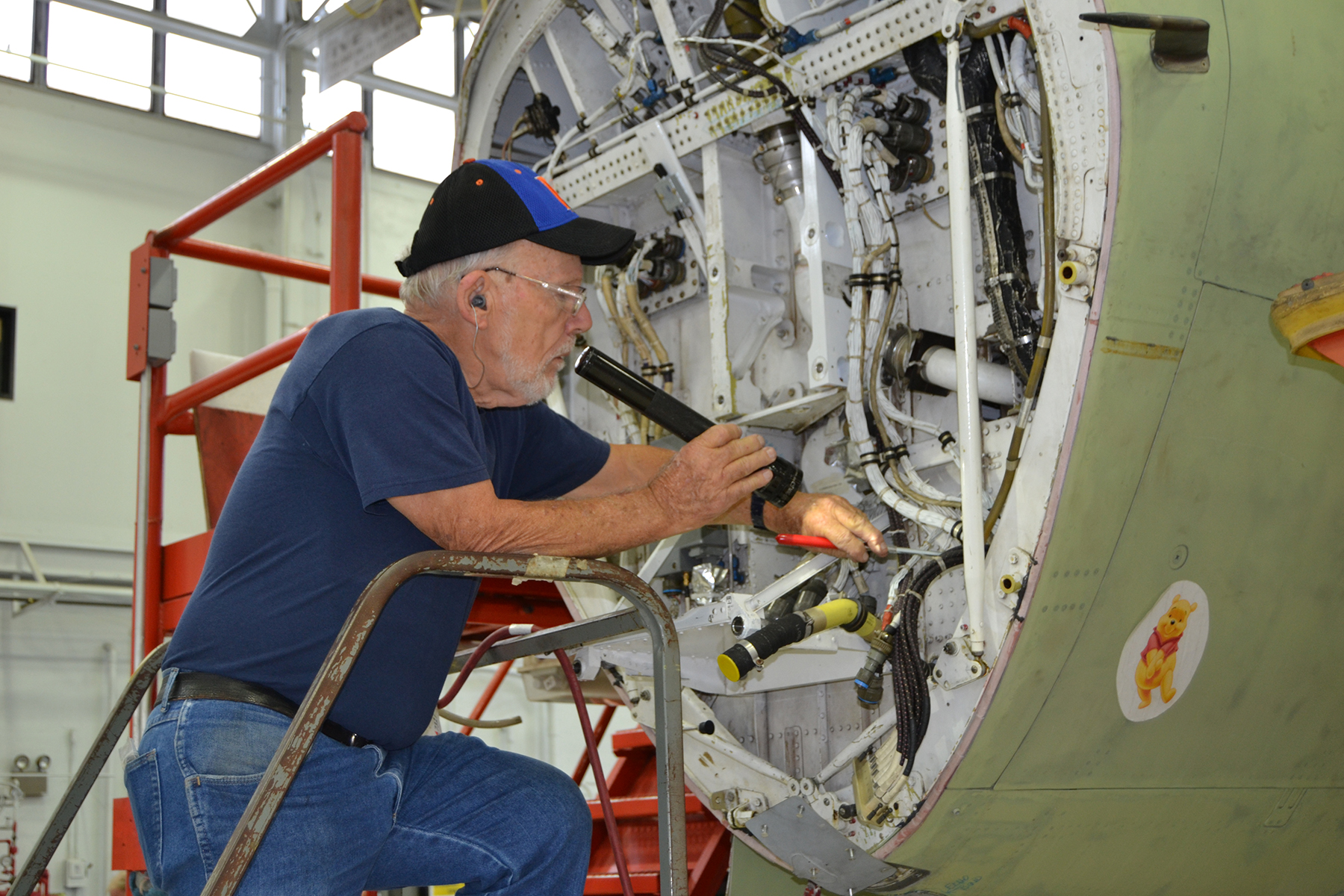
Bob Mayer, an aircraft mechanic at Fleet Readiness Center Southeast, searches for foreign object debris in the nose of the last EA-6B Prowler to receive maintenance at the military depot. The EA-6B program began at FRCSE in 1994. (U.S. Navy Photo/Released)
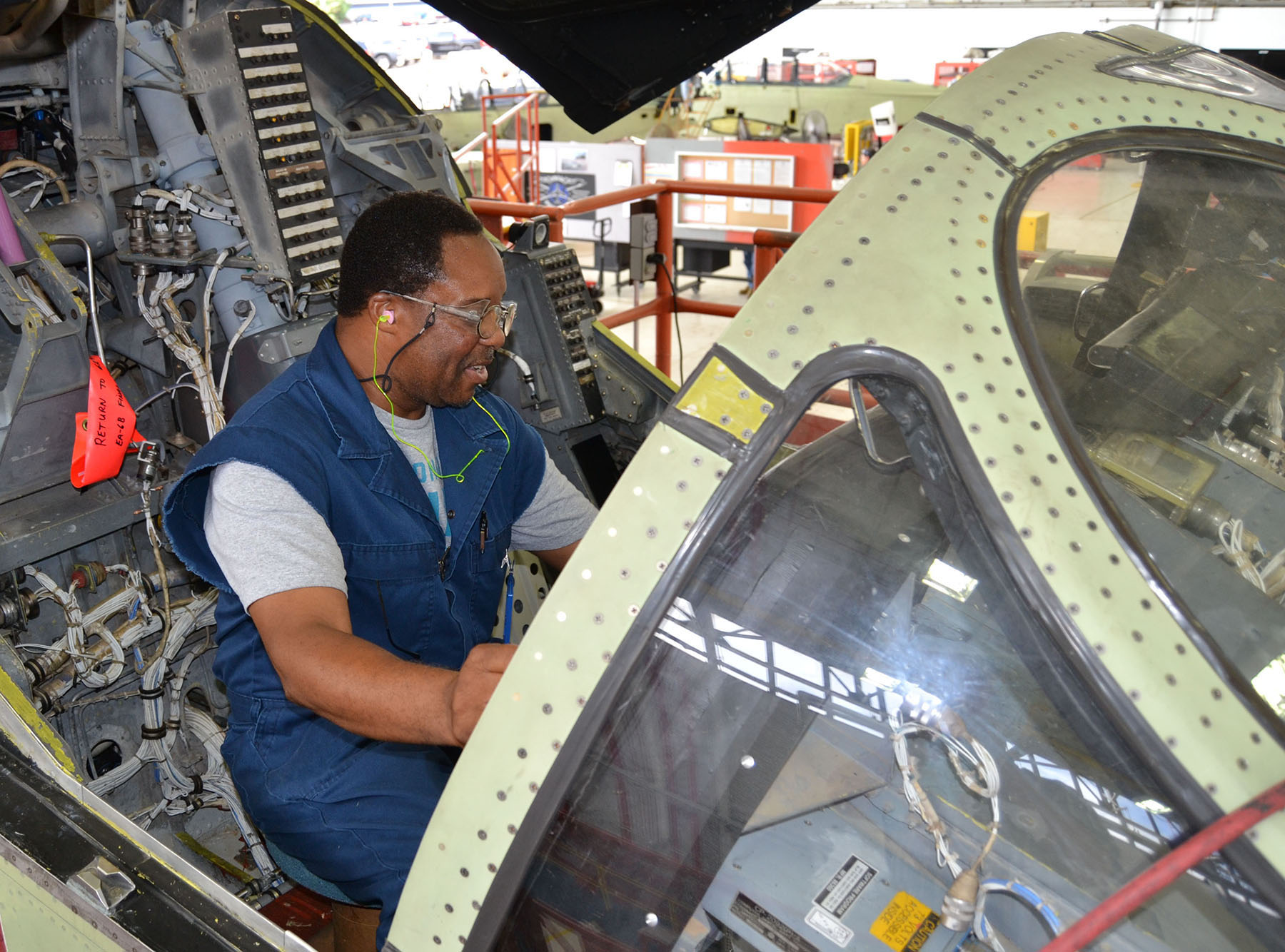
Rooseveldt Solomon, an avionics technician at Fleet Readiness Center Southeast (FRCSE), checks the landing and navigation systems on the last EA-6B Prowler to undergo maintenance at the facility on Sept. 29. (U.S. Navy Photo/Released)