
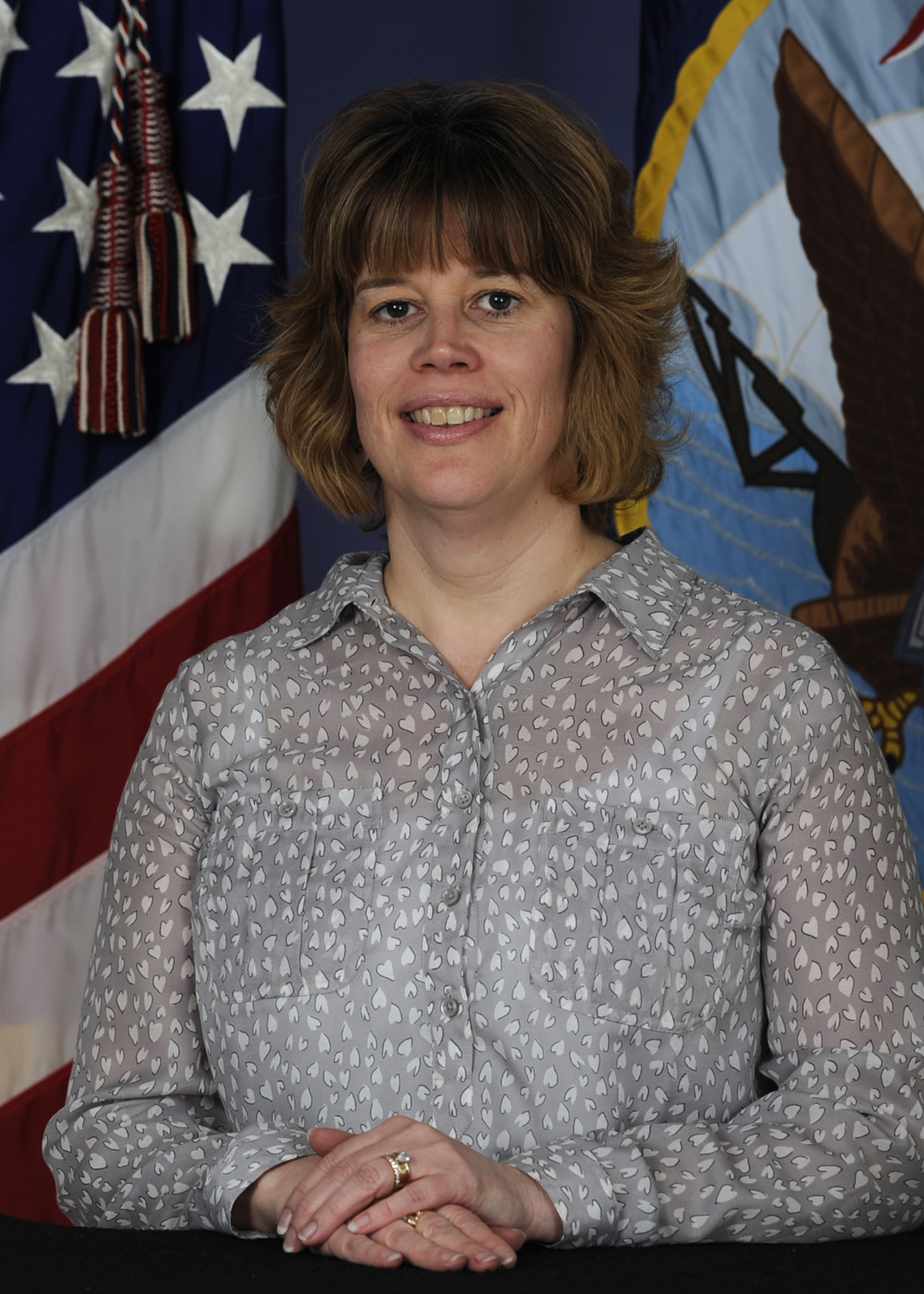
Marci Spiotta, co-lead of the CH-53K Integrated Program Team, cites the teambuilding lessons she learned as part of NAVAIR’s Leadership Development Program for her success. Spiotta was nominated for the 2012 Department of the Navy Acquisition Excellence Award in the Acquisition Professional of the Year category. (U.S. Navy photo)
Teaming up for success
NAVAIR Leadership Development Program Participant Nominated for Acquisition Award
NAVAL AIR SYSTEMS COMMAND, PATUXENT RIVER, Md. — If anyone knows there’s no “I” in “team,” it’s Marci Spiotta.
Nominated for the 2012 Department of the Navy Acquisition Excellence Award in the Acquisition Professional of the Year category, Spiotta credits her co-workers and the teambuilding lessons she learned in NAVAIR’s Leadership Development Program (NLDP) for her success.
“This wasn’t just a ‘me’ award; it was the team,” Spiotta said. “The team took it as theirs also, which, for me, was the most special thing. That’s what I was probably most proud of, that they were so excited.”
James E. Thomsen, principal civilian deputy of the Office of the Assistant Secretary (Research, Development and Acquisition), congratulated Spiotta and the other award nominees in a letter for their dedication and acquisition excellence.
“Their [the nominees’] dedication, inventiveness and professionalism reflected the acquisition expertise that is renowned within the Naval Air Systems Command,” he wrote.
At the time of the award nomination, Spiotta was part of the Persistent Maritime Unmanned Aircraft Systems Program Office (PMA-262). She has since been promoted to co-lead of the CH-53K Integrated Program Team, a promotion she said she earned partly by applying her teamwork skills to her daily job.
The NLDP classes helped her learn from and about the behaviors of other people, she said, giving her the chance to observe and understand different perspectives. It also taught her the importance of appreciating the unique qualities of each of her co-workers, looking at them individually to help them achieve their goals.
“The learning has qualified me to apply my current teambuilding skills, which have better prepared me for my new job opportunities,” she said. Her mentor also played a key role in her promotion, helping her prepare for the job and giving a good reference.
Within the NLDP classes, participants like Spiotta learn about situational leadership models and techniques. They also practice mentoring skills and behaviors to help foster strong team performance, according to NLDP Manager Stephanie Gleason.
“It takes great leadership to build great teams,” Gleason said. “Leaders at NAVAIR must learn to master the art of people and how to best utilize their capabilities in order to form long-lasting teams, meet the command’s mission and support the warfighter.”
Spiotta, who was accepted into NLDP in July 2009, encourages all NAVAIR employees to apply to the program.
“We just become so involved and so busy in our jobs, doing more with less, we forget the importance of this type of program and the benefits it brings to us as an individual and our team,” she said. “It’s a benefit to everybody. It’s difficult for people to take the time, but I think it’s important that we do. You can't afford not to sign up for the program.”
About the NLDP
As the command’s flagship leadership program, NLDP is designed for high performing NAVAIR military and civilian employees with demonstrated leadership potential. In addition to classroom-based leadership training and mentoring, the three- to five-year program includes job shadowing, networking and rotational assignments.
Learn more about NLDP and the other training and developmental programs available to NAVAIR employees at www.navair.navy.mil/jobs/training.html. Program applications will be accepted again in early 2014.
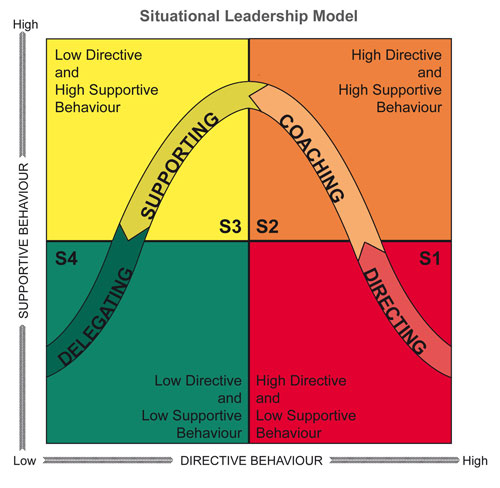
This situational leadership model, used as a practical method for coaching both individual and team performance, still hangs in Marci Spiotta’s office today. Each NAVAIR Leadership Development Program participant learns about the model during their classroom-based training. “That has resonated with me the most out of those classes,” Spiotta said. “I take that chart with me everywhere.” (Source: Hersey and Blanchard situational leadership model)