
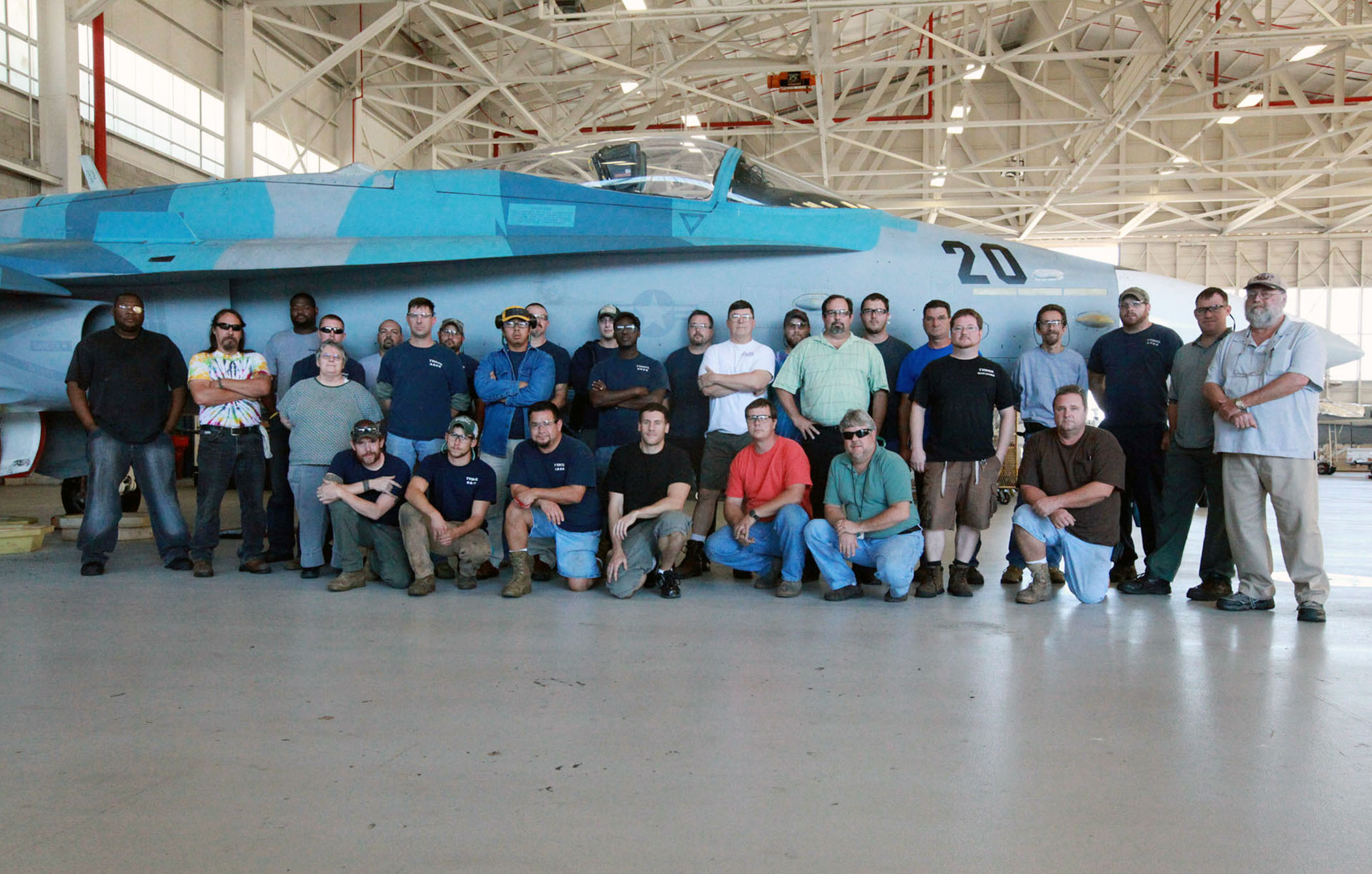
The Fleet Readiness Center Southeast (FRCSE) Beaufort Field Modification Team assigned to U.S. Marine Corps Air Station Beaufort, SC, poses before an F/A-18 Hornet Attack Strike Fighter aircraft Oct. 5. The team inspects and repairs Marine Corps aircraft to ensure mission readiness. (U.S. Navy photo by Cpl. Courtney White/Released)
FRCSE repair team supports Marine squadrons, maintains legacy Hornets
BEAUFORT, S.C. – A small but highly skilled group of aircraft maintenance professionals with the Fleet Readiness Center Southeast (FRCSE) Beaufort Field Modification Team at U.S. Marine Corps Air Station Beaufort, SC., provides expanded depot-level repair solutions for more than 75 F/A-18 Hornet Strike Fighter aircraft flown by six Marine squadrons.
The 50-member team of federal and contract employees, performs Planned Maintenance Interval (PMI) 2, a maintenance inspection that checks the structural integrity of the 20-year-old tactical aircraft that are being flown beyond their expected service life.
“We inspect aircraft panels and substructures for structural damage and cracks, and we make repairs as needed,” said Bryan Holland, FRCSE Beaufort detachment site manager and a retired Marine. “These aircraft operate in a saltwater environment, so there is water intrusion that causes corrosion.”
Corrosion degrades the readiness and availability of aircraft needed for vital missions. The PMI 2 inspection including repairs takes about 46 days once the aircraft arrives at the maintenance hangar.
The FRCSE Beaufort detachment also conducts In-Service Repairs (ISRs) to aircraft requiring short-term but more advanced restorations. These onsite repairs save time and costs associated with moving aircraft to FRCSE in Jacksonville, Fla.
Recently the team has been providing more in-depth, onsite ISRs to expedite services to the deploying Marine aviation squadrons.
“We are a field site, and we really do not have the resources to do this type of long-term work,” said Holland. “We are working about 20 Hornets for PMIs and ISRs with engineering support to maintain the safety and integrity of the airframes.”
The team is currently working on two aircraft involved in Class “A” mishaps that occurred during recent deployments on aircraft carriers.
A single-seat Hornet flown by the “Checkerboards” of Marine Fighter Attack Squadron (VMFA) 312 attached to the USS Harry S. Truman (CVN 75) during a seven-month deployment, sustained significant damage when the left main landing gear door broke free.
Holland said the pilot felt a thud while flying a mission over the ocean and immediately returned to the carrier. The outboard left, main landing gear door had spun wildly in the wheel well damaging the bottom skin and the web beam longerons, a primary structural member made of thin metal strips that fasten to the frame. The door also bent the former rib and punctured two holes in the aft fuselage skin.
“We had to shore up the aircraft to take the whole beam out as one unit,” said Holland. “The cost estimate for repairs is $2.5 million.”
The team is also repairing a Hornet flown by the “Thunderbolts” of Marine Fighter Attack Squadron (VMFA) 251 that was damaged while deployed on the USS Enterprise (CVN 65).
During a landing on the Big “E”, the pilot lowered the arresting hook or tailhook, a metal bar with a claw-like hook on one end used to catch a cable stretched across the deck. The actuator support broke during the rapid deceleration and buckled the speed brake actuator support former, moving it forward 3/8 of an inch.
The speed brake is a large flat plate located on the top, aft tail section between the vertical stabilizers. When preparing to land, the pilot deploys the brake to increase drag and decelerate the aircraft.
A field team made temporary repairs so the pilot could fly the Hornet back to South Carolina. Holland said the extensive repair would take from six to eight months once “North Island or Grumman” manufactures the part.
The maintenance team remains at high operational tempo to support the six hornet squadrons assigned to Marine Aircraft Group (MAG) 31. In addition, Marine Aviation Logistics Squadron (MALS) 31, a maintenance and logistics squadron, provides onsite intermediate-level repair services.
It is imperative these older jets with high-flight hours and extended service lives, continue filling the gap until its replacement platform, the F-35 Joint Strike Fighter, is inducted in the Navy’s inventory.
In the meantime, the artisans at FRCSE Beaufort are performing their own juggling act to increase aircraft turnaround times and reduce the impact on the tactical air fleet.
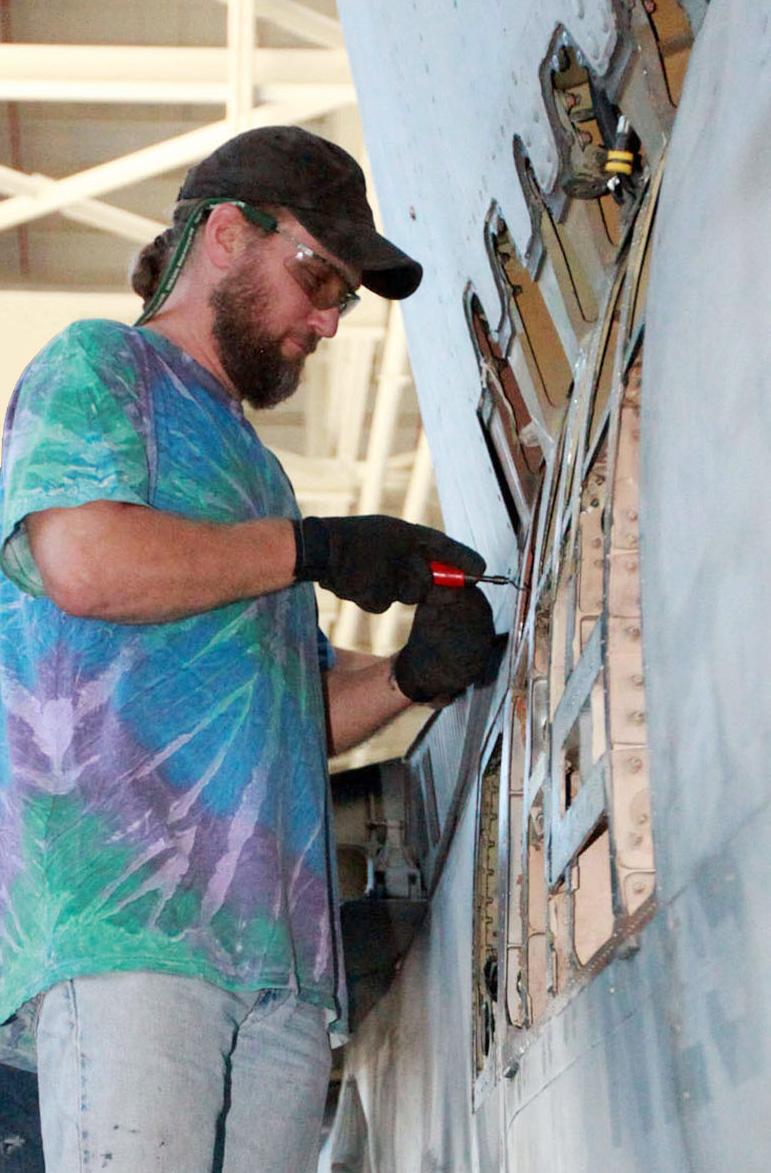
Sheet Metal Mechanic Brian Bushey cleans the aft fuselage substructure holes of an F/A-18 Hornet Attack Strike Fighter aircraft at the Fleet Readiness Center Southeast maintenance hangar on Marine Corps Air Station Beaufort, SC, Oct. 5. The detachment of about 50 civilian federal employees and contract workers inspect, maintain and repair the aircraft flown by the Marine squadrons on the installation. (U.S. Navy photo by Cpl. Courtney White/Released)
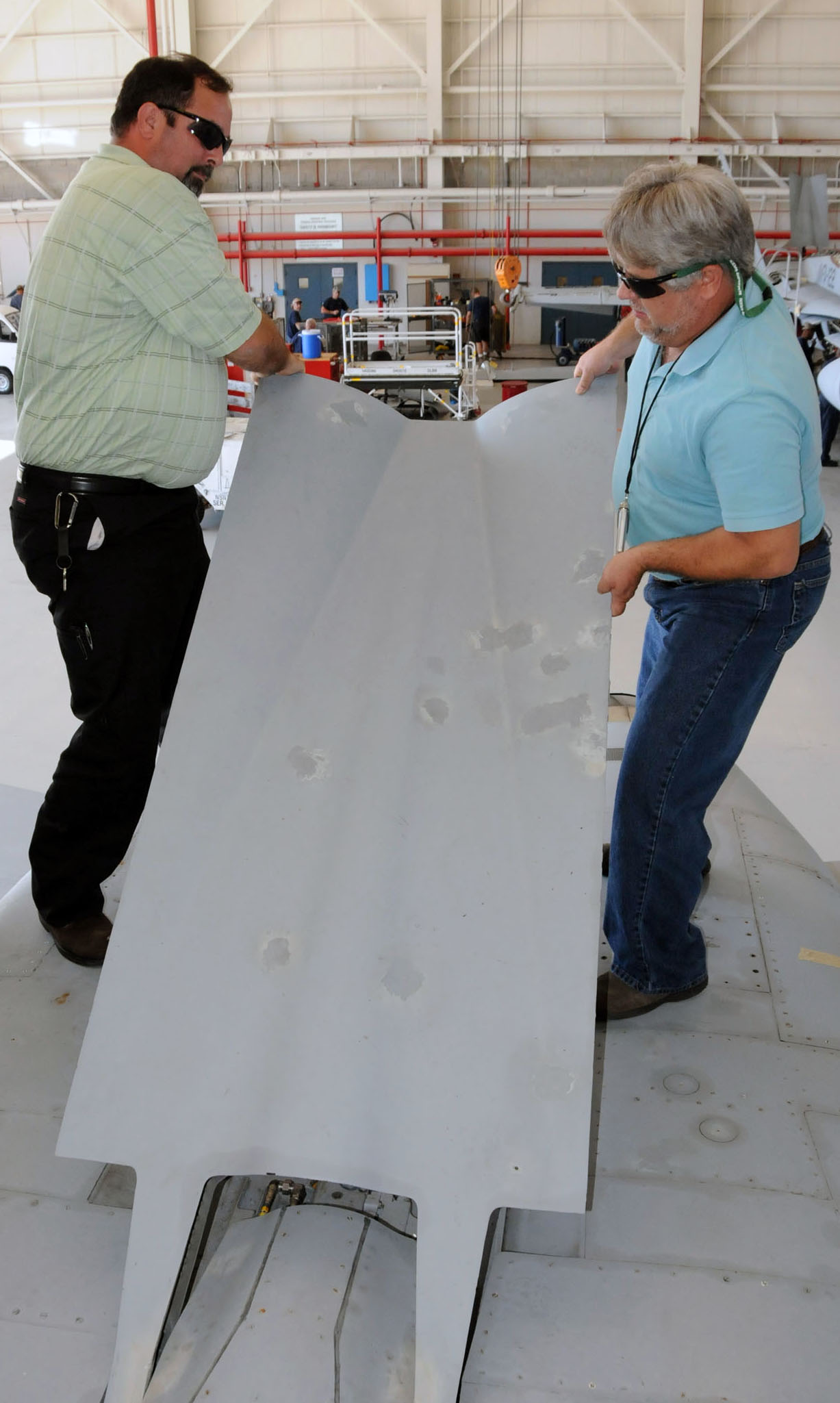
F/A-18 In-Service Repair and Modification Supervisor Eric Kelly (left) and Site Manager Bryan Holland with the Fleet Readiness Center Southeast Beaufort Field Modification Team at U.S. Marine Corps Air Station Beaufort, SC, raise the speed brake on an F/A-18 Horne at the maintenance facility Sept.8. Artisans are repairing the brake’s actuator support former damaged during a landing on the USS Enterprise (CVN 65). The "Thunderbolts" of Marine Fighter Attack Squadron (VMFA) 251 fly the aircraft. (U.S. Navy photo by Victor Pitts/Released)
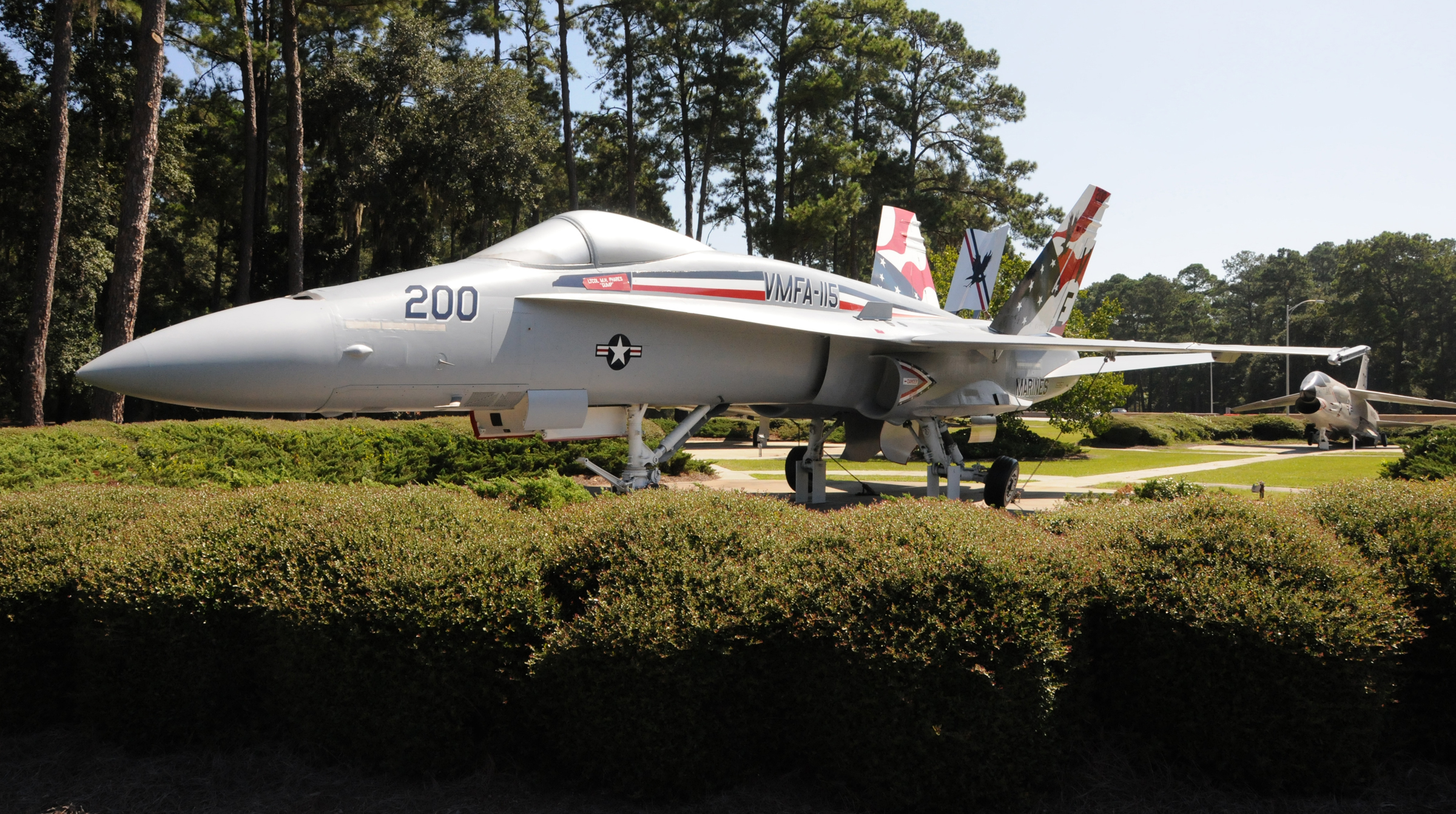
A static display of an F/A-18 Hornet Attack Strike Fighter aircraft sits in front of Marine Corps Air Station Beaufort, SC, with the speed brake raised on the top aft tail section between the two vertical stabilizers. The pilot deploys the speed brake to increase drag and slow the aircraft in preparation for landing. (U.S. Navy photo by Victor Pitts/Released)