
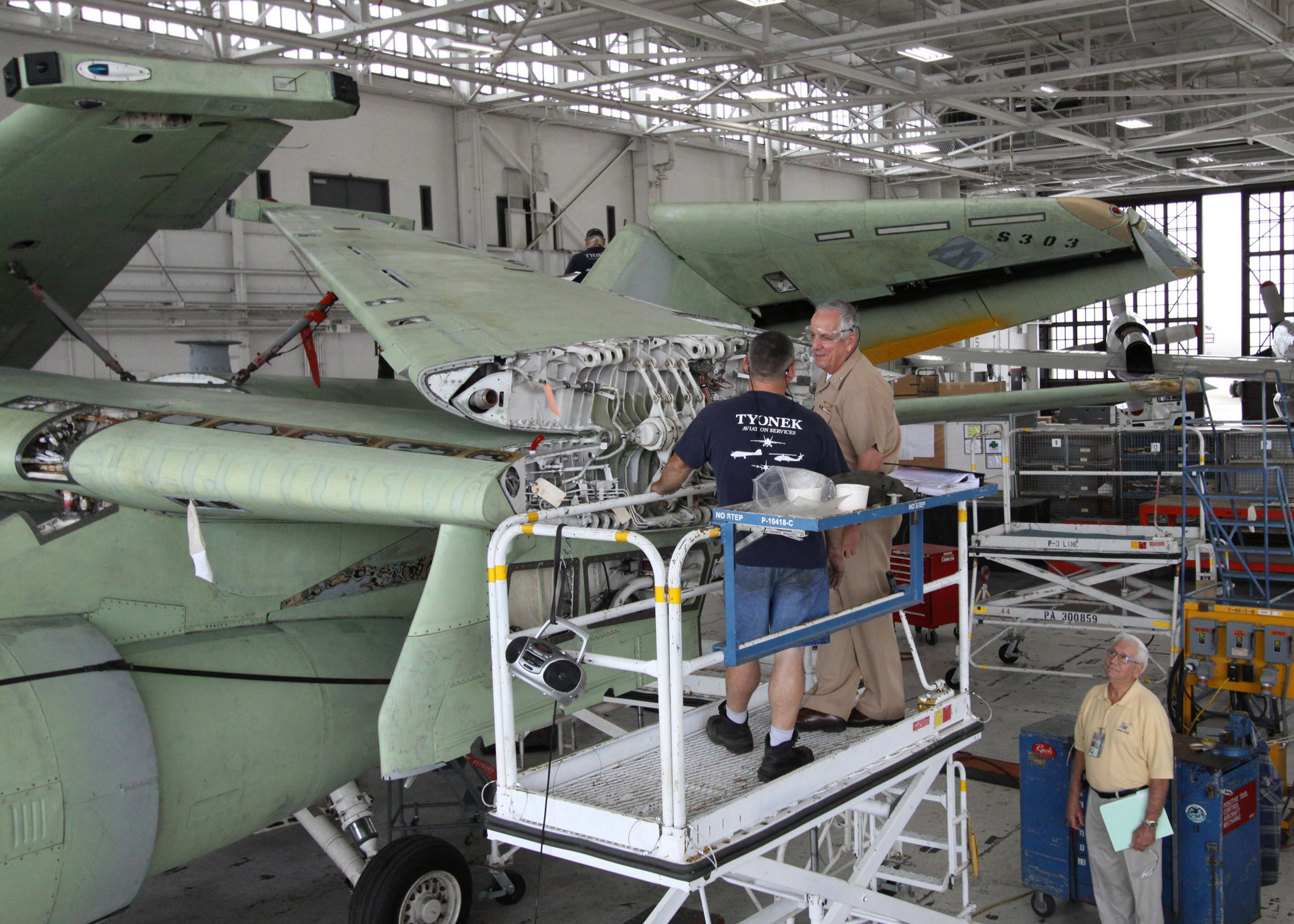
Commander NAVAIR Vice Adm. David Architzel (center) speaks with Aircraft Mechanic Howard “Duck” Tarvitt (left) during a tour of the S-3 Viking hangar Nov. 29, as Integrated Maintenance Program Coordinator Harry Mattox (right) looks on. (U.S. Navy photo by Vic Pitts/Released)
Commander NAVAIR visits FRCSE, observes extensive industrial capabilities
JACKSONVILLE, Fla. – The Naval Air Systems Command (NAVAIR) senior officer visited Fleet Readiness Center Southeast (FRCSE) Nov. 29 to tour the facility and reaffirm his commitment to the long-term strategic priorities of current readiness, future capability and the workforce.
Vice Adm. David Architzel, who assumed command in May, made several stops at FRCSE, including aircraft production lines, the engine facility, the Hydraulics Shop and the Manufacturing Division during his first visit to the facility as NAVAIR commander.
His initial stop was at the S-3 Viking aircraft line where artisans are conducting one-of-a-kind depot-level repairs and maintenance to add up to six years of service life to the all-weather jet before another scheduled maintenance is due.
FRCSE inducted the first of three S-3 Vikings for Planned Maintenance Intervals (PMI) 1, 2, 3 in March, 2009. The first two aircraft were completed and turned over in April and November 2010 to the “Bloodhounds” of VX-30 at Point Mugu, Calif., with the third scheduled for delivery in April 2011. The aircraft is being used to enhance VX-30’s critical surveillance and reconnaissance mission over the Pacific Ocean.
FRCSE’s Integrated Maintenance Program Coordinator Harry Mattox explained to the admiral some of the maintenance issues encountered, including sand intrusion from operations in Iraq. He said a “fourth S-3 may not be cannibalized” if funding is identified.
Sheet Metal Mechanic Michael A. Smith told the admiral they “expected some corrosion” on the aircraft, but “they were repairs we have made before.”
Architzel, a career Naval aviator with more than 5, 000 flight hours, 4,300 of those in the Viking, enjoyed talking with the S-3 artisans. He presented Electrician Melvin Jackson with a command coin.
“He was my first Skipper,” said Jackson. “We served in Sea Control Squadron (VS) 30 together.”
In the Crinkley Engine Facility, Engines Division Director Don Dunlap explained the facility’s robust capability to repair and assemble gas-turbine engines for a variety of military aircraft.
He also discussed needed improvements to the modern engine facility in preparation for the next generation of engine workload on developing aircraft, such as the F-35 Joint Strike Fighter.
“Space is one of our key areas of concern. We are using the strategic planning process to plan for future engine workload,” said Dunlap.
FRCSE Fleet Support Team (FST) Engineer Martin Breen and F414 Program Manager Ken Traylor discussed the F414 High Pressure Compressor (HPC) Module Stator Case issue impacting readiness with the F/A-18 Super Hornet Strike Fighter.
The FST is using a slave engine to determine the cause of the excessive rubbing inside the casing, to clear backlogged assets for use and to evaluate possible repair solutions.
In the Hydraulics Shop, Components Officer Cmdr. Jerry Brown talked about the facility’s efforts to integrate the depot-level civilian workforce with the Level II military workforce.
Architzel chatted with Sailors repairing pneumatic values. He presented a command coin to AM3(AW/SW) Ryan Costa who impressed him with his Surface Warfare rating Costa earned while serving on the USS Theodore Roosevelt (CVN 71). Architzel also served on the nuclear powered aircraft carrier as the sixth commanding officer.
During a tour of the Industrial Manufacturing Division, Deputy Director Bruce Mobley pointed out one-of-a-kind aircraft components that the artisans are producing for the Fleet. He credited the highly skilled manufacturing team for its innovative solutions to provide exceptional value to the customer.
To find suitable replacements for the aging workforce, Mobley said the facility was “partnering with Florida State College at Jacksonville to provide internships for students studying to become machinists.” Graduates provide a qualified applicant pool for vacant positions at the facility.
During the final stop at the P-3 Orion Production Line, FRCSE Commanding Officer Capt. Paul Sohl read the citation announcing FRCSE as the recipient of the Chief of Naval Operations 2009 Naval Aviation Safety Award. He added his thanks to the P-3 artisans who keep the legacy aircraft flying.
“I am continually amazed by the innovative contributions of our outstanding workforce here at FRCSE,” said Sohl. “Each of you plays a critical role in mission readiness, and your efforts help to keep our Naval aviators, Sailors and Marines safe.”
Architzel presented the safety award to Aviation Safety Officer Lt. Cmdr. Brian Cowell.
“What you are doing is terribly important,” Architzel told the workers. “The Navy’s replacement platform for the P-3C, the P-8A Poseidon, is coming. But until it gets here, we need people to keep working on these legacy aircraft, and that gets harder and harder. Your proactive, all-hands commitment is making a significant difference.”
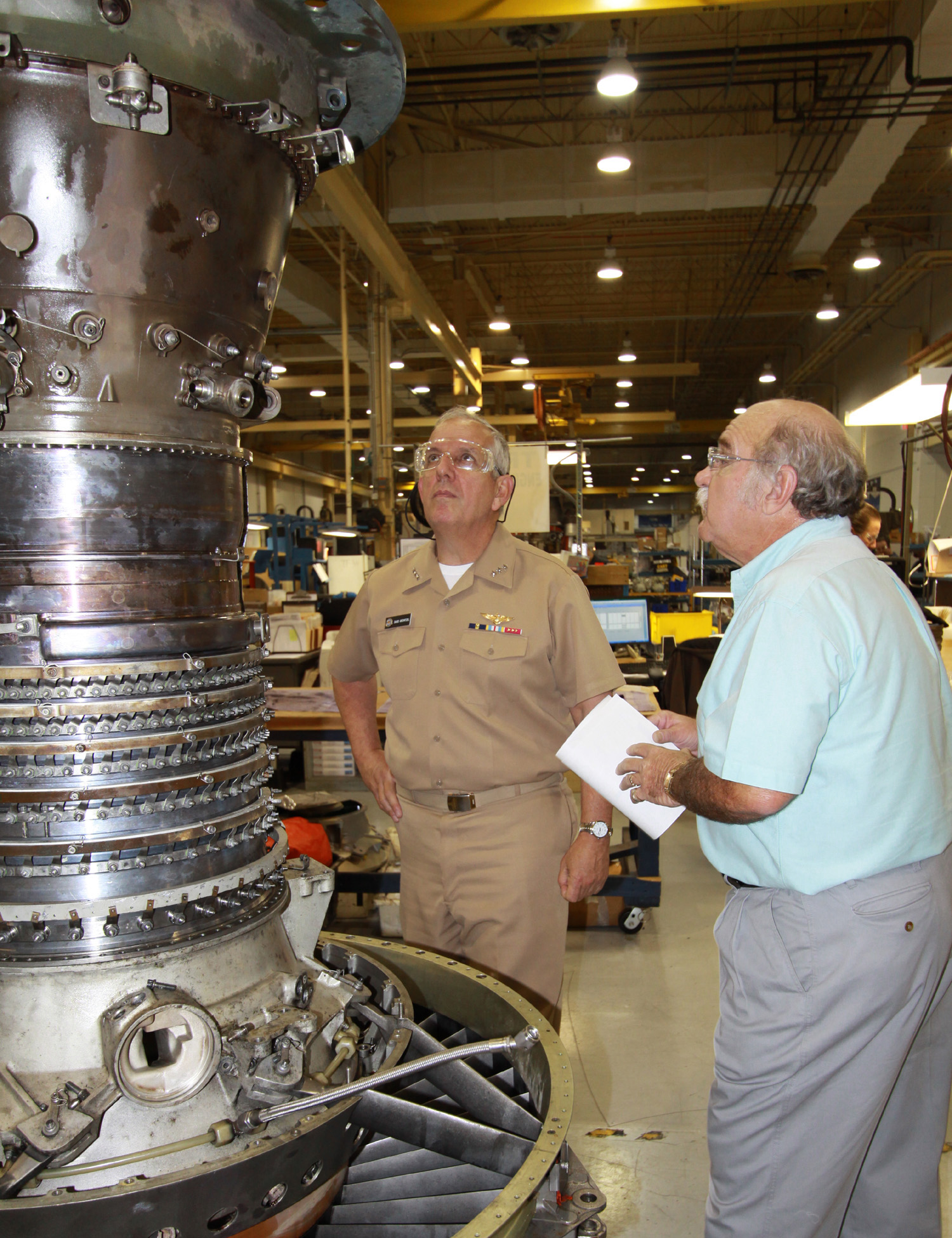
TF34 Engine Shop Supervisor Bill Ockenhouse (right) discusses with Vice. Adm. David Architzel the facility’s repair capabilities for the TF34 engine that powers the U.S. Air Force A-10 Thunderbolt (Warthog) Ground Attack Aircraft and the Navy’s S-3 Viking Aircraft. (U.S. Navy photo by Vic Pitts/Released)
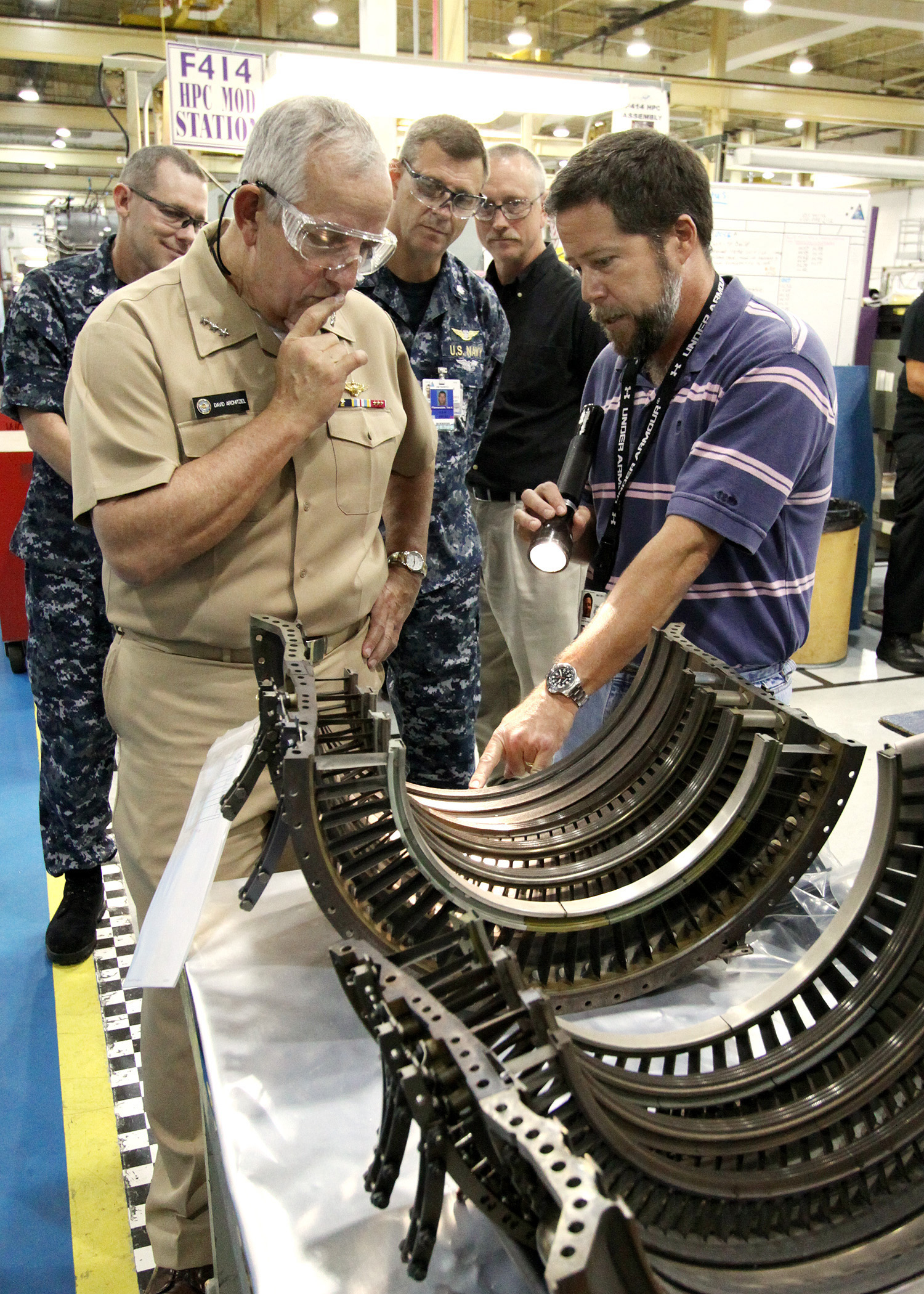
FRCSE Executive Officer Capt. Rob Caldwell (from left), Commander NAVAIR Vice Adm. David Architzel, Production Officer Cmdr. Tim Pfannenstein and Production Director Bobby Stroud listen as Fleet Support Team Engineer Martin Breen discusses an F414 HPC Module Stator Case issue impacting the readiness of the F/A-18 Super Hornet aircraft. (U.S. Navy photo by Vic Pitts/Released)
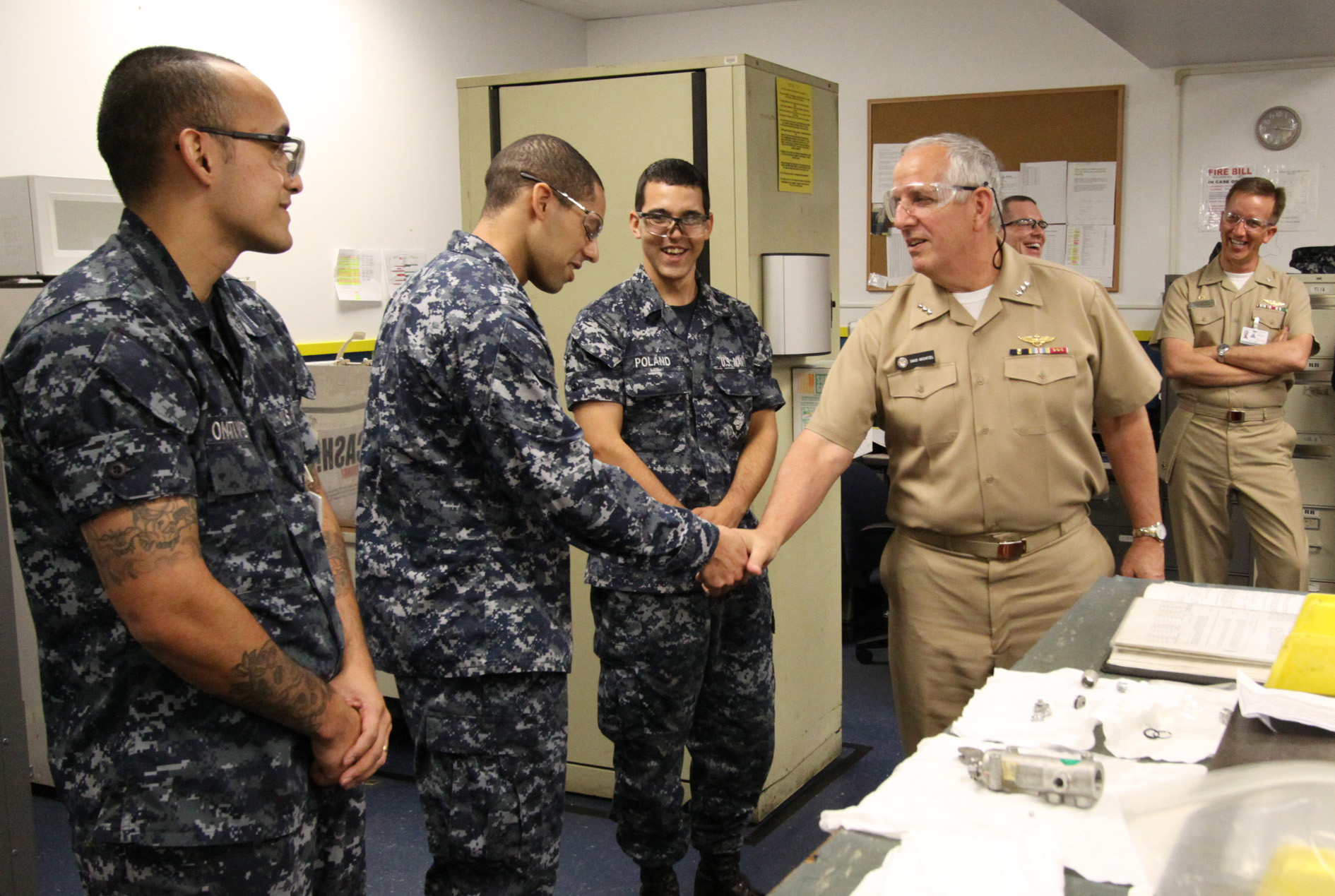
During a visit to the FRCSE Hydraulics Shop Nov. 29, Commander NAVAIR Vice Adm. David Architzel presents AM3(AW/SW) Ryan Costa (center left) with a command coin for earning his Surface Warfare rating while serving on the USS Theodore Roosevelt (CVN 71). Architzel asked Costa, AMAN Luis Ontireros (left) and AMAN Christopher Poland (center) about quality of life issues as FRCSE Commanding Officer Capt. Paul Sohl (right) looks on. (U.S. Navy photo by Vic Pitts/Released)
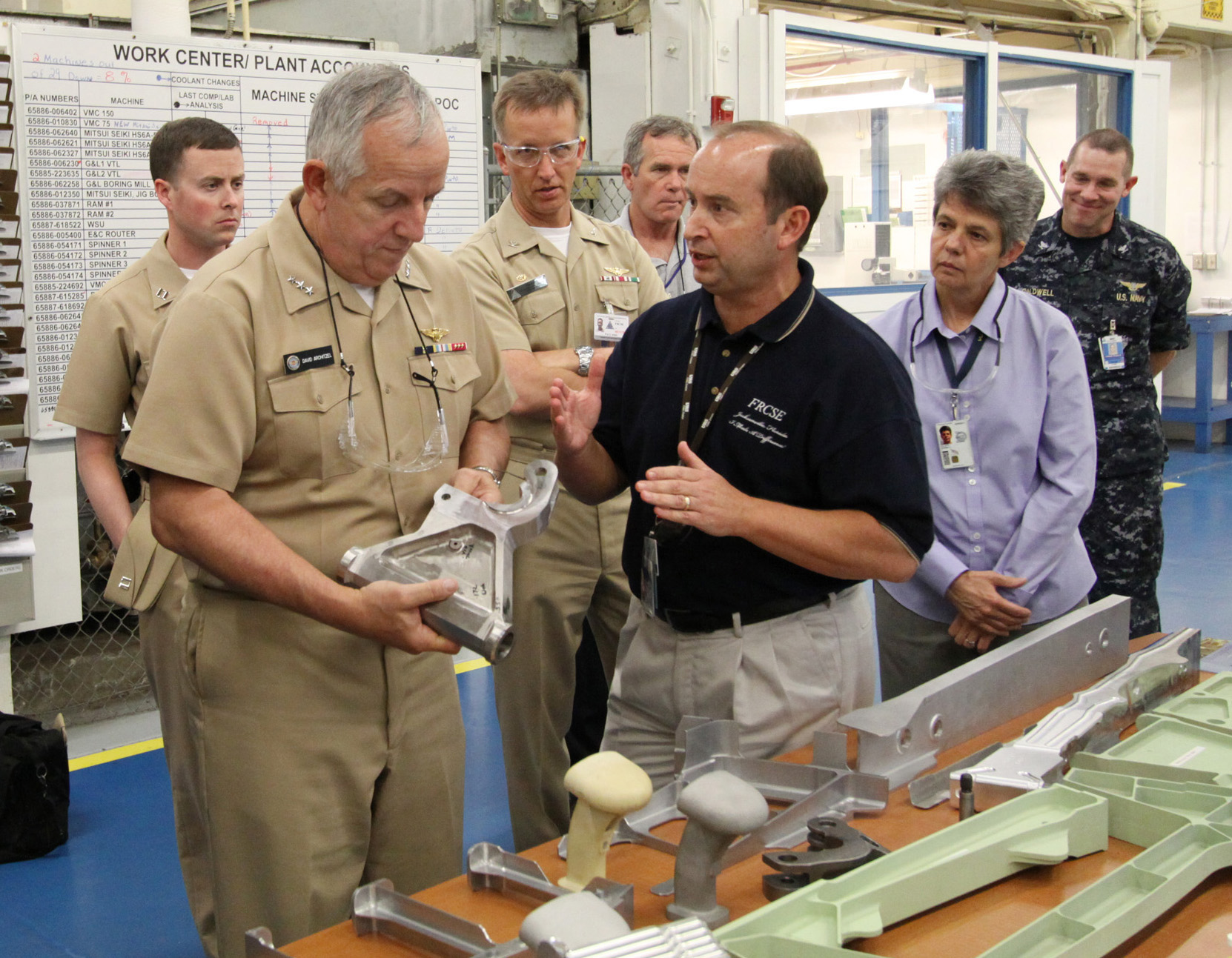
Vice Adm. David Architzel (front left) holds an F/A-18 Hornet steel engine mount made at FRCSE as Manufacturing Division Deputy Director Bruce Mobley (front right) explains how machinists are producing one-of-a-kind parts no longer available from commercial vendors to keep legacy aircraft operational as Lt. John Walsh (from rear right), Capt. Paul Sohl, Rick Delp, June Tillett and Capt. Rob Caldwell listen in. (U.S. Navy photo by Vic Pitts/Released)
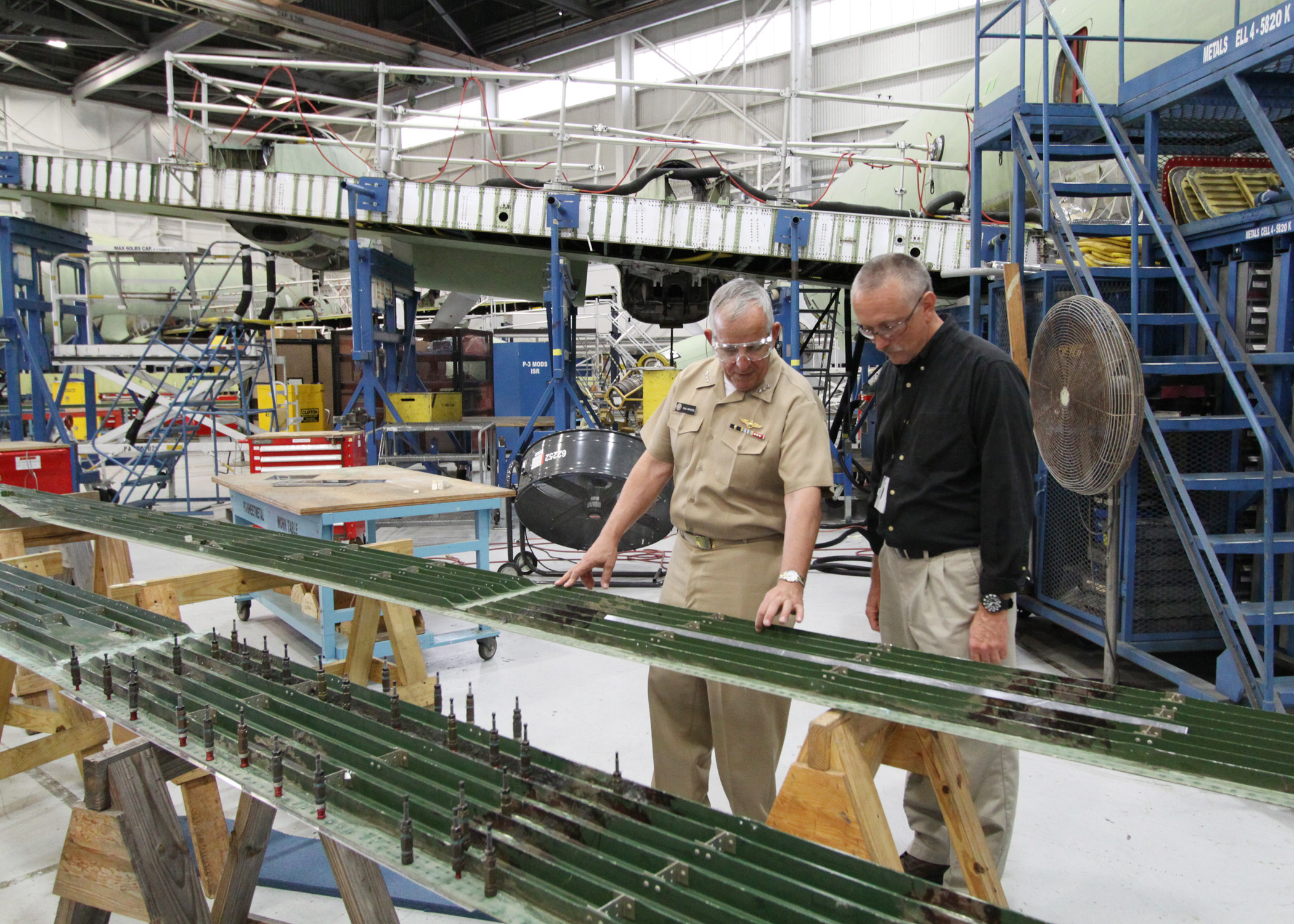
On the P-3 Orion Production Line, Vice Adm. David Architzel examines a wing plank as FRCSE Production Director Bobby Stroud discusses how artisans are repairing structural fatigue damage to the lower outer wing that affected one-quarter of the P-3C fleet. In October, the team completed repairs to 15 aircraft, a 25 percent increase over planned deliveries. (U.S. Navy photo by Vic Pitts/Released)
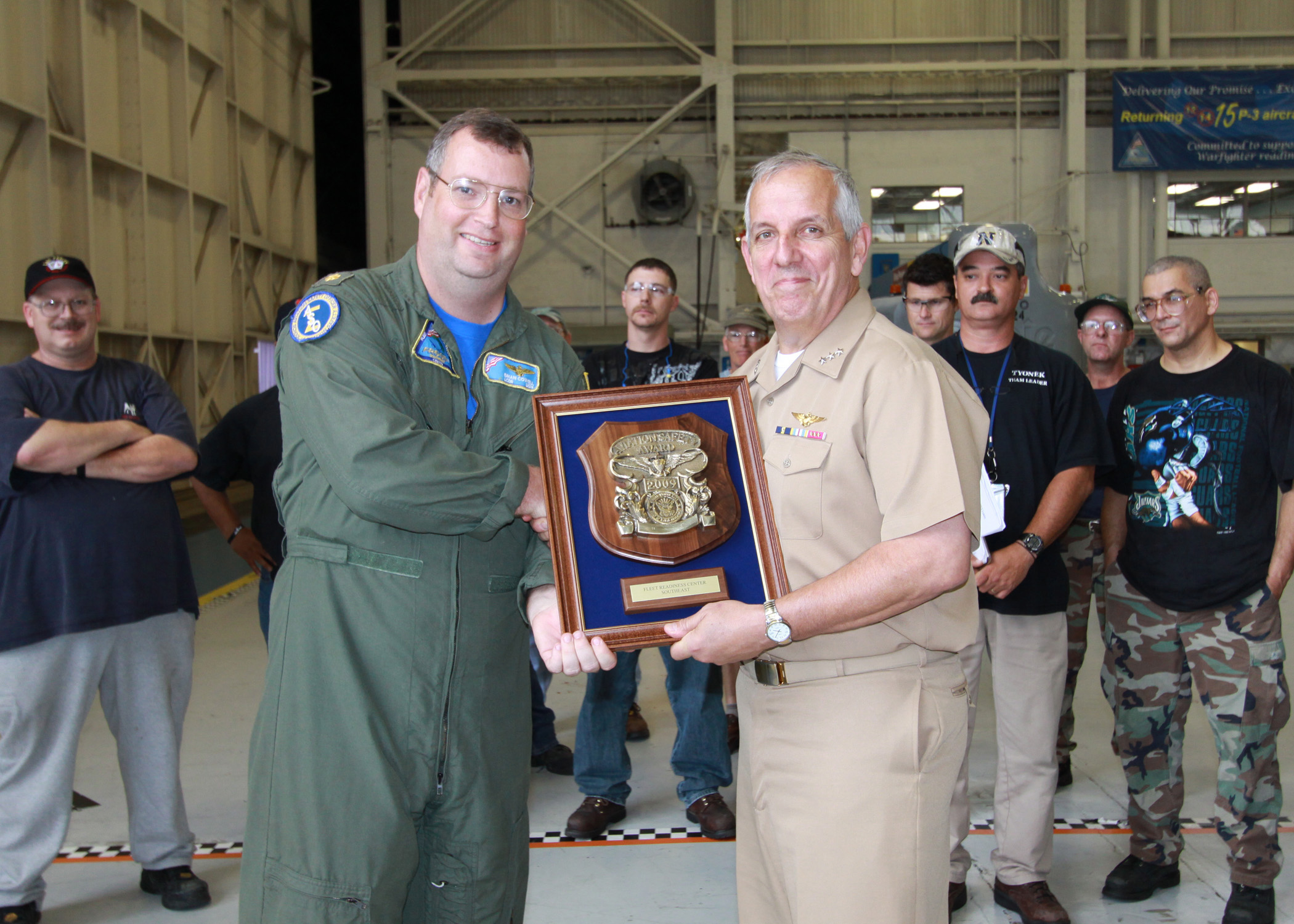
Commander NAVAIR Vice Adm. David Architzel (right) presents FRCSE Aviation Safety Officer Lt. Cmdr. Brian Cowell with the CNO 2009 Naval Aviation Safety Award during a tour of the facility Nov. 29. (U.S. Navy photo by Vic Pitts/Released)