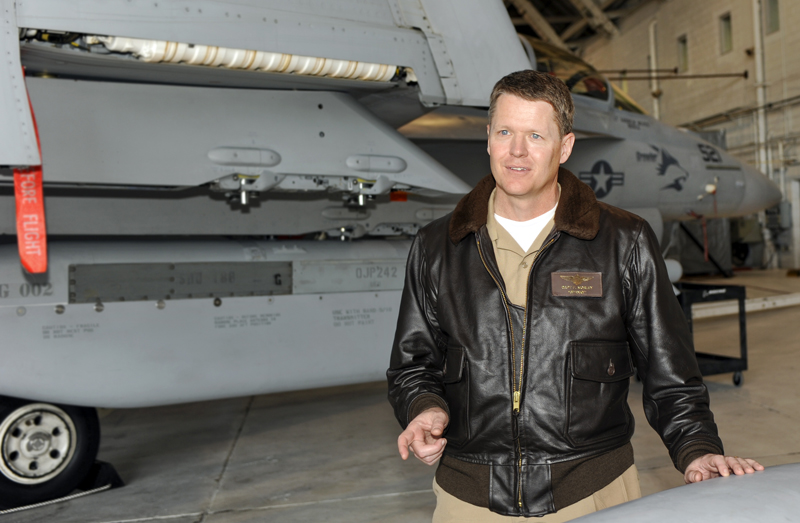
CAPT. FRANK “SPANKY” MORLEY
Program manager, F/A-18 and EA-18G Program Office (PMA-265);
BIO: Born in Miami, raised in Kansas, Missouri and Arizona; married; WORDS OF WISDOM FOR ASPIRING MAJOR PROGRAM MANAGERS: “Most of us come in to fly, then discover we have to lead. We grow to like it. At this level, it’s about solving problems. You’ve got to commit -- it’s a lot of time and effort. Great leadership support is important. My predecessor in the [F/A-18 and EA-18G Program Office] was Rear Adm. [Mark] Darrah. He took an interest in me and answered my stupid questions. It doesn’t matter how you got here; it matters how you do.” (U.S. Navy photo)
Program improves opportunities for aviation corps unrestricted line officers to gain key leadership roles in acquisition
Archived Body
NAVAL AIR SYSTEMS COMMAND, PATUXENT RIVER, Md. -- After steadily building a résumé as an accomplished naval aviator, Capt. Frank Morley reached the “what’s next?” point common to most post-command naval officers.
Then 42 years old, Morley had served the Navy for more than 20 years. He completed tours in the Western Pacific, Arabian Gulf and Mediterranean Sea, was on the forefront of several wartime missions, leading strikes on Iraq during Operation Southern Watch, flying missions over New York City immediately after the 9/11 terrorist attacks and supporting troops on the ground in Afghanistan and Iraq during operations Enduring Freedom and Iraqi Freedom.
Ashore, Morley did stints at Naval Air Station Patuxent River, Md., where he graduated from the Navy’s Test Pilot School and was later selected to be one of the three original pilots for the beginning of the F/A-18E/F Super Hornet Engineering and Manufacturing Development flight test program. He would later execute the first-ever Super Hornet shipboard landing in January 1997 as part of initial sea trials.
Along the way, Morley earned a Master of Science degree in aviation systems, graduated from the Air Command and Staff College and Joint Forces Staff College as well as served a tour as a squadron commander. Brought back in 2007 to support the EA-18G Growler development program, he was drawn to the myriad challenges, disciplines and leadership opportunities within the Navy’s development and acquisition community.
Morley’s challenge, and that of many other acquisition-experienced fleet commanding officers, was determining the path that would lead to selection as a major program manager, those professionals overseeing military acquisition programs with annual procurement budgets of more than $4 billion in some cases. That professional path was not clear, given the significant operational, yet limited acquisition-career experiences he had gained.
To be eligible for the major program manager selection board, applicants are required to have a minimum of 96 months of acquisition experience with 24 months working in a naval-aviation program office, have completed specific education and military schools as well as attained Defense Acquisition Workforce Improvement Act, or DAWIA, certifications. The DAWIA certification ensures an employee meets the education, training and experience standards required for careers in acquisition, technology and logistics.
BEHIND THE POWER CURVE
Morley was behind the curve, but his plight was common among the community of Unrestricted Line, or URL, officers qualified to become major program managers in naval-aviation acquisition. Authorized to command ships and aviation squadrons, URL officers primarily include personnel from the Surface Warfare, Submarine Warfare and Aviation communities. Compared with their brethren in the restricted line officer ranks, URL officers overseeing major acquisition programs have been historically outnumbered, particularly by those in the Aerospace Engineering Duty Officer (AEDO) billets, Navy officials said.
Naval aviation acquisition program managers are typically drawn from three distinct communities: Aerospace Engineering Duty Officers, or AEDOs; Aerospace Maintenance Duty Officers, or AMDOs; and Aviation Acquisition Corps URLs.
There are currently 320 AEDOs in the Navy, with 22 filling major program manager roles, said Lt. Cmdr. Holly Shoger, the AEDO community manager. In the Aviation Acquisition Corps URL officer world, there are 245 professionals, with seven in major program manager slots. Unlike URL officers, restricted line communities have developed a strong acquisition-career path, which has yielded highly experienced and qualified acquisition professionals, Navy documents show.
So, three years ago, senior Navy leaders acknowledged the disproportionate number of aviation URL officers who held positions as major program managers in the naval aviation acquisition community and launched an initiative in May 2009 to improve their opportunities. Known as the Aviation Acquisition Corps Unrestricted Line Officer Major Program Manager Career Track, the initiative’s selection board picks three to four URL officers from about 20 applicants twice a year. The deadline for the next application is Oct. 9, 2012.
In July 2011, Morley became the first URL officer from the program selected as a major program manager, overseeing the F/A-18 and EA-18G Program (PMA-265) at Naval Air Station Patuxent River, Md. This command screen selection provided Morley with a four-year major command tour and the opportunity to continue to serve and fill a critical leadership role within naval aviation. As of Sept. 1, three more URL officers have been selected for Major Acquisition Command (0-6/captain).
Organized under the Program Executive Office for Tactical Aircraft (PEO(T)) based at NAS Patuxent River, PMA-265 is responsible for the acquisition and total life-cycle support of more than 1,500 F/A-18 Hornet, F/A-18 Super Hornet and EA-18G Growler aircraft. The organization is supported by an annual budget of approximately $4.5 billion and manages 33 projects of varying size and complexity with nearly 3,000 government, military and contractor professionals. With seven international customers, PMA-265 also oversees the life-cycle management support of the foreign military sales aircraft sold to Australia, Canada, Switzerland, Finland, Spain, Kuwait and Malaysia.
“The initial formulation of the [URL pipeline] program is one thing that attracted me back into this business, post-command,” Morley said. “When it was finally implemented a couple of years later, I was relieved, as the timing allowed me an opportunity to compete. The majority of my life has been with the F/A-18. Being able to make a difference in naval aviation in the Hornet and Growler communities is extremely rewarding.”
BRAVO ZULU
One of the program’s earliest supporters was Vice Adm. W. Mark Skinner, the principal military deputy to the assistant Secretary of the Navy (research, development and acquisition), who has deep roots in the acquisition community and came from the URL acquisition professional officer ranks. As a junior flag officer, Skinner managed PEO(T), commanded Naval Air Warfare Center Weapons Division and served as assistant commander, Test and Evaluation, Naval Air Systems Command at NAS Patuxent River.
“Frank has done a great job with the Hornet program, which is one of the flagship programs down at Patuxent River,” Skinner said. “He brought in a unique blend of aviation and acquisition experience. … We need officers running major programs who have recent fleet experience, who can bring that kind of experience to the acquisition process, so the products they’re producing for our warfighter are relevant. Not every program manager has to be a URL acquisition professional, but we need that flavor -- those skills are just critical.
“There are two types of skills we seek,” Skinner continued. “The aviation engineering duty officer skill-set, an in-depth engineering skill-set with a little bit of fleet experience. Then we have our URL acquisition professionals [APs], who have less of an engineering skill-set, but much more fleet experience. That mix of URL APs and AEDOs has served us well over time.”
In the middle of this past decade, however, “the AEDO community was in ascension because the URL APs were simply not qualified,” Skinner said. “So, I and a cadre of 0-6s got together and said ‘What can we do about this? It’s untenable.’ We went back and did a couple of things -- it was a two-phase process.”
First, Navy leaders created an Aviation URL Acquisition Professional career track.
“We determined that if we could get an O-5 out of commander command, who had four years of acquisition experience, whom we could give four additional years of acquisition experience and, as a minimum, two years in a program office, by the 22-year mark in an officer’s career -- give or take a couple of years -- we would pick them for a major command,” Skinner said. “The issue we had to deal with was how to keep them in acquisition jobs.”
CRAMMING A LOT INTO 22 YEARS
The program has essentially created a way for unrestricted-line acquisition professionals with 22 years in their careers to acquire the skills they need to compete for major program manager.
“Twenty-two years of an officer’s career is a long, long time,” Skinner said. “But in order to do all the things an officer has to do -- to be a captain, an 0-6, with eight years of acquisition experience, with two years in a program office and all the qualifications at the 22-year mark, it’s not a lot of time. We ask a lot of these officers to cram a lot of things in 22 years just to be in position, so that we can put them up on a selection board.
“The problem was they were never getting to meet the board because they never had the qualifications,” he continued. “Once they got to the board, they competed very well.”
EARLY BAPTISM
Navy leaders also hope to use the new URL officer pipeline program to expose naval officers to the acquisition environment earlier in their careers.
Assistant Secretary of the Navy for Research, Development and Acquisition Sean Stackley believes acquisition is part of your DNA, Skinner said. “He really advocated giving selected URL APs the opportunity to go to acquisition tours earlier in their careers--when they were lieutenants, for example.”
That time, Skinner said, would count toward the required 96 months of acquisition experience and expose junior officers to acquisition.
Navy leaders also identified a dozen billets for 0-4 and 0-5 level acquisition jobs where they would send URL APs to gain experience.
“They’re career-enhancing opportunities, but they also give those officers exposure to acquisition,” he said. “Over time, we’ll have people who’ll show up out of their command or commander tours with not just four years of acquisition experience, but five or six. Ultimately, we’ll get better experienced officers, and acquisition will get better experienced officers.”
As for the future, Skinner said he believes the Navy has achieved the right mix and balance of aviation-acquisition major program managers.
“It will probably be another decade before we accrue the benefit from them,” the admiral said, “but in this business, we count on that kind of long-term investment. We’re going to be buying aviation systems and submarine systems and surface systems in the Navy for a long time to come, so we can afford to invest in a junior officer.”
BALANCING THE STOOL
Program managers in the naval-aviation acquisition career field form a “three-legged stool,” which includes civilian, professional engineers as well as military restricted and unrestricted line officers, explained Capt. Patrick Herring, the outgoing community manager for Aviation Acquisition Corps URL officers.
“With fewer numbers of URL officers in the major program manager naval-aviation acquisition community, the three-legged stool was unbalanced,” Herring said. “This [program] will encourage those who were frustrated about progression to extend their careers.”
For Morley, the Navy’s investment appears to have paid off. One year later, the captain has settled into his new major program manager role and is learning to navigate the acquisition world as adeptly as he did the F/A-18 cockpit.
“I’ve felt myself grow in this job,” Morley said. “It’s great to be part of a first construct. Like a pilot, the more flight time you have, the more the hair stands up on your neck when something goes wrong. We all need time to gain innate instincts.”
And Morley is even working on his “what’s next?”
“As a senior URL,” he said, “I have a duty and responsibility for encouraging and training the next generation, just as my predecessors did for me.”
Watch a video about the Aviation Acquisition Corps Unrestricted Line Officer Major Program Manager Career Track:
HOW TO PREPARE FOR THE SELECTION BOARD
The next selection board for the Aviation Acquisition Corps Unrestricted Line Major Program Manager Career Track will meet Nov. 8, 2012. Signed applications must be submitted to the board no later than Oct. 9, 2012. Neither endorsements nor recommendations will be accepted.
Application forms and additional selection board information are available at www.navair.navy.mil. Under the “careers” tab, select “acquisition selection boards.”
E-mailed pdf submissions are preferred, though applications also will be accepted via standard mail and fax. Signed scanned applications should be submitted via e-mail per the instructions posted on the NAVAIR Web site. If using standard mail, send to: Commander, Naval Air Systems Command (AIR-7.3.6), FY-12-1 Aviation AC URL MPM Eligible Selection Board, 22095 Fortin Circle, Bldg. 1489, Room 206, Patuxent River, MD 20670-1549. Submissions may be faxed to (301) 757-1526; DSN 757-1526.
For more information, call the Aviation Corps Unrestricted Line Major Program Manager Eligible Selection Board point of contact at 301-757-6203; DSN 757-6203.
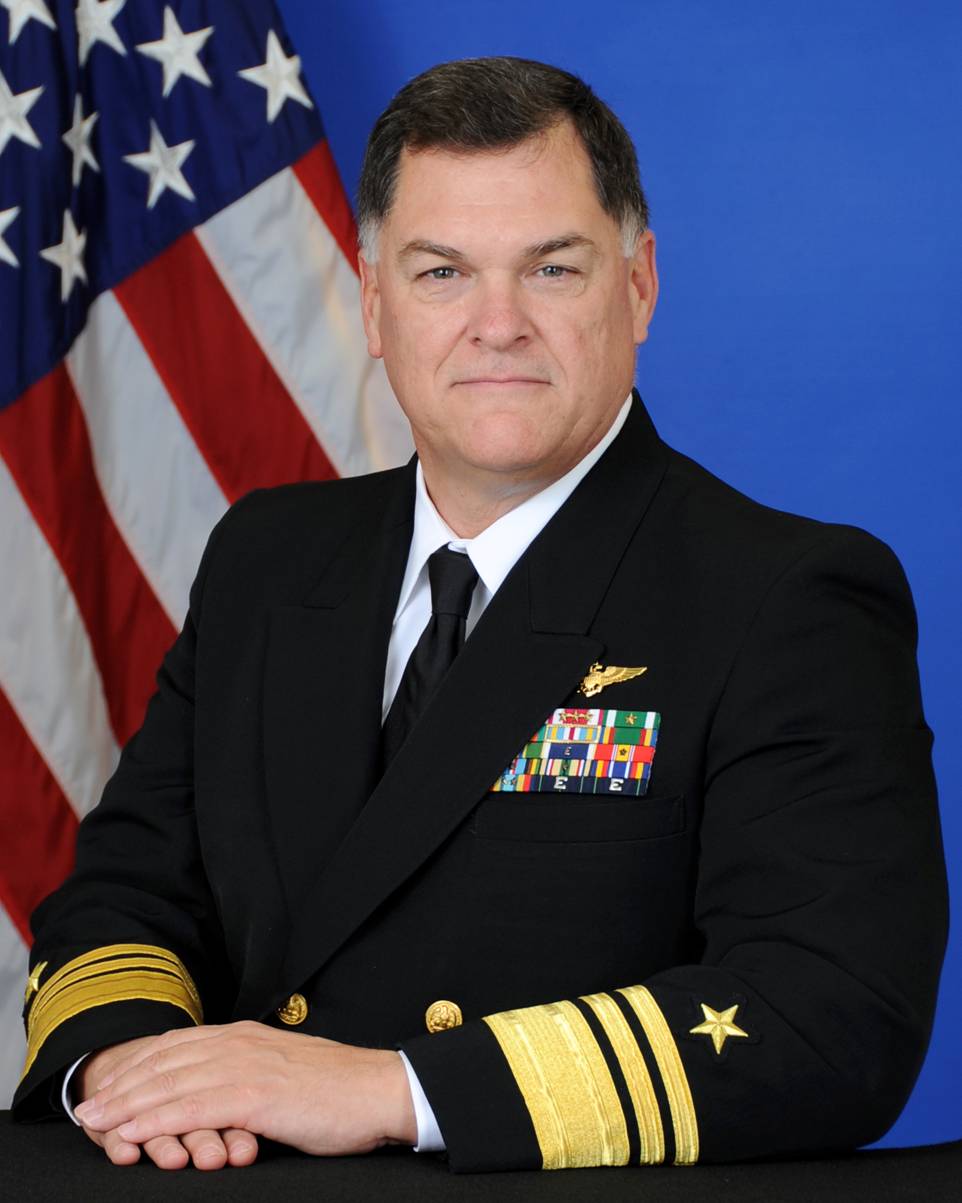
Principal Military Deputy to the Assistant Secretary of the Navy (Research, Development and Acquisition) Vice Adm. W. Mark Skinner is one of the architects of the Aviation Acquisition Corps Unrestricted Line Officer Major Program Manager Career Track. Three years ago, senior Navy leaders acknowledged the disproportionate number of Aviation Unrestricted Line Officers who held positions as major program managers in the naval aviation acquisition community and launched an initiative to improve their opportunities. (U.S. Navy photo)