NAVAIR Vice Commander, Rear Adm. Bert Johnston, to Retire in April
Submitted by NAVAIR Public Affairs Office
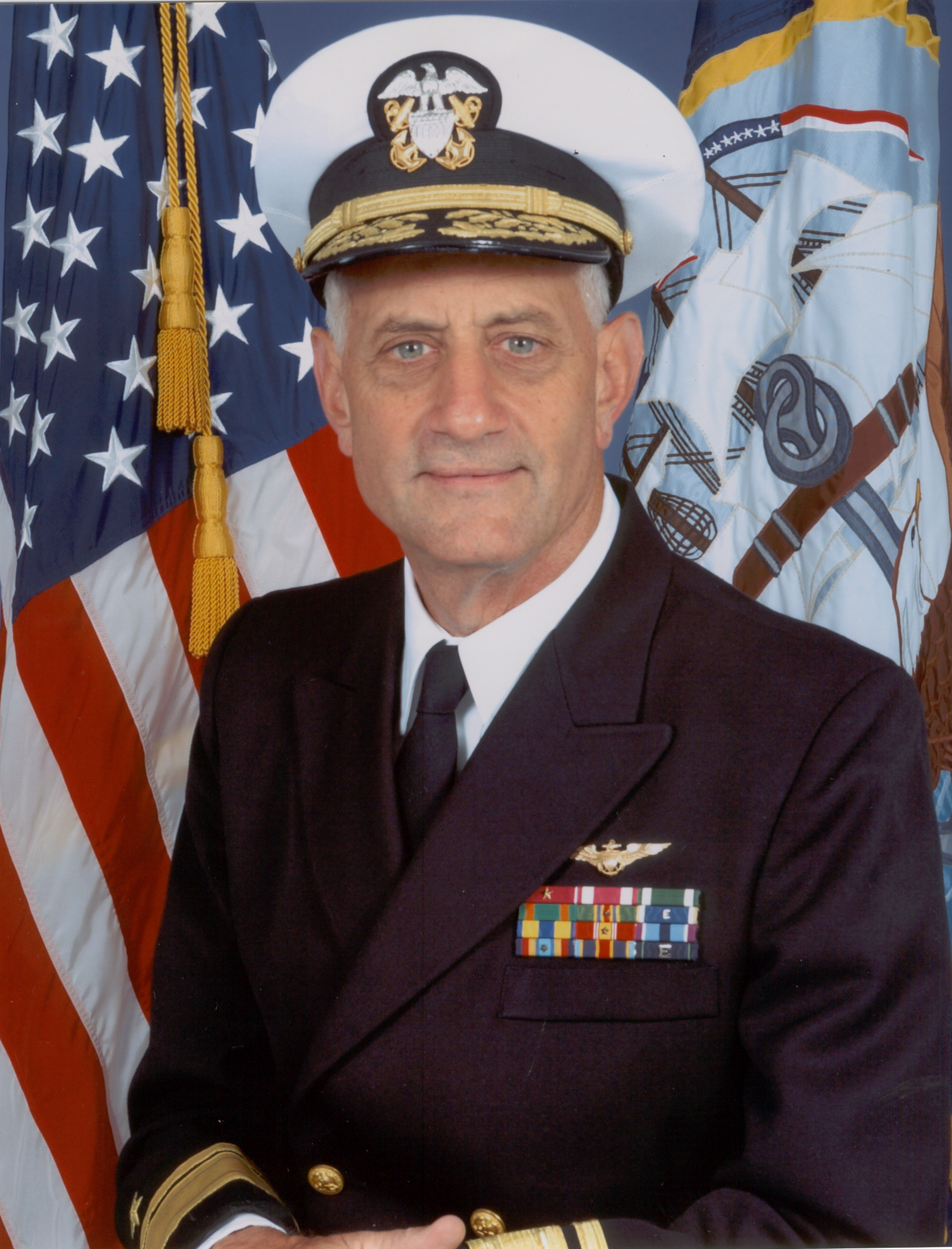
With 32 years of service behind him (20 of those with NAVAIR), Rear Adm. Bert Johnston, NAVAIR’s Vice Commander, is looking ahead to the new opportunities his retirement in April will bring.
Rear Adm. Mike Bachmann, formerly co-commander of AIR-3.0 and AIR-6.0 with Rear Adm. Pete Williams, took over as the new Vice Commander on March 8 while Johnston represents NAVAIR in Australia at the Australian International Air Show.
As Vice Commander for NAVAIR from January 2002 through April 2005 (his longest assignment in the Navy), Johnston was in charge of the day-to-day operations of the organization.
“It is an interesting job,” he said, “and it has been very rewarding.” Johnston was also NAVAIR’s acting Commander from June 2002 when Vice Admiral Joe Dyer retired, until December 2003 when Vice Admiral Wally Massenburg took over the position.
“I’m pleased with where NAVAIR is headed,” Johnston said. “(VADM) Massenburg’s direction and new vision of cost-wise readiness and dominant maritime combat power has put into action what many of us have felt.”
“Looking back,” he added, “I have to thank previous leaders for the organizational structure, the CAO-IPT structure that was so right, enabling NAVAIR to support the warfighter.”
Johnston entered the Navy through the Aviation Officer Candidate Program and was commissioned in October 1973. He has master’s degrees in aeronautical systems from the University of West Florida and in aeronautical engineering (avionics) from the Naval Postgraduate School, and is a graduate of the U.S. Naval Test Pilot School.
“I’ve been a part of NAVAIR for 20 years,” Johnston said. “In June of 1985 I checked in as a test pilot under instruction . . . and I haven’t left since.”
“I never planned to stay in the military; I just never got out,” Johnston said. “I was first attracted to the glamour and the excitement of being a jet pilot. Now, I have great respect for the Navy and a much better appreciation for the hard work and dedication that it takes to wear a uniform and serve our country.”
When asked what he would miss most about his job, Johnston’s immediate response was, “The people – I’ve got a lot of good friends here.”
Johnston elaborated, “I’m pleased to have worked with so many warfare professionals – selfless servants of our nation who may not always agree with our answers. In the end, though, we all agreed with the focus on the warfighter and that our Navy must support our nation and our President.”
Johnston said he has been very impressed with the young people joining the organization. “I’m so pleased with the quality of people we have at NAVAIR,” he said, “and the enthusiasm and skills they bring with them.”
After some quick calculations, Johnston came up with a startling detail about NAVAIR’s workforce of 27,000 people. He believes the average experience of the workforce gained daily outweighs the loss of experience with retirees.
“Nearly four 30-year veterans can retire every day to be replaced by new hires,” Johnston said, “and the average experience of the workforce would never change.”
In other words, Johnston said, our organization will stay strong.
“The people who have come in (to NAVAIR) have risen to the occasion,” he said. “Kids coming out of college today are learning from us and carrying on the tradition.”
Johnston believes NAVAIR is well suited to face the challenges ahead, especially those that come from smaller battlefields.
“Who better than NAVAIR to understand the integrations, development, acquisition and ongoing support for complex systems?” he asked. “There will be plenty of work as we migrate our responsibilities from platforms, weapons and sensors to more focus on the whole battlespace and how systems work together.”
One of Johnston’s favorite quotes comes from former NAVAIR Commander VADM Joe Dyer, who said, “In peacetime our nation expects us to be more efficient, and in wartime our nation expects us to be more effective – but I’ll be darned if I’ve ever seen them expect both at the same time.”
According to Johnston, “We could look at that challenge of being both efficient and effective at the same time and wonder and worry about how to do it,” he said. “Or, we can do what I’ve chosen to do – take it as a great compliment and vote of confidence from the American people – and I believe we will succeed.”