First Super Hornets converting for electronic battle
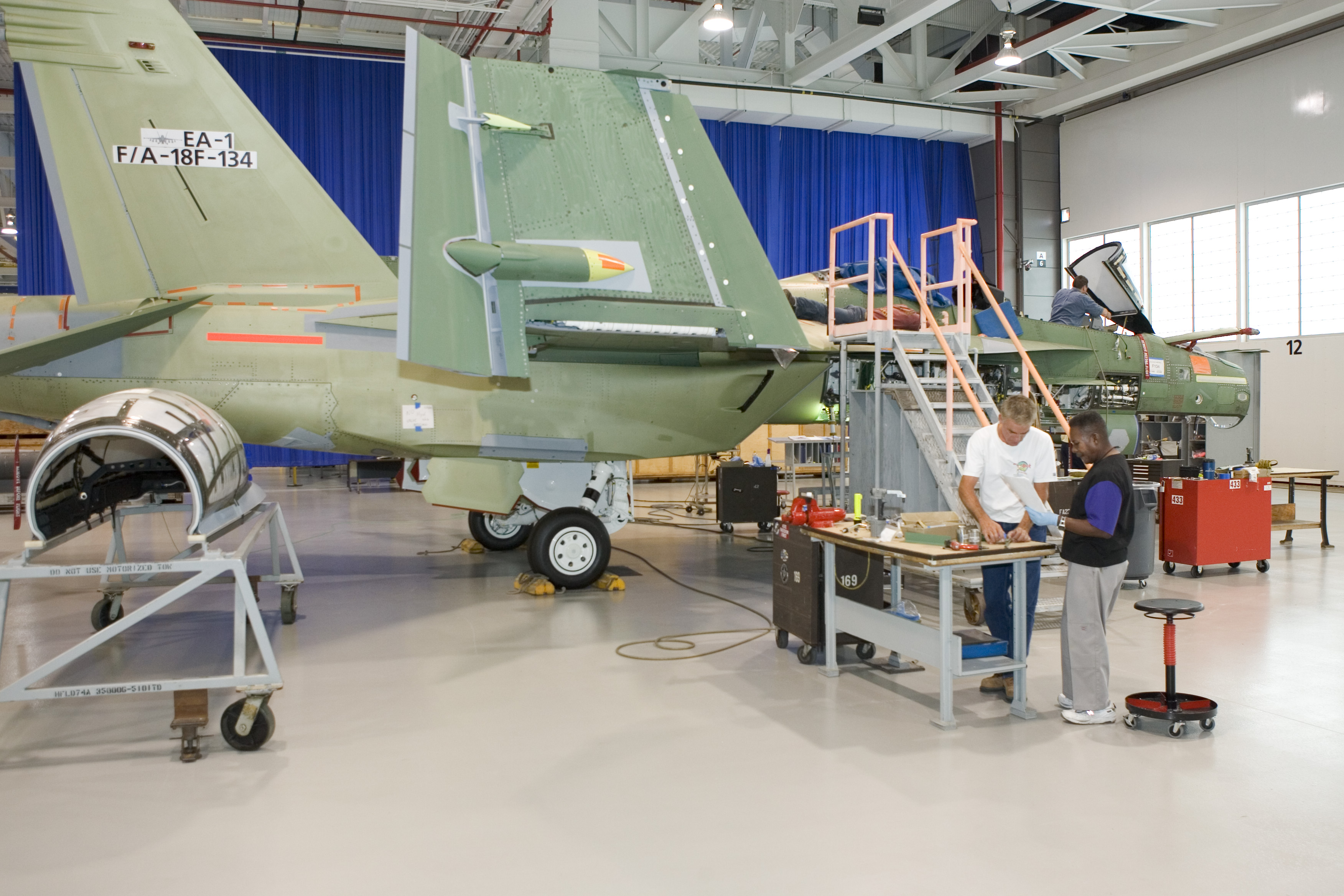
Two F/A-18F Super Hornets were recently rolled unfinished from Boeing’s St. Louis, Mo., assembly line into a separate hangar for conversion into the Navy’s two planned EA-18G developmental test aircraft.
The EA-18G is designed to be the Navy’s next generation electronic attack aircraft to replace the fleet’s current carrier-based EA-6B Prowler.
The Super Hornets’ conversion follows the successful completion of a weapon system critical design review in April, which established engineering guidelines for the aircraft. Representatives of the U.S. Navy met with the Boeing-Northrop Grumman industry team to review the detailed design and development schedule and assess program risks.
Starting with an F/A-18F Block II aircraft, the developmental test aircraft will be fitted with the Prowler’s latest electronic attack equipment, including the ALQ-218(v)2 tactical receiver, communications countermeasures set, interference cancellation, ALQ-99 tactical jamming system pods and the multi-mission advanced tactical terminal (MATT).
The program selected the F/A-18F airframe so that the electronic aircraft would have the same speed and mobility to fly, and engage, with its Super Hornet cousins.
The two developmental test aircraft – to be called EA-1 and EA-2 – are scheduled to begin flight-testing in September and November 2006, respectively. The first EA-18G squadron is scheduled to take to the air in fiscal year 2009.
“The review, like the [preliminary design review], was comprehensive, professional and successful … For an aircraft electronic warfare program the [review] was very mature,” said RDML Jeffrey Wieringa, assistant commander for research and engineering, Naval Air Systems Command (NAVAIR).
In total, the program has successfully completed 13 critical design reviews since November 2004. The recent review finished on schedule six months after developers completed a preliminary design review.
“This [critical design review], combined with the beginning of modifications for our flight test aircraft, represent two outstanding achievements that put a bookend on the early phase of the development of the EA-18G,” said Bob Feldmann, Boeing’s program manager for the aircraft.
The Super Hornets were pulled from Boeing’s production line prior to completing final assembly to improve access to internal components necessary for conversion, and will return to the production line for completion after the electronic systems are installed. This mid-assembly production strategy is projected to save the Navy over $5 million.