FRCSE Delivers First Red-Striped P-3 Back to the Fleet
FRCSE Delivers First Red-Striped P-3 Back to the Fleet
Judy Hartman Alexander
Fleet Readiness Center Southeast (FRCSE) completed repairs on the first Red-striped P-3C and delivered the aircraft to its squadron in Brunswick, Maine. The term “Red-stripe” comes from the diagonal red stripe on the Airworthiness Bulletin that grounded 39 P-3C aircraft in December 2007 for structural fatigue concerns on a portion of the lower outer wing, called Zone 5. These 39 aircraft comprise approximately one quarter of the P-3C fleet, many of which have been flying for more than 25 years. The P-3 groundings were not the result of an aircraft incident, rather the result of ongoing analysis obtained through the structural engineering focused P-3C Fatigue Life Management Program (FLMP). This program monitors the fatigue status, flight hour usage, and operational profiles on aircraft. In materials science, fatigue is the progressive and localized structural damage that occurs when a material is repeatedly stressed. FRCSE is leading the way in repairing these aircraft and returning them to the Fleet. The Zone 5 repair consists of replacing five of the nine lower wing planks and the aft lower wing spar.
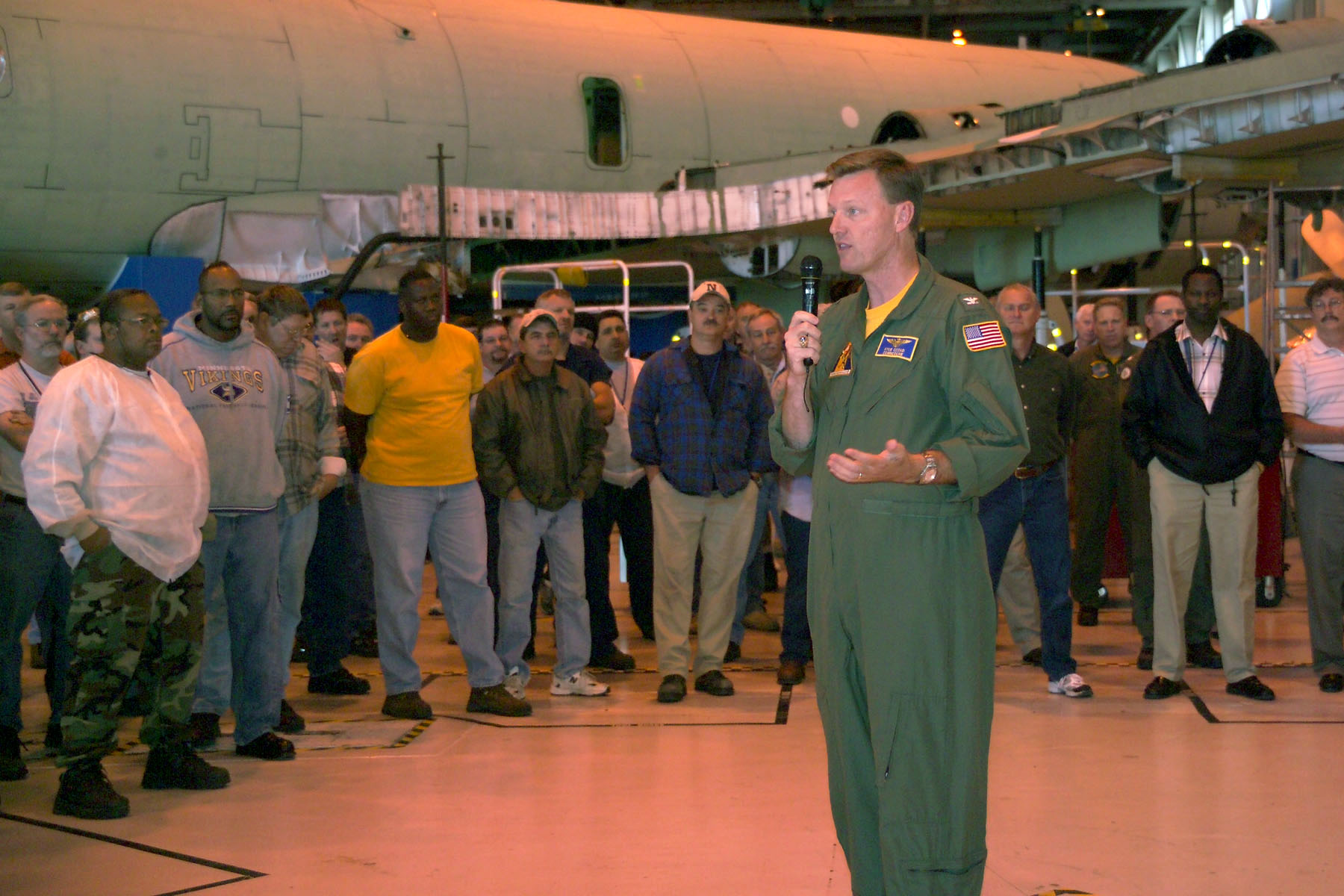
Commodore Kyle Cozad, Commander, Patrol and Reconnaissance Wing Eleven (CPRW-11) recently addressed the artisans who repair the P-3 at FRCSE. He thanked them for their support of the Warfighter, and reinforced the importance of their contributions. “The repair of these aircraft means that we return aircraft to our flight line which provides combat readiness and trained crews to the combatant commanders in theater. That mission begins here at FRCSE, so we want to say thanks for all you do. When the Zone 5 repairs are completed at FRCSE, it provides an additional 5,000 flight hours for the aircraft, extending the service life by eight to 10 years.”
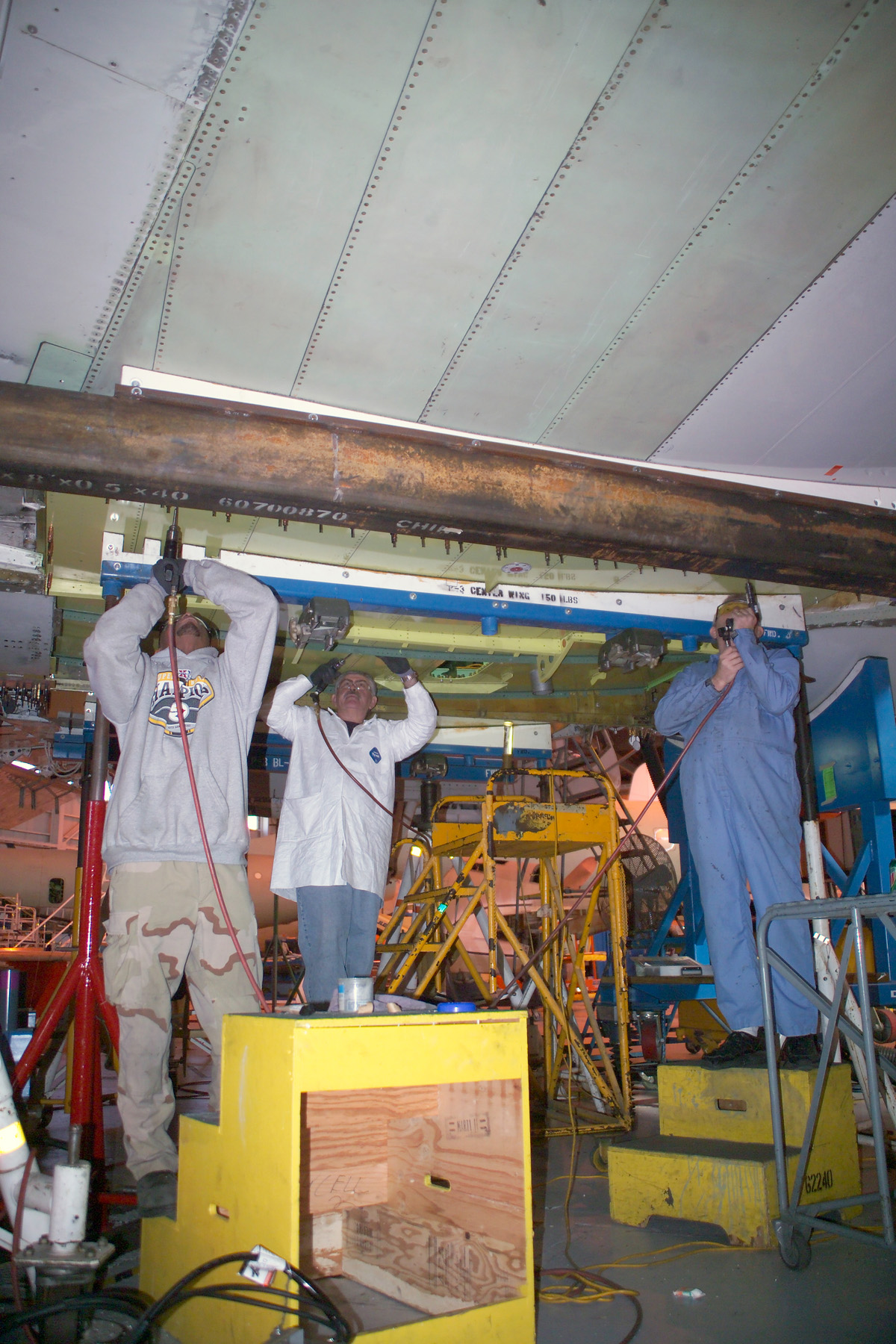
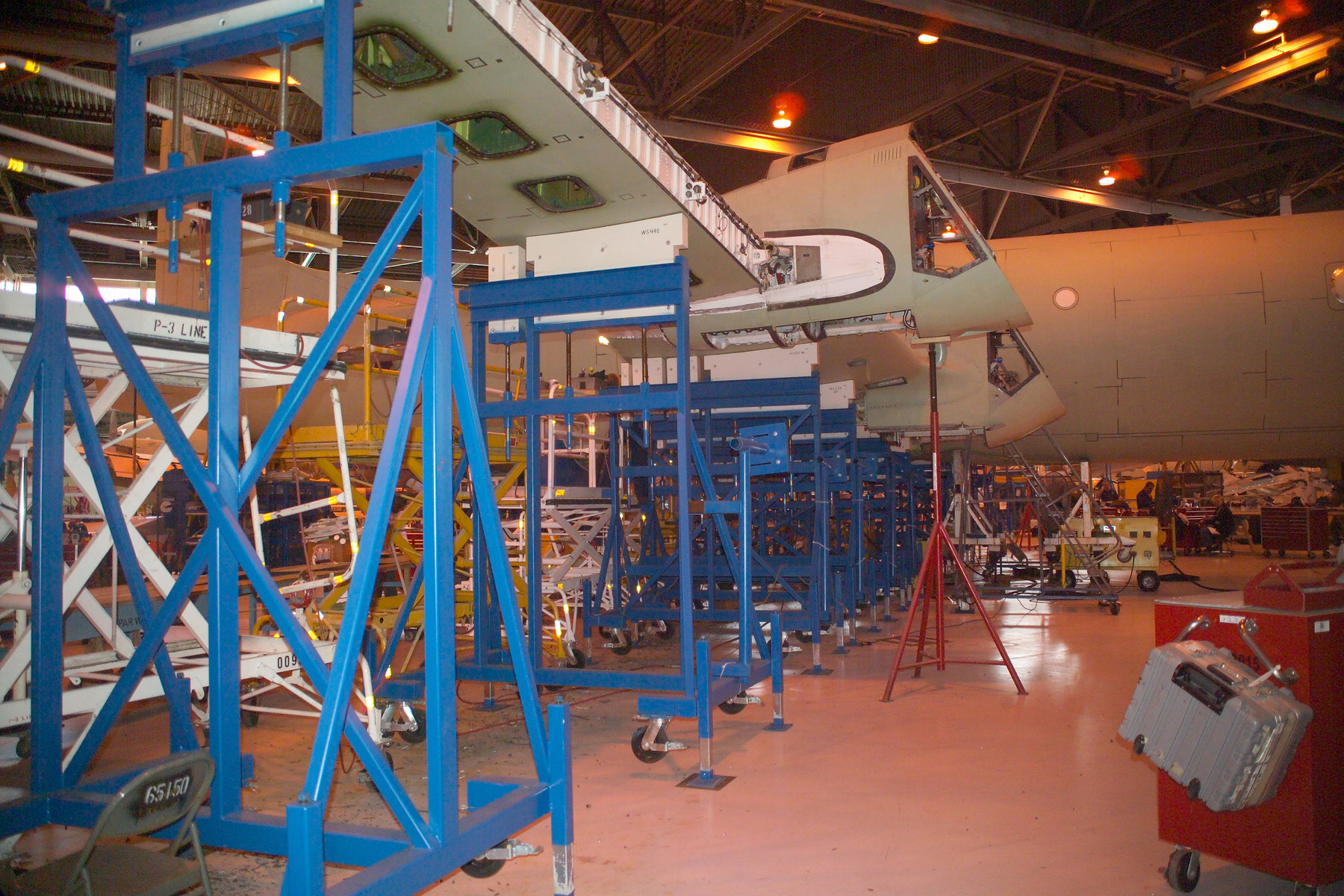
The Zone 5 repairs are very extensive, requiring 21,000 man-hours of work and 6,000 holes drilled for rivets. All this work is accomplished while the wing is attached to the aircraft. The extensiveness of the repair process presents another issue: stabilization and alignment of the work surfaces. The wingspan on a P-3 is more than one hundred feet long. Special blue shoring was developed to support the wing during the repairs and to prevent it from bending and twisting. The normal Phased Depot Maintenance (PDM) repair process is not as extensive, so the special shoring was previously not required. Greg Wallace, P-3 General Foreman, explains the importance of the special shoring. “The blue shoring was actually needed for the alignment issues that we had with the wings. We had to come up with a way to ensure the wing did not move while it was in work. The shoring locks down the wing and keeps it within prescribed alignment specifications.”
FRCSE began working on the first two Zone 5 aircraft in January 2008, overcoming many obstacles in the process. P-3 Product Officer Lt. Cmdr. Katy Baldwin praised the coordinated effort from many groups. “This effort would not be possible without the highly skilled and innovative talents of our artisans, engineers, and support personnel.” The staff developed new repair procedures using AIRSpeed (Lean) methodologies, to replace the affected material, and even manufactured parts that were not available from vendors. FRCSE currently has nine Zone 5 aircraft in work, and eight inductions expected next year.
The P-3 was originally designed as an Anti-Submarine Warfare platform, but in the post-Cold War era the mission was expanded to include overland intelligence, surveillance and reconnaissance. Whether the P-3 is flying in Iraq, Afghanistan, Africa, or as a first responder following natural disasters in Galveston or New Orleans, the mission must be completed with fewer aircraft available. Thanks to the artisans at FRCSE, more P-3s will be returning to the Fleet.
For more information, contact Terresa White, FRCSE Public Affairs Officer at (904) 542-4429 x 161 or electronically at [email protected].
Captions:
Photo One - Commodore
Commodore Kyle Cozad, Commander, Patrol and Reconnaissance Wing Eleven (CPRW-11) (r) spoke with the P-3 artisans and thanked them for their dedication, quality maintenance, and superior craftsmanship of the Zone 5 wing repair of a P-3.
Photo Two – Zone 5 Repair.
From left, Eddie Marbury, Leo Shvets, and John Stieb perform Zone 5 repairs on a P-3.
Photo Three – Blue Forest
During the Phased Depot Maintenance repair process, the P-3 wing does not need a support fixture, but during the extensive Zone 5 repairs six shoring fixtures, known as the Blue Forest, support each wing and prevent the wing from bending and twisting.
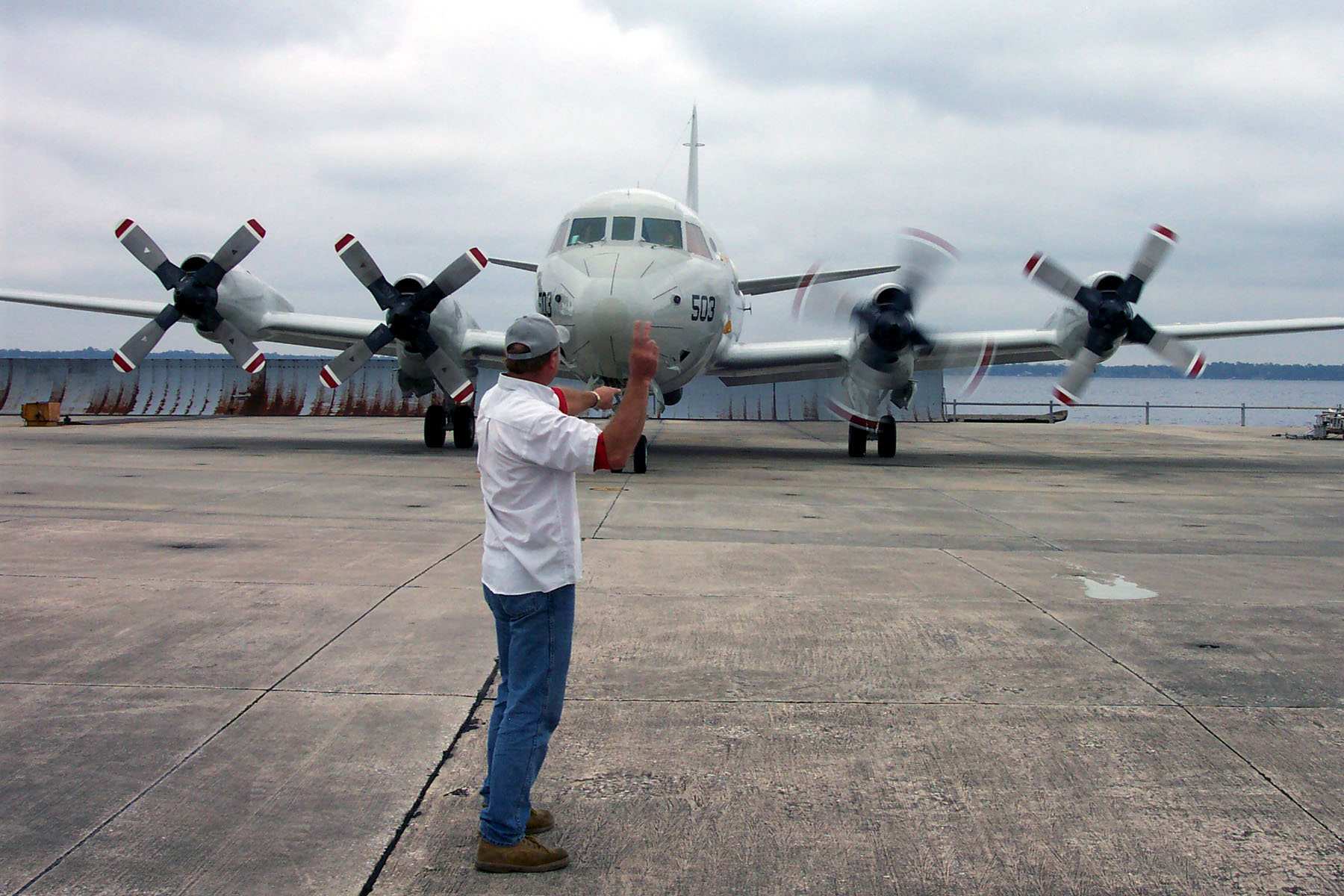
Photo Four – Plane Captain
Plane captain Robert Johnson signals the pilot to start engines of the first FRCSE repaired Red-striped P-3C returning to the Fleet.
– USN –