
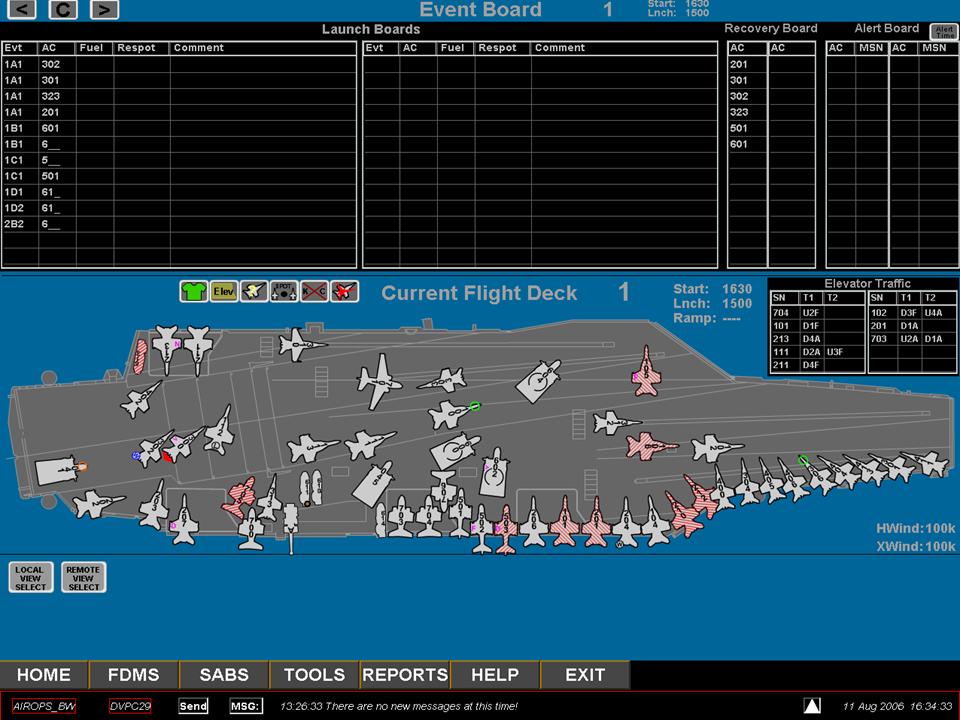
ADMACS giving Sailors a Next Generation Edge
NAVAL AIR SYSTEMS COMMAND, PATUXENT RIVER, Md. -- Engineers at Naval Air Engineering Station Lakehurst, N.J., are designing a new way for carrier Sailors to track aircraft, gather unique data and put the old “Ouija board” back into its box.
The Ouija board is the informal term Sailors have given the tabletop replica scale model of the aircraft carriers’ flight and hangar decks. This scale model is utilized by launch and recovery officers to track and monitor all aircraft on the carrier. Information on deck aircraft, such as the type of weapons loaded and their fuel tank levels, are documented on deck and hand-carried to board operators where the information is written and displayed on see-through grease boards.
The Aviation Data Management and Control System is a tactical, real-time data management system, which gathers and shares information between the shipboard teams who manage the aircraft launch and recovery operations on all multi-purpose naval carrier vessels and nuclear carrier vessels.
Although the Ouija board has served the Navy since its inception during World War II, ADMACS will reduce this labor intensive method, allowing Sailors to focus on other carrier duties, while providing a paperless, electronic repository of aircraft data.
“ADMACS delivers cutting-edge technology to today’s tech-savvy Sailor,” said Capt. Randy Mahr, NAVAIR’s Aircraft Launch and Recovery Equipment (PMA-251) program manager at NAS Patuxent River. “ADMACS puts the information in the hands of those who have an instant and critical need for it.”
The system communicates aviation and command-related data across the system’s local area network and the integrated shipboard network system. This sharing of information allows for ADMACS to display an aircraft’s position on the flight deck, status, fuel readings, weapon types and their quantity on the carrier.
Due to the technical complexity of modern air operations onboard aircraft carriers, an information distribution system must continually disperse accurate data to all work centers. Therefore, it is imperative the system maintains power as long as the carrier is deployed.
“Because ADMACS runs off of uninterruptable power supplies, if the power is lost on a flight deck control work center, the data will be collected and the system will continue to be fully operational,” said Bruce Chiodi, ADMACS program lead.
“When ADMACS went aboard the CVN 73 in 1995, air operations kept the grease boards because they felt ADMACS’ large screen displays were going to fail. That never happened,” he said. ”When we returned for additional integration, the grease boards were taken down.”
-- 30 --