ALRE program leadership changes hands
NAVAL AIR SYSTEMS COMMAND, PATUXENT RIVER, Md. – The Aircraft Launch and Recovery Equipment Program Office (PMA-251) here received a new program manager during a change-of-command ceremony Aug. 23, held at the Rear Adm. William T. Moffett building here.
Capt. Jim Donnelly relieved Rear Adm. Randy Mahr, who leaves PMA-251 to become Commander, Naval Air Warfare Center Aircraft Division.
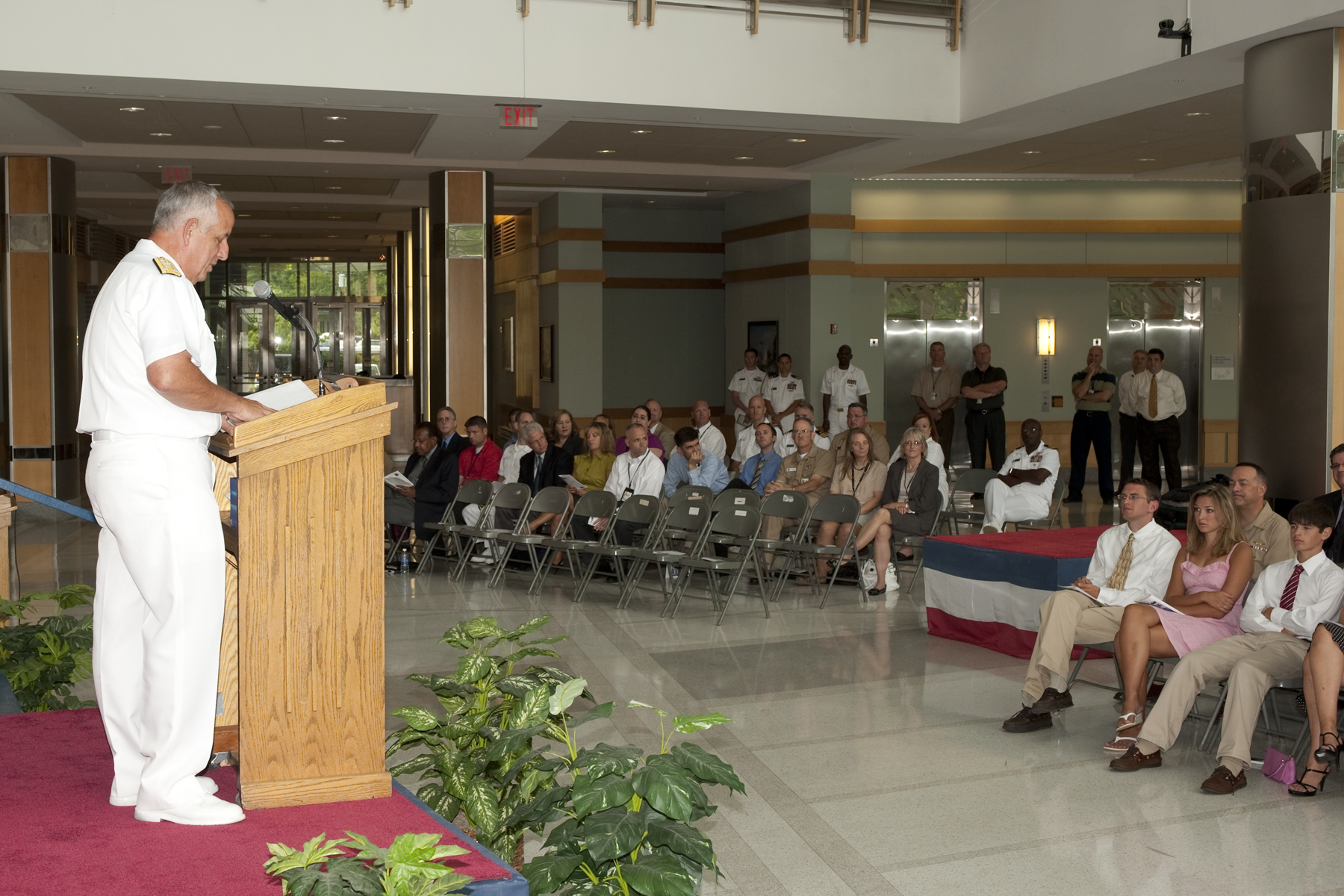
During the ceremony, Vice Adm. David Architzel, Commander, Naval Air Systems Command, thanked Mahr for his time as program manager and said he had been the driving force behind the busy, innovative and complex program office for more than two year.
“Rear Admiral Mahr’s clear vision and well-placed direction has allowed PMA-251 to develop innovative system readiness products, identified promising cost-wise initiatives, and established an environment of trust, respect, institution of best practices and the skill-set to provide an alignment of war-readiness objectives,” said Architzel.
Mahr was selected in April 2008 to serve as ALRE program manager, leading a team jointly located at Patuxent River and Lakehurst, N.J.
Under Mahr’s leadership, Expeditionary Airfields integrated product team received a Naval Air Warfare Center, Aircraft Division Commanders Award in 2009. The team supported rapid deployment and redeployment of expeditionary systems including deployment of 4.7 million square feet of Airfield Matting (AM-2) and more than 300 AM-2 accessories packages, accomplishing installation in Afghanistan in just 16 weeks.
The future Electromagnetic Aircraft Launch System (EMALS) full-scale test catapult went operational for the first time at NAVAIR Lakehurst, N.J., and has since demonstrated max speed of 180 knots, or 207 miles per hour. The program is scheduled to launch its first test aircraft later this year.
Most recently, the Aviation Data Management and Control System (ADMACS) Block II received its Milestone-C decision to move forward with production. ADMACS Block II will replace the WWII-era “Ouija” board in flight deck control, giving a more complete picture of flight deck action for the air boss and carrier deck experts.
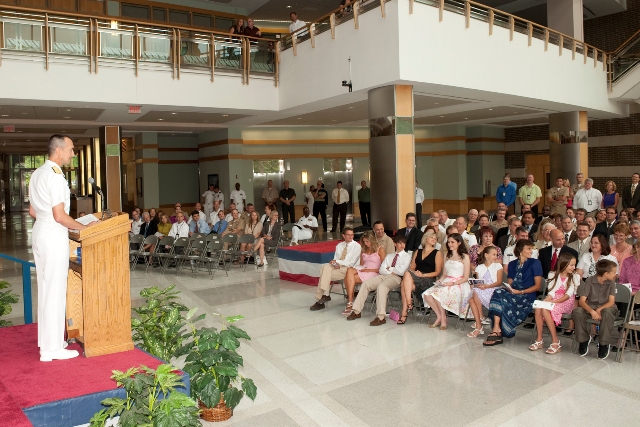
Before turning the reins of command over to Donnelly, Mahr addressed the members of the program office. He thanked them for their commitment and hard work and said that while it was time for him to move on it was a hard thing to do.
“I’m not really ready to step out of the starting rotation, but the Navy needs a fresh arm,” said Mahr. “There’s a promising new kid by the name of Donnelly, who the club has been watching for a long time, and now it’s his turn. I want to thank my team mates for the great fielding when I gave up a hit, and for their offense that made up for runs I surrendered. I am extremely proud to have played alongside the men and women who are PMA-251.”
Donnelly, a 1986 U.S. Naval Academy graduate and naval aviator, was serving as the chief of staff for Program Executive Officer, Tactical Aircraft Programs here, when he was selected April 2008, as the deputy program manager for future systems - EMALS and the Advanced Arresting Gear (AAG).
During operational tours, Donnelly flew both the EC-130Q Hercules and E-6A/B Mercury aircraft. He also served aboard USS Theodore Roosevelt (CVN 71) as the catapult and arresting gear officer and assistant air officer.
Donnelly served as the executive officer and commanding officer of the VQ-3 Ironmen where he marked 3,000 hours as a naval aviator.
Donnelly expressed a passion for shipboard aircraft launch and recovery having been an operator himself.
“I have had the good fortune to lead the ALRE teams responsible for the future in launch and recovery technology as the deputy program manager for EMALS and AAG; I’m pleased that today the envelope broadens, and I’m looking forward to being a part of the grand-scale portfolio of products that we deliver to our boatswains and Marines, as well as ground and sea-based aviators who depend on leaving and returning safely anywhere and everywhere,” Donnelly said.
ALRE’s mission is to deliver adaptable and reliable technology to the Fleet providing life-cycle acquisition management for 40-plus Navy and Marine Corps systems and equipment, utilized for the launch and recovery of current and future fixed and rotary wing aircraft. The program has responsibility for the definition, research and development, test and evaluation, acquisition, certification and modernization of catapults, arresting gear, helicopter landing systems, wind measuring systems, aviation marking and lighting installed aboard ships, recovery systems and visual landing aids installed ashore, afloat Navy aircraft firefighting equipment, and expeditionary airfield equipment (matting, recovery systems, landing aids and airfield lighting).
As the primary interface with the Naval Sea Systems Command, the program is responsible for the integration onboard ships and management of shipboard aviation facilities, and provides program support to all classes of aviation, air capable and amphibious ships.
“Like most NAVAIR program offices, PMA-251 is the here and now -- it is the future, and it is at the very center of our advanced war-fighting Navy,” said Architzel.
-- 30 --
Cutlines:
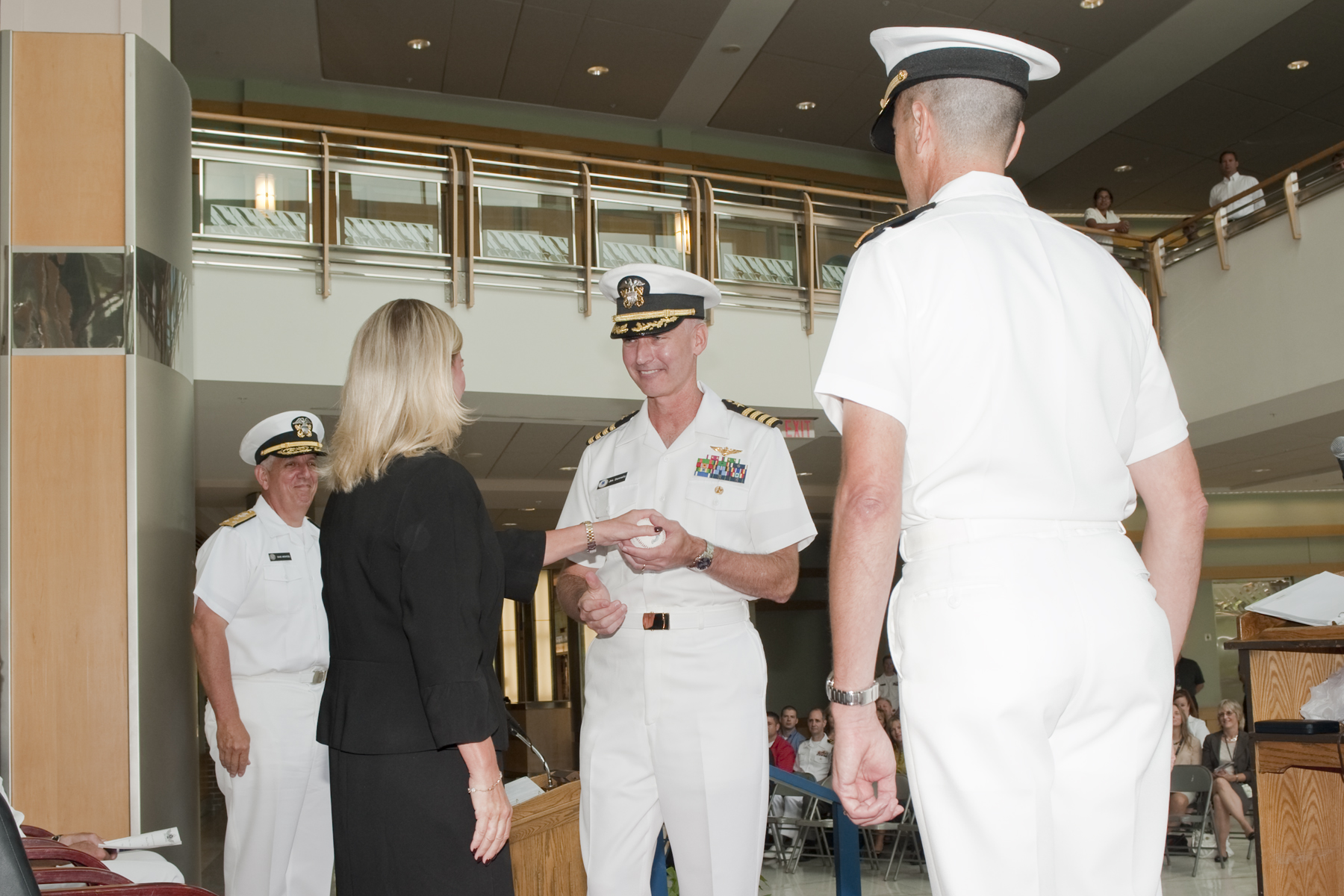
PMA251-1 – Capt. James Donnelly, incoming Aircraft Launch and Recovery Equipment Program Office (PMA-251) here, accepts responsibility of PMA-251 and the “game ball” from Lisa Nyalko, Program Executive Officer Tactical Aircraft Programs (acting), during the PMA-251 change-of command ceremony held Aug. 23, held at the Rear Adm. William T. Moffett building here. (U.S. Navy Photo)
PMA251-2 -- Vice Adm. David Architzel, Commander, Naval Air Systems Command, delivers remarks during the PMA-251 change-of command ceremony held Aug. 23, held at the Rear Adm. William T. Moffett building here. (U.S. Navy Photo)
PMA251-3 -- Rear Adm. Randy Mahr, outgoing Aircraft Launch and Recovery Equipment Program Office (PMA-251) here, delivers remarks during the PMA-251 change-of command ceremony held Aug. 23, held at the Rear Adm. William T. Moffett building here. (U.S. Navy Photo)