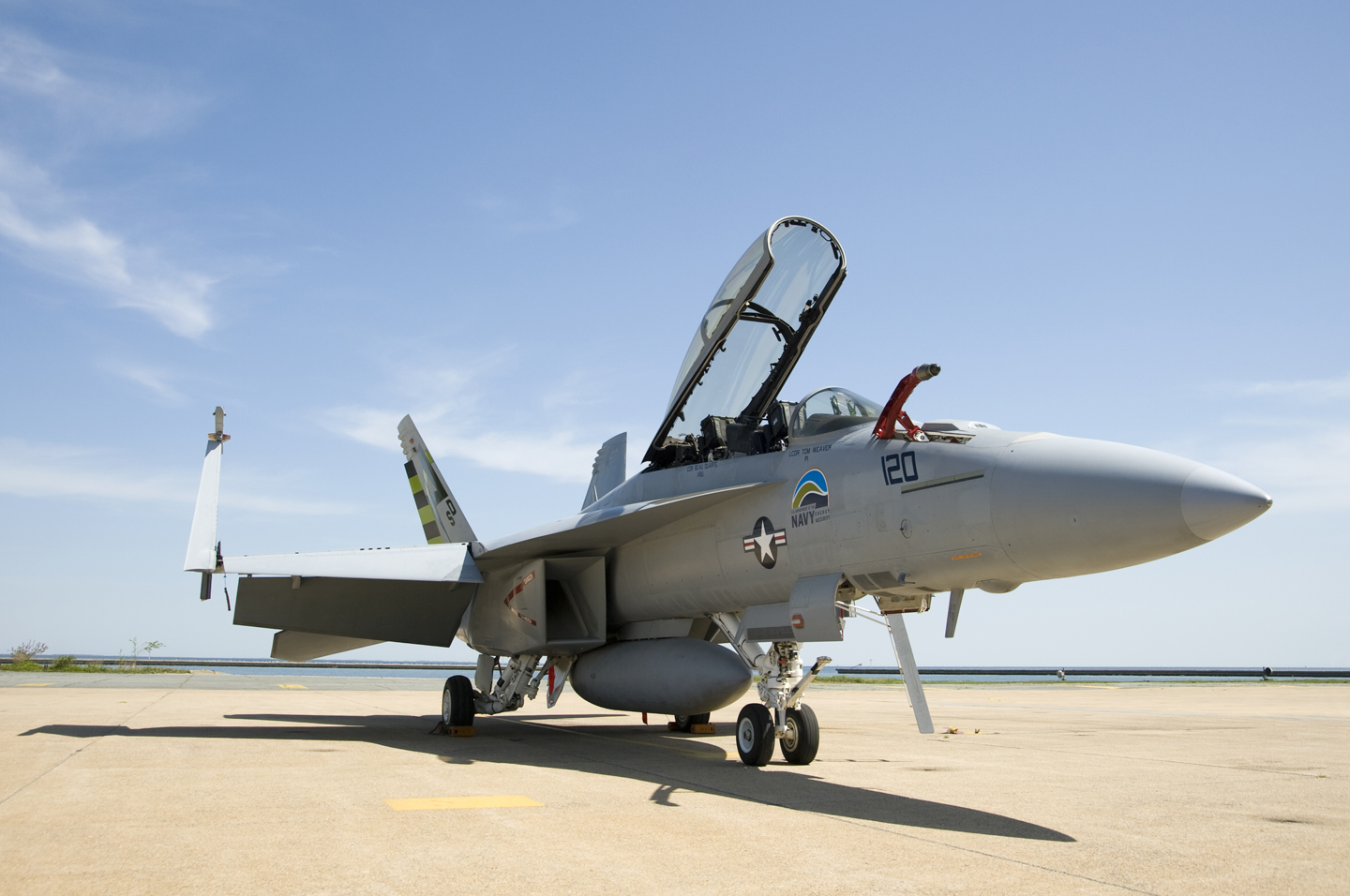
The F/A-18 & EA-18G program office's (PMA-265) Green Hornet team has won the Chief of Naval Operations Environmental Excellence Award for the fifth consecutive time. (U.S. Navy photo)
Green Hornet team wins 5th environmental excellence award
For the fifth consecutive time, the F/A-18 & EA-18G program office’s (PMA-265) Green Hornet team has won the Chief of Naval Operations Environmental Excellence Award.
The team is being recognized for its efforts in developing successful environmental protection and awareness initiatives, including collaboration with the Naval Air Systems Command Propulsion and Power team to develop and use biofuel in the F/A-18E/F Super Hornet.
Winning the CNO award automatically placed the Green Hornet team in nomination for the 2009 Secretary of the Navy Environmental Award. Recently, SECNAV named the team the winner of fiscal year 2009 SECNAV Environmental Awards competition in the environmental excellence in weapon system acquisition team category. The award recognizes individuals, teams, ships and installations within the Department of the Navy for promoting environmental excellence and awareness. Winning this award advances the acquisition team to the Department of Defense-level competition in the same category.
The CNO and SECNAV awards are scheduled to be presented to the team this summer at the U.S. Navy Memorial and Naval Heritage Center in Washington, D.C.
“The consistent recognition acknowledges the many innovative initiatives put in place by the government / industry team to ensure the F/A-18 and EA-18G platform and support systems comply with DoD guidance to integrate environmentally sound capabilities whenever possible,” said Capt. Mark Darrah, PMA-265 program manager.
“Our goal is to inspire others to see the opportunity the biofuel initiative offers to look at alternative fuels for high performance jet power plants. SECNAV has made energy efficiency a top priority, and we are taking that very seriously,” Darrah said.
The Super Hornet is the first Navy aircraft to demonstrate alternative fuel capability using a 50/50 blend of camelina biofuel and the Navy’s primary jet fuel, jet propellant (JP)-5.
The blend of camelina, a U.S.-grown, renewable flax type grain normally used for feedstock that is low rainfall tolerant and does not compete with food crops, and JP-5 is estimated to reduce carbon emissions up to 80 percent compared to its petroleum-based counterpart, according to recent studies.
Biofuel is one of several environmental projects managed by the NAVAIR Propulsion and Power team and supported by the Green Hornet team under the leadership of Mike Rudy, PMA-265 environment, safety and occupational health manager.
Comprised of government and industry partner experts, the team manages all environmental, safety and occupational health compliance guidelines in manufacturing of the aircraft, testing and evaluation, maintenance, operations, training -- and eventually, disposition of the aircraft at the end of its life-cycle.
Meeting ESOH guidelines and reducing the carbon footprint on the environment also means reducing jet noise for the aircrew, maintenance personnel and the surrounding communities.
In a combined effort, PMA-265 and Office of Naval Research have invested in a project with industry partner General Electric Aircraft Engines to reduce noise levels. This project involves using mechanical chevrons or extensions on the F414 engine nozzle of the Super Hornet.
The project is still in the testing and development phase; when implemented, it will be the first installation of jet noise reduction technology on any high-performance tactical Navy aircraft.
“It is imperative that acquisition programs seek ways to reduce the noise levels,” Rudy said. “The F/A-18 program has embarked on a robust research and development program to determine the best solution to make our jets quieter.”
According to Rudy, studies show the chevron project is a viable deployable solution with demonstrated reduction in noise levels and will not affect performance of the aircraft.
The F414 engine is also becoming more efficient through the incorporation of new technologies. Air emission and fuel consumption reductions are the goal of the trapped vortex combustor technology, where partially combusted air from the cavities mixes with the main air flow resulting in reduced greenhouse gas emissions without compromising the engine’s performance.
The F/A-18 and EA-18G program office estimates that its carbon footprint will be reduced with all of the energy initiatives. The program office expects to reduce fuel consumption by 27 million gallons per year and reduce greenhouse gas emissions by 300,000 metric tons annually. Use of the camelina biofuel also reduces conventional aviation fuel use by 50 percent and reduces carbon emissions by 84 percent on a life-cycle basis.
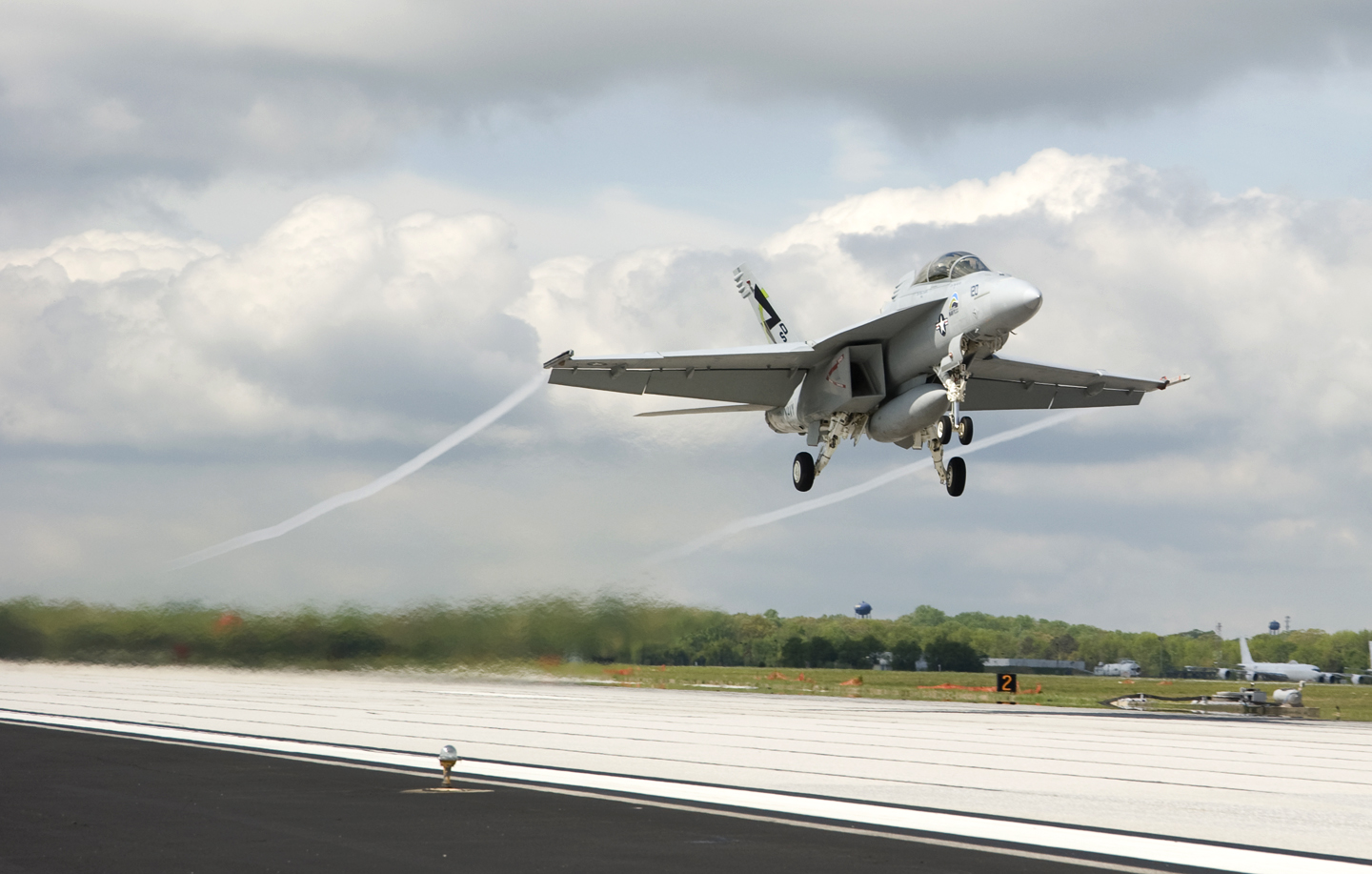
The PMA-265 Green Hornet team is being recognized for its efforts in developing successful environmental protection and awareness initiatives, including collaboration with the Naval Air Systems Command Propulsion and Power team to develop and use biofuel in the F/A-18E/F Super Hornet. Pictured here is the Green Hornet taking off at Patuxent River, Md. (U.S. Navy photo)
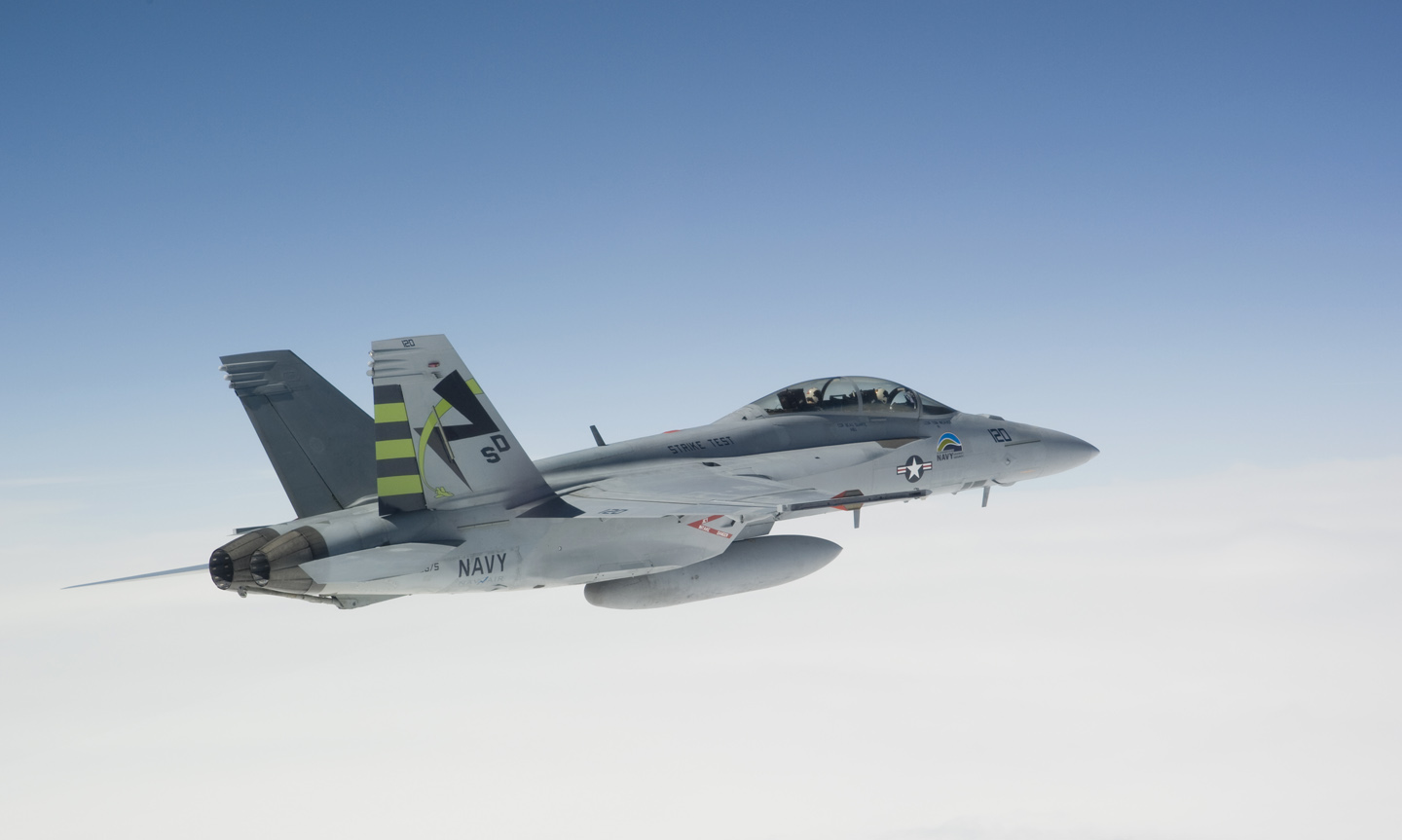
The Super Hornet is the first Navy aircraft to demonstrate alternative fuel capability using a 50/50 blend of camelina biofuel and the Navy’s primary jet fuel, jet propellant (JP)-5. (U.S. Navy photo)
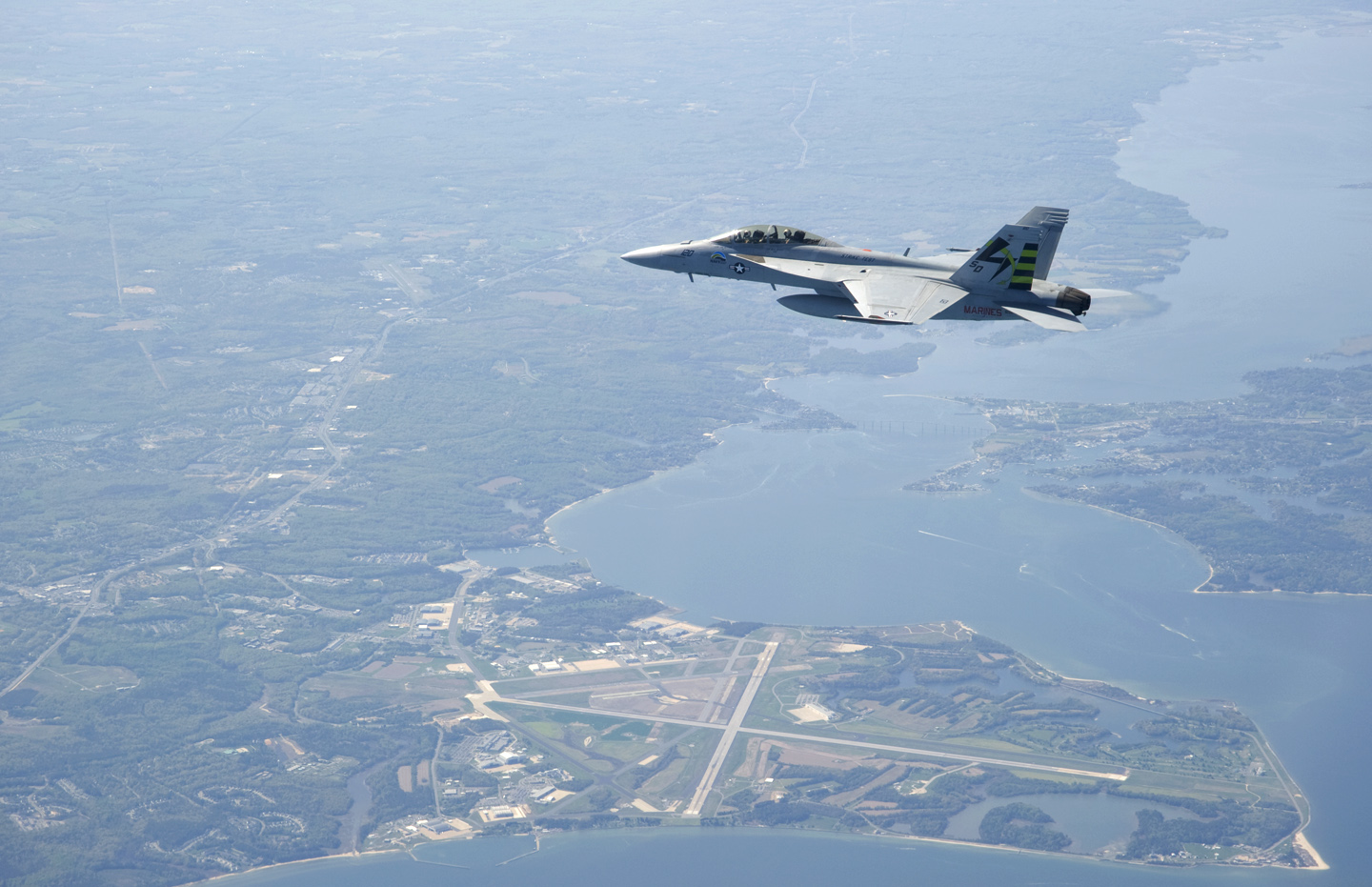
Use of the camelina biofuel reduces conventional aviation fuel use by 50 percent and reduces carbon emissions by 84 percent on a life-cycle basis. (U.S. Navy photo)