
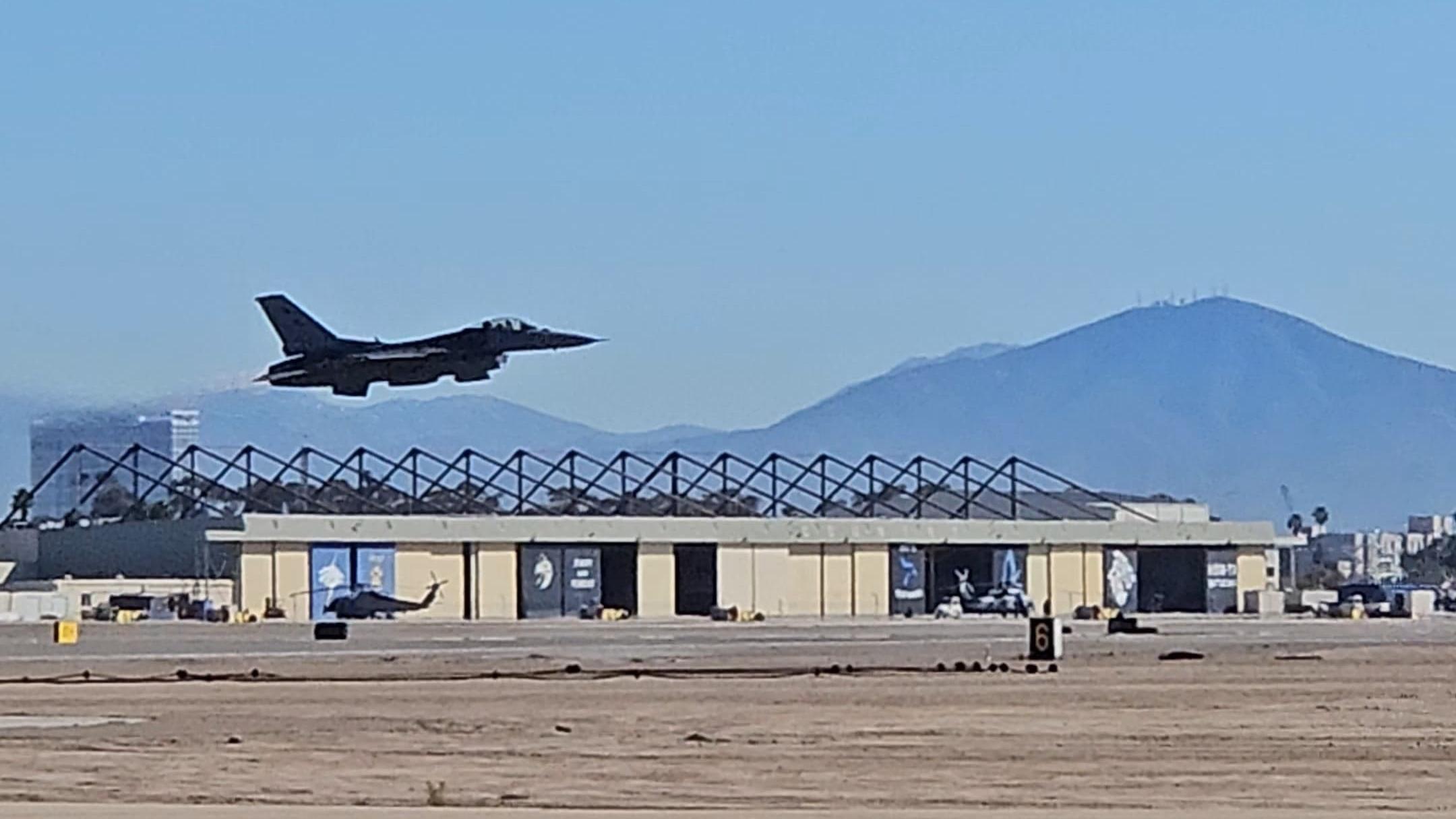
A U.S. Navy F-16C Viper takes flight following completion of the service's first Programmed Structural Sustainment Repair at Fleet Readiness Centers Southwest.
Teams complete first F-16 sustainment repair ahead of schedule
The Adversary and Specialized Aircraft Program Office (PMA-226) and Fleet Readiness Center Southwest (FRCSW) have exceeded expectations by completing the first-ever Programmed Structural Sustainment Repair (PSSR) on a U.S. Navy F-16C Viper this month, delivering the aircraft eight months early.
This milestone marks a historic win for both organizations, showcasing their ability to deliver critical capabilities to the fleet with unprecedented speed and precision.
“This is a huge achievement for the Navy,” said Capt. Jason Pettitt, program manager for PMA-226. “The strategic collaboration between FRCSW and PMA-226 to establish F-16 depot maintenance capabilities has delivered accelerated readiness for the warfighter. Both teams worked tirelessly to procure, train and install the necessary equipment to stand up the F-16 PSSR capability in just 18 months — an unprecedented pace for depot line activation.”
The F-16 plays a vital role in the Navy’s inventory, serving as a cost-effective, 4+ generation adversary aircraft for training operational pilots. The jets are flown by the Naval Aviation Warfighting Development Center (NAWDC) and Air Force Reserve components to simulate modern threats during deployment training and TOPGUN activities for naval aviators. With dozens of F-16s acquired from the Air Force, the Navy had to ensure the aircraft could continue to safely operate for decades as an adversary training aircraft for the Navy.
The solution emerged through a bold, collaborative effort between PMA-226 and FRCSW, focused on performing essential structures inspections and repairs to ensure safe flight operations. The teams tackled the challenge head-on, setting aggressive goals to achieve impactful results.
“Bringing a new aircraft into a military depot in 18 months is an amazing achievement,” said Mark Greenamyer, the F-16 Depot Integration lead with PMA-226. “Most depot standup activities can take five years or more. Teaming with FRCSW, PMA-226, the USAF F-16 System Program Office, and Air Force depot locations made the acceleration possible with everyone running every day to a common vision and goal.”
The collaboration came with its share of challenges. The Navy had to adapt Air Force technical data for use in a Navy facility, manually add thousands of parts to the Navy supply system, and train personnel on a new platform—all while standing up the depot for a new platform.
Greenamyer said the first aircraft induction was used as a learning opportunity, allowing the team to refine processes, calculate timelines and train artisans.
“During the Navy’s first aircraft induction, we identified ways to streamline efforts and prioritize work to accelerate delivery of the aircraft back to the units,” Greenamyer explained.
Cross-service collaboration with the Air Force’s PSSR process provided valuable lessons, helping the Navy avoid potential pitfalls and streamline their own planning efforts.
“Transparency. Meet early and often. Get straight to the goal and never take your eye off the destination,” Greenamyer said.
The delivery of the first PSSR-complete F-16 is just the beginning. FRCSW can support the entire fleet of aircraft with additional docks over time. The team is also working its first Canopy Sil Longeron (CSL) repair—a critical fix that can ground aircraft—and is scheduled to apply the first Uniform Have Glass (UHG) paint application. UHG not only improves durability and reduces maintenance costs but also enhances the F-16’s ability to simulate a modern threat. All of this to say, FRCSW has moved forward at the speed of relevance to take on exactly what the customer prioritized and has done so without impacting other planned work.
For the Navy, this milestone means more than just one repaired aircraft. It represents a leap forward in fleet readiness and operational flexibility. The F-16s acquired from the Air Force were life-limited between one to five years, but the PSSR ensures safe operation for decades. With FRCSW now postured to handle ongoing sustainment and future upgrades, the Navy is better equipped to meet its adversary training needs and maintain its warfighting edge.
Looking ahead, the trust and synergy built between PMA-226 and FRCSW will serve as a model for future projects.
“This achievement is a testament to the power of collaboration and the Navy’s commitment to readiness,” Pettitt said. “Congratulations to all team members for this successful achievement on delivering the first Navy F-16C Viper out of FRCSW!”
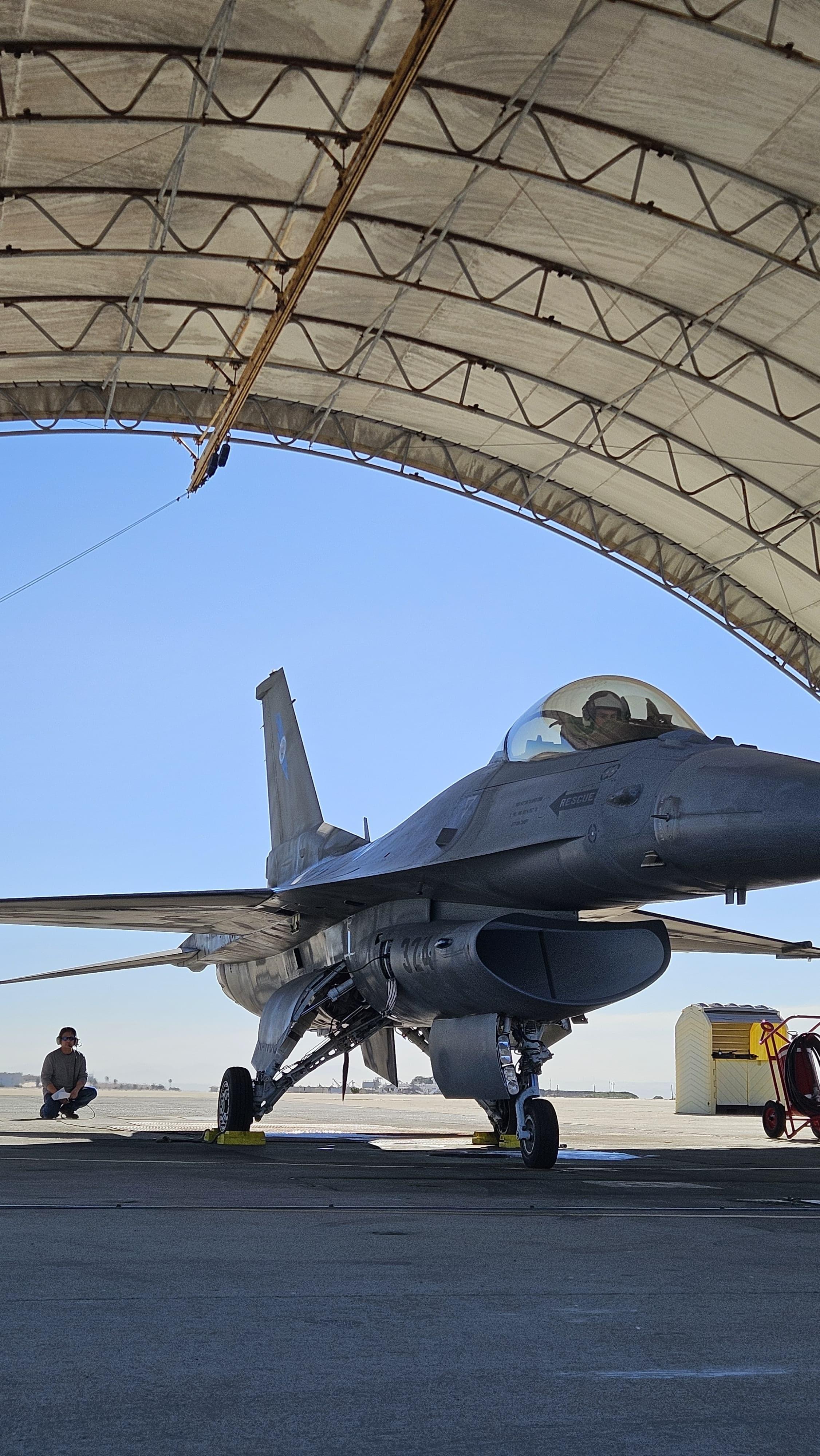
A. U.S. Navy F-16C Viper, sustaining adversary training readiness through the Navy's first-ever Programmed Structural Sustainment Repair.