NWIRP McGregor project wins Navy environmental kudos
by Kelly Burdick
Public Affairs
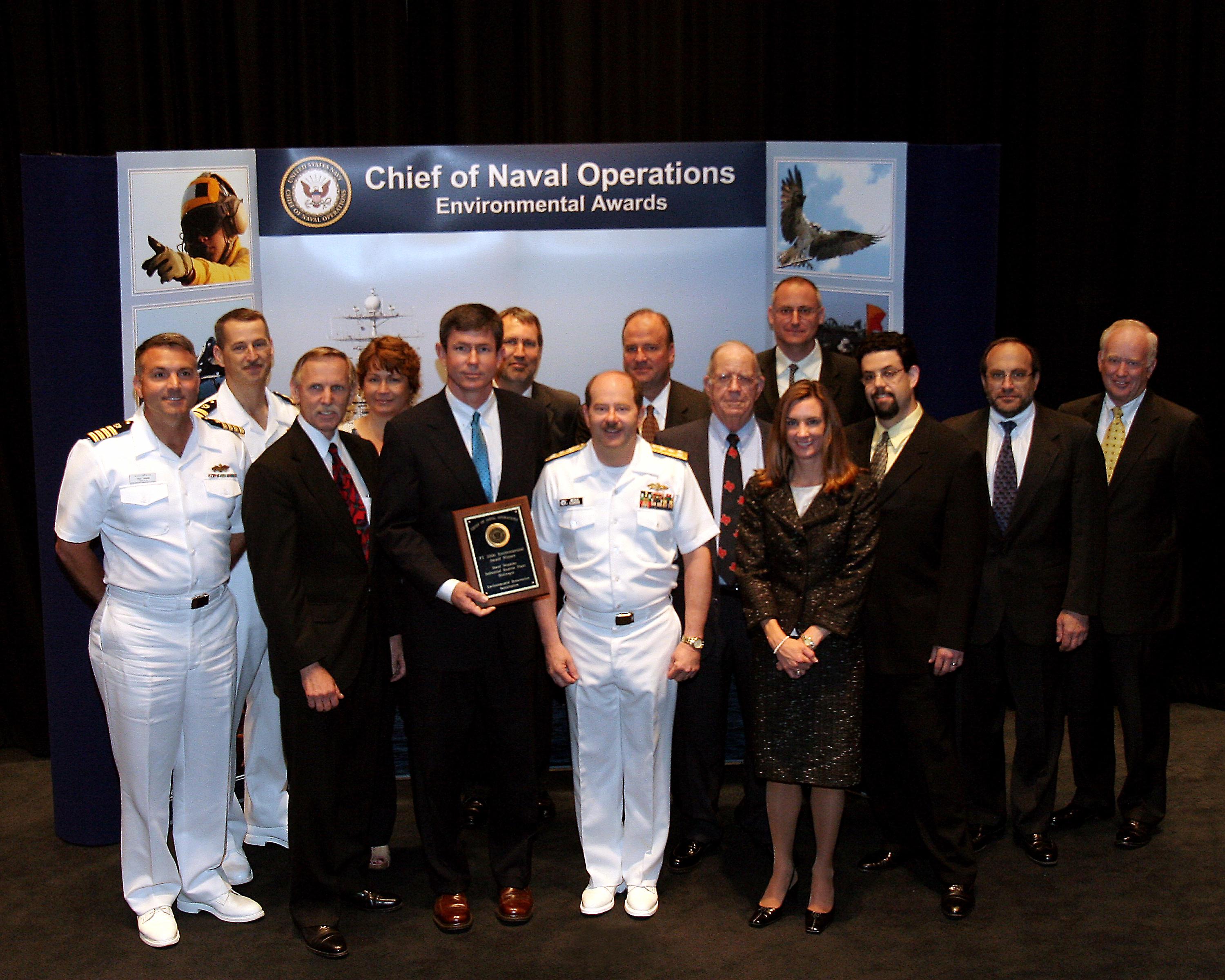
NAVAIR Patuxent River, Md. -- The Naval Air System Command's (NAVAIR) Naval Weapons Industrial Reserve Plant (NWIRP) McGregor remediation project received the 2006 Chief of Naval Operations and the Secretary of the Navy Environmental Awards for environmental installation restoration during ceremonies at the Navy Heritage Center in Washington last month.
The project also received an honorable mention from the Secretary of Defense.
The NWIRP McGregor facility was one of NAVAIR’s government-owned/contractor-operated (GOCO) properties. When the McGregor mission ceased, NAVAIR partnered with the Naval Facilities Engineering Command Southeast (NAVFAC SE) to begin environmental cleanup of the property.
The McGregor project team, which also includes members from the Environmental Protection Agency, the Texas Council on Environmental Quality, and contract partners EnSafe and CH2M Hill, wrapped up a 14-year remediation project over the past year. The team achieved several Navy firsts that have set new standards for environmental remediation.
“This project is the new precedent for all future divestitures,” said Joe Kaminski, NAVAIR’s GOCO program manager. “The remediation effort and awards recognition is outstanding, but even more so is knowing that we’ve done the right thing and we’ve done it well.”
NAVAIR’s Infrastructure Business Operations (AIR-7.10) manages the GOCO program and is charged with cleaning up and divesting these inactive properties. The program’s ultimate goal is to produce economic development opportunities for the communities where these properties reside. But before any property can be turned over, it must first meet strict environmental standards that define a property as “suitable for transfer.”
Perhaps the most prominent of all project accomplishments, NWIRP McGregor is distinguished throughout the entire U.S. Navy for being the very first Navy facility to receive the EPA’s Ready for Reuse (RfR) Determination. An RfR verifies that environmental conditions at the property are protective of human health and the environment for current and future commercial, industrial and agricultural uses.
Deputy Assistant Secretary of the Navy (Environment) Donald R. Schregardus signed the RfR certificate and accepted the EPA determination on behalf of the Navy last October. “The McGregor remediation and redevelopment project is a powerful demonstration of the Navy’s commitment to ensuring a safe environment for future generations,” said Schregardus.
Captain Bill Cords, AIR-7.10 director, knows he needs to rely on more than just the Navy’s good intentions and technology to achieve this goal; it takes a united community approach from local citizens and state and federal regulators. “Our success can be attributed to a strong public and private partnership, a determined and forward-thinking community, and a progressive and innovative government all working together in a spirit of cooperation,” said Cords.
NWIRP McGregor has found a new life as the McGregor Industrial Park, which has brought fresh opportunities and an invigorated economy – creating over 1,000 jobs in the rural Texas town of 6,000.
“The team has been remarkable,” said Mark Craig, NAVFAC SE Remedial Project Manager. “We had our fair share of challenges to overcome and we all worked together for solutions. It's an incredibly rewarding experience to work successfully toward a common goal, achieve that goal, and to know that this project is a model for future remediation projects.”
Award-winning factors:
•The first Navy facility to receive an RfR determination.
•The first – and world’s largest – full-scale biowall application for groundwater remediation of perchlorate and volatile organic compounds (over three miles of biowall).
•The first Post Closure Order for both the Navy and Texas, which scaled back the Navy’s 9700-acre RCRA permit to just 16.4 acres – making it possible for the City of McGregor to manage.
•The first Navy non-BRAC Operating Properly and Successfully determination.
•Accelerated remediation timeframes – reduced clean-up times by 10 years or more using highly innovative remediation technologies that are readily transferable to other Department of Defense sites.
•Cost savings – $20 million in construction costs and more than $1 million annually.
•A spotless health and safety and environmental record – over 1,000,000 construction man-hours with no reportable health and safety incidents. In addition, there were no regulatory violations during the environmental restoration of the facility.
-30-
(CNO award.jpg)
The annual CNO and SECNAV awards honor installations, teams, and individuals for outstanding work in Department of the Navy environmental programs.
From left to right: Captain Bill Cords, NAVAIR Director, Infrastructure Business Operations; Captain Ed Brown, Executive Officer, NAVFAC SE; Joe Kaminski, NAVAIR GOCO Program Manager; Kelly Burdick, NAVAIR Public Affairs; Mark Craig, NAVFAC SE Project Manager; Mark Arthur, TCEQ; Vice Adm. Michael K. Loose, Deputy Chief of Naval Operations for Fleet Readiness and Logistics; Jeff James, EnSafe; Bob Sturdivant, EPA: Tom Beisel, CH2M Hill; Kathy Stewart, Restoration Branch Head NAVFAC SE; Mike Perlmutter, CH2M Hill; Alan Jacobs, EnSafe; and Sid Allison, former Environmental Director NAVFAC SE.
Photo by DCEventPhoto.com