
Wiring conference tackles data collection
By Jim Jenkins
Aging Aircraft Enterprise Team
More than 200 people participated in the fall session of the Joint Service Wiring Action Group (JSWAG) conference in Virginia Beach in November, a record amount for the bi-annual, multi-service meeting of wiring professionals.
“This has been one of the best JSWAGs so far,” said Mark Ragland, JSWAG coordinator for the U.S. Air Force. “The attendance here has been much better and the groups of people have been more focused than in the past. We’ve been able to help those maintainers who bring real problems to our attention, and those guys are taking what they’ve learned here and using the information positively once they get back to their respective bases.”
Aircraft wiring maintainers, engineers, logisticians, and program managers came from all over the country, from all the different services, from different countries and from as far away as the Pacific Rim to take part in this forum.
The JSWAG maintainers’ conference was established and chartered by the Naval Air Systems Command and the U.S. Air Force to collectively provide advancements in safety, reliability, maintainability and readiness of wiring interconnect systems.
For the young Sailor, Airman, Marine or Soldier aircraft maintainer, the conference reinforces training and provides insight to how problems are resolved, and highlights the importance of the one team, one fight mentality of JSWAG. For the seasoned maintainer, it’s the opportunity to pass on lessons learned and voice whatever concerns there may be so that the people with the power to solve these issues can. JSWAG is about sharing knowledge.
This fall session focused on maintenance, but also on quality components, training, data collection, design and installation.
Maintenance
Multiple facets concerning wiring maintenance were addressed including updates to the joint service manual (NA01-1A-505), and improved materials and processes. Equipment upgrades were a hot topic as maintainers are eager for improved wiring diagnostic and fault location capability. Laser wire marking and heat gun issues were also addressed as a means to focus on the war fighters’ needs.
Data Collection
One of the focus areas of this JSWAG was that of data collection. Decision makers need fleet maintainers to provide good input for reasons why aircraft wiring may be failing. This good data enables engineers and logisticians to better support war fighters where they need it most. Dave Dudziec and Tim Faux, of NAVAIR’s Wiring Systems Branch (AIR 4.4.5.3) and supporting the Aging Aircraft Enterprise Team (AAET), were able to share with JSWAG participants what NAVAIR is doing to help in this area.
“One of the good things at the JSWAG was getting out into public view the new malfunction codes and work unit codes for aircraft wiring,” Dudziec said. “Filling out the maintenance action forms correctly with the real data will better enable us to properly identify the problems, get the funding and get the fleet the tools and answers it needs to solve wiring problems nearly every platform has been experiencing for years. Simply put: good data leads to good information, which ultimately leads to good decisions.”
In order for NAVAIR professionals to get the right answers to the fleet, the most accurate data is needed. The JSWAG lets NAVAIR engineers interact with fleet maintainers and explain why the data is so important to the fleet’s future, Faux said. Using the new malfunction and work unit codes to properly identify maintenance issues is crucial to understanding what’s really happening to aircraft.
“We tried to stress to the JSWAG participants the importance and usefulness of data collection to not only to the Navy fleet but across the services jointly,” said Faux, who is the data collection manager for the AAET’s wiring team. “Not knowing why the data is important makes it that much harder to get accurate data from the fleet.”
Training
Another goal of this JSWAG was to explore opportunities for more joint training. A common method of training for wiring maintenance personnel from all the services is the use of computer-based-training. But while they all may use CBT, it’s not tied together. It’s not joint training. Wire is wire, as some wiring maintainers might say. There is no difference in the wire used in an F/A-18, F-16, or Blackhawk. How it’s used is certainly different but the general maintenance is the same for all. So why can’t there be one common CBT-based “schoolhouse” for everyone?
“One of the issues we have is that we already have a CBT that is joint that the Army, Navy and Coast Guard are using but to date, has not been approved for posting on the Navy Knowledge Online Web site,” said AOC (AW) Rich Burry, of NAVAIR’s Fleet Training Support Division (AIR 6.7.5.2).”
NAVAIR engineers and logisticians appreciate and admire the work the fleet is doing in keeping aircraft flying, but in order to get the proper tools to the maintenance professionals who need it, more feedback is needed. The JSWAG is the avenue that enables fleet maintainers from all the services to provide feedback. In order for the JSWAG to be as productive an organization as it was intended to be, all of the services’ maintenance professionals need to be honest and forthright in their advice. Despite this JSWAG event being one of the biggest to date, Ragland said that he still needs more participation from active-duty maintainers.
Having the active-duty maintainers interact and network with civilian leaders and professionals is the ultimate goal of the JSWAG. The underlying message being that wiring is an integral part of the reliability and readiness of aircraft.
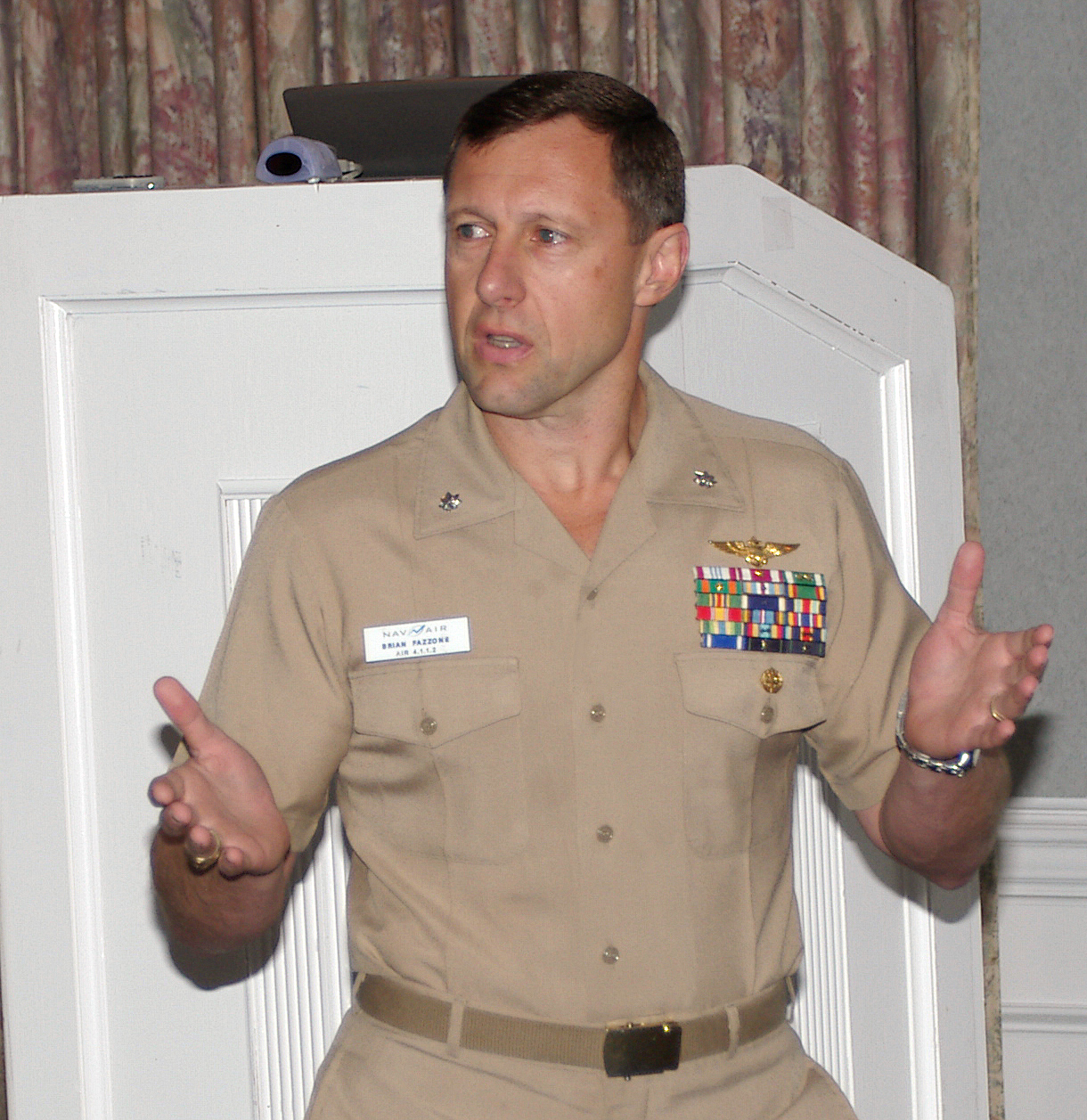
“The main issue that faces us today, still, is the fact that there is a culture that refuses to recognize wiring as the critical system that it is,” said Cmdr. Brian “Fuzz” Fazzone, Aging Aircraft Enterprise Team deputy director. “Wiring is seen as the small piece of the larger puzzle, but with the introduction of the new work unit codes we’re going to start getting the visibility we need which is going to target both the training and maintenance practices to correctly address the wiring problems that are impacting the fleet now.”
Since so many issues were brought to light and submitted as action chits, the executive committee chose to change the venue and the format for the next JSWAG currently schedule for May 22-24 at Naval Air Station Patuxent River, Md. This JSWAG will include fewer participants with the sole purpose of addressing and working on the action chits. The next full JSWAG, during the second week of November will return to its previous full scale format.
CAPTION:
Cmdr. Brian Fazzone kicks off the Fall 2006 Joint Service Wiring Action Group conference in Virginia Beach.
Photo by Jim Jenkins