Web-based Airworthiness flight clearance system cuts turnaround from 45 days to two
by Robert Kaper
NAWCAD Public Affairs Office
A new web-based, flight clearance system in the US Navy/Marine Corps Airworthiness Office has reduced average turnaround times from 45 days to two days for Global War on Terror support - and in some cases, to only two hours.
The dramatic reduction took place in just three months, according to Bob Hanley, Director, US Navy/Marine Corps Airworthiness Office. Hanley said the new system saves lives by making sure Navy and Marine Corps forces have the most effective weapon systems available as quickly as possible while saving millions of dollars for the Navy through greater efficiency. The Airworthiness Office is part of the Naval Air Systems Command, Naval Air Warfare Center Aircraft Division, at Patuxent River, MD.
Flight clearances are technical documents explaining how to use new or altered weapons and aircraft configurations. They usually require extensive engineering analysis and approvals. In the past, flight clearance requests were sent in series, one after the other, through a chain of engineers – a process that could take up to 60 days. The result was that forces in the field sometimes had to fight with old technologies while waiting for new capabilities to be certified. But with the new web-based system, engineers can access the same request simultaneously and work on them in parallel, Hanley said. “When somebody’s getting shot down, it’s a ‘no kidding’ situation, and they need it as soon as possible.”
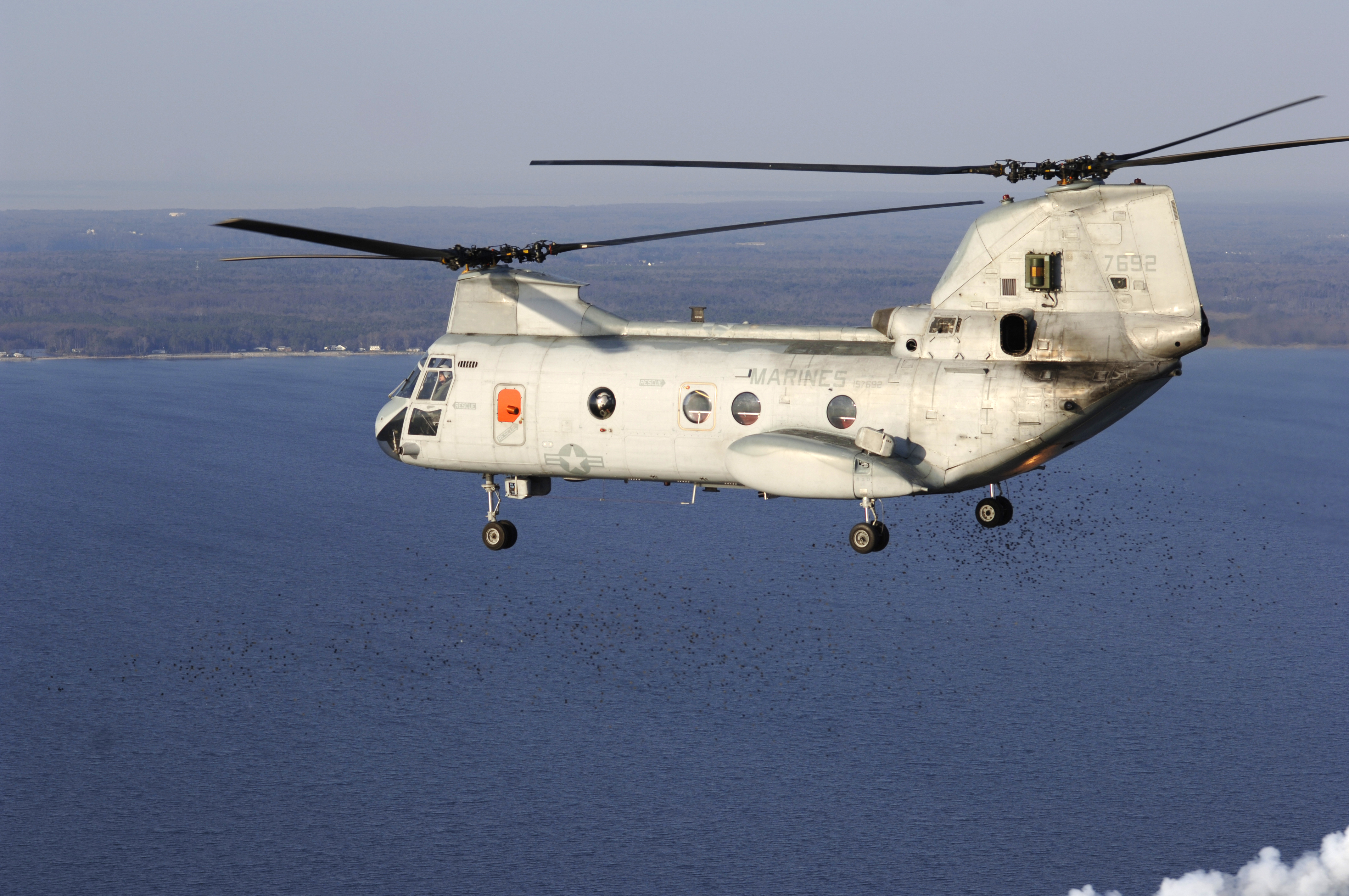
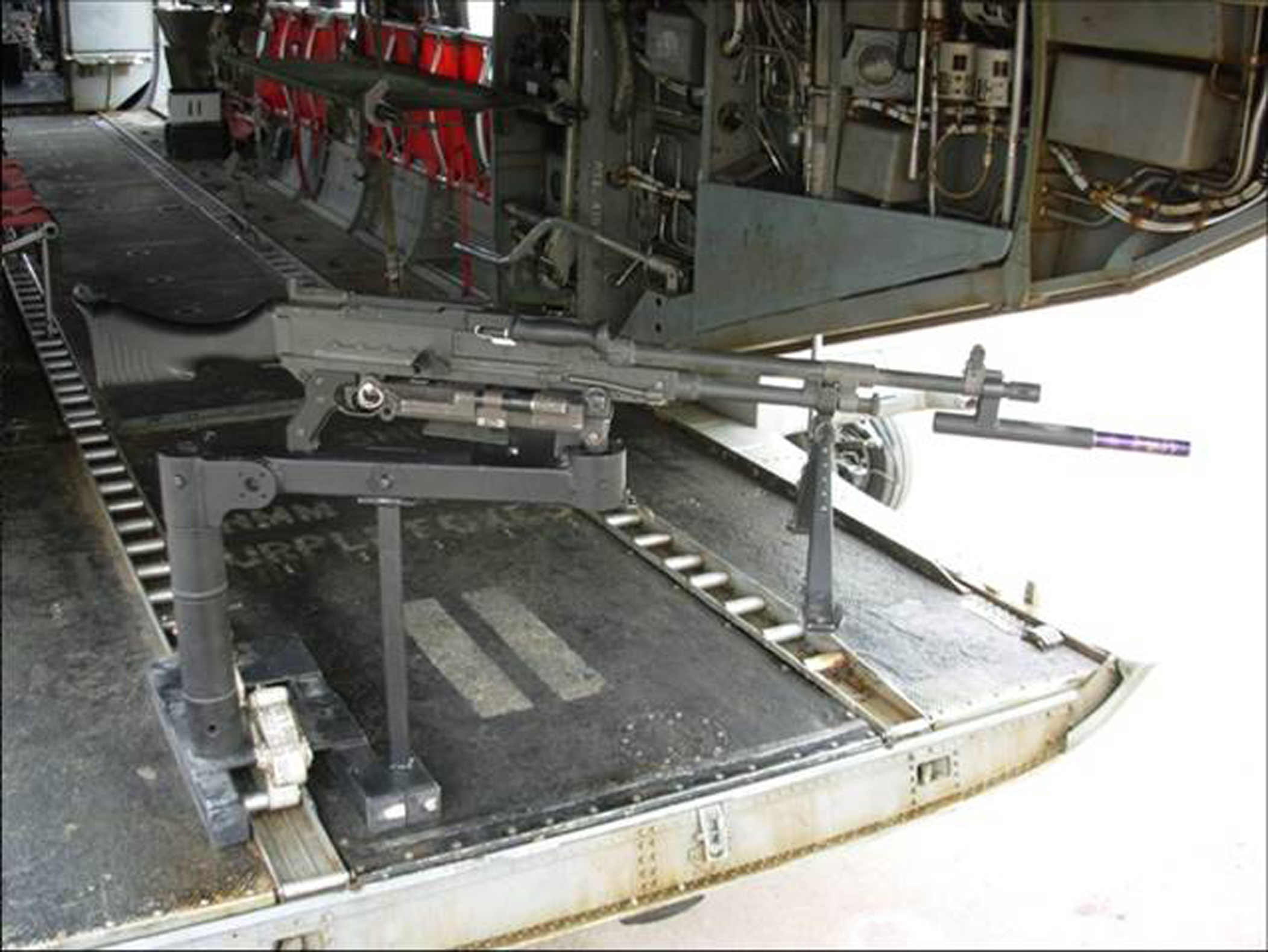
Hanley and his staff take special pride in a “no kidding” request they got from Marines in Iraq who had just lost two CH-46 helos and crews after being shot down from behind. “The crews had door-mounted machine guns, but none in the rear,” he said. “This was an urgent request for a ramp-mounted gun.”
The big, tandem-rotor helo was not designed for a ramp gun, so installation, mounting and operating procedures had to be devised on the fly and under pressure. “There’s no obvious installation location,” Hanley said, “and the gun is big and heavy. How do you mount it on the floor?” The gun also has a powerful recoil, he said, “and we had to make sure it wouldn’t snap off the mounts.”
With the gun located back inside the ramp opening, there was a danger the gunner might shoot his own aircraft, Hanley said. “We had to make sure there were stops located so the gun didn’t swing too far.” Provision also had to be made to hook up the gunner so he wouldn’t fall out.
Despite the complexity of the new design, “it only took a few days,” Hanley said, to get the flight clearance back to the troops in the field, thanks to the new web-based electronic system.
Hanley pointed out that this dramatic reduction in turnaround time is all the more impressive given the large number of requests his office receives each year: more than 4,000 from all over the world. Engineers now can review flight clearances securely from any site that has web access, eliminating delays resulting from geographical location.
Hanley said the new web-based system includes a global customer support team. Customers are called back after the flight clearance has been delivered and given a survey to determine their opinion of the new process. “So far,” he said, “it’s been 100% satisfaction.”
For more information on the web-based flight clearance system contact Bob Hanley, Director, US Navy/Marine Corps Airworthiness Ofc., Naval Air Systems Command, Headquarters (AIR-4.0P)
22244 Cedar Point Road (Bldg 460/Suite 227) Patuxent River, MD 20670-1163
301-342-0301.
Photo: Gun mount installed on CH-46 rear ramp
Photo: Kurt Lengfield. CH-46 conducts test operations from NAS Patuxent River