NAVRIIP attacks non-deployed naval aviation readiness platform by platform
By Sue Brink
NAVAIR Public Affairs
The Naval Aviation Readiness Integrated Improvement Program (NAVRIIP) continues its focus and efforts in removing barriers to improve non-deployed readiness by each aircraft type/model/series (T/M/S) across the naval aviation community. The most recent T/M/S event evaluated the P-3 community at Naval Air Station Jacksonville.
The P-3 T/M/S evaluation began in December 2002 when the barrier removal team (BRT) members were trained on each step in the barrier identification process.
“By improving awareness of the complete process to the BRT, we can move forward with fixing key barriers to non-deployed readiness,” said Capt. Carlos Chavez, Commander, Reserve Patrol Wing 11 commodore. "We are picking up on the lessons learned from previous TMS teams and learning more about the process and the value of the research. Having the right people on the team is key to resolving the barrier issues,” Chavez said.
In continuing with the T/M/S approach, barriers that are identical across squadrons are being identified and are being resolved throughout each aircraft community instead of just locally. The barrier identification process promotes sharing research, knowledge and results among the BRTs across naval aviation.
“Synergistically, we need to find the common pieces and have a meeting of the minds,” said Rear Adm. Wally Massenburg, assistant commander for Aviation Depots, Naval Air Systems Command (NAVAIR). “We will find the common points across the T/M/S with the appropriate fleet members and resources working with the team. The open communication between the team members allows for discussion of barriers to systems that are common between bases and a specific T/M/S community.”
After evaluating the P-3 aircraft, barriers to non-deployed readiness were identified with the system’s T-56 engine, propeller and the APS-115 radar system. Cmdr. Tim Boothe, NAVAIR P-3 assistant program manager for logistics, presented the systems and barriers to the NAVRIIP leaders. The BRT team is addressing reliability and/or availability issues with each barrier identified.
The P-3 BRT reviewed two barriers with the T-56 engine. With the T-56 reduction gearbox, the issues the team identified that needed improving include reliability, support equipment and technician repair skills to accomplish the ultimate goal of the having the aircraft ready for training (AFT). The team also looked at the T-56 vibration test set and is looking at procuring additional test sets, which will cut down total man-hours spent evaluating out-of-balance components.
“The greater capability kit will cut down on our man hours which will allow us to focus more of our attention on requirements to achieving AFT,” said AD1 William Robinson, quality assurance representative for Patrol Squadron 16.
A BRT reviewed availability of the propeller valve pump housing test bench. “The biggest problem we are encountering with the pump housing test bench is support,” said Daniel Clark, engineering technician, Naval Air Technical Data and Engineering Service Command. “I go all over the world to obtain the knowledge and support we need to maintain and repair the bench.” Clark uses this knowledge to train new sailors in the work center.
“The NAVRIIP process increases reliability among squadrons and departments because we are encouraged to share information,” said ATCS (AW) Raymond Stull, AIMD Avionics Production Control senior chief petty officer. The key is to streamline the process and share the knowledge throughout the squadrons that perform the same work. NAVRIIP provides the methods to improve processes and provide cost savings while addressing improvements to non-deployed readiness.
In reviewing the APS-115 radar system receive/transmit availability, the team identified logistics shortfalls and causes of high demand and low reliability. During the BRT process, the team found that NAVAIR Jacksonville was ordering an antenna bolt that fit while another NAVAIR command was ordering a bolt for the antenna under another part number that didn’t fit.
“We were both using part numbers listed in the tech manual, but their part number did not correspond with the correct part,” said AT2 Joshua Lingenfelter, radar technician, AIMD Jacksonville. Although both numbers were listed in the technical publication as being correct, one number did not match the correct part. By sharing this information among the T/M/S community, adjustments are made and mistakes are avoided.
“This (NAVRIIP) is a group function. Everyone gets together, everything is handled right there. We solved half of each other’s problems on the spot”, said Lingenfelter.
If the BRTs are not able to resolve the barriers locally because of necessary resources or span of control, barriers may be elevated to the program or systemic level, which include technicians, managers and flag officers from cross functional teams 1, 2 and 3. These teams represent readiness, supply and programming, respectively.
“NAVRIIP brings more resources and more focus to process-centered barrier identification,” Boothe said. “By using the NAVRIIP approach, we can quickly and easily solve our readiness problems and communicate the resolution across our T/M/S community.”
Photo by: Sue Brink, NAVAIR Public Affairs
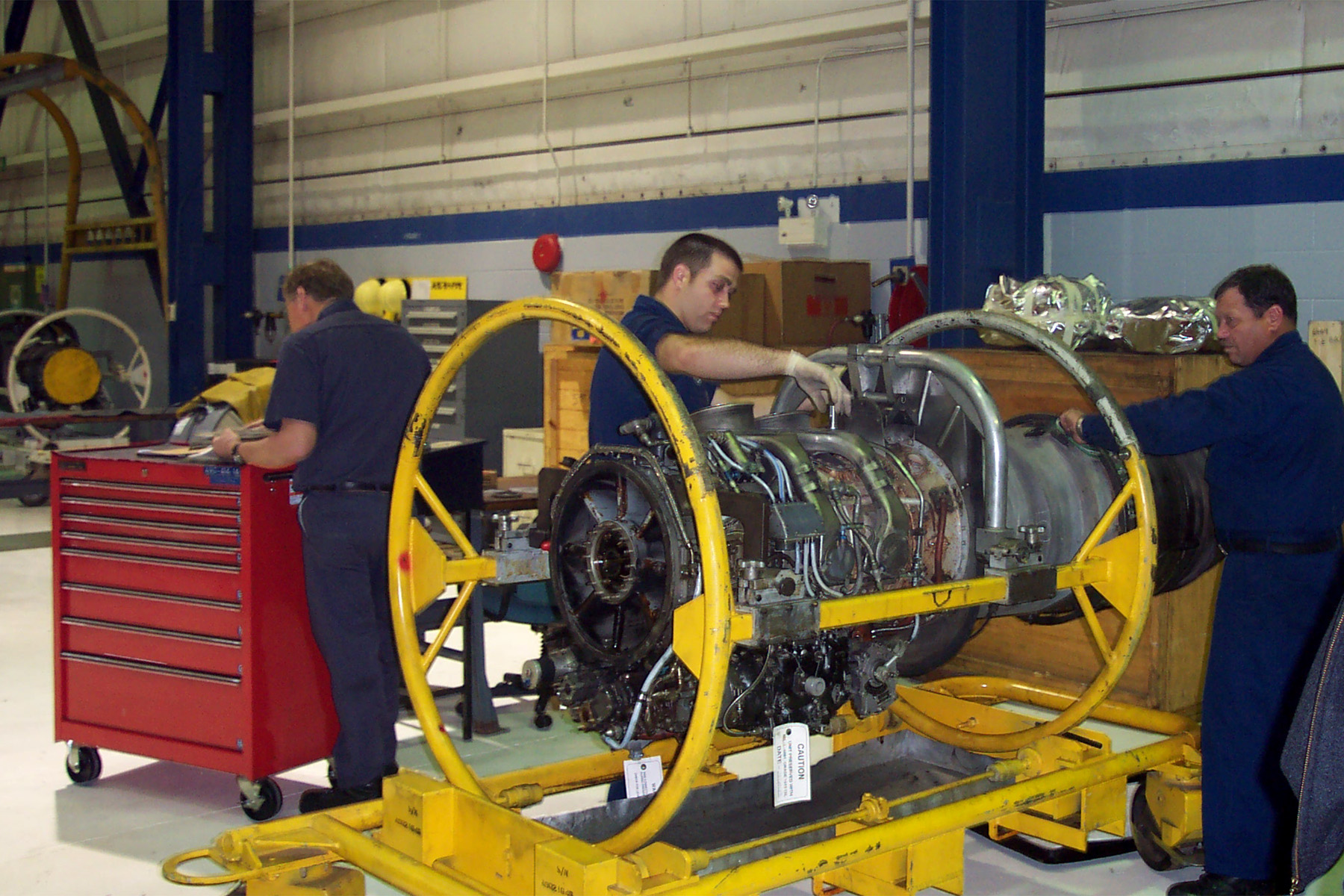
During the recent Type-Model-Series evaluation at Naval Air Station Jacksonville, a T-56 engine undergoes disassembly and preparation for cleaning and re-work.