
Math, science, technology teachers tour Pax
By Norine Rowe
Public Affairs Department
PATUXENT RIVER NAVAL AIR STATION, MD—Hoping to tap into NAS Patuxent River as a “real-life” learning ground for students, local teachers plan to show how aviation professionals use math, science and technology in their work here.
Nineteen math, science and technology teachers from St. Mary’s County public schools toured Pax River last month to learn about some of the station’s high-tech careers, visit station facilities and see Pax professionals at work. The middle- and high-school teachers plan to take what they learned back to the classroom to share with students.
“We’re looking for ways that students can study something in the classroom and then come here and see how the math, science and technology they’re learning in school are utilized in real-life projects at Pax River,” said Marian Steinbach, acting supervisor of instruction for mathematics. “This base will be the employer for many of our students and they need to be aware that all this technology is right in their neighborhood.”
Leading the tour was Tim Smith, NAS executive director, who briefed the educators about the station’s history, facilities and operations.
“We have unique, world-class capabilities here that no other base in the country has,” Smith said, describing Pax River’s role in the research, development, testing and evaluation of naval aircraft.
As to future employment opportunities for local students, Smith said the high-tech careers at Pax River will require solid skills in math, science and technology. And to stay competitive, he said students will need to keep educating themselves.
“Anyone who doesn’t keep their skill level up will end up in low-paying, dead-end jobs,” Smith said. “To be successful in careers here, students must understand and be able to use the technology of the day.”
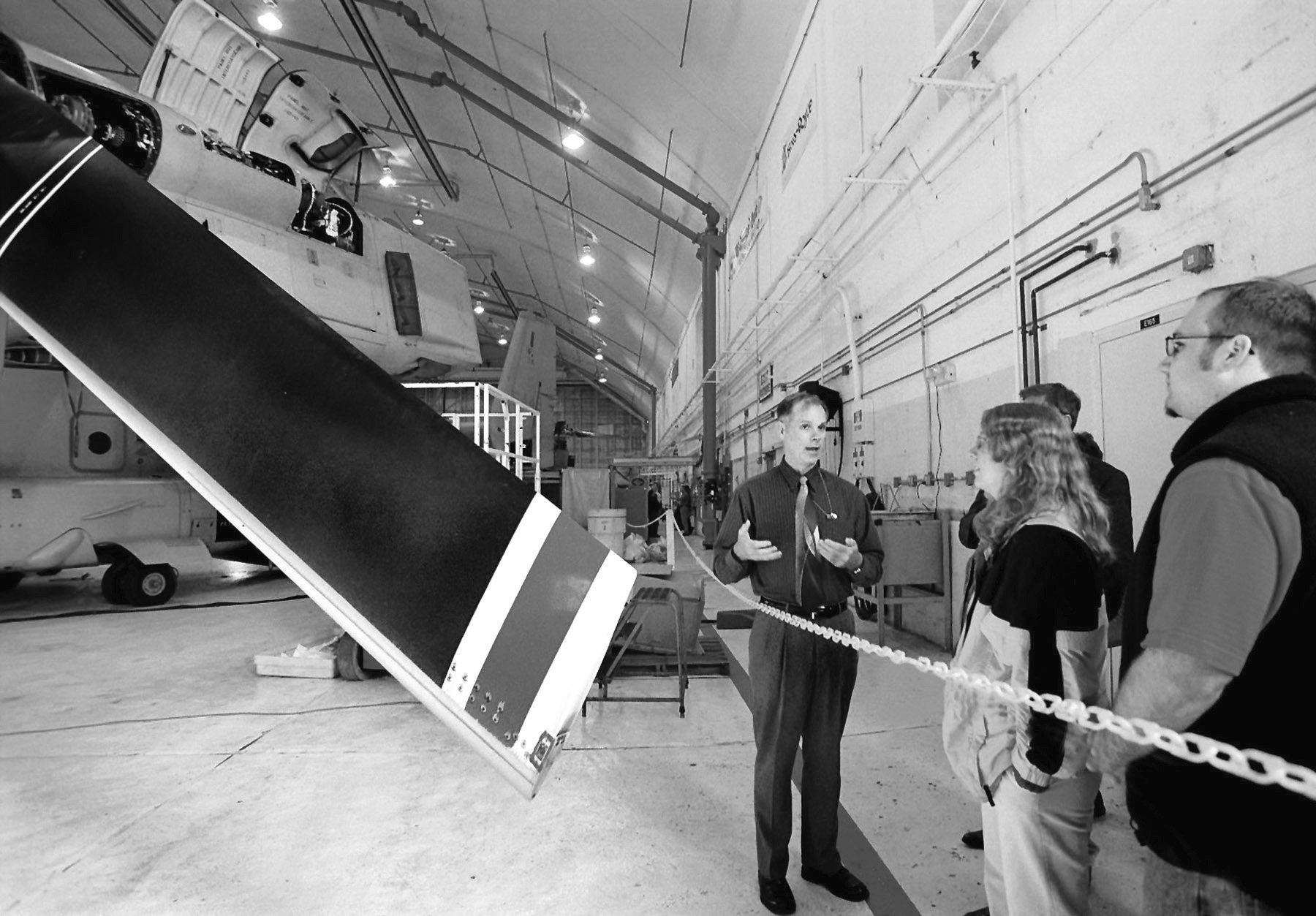
During their tour of station facilities, the teachers visited the V-22 hangar, Atlantic Ranges and Facilities, and the F/A 18-E/F program. In addition to seeing some of the station’s high-tech equipment, they learned about the mission of the facilities they visited, the technology being used and career opportunities available. They also began thinking about ways to connect what they were seeing to classroom learning.
“Students still ask the age-old question, ‘Why do I need to know this?’” Steinbach said. “And we’re trying to answer them by showing how math, science and technology are used to solve problems in the real world of naval aviation.”
Finding ways to get students excited about math and science can be challenging, but the teachers who toured Pax River discovered some opportunities to help students connect math and science concepts with naval aviation technology.
“This is great, learning the physics behind the planes,” said Melissa Cortinas, an eighth-grade science teacher at Leonardtown Middle School. “My students will love this. They’ll eat it up. I can take what I’ve learned today and put it into language my students will understand.”
Following their tour of Pax River, the math, science and technology teachers will explore ways to incorporate what they’ve learned into the classroom studies. They will also look into ways to collaborate with station employees and tap into station resources to enhance what their students are learning.
-USN-
V-22 Integrated Test Team member Bob Price explains some aerodynamic principles behind the V-22 Osprey to a group of local math, science and technology teachers during a tour of station facilities. In an effort to connect classroom learning with real-world applications, the teachers plan to show students how Pax professionals apply math, science and technology to their work in naval aviation.
Photo by Norine Rowe