Flight Deck Scrubbers: Improving the Breed
Flight Deck Scrubbers:
Improving the Breed
by John Goodman
NAVAIR Public Affairs
“If jet fuel or hydraulic fluid spills on a carrier’s flight deck in a rough sea, you could have planes sliding all over, even into each other or off the deck. You’ve got to get those spills cleaned up, and fast.” So warns David Semat, the retired Navy Master Chief who manages the Support Equipment Rework Facility, or NAVAIRSEFAC, located in the corner of a Solomons (Md.) industrial park.
Semat’s SE rework team has developed an essentially new model of flight deck scrubber, modified from a small commercial street-cleaner-like machine that had just not been up to the job. Now they’ve set up their own production line to build 54 of these reworked units, shipping one every two weeks to the fleet.
The team is even writing the manuals and training the crews, and Naval Sea Systems Command (NAVSEA) is more than happy with the results. Fleet readiness has been enhanced in a small but very important area.
A Problem Waiting for a Solution
Semat tells how he bought the first scrubber years ago and put it aboard the USS Franklin Delano Roosevelt (CV-42). “We had planes aboard that were leaking so bad there was more damage from their sliding together than from anything else. But none of the scrubbers we’ve ever had were specifically engineered or developed for a flight deck. We never developed a particular machine for this function, as we have for the tractors that handle airplanes.”
Over time, the Navy has used three companies to supply its deck scrubbers. Now the Naval Sea Systems Command (NAVSEA) buys two from the Tennant Company in Minneapolis for each ship commissioned. One problem is that no specific personnel were designated to perform maintenance on the machines, though the Air Department operates them. Another is that the machines are designed basically for warehouse use, that is, leisurely pickup on smooth concrete—a far cry from the rough, pitching surface of a flight deck, with immediate demands in all kinds of weather.
To get the machine to function better, NAVAIRSEFAC redesigned a number of its basic components and set up a production facility in Solomons, Md. Two other NAVAIRSEFAC sites are also involved in the rework: Norfolk, Va., and North Island, Ca. The Tennant scrubbers come in from the fleet, pretty much used up after hard service, and Tim Humphreys, commodity manager for the scrubber project, is in charge of getting them rebuilt and reconditioned to be virtually new models.
Humphreys explains why SEFAC is equal to the task: “We work on everything from jet engine test cells—repairing and testing them before they go into service—to fixing the towbar that pulls the aircraft on the flight deck. And anything in between, including ordnance handling and support systems and avionics.” NAVAIRSEFAC has some 1,400 employees at 20 sites here and overseas. Solomons, Md., is the headquarters.
Transformation Extends to Deck Scrubbers Too
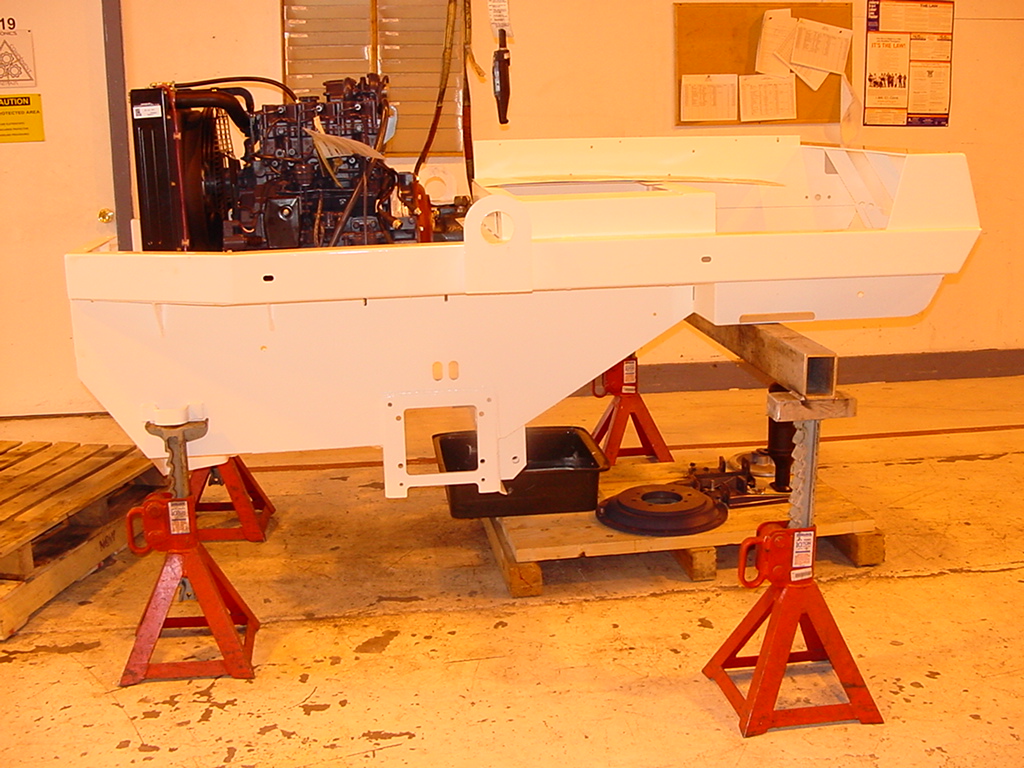
The first modification was to give the Tennant Company unit an engine change. Its low-powered diesel was replaced with a higher-powered unit installed in a quick engine change (QEC) pod. Now the engine, hydraulic pump and radiator are in one unit, on rails. Other changes for easier maintenance and better performance followed. Most modifications were made to the hydraulic system or involved upgrading and moving components around for easier access and service.
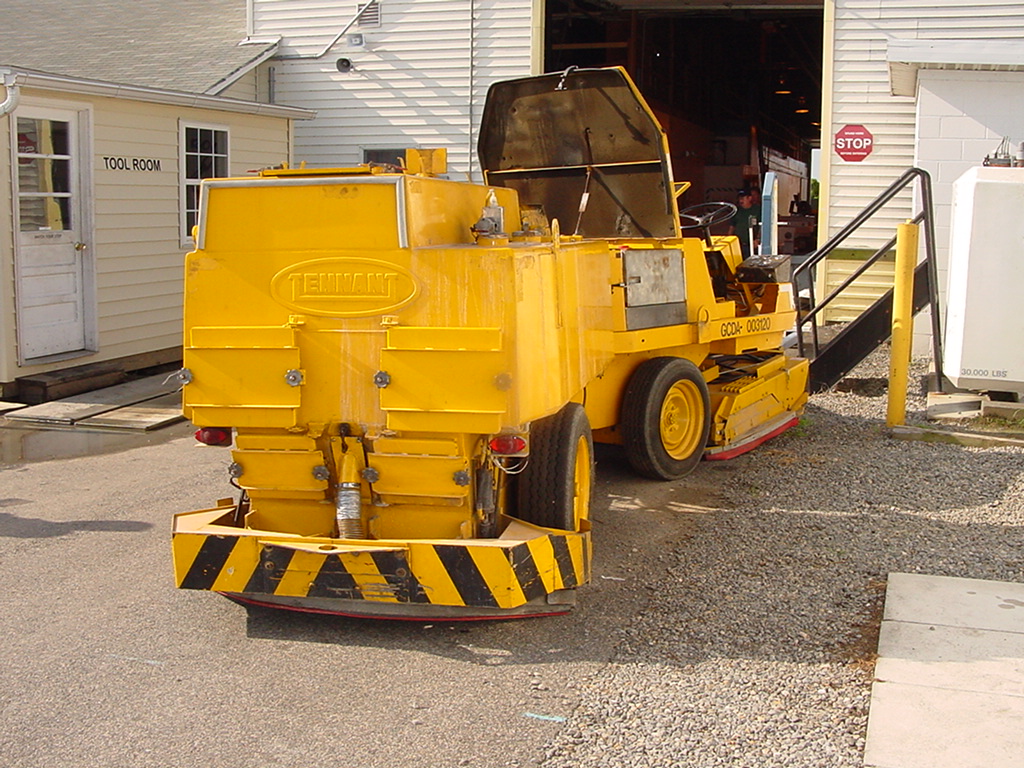
The scrubber is built in two sections—a tractor with rotating brushes underneath and a trailer which picks up and holds the spills. The liquids are filtered and reused; no solvents are employed, just water, rotating brushes and a big holding tank. Over time, Tennant had done its own modifications, adding and changing parts here and there so that some 82 different versions of the machine exist. The SE rework team is going to “lock in a configuration” in order to standardize the Navy’s new scrubber and reduce costs.
Humphreys says, “We will do a complete logistics analysis on it, provide all the parts, stock all the parts, and meet all the standards of logistics before we’re done.” The team plans to deploy its first units in December.
__________________
NAVAIR provides advanced warfare technologies through the efforts of a seamless, integrated, worldwide network of aviation technology experts. From aircraft and weapons development to carrier launch and recovery; from sensors to real-time communications to precision targeting; from aircraft and weapons sustainment to state-of-the-art training; NAVAIR provides dominant combat effects and matchless capabilities to the American warfighter.
Captions
Photo 1: NAVAIRSEFAC Flight Deck Scrubber
Photo 2: Scrubber Quick Enginge Change (QEC) Pod