NAVRIIP team identifies unique and aggregate barriers
By Margaret Kenyon-Ely
NAVICP Public Affairs
The Naval Aviation Readiness Integrated Improvement Program (NAVRIIP) team continues to focus on barrier identification and removal through the Type Model Series (T/M/S) review process.
“I see a lot of synergy. So far, identifying the efficiencies in sites by T/M/S has been working extremely well,” said Capt. Steven M. Nagorzanski, Cross Functional Team-2 (CFT-2) lead.
“We’re recognizing differences among site performance and now we’re asking why,” added Bob Mason, Thomas Group - results manager and barrier collector.
In December 2002, the NAVRIIP team changed its focus to T/M/S barrier identification vice site specific. The utilization of across-the-board representation of top-to-bottom support – Naval Air Systems Command (NAVAIR) program offices, Naval Inventory Control Point (NAVICP) integrated weapon support teams (IWSTs), aircraft intermediate maintenance detachments (AIMDs), naval depots, and the Thomas Group support – is a key advantage of the T/M/S strategy.
Each T/M/S has unique barriers, although the NAVRIIP team is discovering common barriers as it works through the process, noted Nagorzanski.
Significant aggregate barriers include scheduled maintenance as a major driver of aircraft downtime, trained manpower, and obsolescence.
All communities are looking at potential manpower barriers and, for the first time, cross-site optimization, according to Nagorzanski who cited the F/A-18 F-404 engine as an example.
In the case of the F-404 engine, enough components were available but were at the wrong location. The T/M/S team determined that redistributing the assets would optimize the process.
“The number one benefit of NAVRIIP is the fact that it makes the whole logistics chain visible from start to end. For me, it’s personally good to see the items and talk to the people who work on the items – the E-3s, the E-4s, the petty officers. I think that’s important,” commented Cmdr. Joyce Robinson, F/A-18A/C/D weapons manager, NAVICP.
In addition to improving F-404 engine readiness, the NAVRIIP process contributed to increased
support material availability (SMA) and decreased backorders on the F/A-18’s radar (previously called the APG-65) and APG-73. Previously, the Defense Logistics Agency (DLA) utilized weapons system designator codes (WSDC) on complete aircraft only. The F/A-18A/C/D program had DLA assign codes to top degraders, including the radar and the APG-73, thus enabling the organization to take a systems focus.
“Immediately after this change, we were able to get the backorders down. Before that, we had no visibility,” said Robinson.
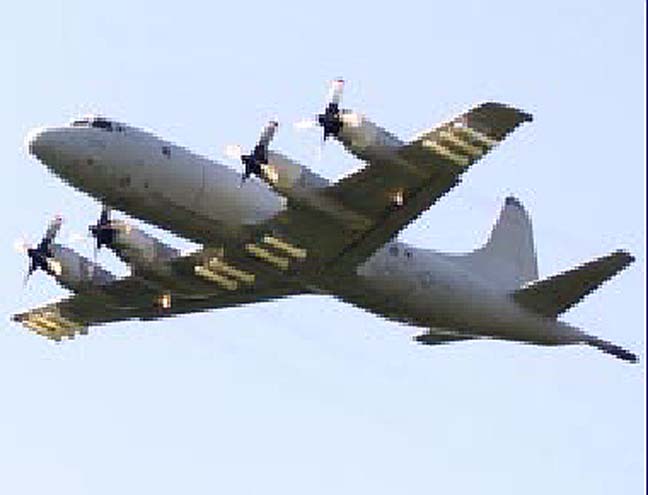
Lt. Cmdr. Philippe Grandjean, weapons manager of the P-3, NAVICP, agreed that NAVRIIP fosters resolution of readiness problems.
“What I like about the NAVRIIP process is that it brings subject matter experts together to talk about problems. We’re really looking deep to find solutions. It’s a good process that will pay
back dividends,” said Grandjean.
For example, decreasing the gap between entitled ready for training aircraft vice the actual number of RFT aircraft in place is a key goal for the P-3 community.
Already the P-3 T/M/S team has experienced success with the Anti-Surface Warfare Improvement Program Integrated Avionics Trainer (AIPIAT), one of the first NAVRIIP initiatives.
Parts obsolescence is another crucial issue faced by the T/M/S teams, especially in the H-60 B/F/D program.
“We’re looking at ways to improve systems that are always obsolete. We certainly have challenges maintaining required readiness rates in our inservice aircraft,” said Cdr. Michael Ropiak, Weapons Manager of the H-60, NAVICP.
The H-60 Obsolescence Barrier Removal Team (BRT), created in the spring of 2003, focuses on the items that drive customer wait time and RFT aircraft availability. By utilizing an Opportunity Index Tool, the H-60 T/M/S team can examine the number of cannibalizations, failure rates, as well as supply and maintenance downtime.
“We’re already working on improving obsolescence through Performance Based Logistics (PBL) contracting and replacement with parts that are suitable substitutes,” added Ropiak.
Additional T/M/S teams scheduled for training throughout September and October 2003 include the CH-46, CH-53, AH/UH-1, MH-53, H-3, and F/A-18 E/F.
U.S. Navy photo by Photographer’s Mate Airman Shannon Smith