NAVAIR Test Effort Brings Joint Collaboration
By Vicky Falcón
NAVAIR Public Affairs Office
The importance of testing and the value of teamwork were never better illustrated than in the events that led to a recent evaluation for the KC-130J – a brand new Marine Corps aircraft in the final stages of testing at the Naval Air Systems Command (NAVAIR) testing facility at Patuxent River, Md.
The Navy/Marine Corps was within weeks of taking delivery of two new planes from the contractor when a problem was suspected with the state-of-the-art glass cockpit and flight deck displays.
According to Thom Esposito, NAVAIR Class Desk Officer for the Coast Guard’s C-130J and former Deputy Class Desk Officer for the KC-130J, the manufacturer had upgraded portions of the flight deck after cockpit testing had already been completed.
“There were some concerns about those upgrades affecting the aircraft’s compatibility with Night Vision Imaging System (NVIS) use,” Esposito said.
Those concerns required additional testing, and since there were no test planes at NAVAIR Patuxent River with the upgraded flight deck, Esposito went to work locating the aircraft necessary to conduct the analysis.
“Both the Air Force and the Coast Guard have C-130Js,” said Esposito, who explained that the cockpits in the aircraft are the same, but their mission/payload designs are not.
Esposito first contacted the Air Force and then the Coast Guard about the NVIS concerns. Though the Air Force had no aircraft available to participate in the testing, they did offer the use of their pilots. The Coast Guard, on the other hand, had a C-130J but no one available to fly the plane.
“The test represented a true joint service effort,” said Esposito. “An Air Force crew flew a Coast Guard aircraft to a Navy facility to test Marine Corps avionics equipment.”
Lt. Col. Ed McDaniel is NAVAIR’s principal deputy program manager for the KC-130J. “This is a great example of working together,” he said. “We’re all common “J” users and we’ll all benefit from the test.”
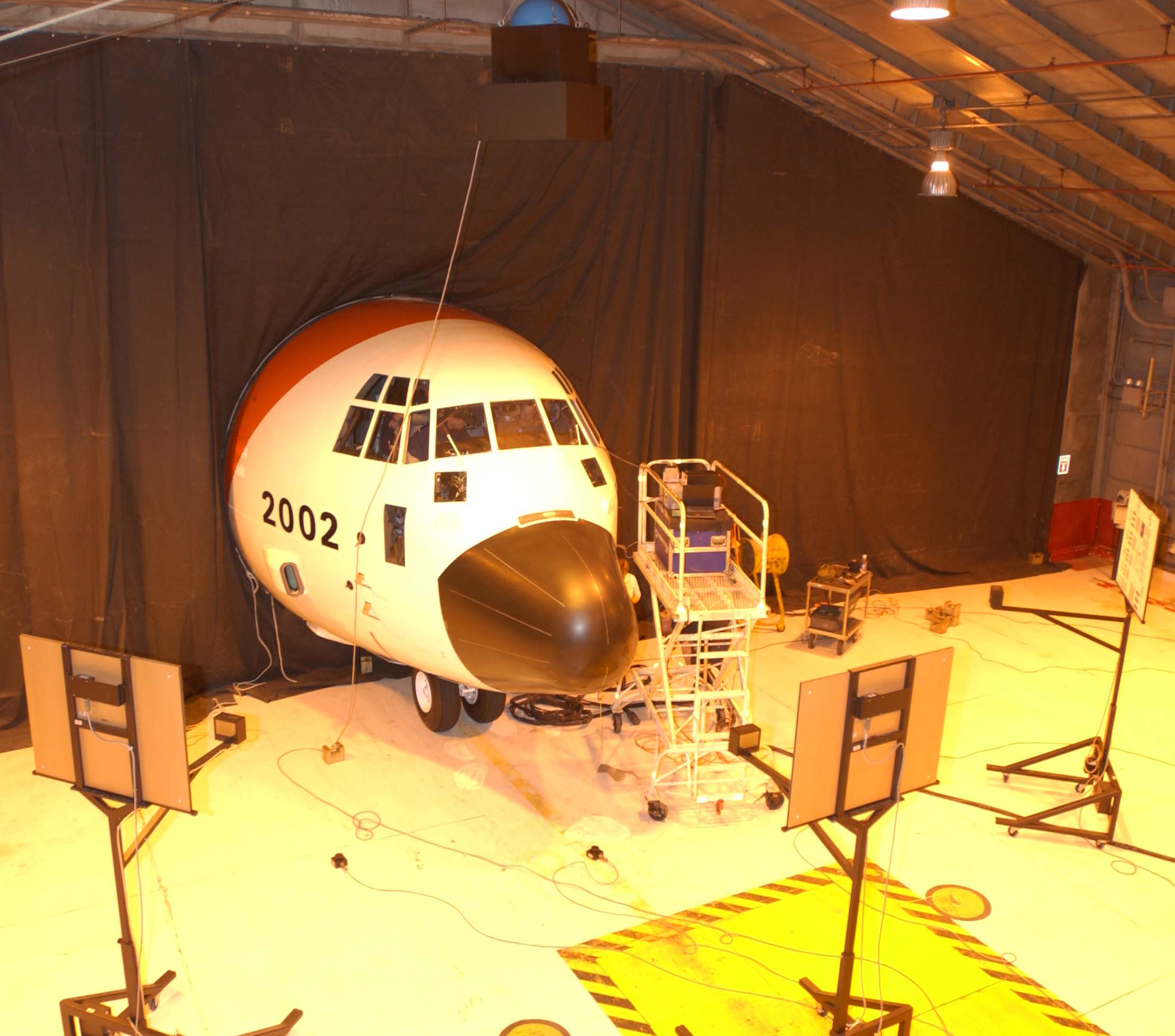
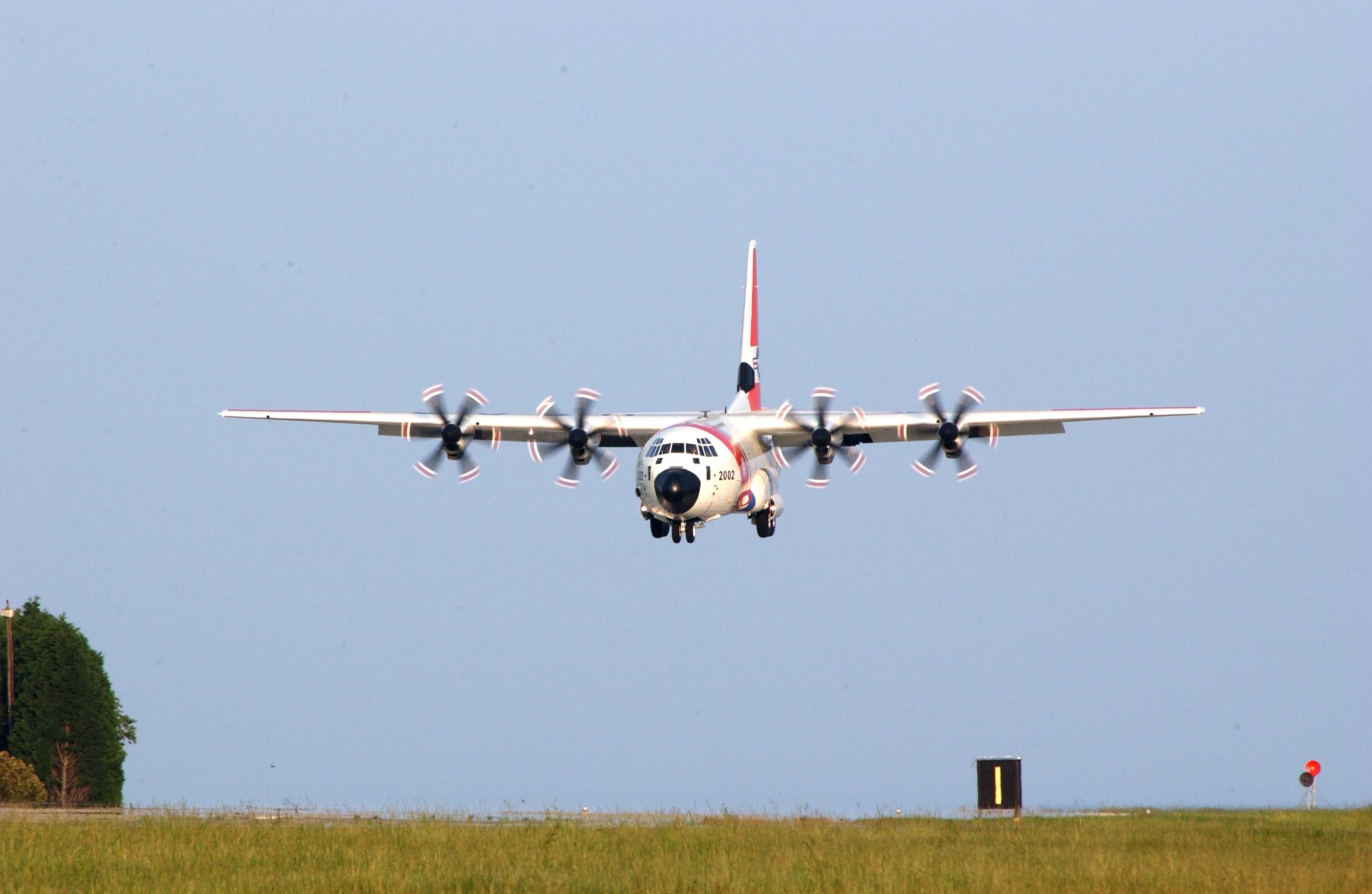
The aircraft flew into NAVAIR Patuxent River on June 5, where it underwent extensive testing in the Aircraft Test and Evaluation Facility. During the day the facility tests aircraft engines, but at night it can be used as a light evaluation lab. In this optimum test environment, a team conducted an NVIS assessment until nearly 4:00 a.m. The aircraft was then flown back to its home at US Coast Guard Air Station Elizabeth City, N.C. later that same day.
Initial results of the testing showed a discrepancy between the new displays and the current specifications. Those results are presently with the NAVAIR program office that oversees the KC-130J and C-130 aircraft. That program office will resolve potential safety-of-flight problems with the manufacturer.
Test results have also been submitted to both the Air Force and the Coast Guard, providing both services with important new information about their aircraft’s NVIS compatibility.
“As a result of this cooperative effort potential deficiencies relative to safety-of-flight with night vision goggle use were identified,” McDaniel said. “We’re working with the contractor to address them prior to fleet introduction (of the plane).”
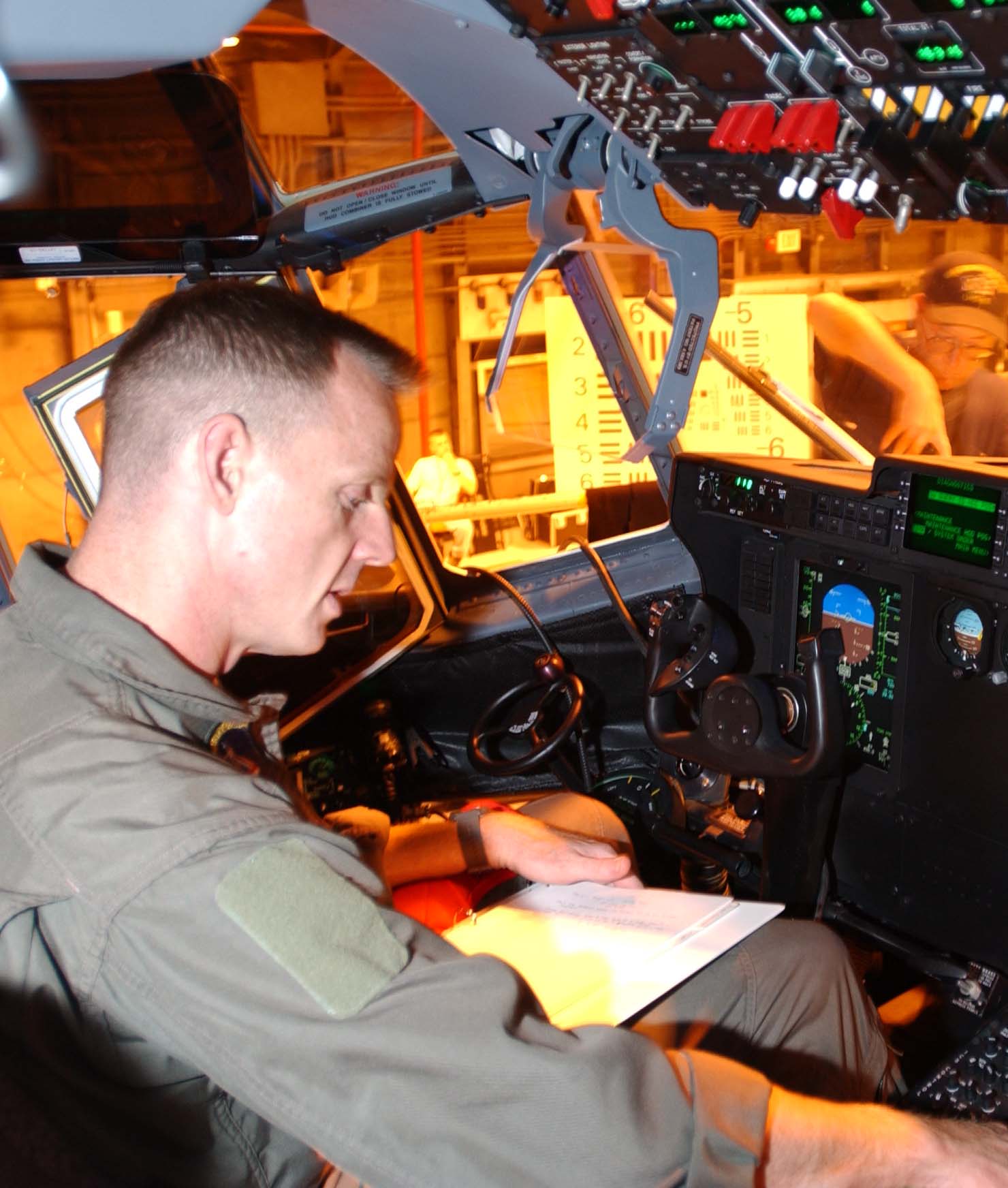
Night vision goggles have become an important asset to the U.S. military, according to Major John Albers, lead test pilot for the KC-130J test team. Albers and his test team had been involved in all previous NVIS tests on C-130s and performed the tests on the Coast Guard aircraft.
“Night vision is essential to the way America fights today,” he said, “and its importance can not be over emphasized.”
“My job is to make sure what the fleet gets (when an aircraft is delivered) is exactly what it needs,” Albers said, “and that it is safe for the user.”
NAVAIR’s unsurpassed testing facilities, combined with the knowledge and expertise of the test teams, are used to examine the operational integrity of aircraft and its equipment – and ultimately prove its safety.
“There were questions about the KC-130J that needed to be answered,” said Esposito. “The test team had to shift gears to change the test plan, get it approved, arrange for the facilities and personnel necessary to eventually conduct the test.”
And though all this had to happen in a matter of weeks, the effort put forth by the team and the results of their testing will ensure the fleet has a safe and reliable product that meets their war-fighting needs.
NAVAIR provides advanced warfare technologies through the efforts of a seamless, integrated, worldwide network of aviation technology experts. From aircraft and weapons development to carrier launch and recovery; from sensors to real-time communications to precision targeting; from aircraft and weapons sustainment to state-of-the-art training; NAVAIR provides dominant combat effects and matchless capabilities to the American warfighter.
Photo 1 Caption: Major John Albers, lead test pilot for the KC-130J test team, performs an evaluation of upgrades to state-of-the-art glass flight deck displays on a US Coast Guard C130-J. Both aircraft share similar cockpit configurations. US Navy photo by Vernon Pugh.
Photo 2 Caption: A US Coast Guard C130-J arrives at NAVAIR Patuxent River for testing of its recently upgraded state-of-the-art glass cockpit and flight deck displays. The aircraft cockpit is the same as the new US Marine Corps KC-130J, which is in the final stages of testing. US Navy Photo by Vernon Pugh.
Photo 3 Caption: A US Coast Guard C130-J undergoes extensive testing of its glass flight deck display at the Aircraft Test and Evaluation Facility at NAVAIR Patuxent River. During the day the facility tests aircraft engines, but at night it can be used as a light evaluation lab. US Navy photo by Vernon Pugh.