AH-1Z Super Cobra test pilot wins fight with leukemia, returns to fleet
By J.C. Milliman
PMA-276 public affairs officer
NAVAIR PATUXENT RIVER, Md -- Before June 1997, Maj. Tom Post didn’t really know what NAVAIR did.
Six years later, on the eve of his return to the Fleet Marine Force, he claims he still doesn’t. Coworkers in PMA-276 chalk this up to modesty. After all, he’s a Marine who has seen most facets of naval air warfare system acquisition from the inside out as few do here.
He’s even faced the odd professional detour or two along the way. Nothing big he might say, just battling leukemia – and winning.
Post’s duties while assigned here have included attending the Naval Test Pilot School and test flying the Corps’ newest attack helicopter, the AH-1Z Super Cobra, as well as stints in PMA-202, as the Marine Aviation Detachment Executive Officer and lastly as PMA-276’s assistant program manager for systems engineering (or Class Desk) for the H-1 Upgrade program.
It was, to be sure, a NAVAIR experience much different from the one he envisioned when he graduated second in his TPS class, Class 113, in June ’98.
The St. Louis, Mo. native always wanted to be a pilot. He graduated from the University of Illinois and later received his wings in Sept. 1991. After more than 2,200 hours in approximately 30 different types of aircraft (mostly helicopters, though), he was assigned to HX-21 and the H-1 Upgrades Integrated Test Team here.
The H-1 ITT is developing, in conjunction with NAVAIR’s H-1 Program (PMA-276), a remanufacture of the Marine Corps’ UH-1N and AH-1W aircraft to the more than 80 percent identical UH-1Y and AH-1Z. This effort is expected to save the Marine Corps approximately $3 Billion in operating and support costs over the 30-year expected lifespan of the aircraft. The UH-1Y and AH-1Z share a common drive train, rotor head, tail boom, avionics, software and controls.
Post was test flying the first of five upgraded H-1 test aircraft, AH-1Z-1, at the Bell Helicopter plant in Arlington, Texas, when his battle with leukemia started.
“In February of 2002, I was down in Texas flying Z-1 when I started getting sick a lot,” Post said of his initial signs of the deadly bone marrow disease’s early stages. “After that, I spent a lot of time in and out of Bethesda doing chemo therapy.”
Post’s form of leukemia, although one of the more common forms among adults -- Acute Myelogenous Leukemia -- does not have a high survival rate according to the Leukemia and Lymphoma Society. The survival rate is currently about 19 percent for adults.
The overall five-year survival rate for all forms of leukemia has tripled in the past 40 years, according to the Society. In 1960, the overall five-year survival rate was 14 percent, by the 1970s it had reached 35 percent, and now the overall five-year survival rate is 46 percent.
“Because I was fairly young, and they had a new drug treatment in conjunction with the chemo, I had a high chance of recovery,” Post stated matter-of-factly.
In between chemo and trips to Bethesda, Post’s “cook’s tour” of NAVAIR lead him through both administrative and engineering duties, all of which benefited from his fleet, test and medical experiences, according to his PMA-276 coworkers.
“He’s been the best Class Desk I’ve worked with,” said Bert Frowein, PMA-276’s H-1 Upgrades Class Desk systems engineer. “He’s easy to talk to, came with no preconceptions, has good sensibility and practicality. He can see the big picture and whether or not issues amount to a big deal or not.
“The fact that he has recent flight test experience in the same aircraft we are supporting means he could relate to the issues we’ve had to deal with,” Frowein added.
Noting the irony that Post, under normal circumstances, probably would not have come to the program had it not been for the flight surgeons at the Naval Aerospace Medicine Institute in Pensacola, Fl., grounding him, Post’s boss, Col. Doug Isleib, PMA-276 program manager, marveled at the impact he’s made to a program that, under favorable circumstances, it might never have enjoyed.
“I can’t imagine what that’s like, getting news like that,” said Isleib. “Nevertheless, Scruffy’s been tremendously valuable to this program both because of his ability to see the whole picture, and because of his fleet and test experience. The whole program is happy to see him beat the leukemia and to return to flying.”
To no one’s (who knows him, anyway) surprise, the doctors in Pensacola, following a medical finding that he was in remission, issued a waiver returning him to flight status in April.
“I always knew I’d get back to flying some day,” Post said.
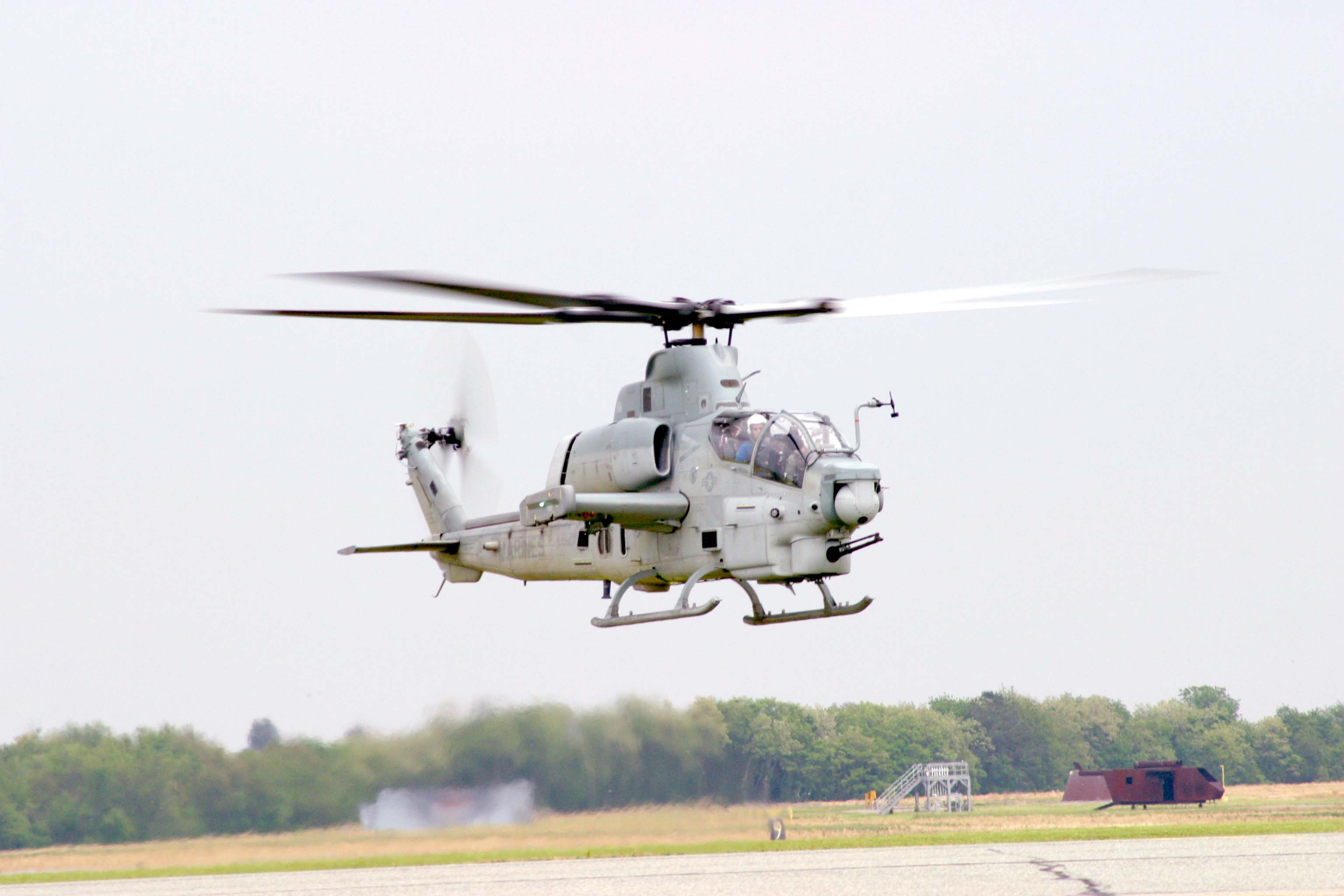
That day came May 21 when Post flew AH-1Z-3 on an avionics familiarization flight with Bell Helicopter test pilot Gregg Shimp.
“It was great to see him flying again,” said Shimp. “And inspirational to see someone come back from where he’s been.”
Apparently, Post hadn’t lost any of his razor-sharp test pilot skills, according to Shimp.
“He’s certainly in the top 10 of all Cobra test pilots on this station,” he said with a grin.
Post credits his wife, Trish, with much of his success in successfully battling leukemia to get back to a Super Cobra cockpit.
“I give her a lot of credit,” he explained. “She did a lot of running between here and Bethesda, taking care of me and three kids. She took it all in stride amazingly well.”
Even though Post returns to the FMF frustrated at watching peers flying in support of Operation Iraqi Freedom on television while he was Stateside battling his own deadly foe, his flight test and acquisition experiences here will come in handy at his new duty station, Marine Corps Base Camp Pendleton, Calif. and Marine Air Group 39.
“I’m happy to go back to new challenges in the fleet,” Post said. “I have a different perspective of what NAVAIR does. For a pilot, that’s a lot like visiting the kitchen at your favorite restaurant – sometimes you see things you don’t really want to see, but you learn there’s a whole lot more to putting the product on the table.”
Post’s PMA-276 teammates concur that his biggest legacy to Naval Aviation in general, and the AH-1Z and UH-1Y in particular, is that there is no single thing they can point to on the aircraft that’s solely his, save, perhaps, the aircraft themselves.
“He’s the consummate leader,” summed up Pat Cox, PMA-276 class desk engineer. “He kept things going during a very chaotic period by being approachable. He danced us all through the minefield as a team by fostering a climate that wasn’t intimidating.
“You can get a lot done that way,” Cox added.
And what of his visit to the NAVAIR kitchen? Do future plans include a return trip to acquisition?
“I’ll probably be back,” Post admitted with a broad smile. “There are worse things to do when you’re not flying.”
-30-
Cutlines
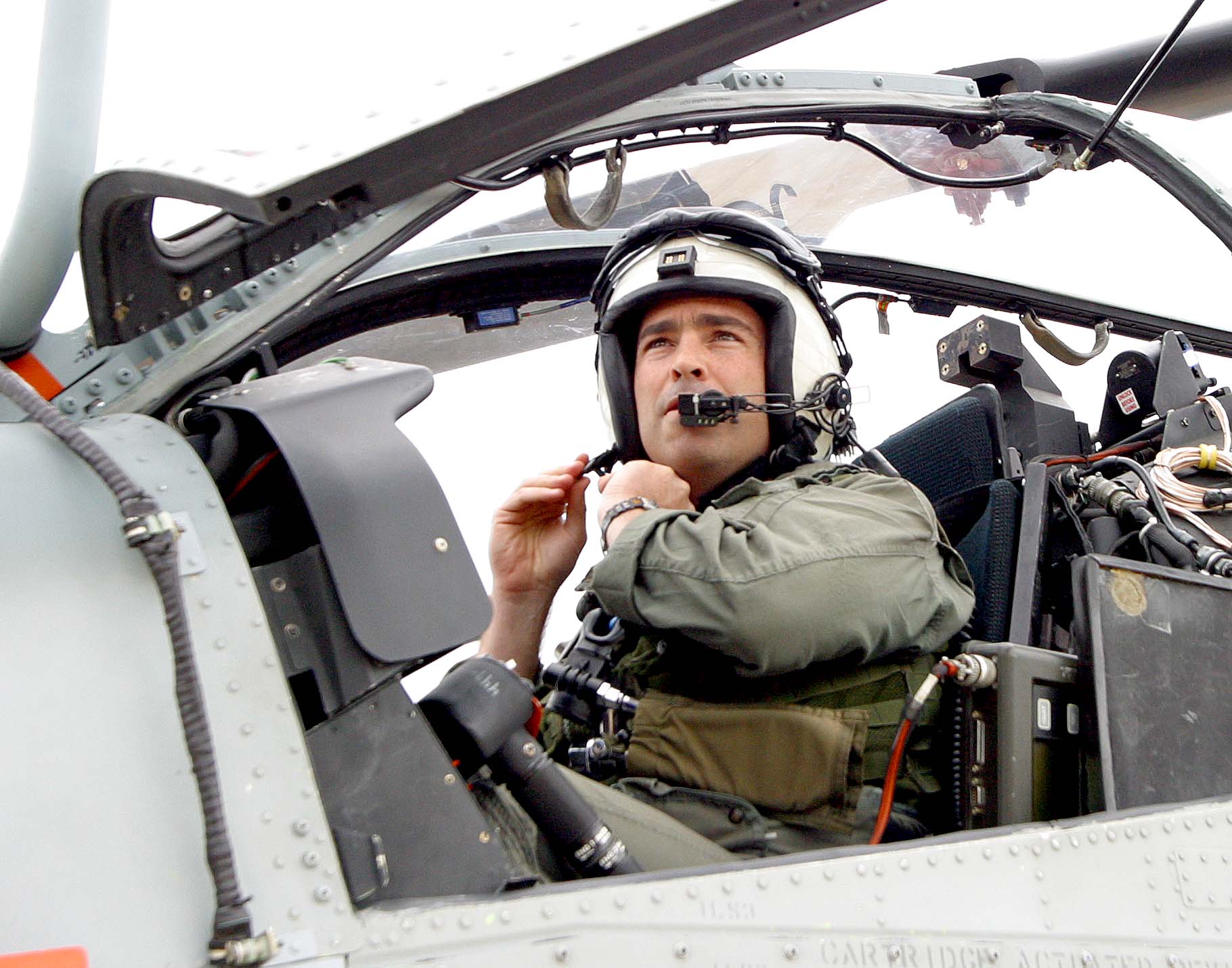
TomPost.jpg -- Maj. Tom Post runs through a post landing check list May 21 after returning from his first flight since doctors in Pensacola, Fla. cleared him to return to flight status in April. Post has spent the past six years at NAVAIR in PMA-202, as the Marine Aviation Detachment executive officer and lastly as PMA-276's assistant program manager for systems engineering (or Class Desk) for the H-1 Upgrade program. His next duty assignment is with the Fleet Marine Force at Marine Corps Base Camp Pendleton, Calif. and Marine Air Group 39.
Photo by Troy Lancaster
Inflight.jpg -- Maj. Tom Post flies the Marine Corps’ newest attack helicopter, the AH-1Z Super Cobra, on his first flight since returning to flight status after successfully battling leukemia. Joining Post for the May 21 flight was Bell Helicopter test pilot Gregg Shimp (rear cockpit). Post spent the past six years at NAVAIR in PMA-202, as the Marine Aviation Detachment executive officer and lastly as PMA-276's assistant program manager for systems engineering (or Class Desk) for the H-1 Upgrade program. His next duty assignment is with the Fleet Marine Force at Marine Corps Base Camp Pendleton, Calif. and Marine Air Group 39.
Photo by Troy Lancaster