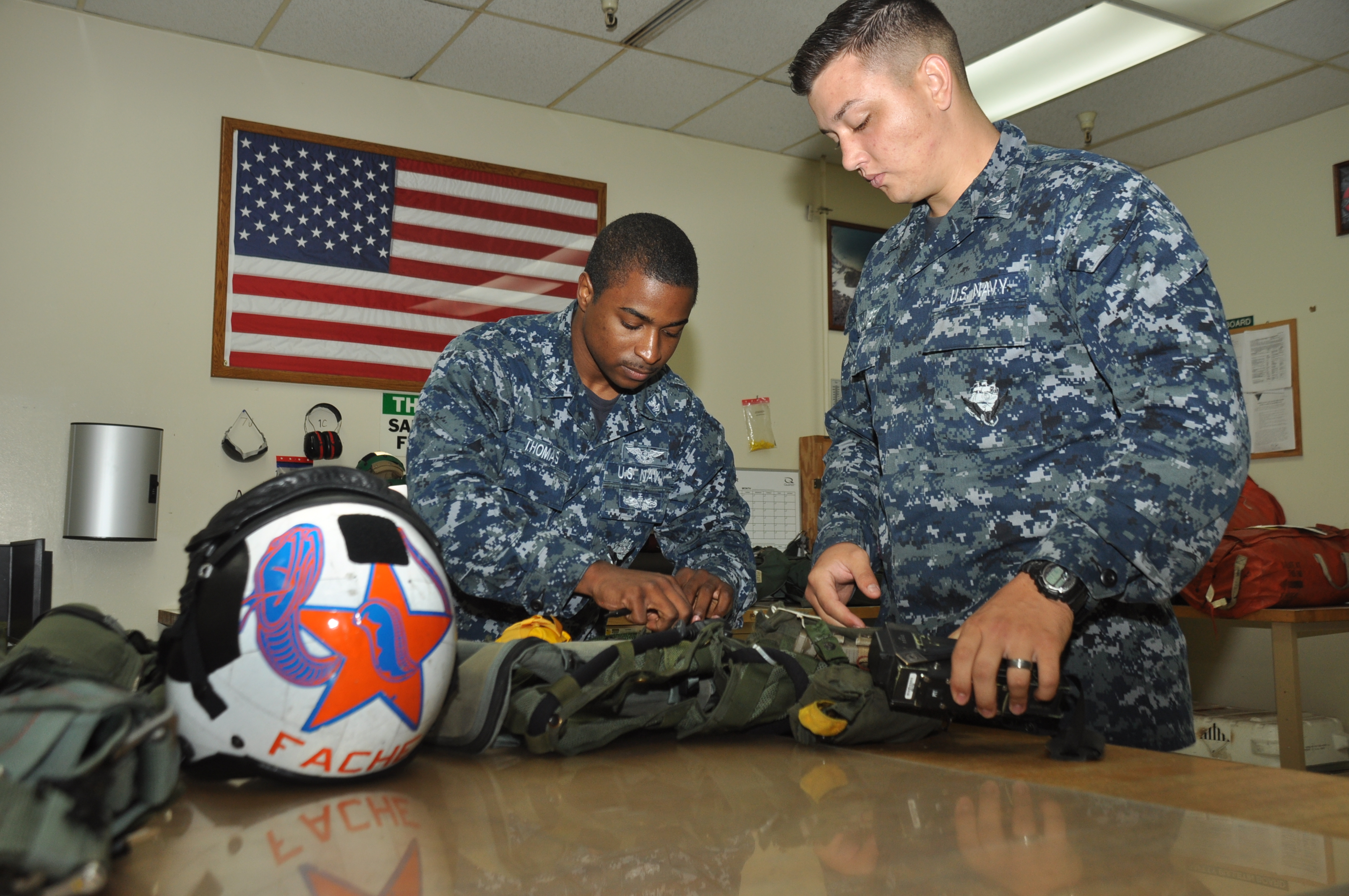
PR2 Andrew Thomas, left, and PR3 Cameron Laver inspect the condition of a flight vest. (U.S. Navy photo)
FRCSW Paraloft Shop Maintains Test Flight Line Gear
NAVAL AIR STATION NORTH ISLAND, Calif. - From aircraft engine and sheet metal mechanics to electricians and painters, Fleet Readiness Center Southwest (FRCSW) employs an array of artisans to ensure the integrity and safety of an aircraft prior to its testing at the flight line.
But before the flight line pilots and their crew take to the sky, the staff of the paraloft shop in Building 785 inspects and tests the aircrew’s gear to make sure it is in top condition.
“We work on the flight crew and pilots’ personal gear including their helmets, some of the equipment in the aircraft like the harness, life rafts, seat pans and parachutes; just about anything that pertains to the aviator or the aircrew,” said Aircrew Survival Equipmentman 3rd Class (PR3) Cameron Laver.
Depending upon the type of equipment, gear inspections are typically performed in 30, 90, 180, and 360-day intervals.
“The 90-day inspection is for the overall equipment,” Laver said. “That’s everything from the helmets, the harnesses, and everything carried in the pockets including knives.”
“The 360-day inspection cycle only pertains to individual harnesses like E-2 Hawkeye and F-18 Hornet equipment, which includes a hang check of the harnesses in case the crew ejects or bails out of the aircraft,” he said.
“Damaged gear is replaced. And because our shop is at the organizational level (O-level), equipment that is repairable but beyond our capability is sent to the intermediate level (I-level). We’re issued new equipment that we turnover for repair, like life preservers,” PR2 Andrew Thomas said.
The primary difference between I and O-level responsibilities is that the inspection-oriented duties of the O-level demand different Job Qualification Requirements.
In addition to `A’ School graduation, the three Sailors assigned to the paraloft shop are also required to maintain ordnance and Emergency Global Rescue, Escape and Survival System (EGRESS) qualifications.
Ordnance qualification is required because the paraloft shop handles the pencil flares and day and night flares stored in the vests of pilots.
“We install the seat pans in the aircraft that hold survival items,” Thomas noted. “We also install the parachutes, the life rafts, and their ordnances in the aircraft because no one else is qualified to handle those items.”
Sewing repairs and adjustments to flight suits and vests are also done in the shop.
Anti-gravity suits (G-suit), which are exclusive to F/A-18 Hornet pilots, are tested on a 180-day interval. Worn over or under a pilot’s flight suit, the G-suit is designed to prevent pilot unconsciousness by inflating to compensate for gravity forces.
The shop conducts about eight gear inspections weekly, Thomas said.