
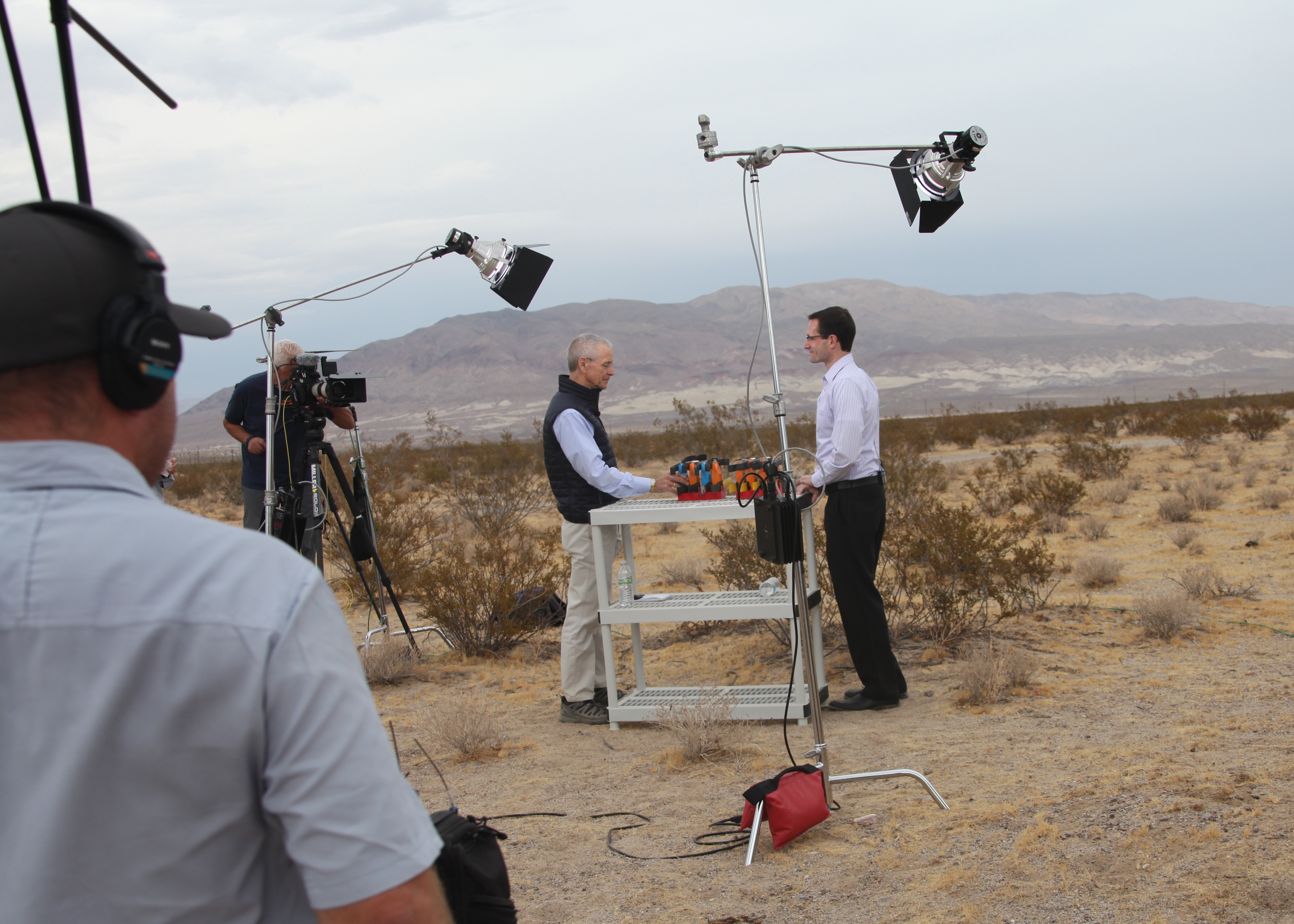
CBS News national security correspondent David Martin, center left, interviews Dr. Will Roper, director of the Strategic Capabilities Office, on the Naval Air Warfare Center Weapons Division South Range in October 2016 for a “60 Minutes” segment that aired Jan. 8. (U.S. Navy photo)
‘60 Minutes’ showcases work at China Lake
NAVAL AIR WARFARE CENTER WEAPONS DIVISION CHINA LAKE, Calif. - CBS News national security correspondent David Martin and a 10-person production crew spent six days filming test events and interviews at Naval Air Warfare Center Weapons Division China Lake last October; the “60 Minutes” segment aired on Jan. 8.
The story that brought Martin and two-time Emmy winning CBS producer Mary Walsh to the Indian Wells Valley was about work that the Massachusetts Institute of Technology’s Lincoln Laboratory is doing with micro unmanned aerial vehicles at NAWCWD.
“All of us at CBS are deeply grateful to the NAWCWD team for making our shoot go so smoothly,” Walsh said.
Lincoln Lab has been working with NAWCWD to test unmanned aerial vehicles, known as Perdix, at China Lake since 2014. The project is sponsored by the Office of the Secretary of Defense’s Strategic Capabilities Office.
The CBS crew was on hand to film the SCO's Perdix graduation exercise Oct. 25, 2016. The GradEx represented a first-of-kind event that dispensed more than 100 Perdix micro-UAVs from three F/A-18Fs. The Perdix vehicles then executed a swarming mission demonstrating autonomous behaviors.
“The scale of this swarm event exceeded any known air launched, or ground launched event, by a factor of more than three,” said Alex Ordway, NAWCWD’s Perdix test engineer.
The “60 Minutes” segment also featured other new technology from across the Department of Defense such as the Navy’s unmanned ocean-going vessel, the Sea Hunter, and the Marine Corps’ Unmanned Tactical Control and Collaboration program.
“This demonstration of one of the world's largest micro-drone swarms at China Lake is yet another example of how the one-of-a-kind ranges and facilities, and our uniquely qualified workforce at the Weapons Division support cutting-edge, innovative work for the warfighter,” said NAWCWD Executive Director Joan Johnson. “We had a team of folks from both our Point Mugu and China Lake sites working together with SCO, MIT/Lincoln Lab, and CBS to make this happen. It was a great success, and we at NAWCWD are proud to be part of one of the most significant tests of autonomous systems under development by the Department of Defense.”
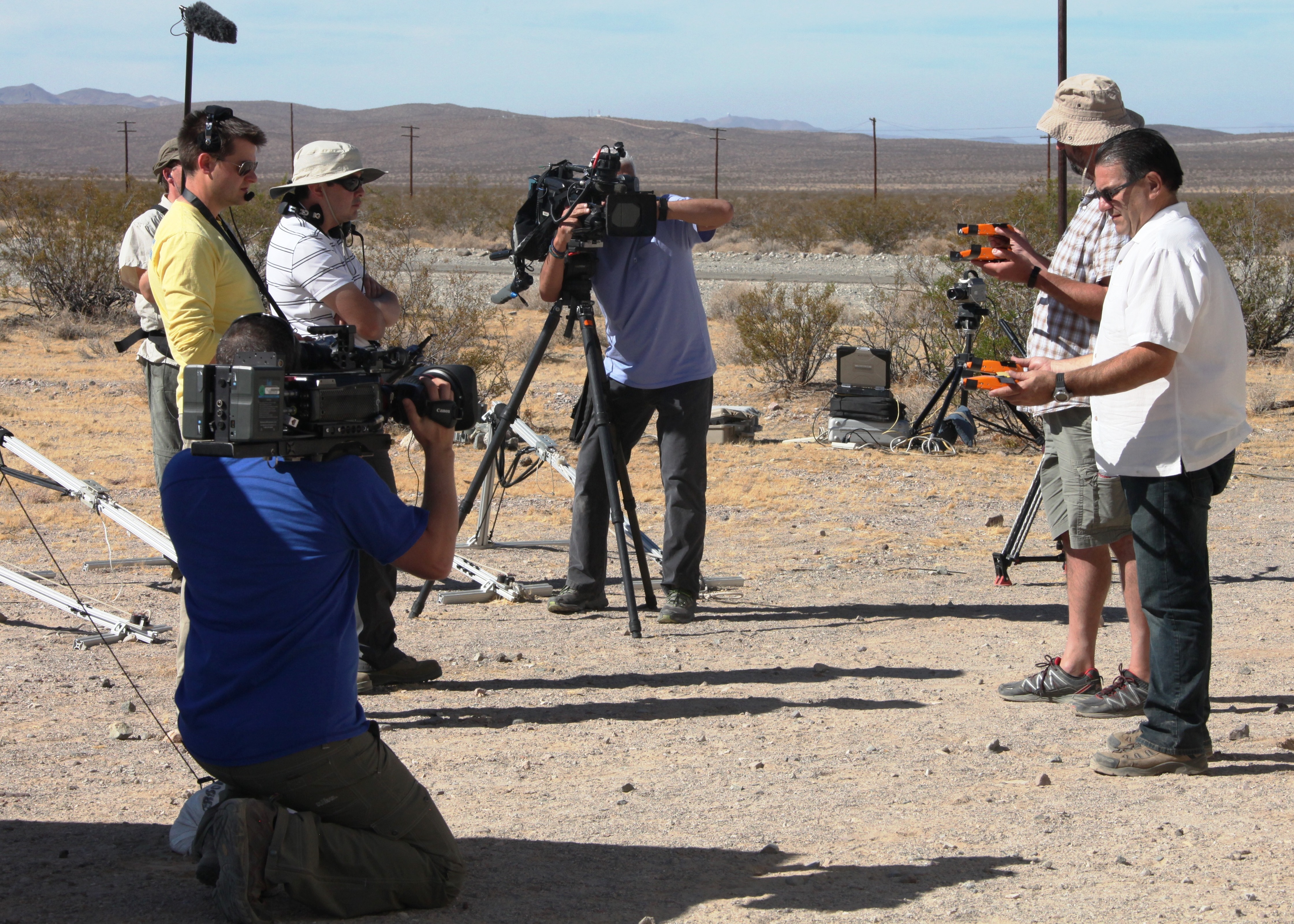
CBS cameramen Justin Hall, left, and Ron Dean, capture pre-launch shots with Massachusetts Institute of Technology /Lincoln Laboratory folks on the Naval Air Warfare Center Weapons Division South Range. (U.S. Navy photo)
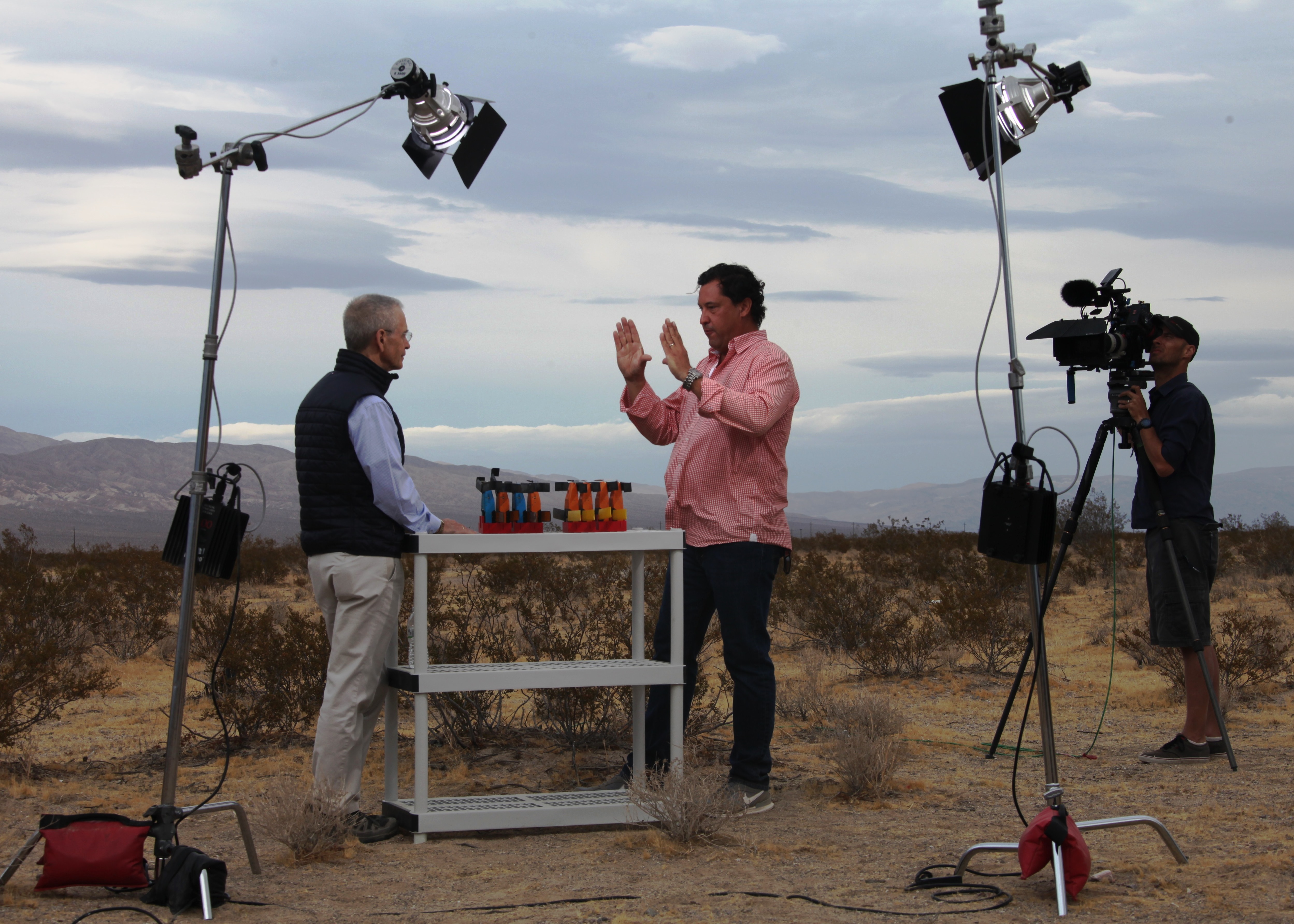
CBS News correspondent David Martin, left, interviews cameraman Rudy Niedermeyer about the challenges of filming the swarm of Perdix micro unmanned aerial vehicles for a segment of “60 Minutes Overtime.” Niedermeyer is a CBS Sports cameraman who normally works golf tournaments, and was brought onto this project because of the difficult nature of capturing Perdix in flight. (U.S. Navy photo by Renee Hatcher)
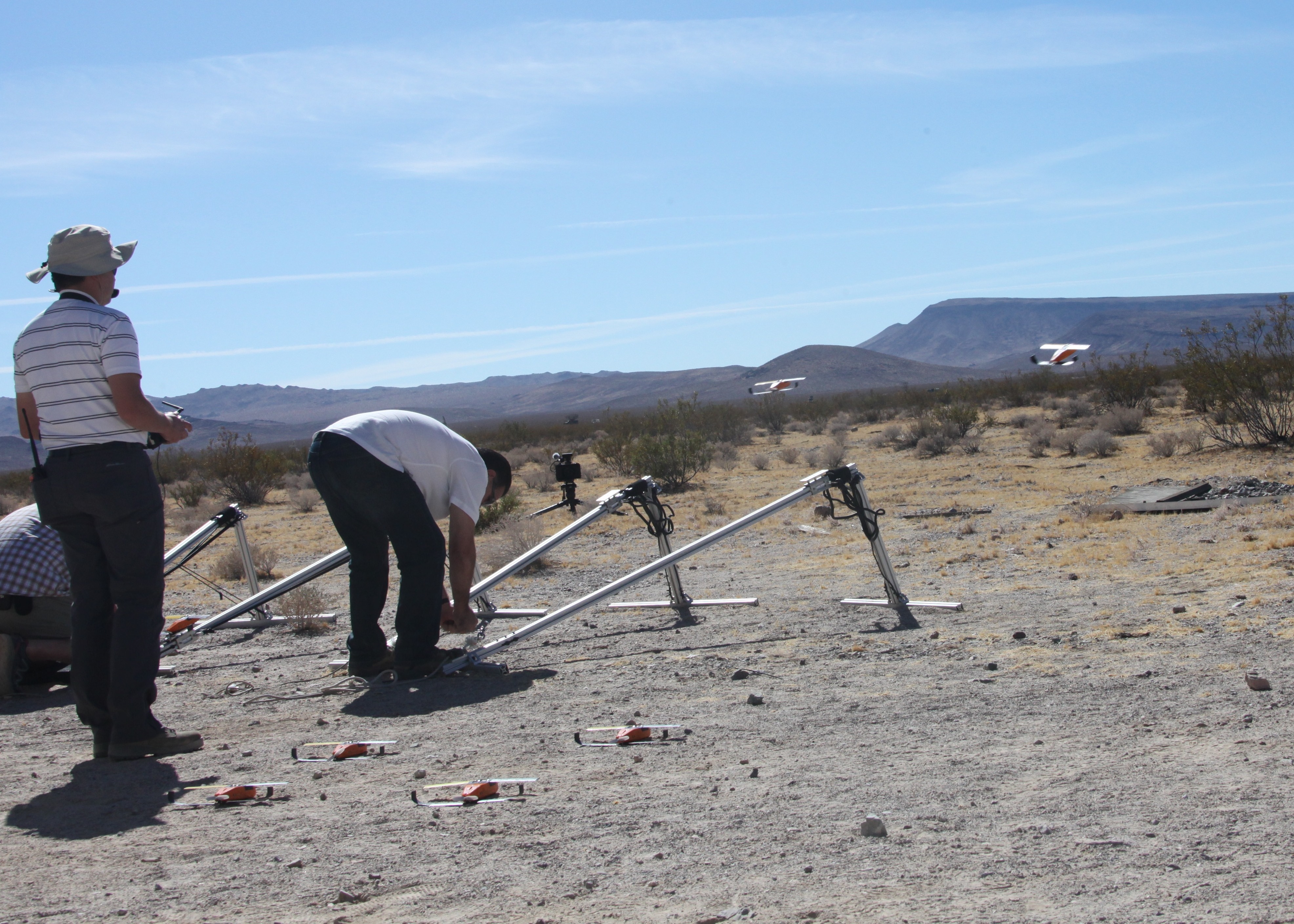
Folks from Massachusetts Institute of Technology/Lincoln Laboratory launch multiple Perdix micro unmanned aerial vehicles during a demonstration on the Naval Air Warfare Center Weapons Division South Range. (U.S. Navy photo)
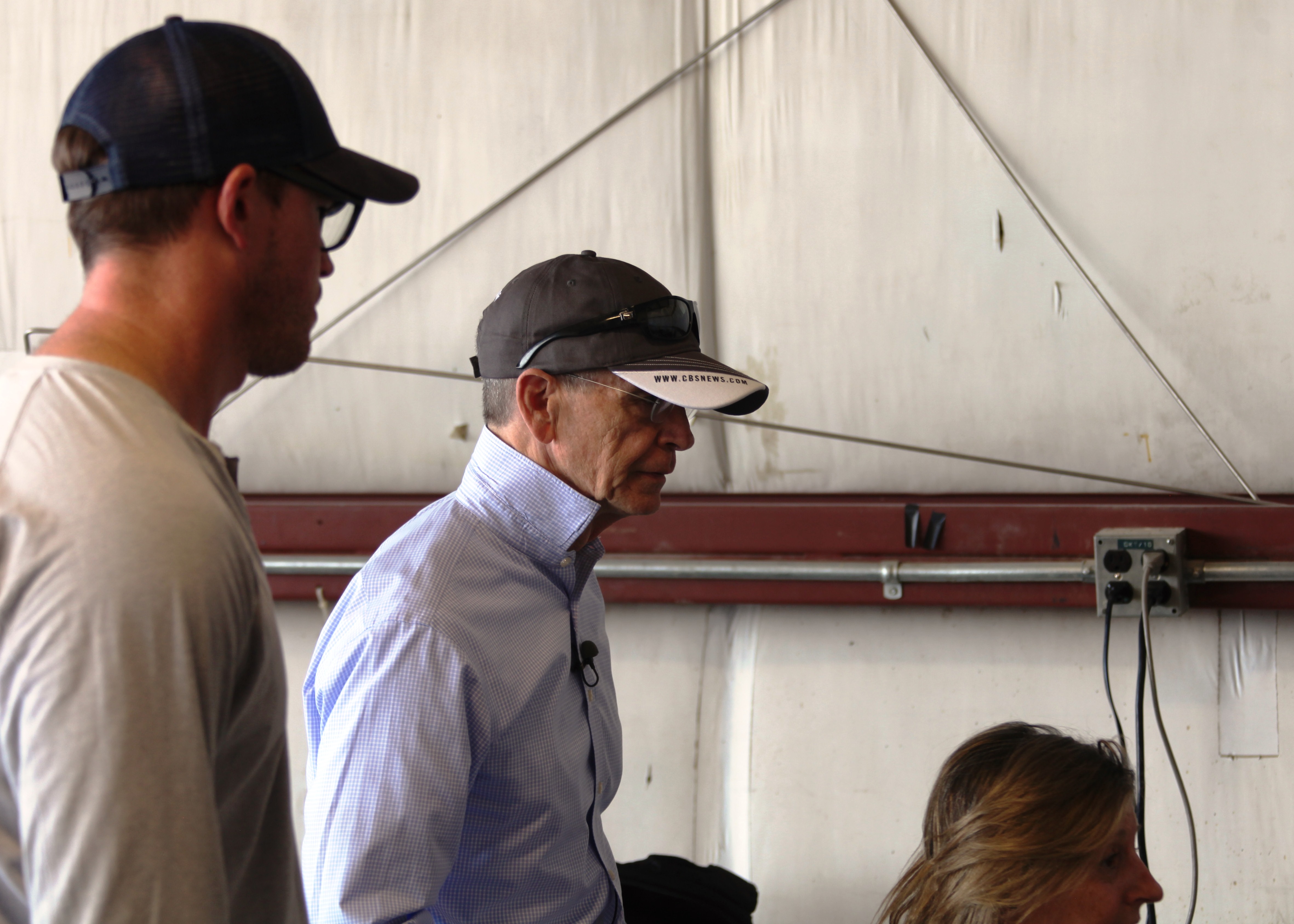
Naval Air Warfare Center Weapons Division engineer Alex Ordway, left, reviews footage with CBS News correspondent David Martin, and producer Mary Walsh after a day of filming on the South Range at Naval Air Warfare Center Weapons Division China Lake. (U.S. Navy photo)
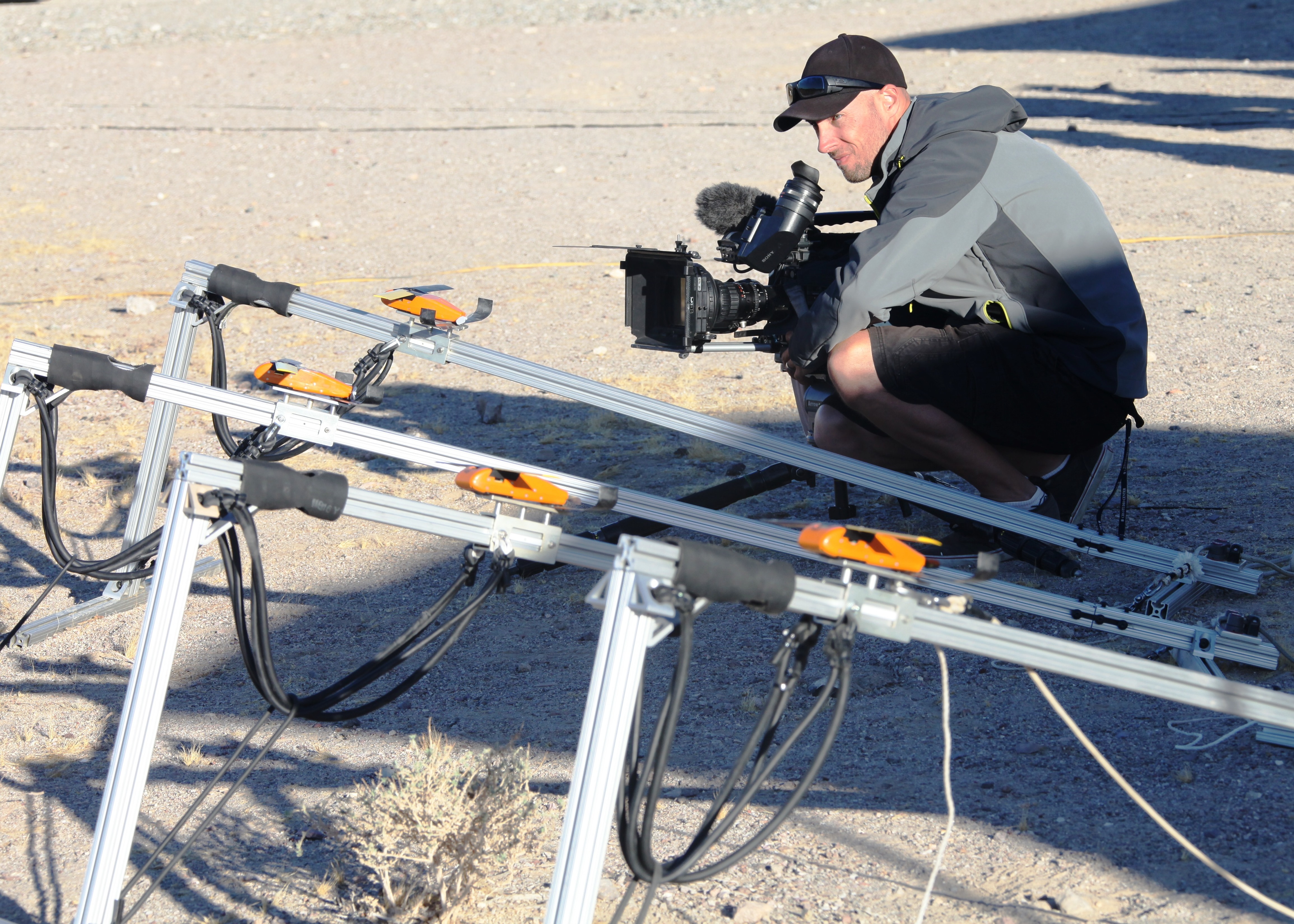
CBS cameraman Leigh Hubner prepares to film a Perdix ground launch event on the Naval Air Warfare Center Weapons Division South Range. (U.S. Navy photo)