
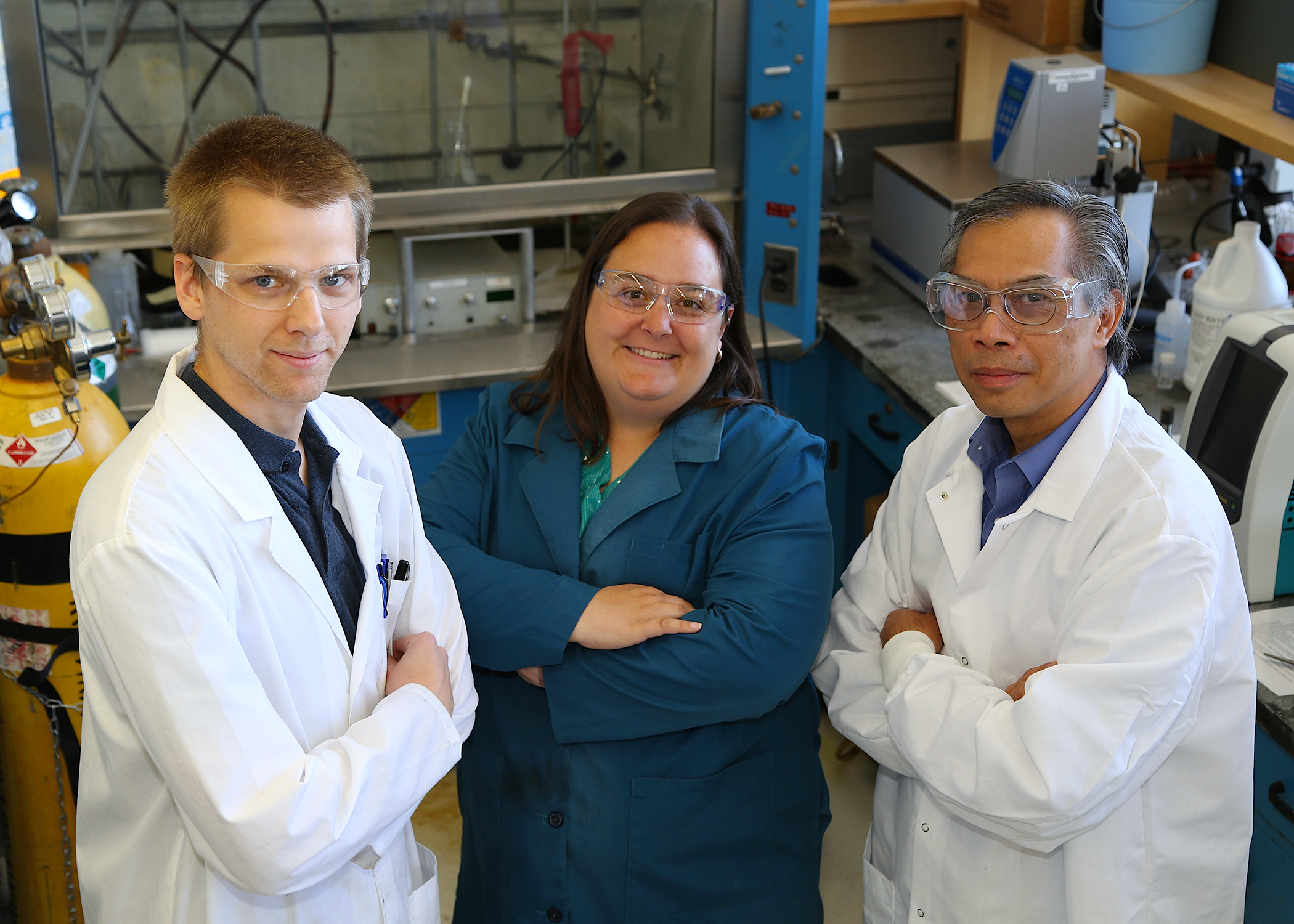
From left, Dr. Paul Goodman, Dr. Heather Meylemans, and Dr. Joseph Tsang are Naval Air Warfare Center Weapons Division employees who recently showed off their work in research during a Naval Innovative Science and Engineering Expo held at the Pentagon. (U.S. Navy photo)
NAWCWD shows off innovative work at Pentagon
NAVAL AIR WARFARE CENTER WEAPONS DIVISION CHINA LAKE, Calif. - NAWCWD employees showcased some of their most innovative research with nanoparticles, supercapacitors, and fire-resistant polymers at a Naval Innovative Science and Engineering Expo held at the Pentagon in April.
Hosted by the Office of the Assistant Secretary of the Navy (Research, Development and Acquisition), the expo allowed scientists and engineers within the Naval Research and Development Establishment, which is comprised of Warfare Centers, Systems Centers, and the Naval Research Lab, to share their ideas for improving Navy and Marine Corps capabilities.
“The NISE Expo was a great opportunity for our folks to demonstrate the progress they are making in various areas of research to advance naval technology,” said NAWCWD Executive Director Joan Johnson. “There is a lot of valuable work going on here, and this expo helped enhance the visibility of the technical, hands-on, in-house expertise we have at NAWCWD.”
Dr. Joseph Tsang, Dr. Heather Meylemans, and Dr. Paul Goodman represented NAWCWD among nearly 50 presentations at the expo.
“After the expo, I was in a meeting with Assistant Secretary of the Navy for Research, Development and Acquisition Mr. Sean Stackley and he commented specifically about Drs. Joe Tsang, Heather Meylemans, and Paul Goodman and their work,” said Scott O’Neil, former NAWCWD executive director who is currently serving as a special advisor to Deputy Assistant Secretary of the Navy for Research, Development and Test and Evaluation Dr. John Burrow. “They all represented NAWCWD, NAVAIR and the Navy research and development community extremely well.”
Dr. Tsang gave an overview of his work on micro-scale calorimetry measurements of new composite resins. The objective of his basic research is to gain a better understanding of structure-property relationships of resins, and correlate and predict their thermo-oxidative properties as well as their fire-resistant properties in fiber-reinforced composite structures. So far, good correlations have been obtained in demonstrating this concept using high char yield resins as a barrier ply on carbon fiber laminates.
Stackley and Secretary of the Navy Ray Mabus spent some time with Meylemans learning about her work with smart sensors and coatings made from florescent nanoparticles. Her research focuses on developing nanoparticle substrates to be used for a variety of applications from environmental metal detection to safety coatings.
“Mr. Stackley was especially interested in the quantum dot nanoparticles, which we have already synthesized and characterized,” said Meylemans, who determined that fluorescence changes are detectable by eye, so there is no need for expensive equipment. These nanoparticles can also be incorporated into polymers for fluorescent coating applications.
“The expo was a great opportunity to engage with a lot of Department of Defense leaders about our projects,” she said. “I made several good contacts who indicated interest in collaboration and possible funding.”
Goodman wowed expo attendees with an explanation of how he fabricated carbon electrodes from cow bones. His basic research is dedicated to improving naval power systems by developing new supercapacitor components and designs.
“Events like this give us a chance to show off our capabilities, and also find out what issues are of specific importance to the people in charge,” Goodman said. “Knowing that people like Secretary Mabus and Under Secretary of Defense Kendall have enough interest in our work to come and hear about it provides motivation to keep working on the hard problems.”
O’Neil said an added bonus from the expo was the dialogue between scientists and technologists working at the other Warfare and Systems Centers, and NRL.
“I heard many attendees express excitement about actually getting to see some 'real work' that is being done by the Navy team,” he said. “They were surprised at the depth and breadth of the work we do in-house. Many did not realize that the Navy has an organic technical workforce outside NRL.”
There are potentially very big problems that NAWCWD could solve for the warfighter if the sciences prove out and can be matured for operational use, according to Mallory Boyd, technical deputy for NAWCWD’s Research and Engineering Directorate, who also manages the command’s $15 million NISE Program, and attended the expo.
The National Defense Authorization Act, section 219 legislation approved in 2008, enabled the NISE program by approving the Warfare Centers to generate the investment fund. The success of the program, witnessed by the growth of technical expertise and capabilities, has led to its renewal several times since first implemented.
“The NISE program is enabling a considerable amount of unique, basic and applied research going on in-house at NAWCWD especially in the chemical and material science areas,” Boyd said. “After you get an understanding of what’s possible through basic research, then you can begin to envision where it might be applied toward addressing Navy problems. During the expo, each of our three researchers furthered their knowledge of additional potential applications for their discoveries and inventions. NISE at NAWCWD is all about funding highly technical, hands-on work activities with the aim of preparing the scientist and engineering workforce of the future. These three examples, while important, are a small sampling of all the great work that is going on at both China Lake and Point Mugu.”
O’Neil said he thought the objectives for the expo were met.
“Navy leadership, both uniformed and civilian, are beginning to see and understand why it is so important to have a resident, strong in-house technical capability,” he said. “I’m in the Pentagon more frequently now, and I am hearing this message more often, and that’s good news for NAWCWD.”
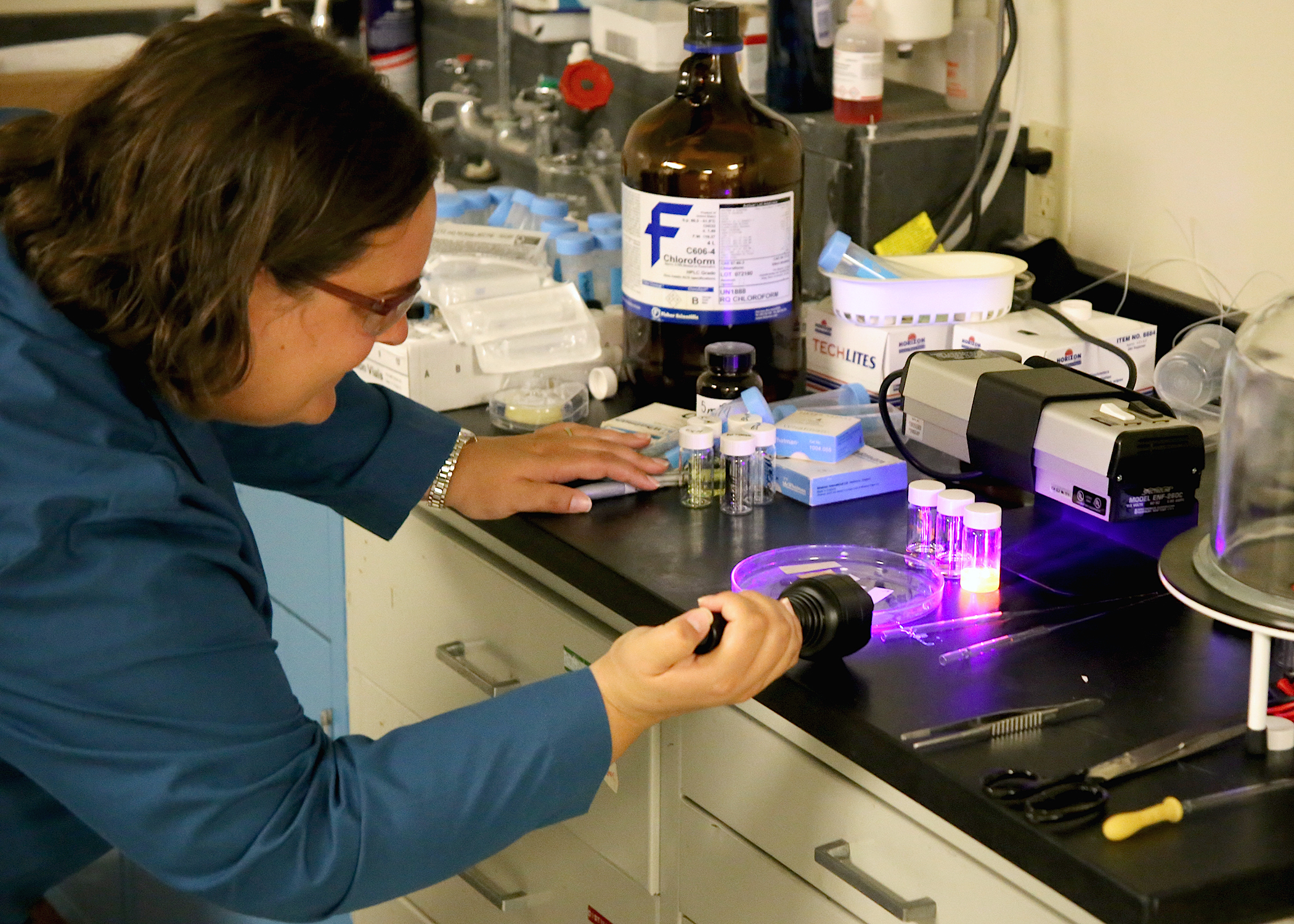
Dr. Heather Meylemans’ research at Naval Air Warfare Center Weapons Division focuses on developing nanoparticle substrates to be used for a variety of applications from environmental metal detection to safety coatings. (U.S. Navy photo)
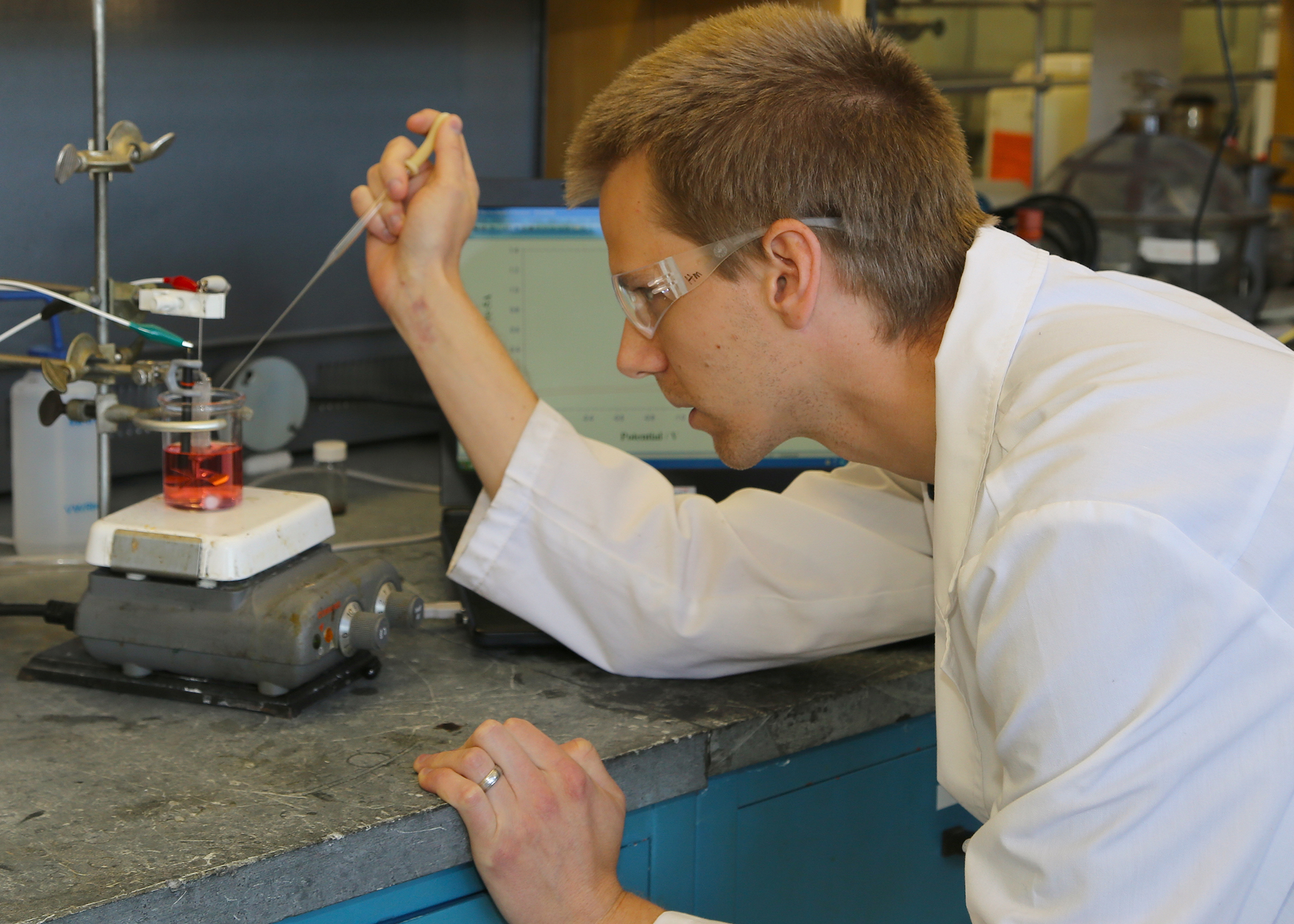
Through his research at Naval Air Warfare Center Weapons Division, Dr. Paul Goodman explores ways to improve naval power systems by developing new supercapacitor components and designs. (U.S. Navy photo)
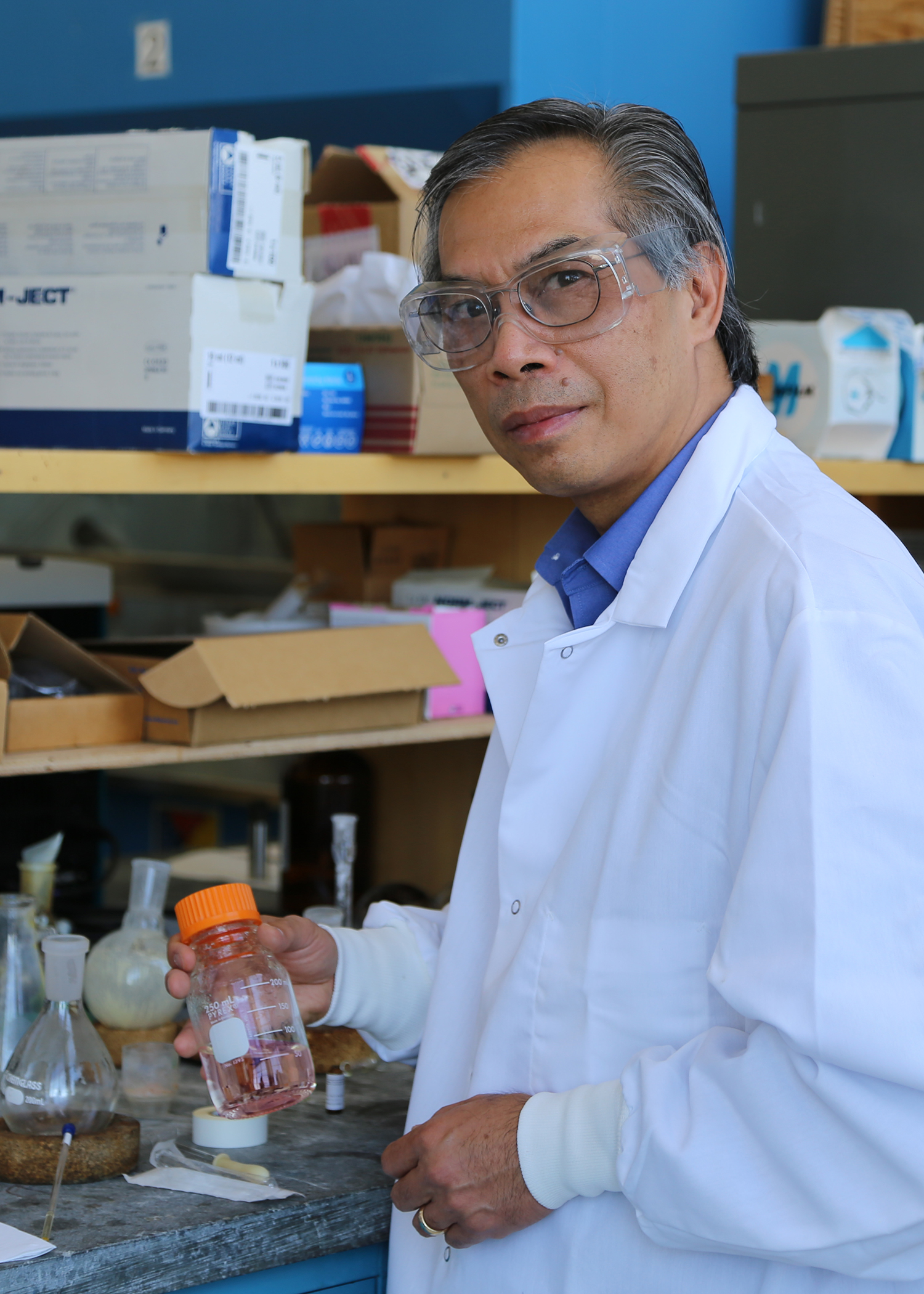
Dr. Joseph Tsang works to gain a better understanding fire-resistant polymers at Naval Air Warfare Center Weapons Division. (U.S. Navy photo)