
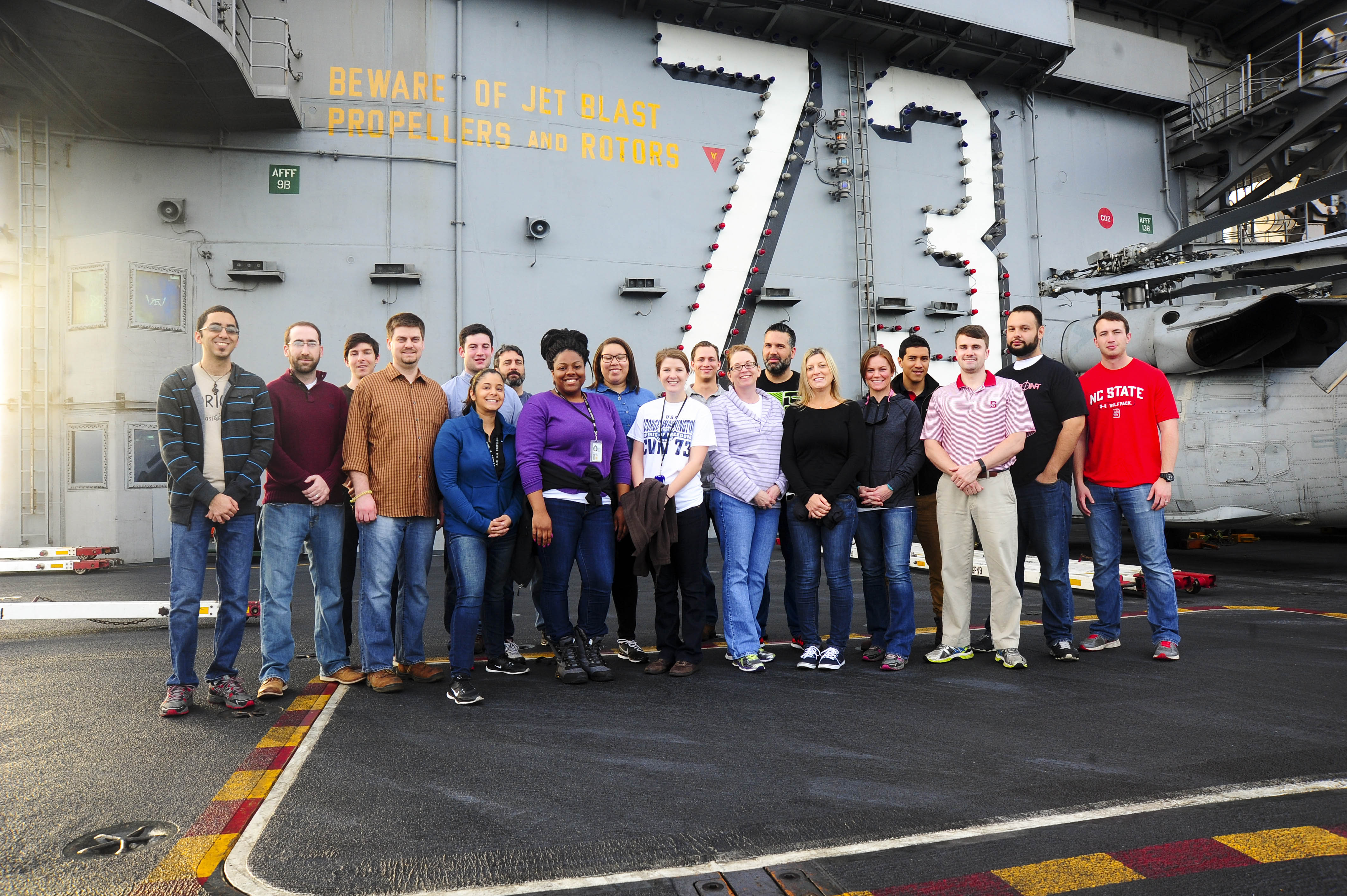
Naval Air Systems Command (NAVAIR) developmental program participants aboard USS George Washington (CVN-73) as part of the “Civilians to Sea” program Mar. 10-14: Alejandro Arboleda, Joshua Buyert, Brian Donnelly, Regina Ford, Mario Haddad, David Kaniss, Joan Melendez, Matthew Miller, Gabriel Morales, Max Okinow, Andrew Pinto, David Pool, Karoly Qader, Selina Ridpath, Michele Shannon, Peter Sheridan, Tiffany Smith, Philip Thornton and Lisa Townsend. Participants currently support NAVAIR East Coast locations including Cherry Point, N.C.; Jacksonville, Fla.; the Joint Strike Fighter Program Executive Office in Crystal City, Va.; Orlando, Fla.; and Patuxent River, Md. (U.S. Navy photo)
Seeing first-hand how logistics work on land affects those at sea
NAVAL AIR SYSTEMS COMMAND, PATUXENT RIVER, Md. -- In times of crisis, the first question our nation’s leaders ask is: "Where are the carriers?"
The centerpieces -- and powerhouses -- of America's naval forces for operating forward, aircraft carriers have inspired books, movies and even a 10-part, Public Broadcasting Service (PBS) documentary television series.
For most of us, books and television are the only way to get a behind-the-scenes glimpse of life onboard; however, for some Naval Air Systems Command (NAVAIR) developmental program participants, the “Civilians to Sea” program provides a first-hand experience.
Participants from the four developmental programs -- the Engineer and Scientist Development Program (ESDP), the Naval Acquisition Development Program (NADP), the NAVAIR Leadership Development Program (NLDP) and the NAVAIR Journey Leadership Development Program (JLDP) -- have “the opportunity to meet the fleet and actually experience what life is like aboard an aircraft carrier at sea for a few days,” said Stephanie Souders, NADP functional manager, NAVAIR Logistics and Industrial Operations (AIR 6.0C). “They get to interact with all of the Sailors and Marines and see first-hand how their jobs here at NAVAIR impact the mission aboard a carrier. They listen to the challenges that the fleet is facing and are able to bring that back to NAVAIR and try to figure out ways for improvement, if possible. It truly is an experience of a lifetime for these folks."
Home to more than 5,000 Sailors and Marines, Nimitz-class carrier USS George Washington (CVN 73) recently hosted 19 Naval Air Systems Command (NAVAIR) developmental program participants from various East Coast locations Mar. 10-14.
Two in the group support AIR 6.0 here at Patuxent River -- Tiffany Smith, a chemical engineer supporting additive manufacturing (AIR 6.8) and Mario Haddad, a logistics management specialist supporting the Foreign Military Sales team for the U.S. Marine Corps Light/Attack Helicopter (AH-1Z) Pakistan program.
What did they enjoy most about their time at sea?
“Basically everything!” Haddad said. “As a retired U.S. Army supply specialist, I have always been intrigued about the way other branches executed supply missions. It was great to learn so much about the Navy's operations first-hand. It was extremely important for me to get a ‘visual’ of the various things that needed to be accomplished on the ship. We discuss those daily at NAVAIR but not always am I able to relate to the topic discussed.
“My favorite tour [of the ship] was during the second day -- the supply and inventory control points,” he continued. But, “the best part of this entire experience was the people. There were many talented and creative individuals whose motivation and dedication to work hard in a harsh environment, day in and day out to protect and serve our country, was inspiring.”
Smith, a civilian who does not have military experience, wasn’t quite sure what to expect from carrier life.
“It did take me some time to get used to living right underneath the flight deck,” she admitted. “Eventually I got used to the noise and could tune it out, but I was not expecting the catapult to be directly overhead. I wouldn't have changed that aspect for the world though.
“I always wondered how much space the ship actually had available,” Smith continued. “I saw that they use every inch of space with precision and purpose when on deployment. It was amazing to see multiple palettes being loaded onboard at the beginning of our trip and, by the time we set sail, they had all been put away.
“My favorite part of the tour was seeing how everything runs on the ship,” she said. “From the preparation of lunch to the flight operations, the sheer amount of planning and execution of activities by everyone onboard to support the mission at any given time, was very eye-opening.”
Were they able to see how their work here at Patuxent River affects those on the carrier?
“Definitely!” said Smith. “We heard many times over that having the right material at the right time was imperative to day-to-day activities. Hearing the importance of readiness directly from the fleet just makes me want to be a better logistician to ensure that everything they need is in the right place at the right time. I think that the shift in focus to readiness here at NAVAIR will have a positive impact on the fleet and I am overjoyed to take part in providing greater readiness to our Sailors and Marines.”
Haddad emphatically agreed.
“Absolutely,” he said. “Many of the professionals we met told us of the difficulties they face when there are schedule changes or delays in deliveries of parts or components and how that could, at times, affect every individual on the ship…I came back knowing I will dedicate myself to serving each and every one of them by acquiring the knowledge, creating better methods for conducting business and constantly striving to improve my skills as a logistician so I can provide our Warfighters with the tools they need to perform their job easily and in the best way they can.”
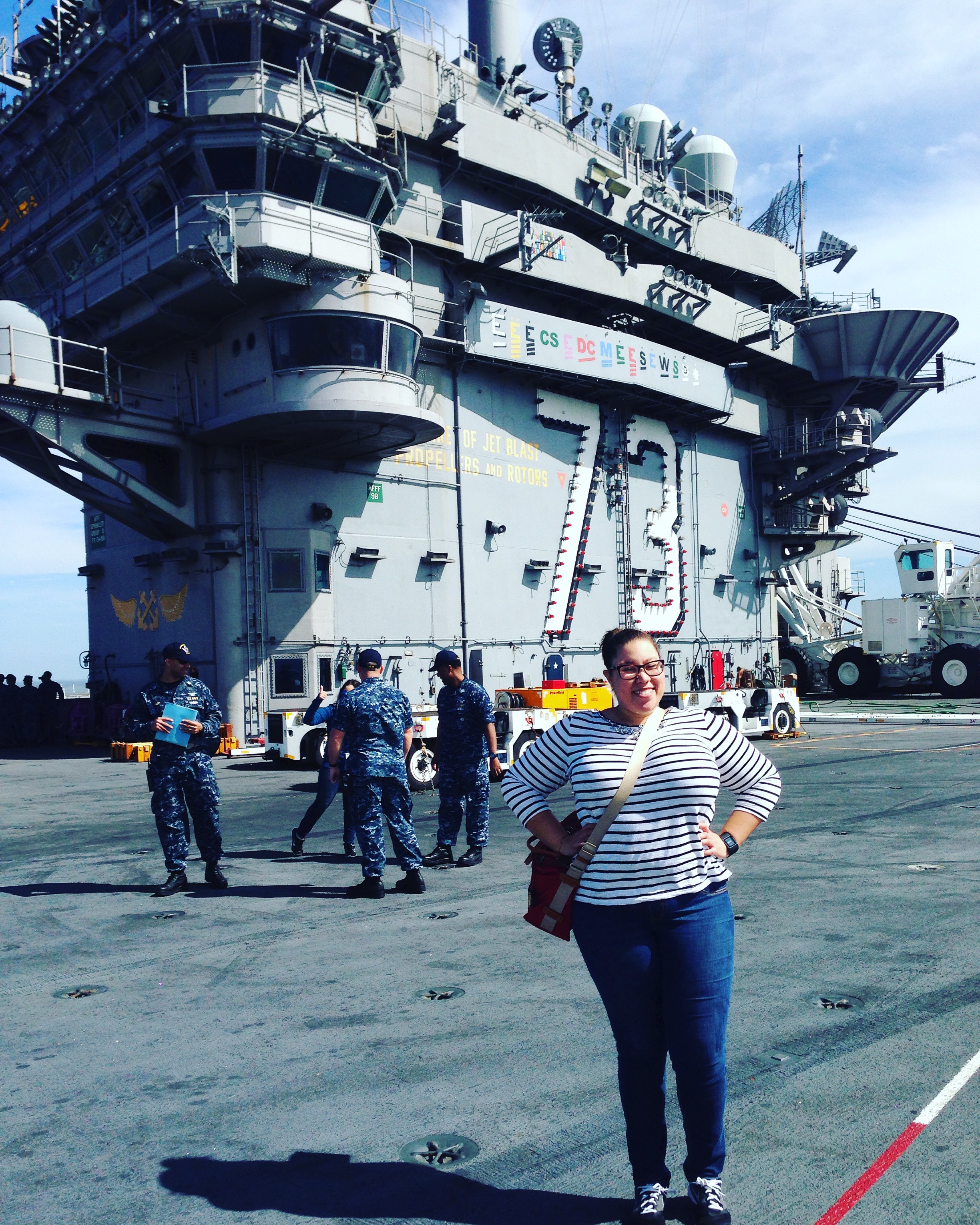
Tiffany Smith, a chemical engineer supporting additive manufacturing at Naval Air Systems Command (NAVAIR) Logistics and Industrial Operations (AIR 6.8), stands on the flight deck aboard USS George Washington (CVN 73) as part of the “Civilians to Sea” program. (U.S. Navy photo)
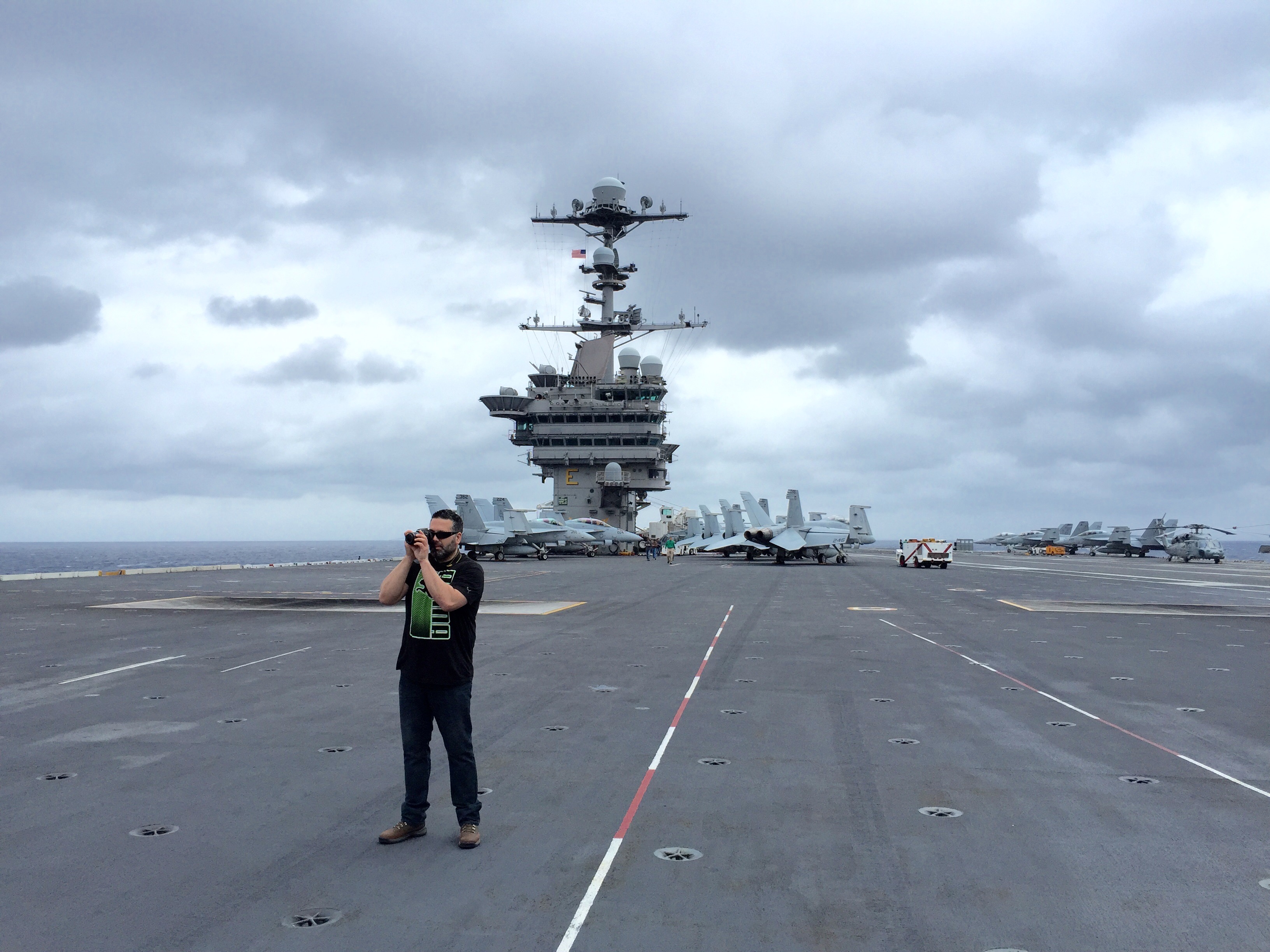
Mario Haddad, logistics management specialist supporting the Foreign Military Sales team for the U.S. Marine Corps Light/Attack Helicopter (AH-1Z) Pakistan program, snaps a photo of catapult and arresting gear pre-ops flight checks on USS George Washington (CVN 73). Haddad was onboard as a participant in the “Civilians to Sea” program. (U.S. Navy photo)