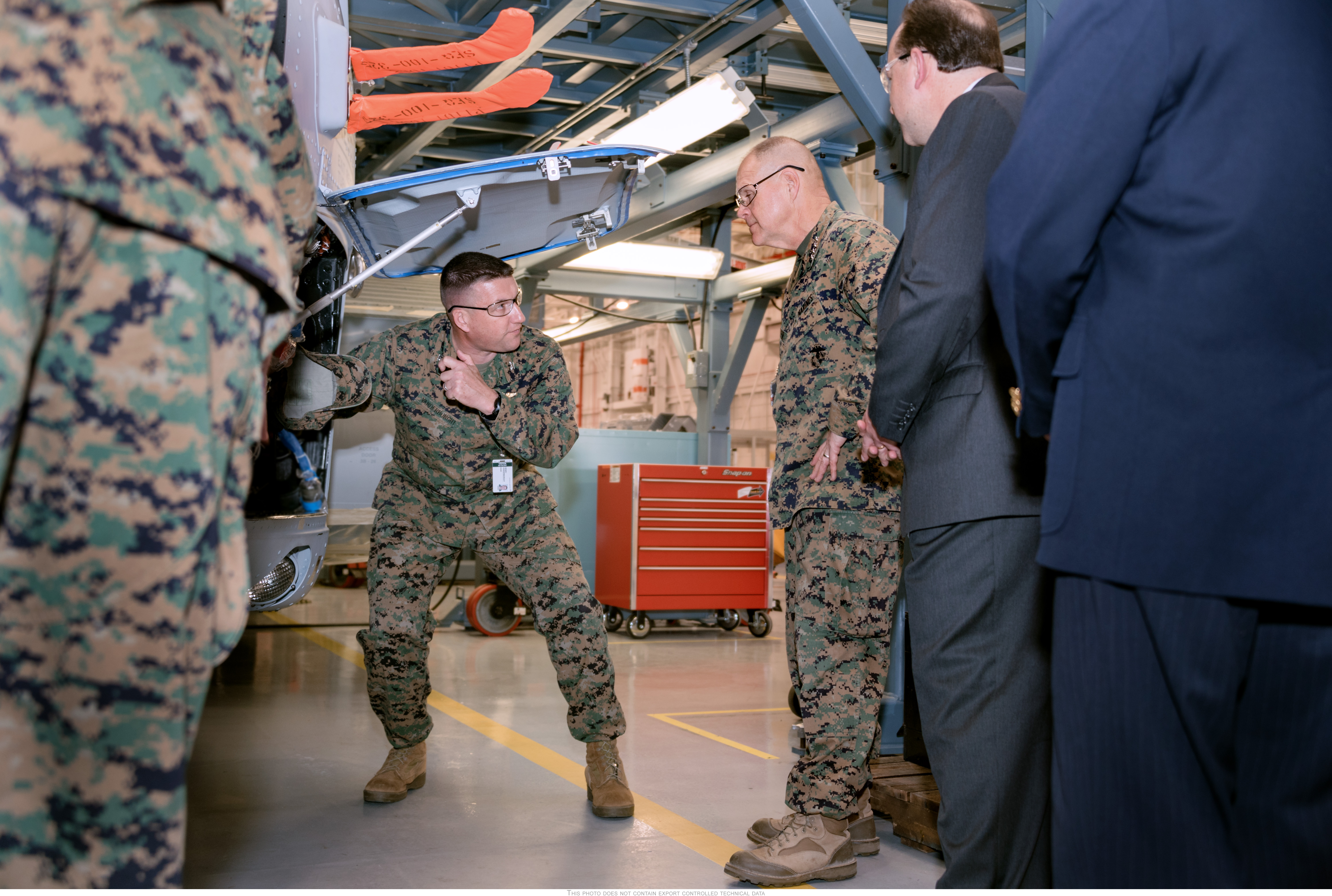
During a visit to the Sikorsky Development Flight Test Center in West Palm Beach, Fla. March 8, Col. Hank Vanderborght (left) shows Gen. Robert Neller (right) an example where having Marine maintainers working with the CH-53K during development has paid off; this particular maintenance improvement suggested flipping the electronic boxes around to provide easier access to the connectors. (Photo courtesy Sikorsky)
General Neller visits CH-53K King Stallion
NAVAL AIR SYSTEMS COMMAND, Patuxent River, Md. — Commandant of the Marine Corps Gen. Robert B. Neller met with CH-53K helicopter program representatives and Marine maintainers at Sikorsky’s Development Flight Test Center in West Palm Beach, Fla. March 8.
While there, Neller discussed program progress with aircraft experts while touring the Engineering Development Model (EDM) helicopters, the Ground Test Vehicle, and the flight line.
With two CH-53K EDMs currently in flight test, Neller was also able to witness a King Stallion in flight. “I checked in on the Marines deployed here at Sikorsky and am impressed with the progress on the CH-53K program,” Neller said. “We continue to move forward as our active duty Marine Corps pilot has been at the controls for multiple flights.”
EDM 1 achieved first flight in October 2015, and a second EDM joined the flight test program on Jan. 22, 2016. Together these helicopters have achieved over 35 flight hours, including multiple flights with an active duty USMC pilot, Lt. Col. Jonathan Morel, at the controls.
These first two aircraft are the most heavily instrumented of the EDMs and will focus on structural flight loads and envelope expansion. EDM 1 has already successfully achieved flight envelope expansion to 120 knots.
"It is exciting to have two CH-53K helicopters flying," said Col. Hank Vanderborght, U.S. Marine Corps program manager for the Naval Air Systems Command’s Heavy Lift Helicopters Program Office, PMA-261. "Our program continues on pace to deploy this incredible heavy lift capability to our warfighters." The third and fourth EDMs are expected to join the flight test program this summer; they will focus on performance, propulsion, and avionics flight qualification.
Sikorsky, a Lockheed Martin Company, is now developing the CH-53K King Stallion heavy lift helicopter for the U.S. Marine Corps. The King Stallion maintains similar physical dimensions with a reduced "footprint" compared to its predecessor, the three-engine CH-53E helicopter, but will more than triple the payload to 27,000 pounds over 110 nautical miles under "high hot" ambient conditions. "With two aircraft in flight test, our flight envelope expansion efforts will accelerate as we continue to make good progress toward our initial operational test assessment and full aircraft system qualification," said Mike Torok, Sikorsky's vice president of CH-53K programs.
The CH-53K is the most powerful helicopter in the Department of Defense and is the only fully marinized helicopter capable of lifting 100 percent of the Marine Air-Ground Task Force vertical Middle Weight Force. The King Stallion evolves its predecessor’s design to improve operational capability, interoperability, reliability, maintainability, survivability, and cost of ownership.
The U.S. Department of Defense's Program of Record remains at 200 CH-53K aircraft. The Marine Corps intends to stand up eight active duty squadrons, one training squadron, and one reserve squadron to support operational requirements.
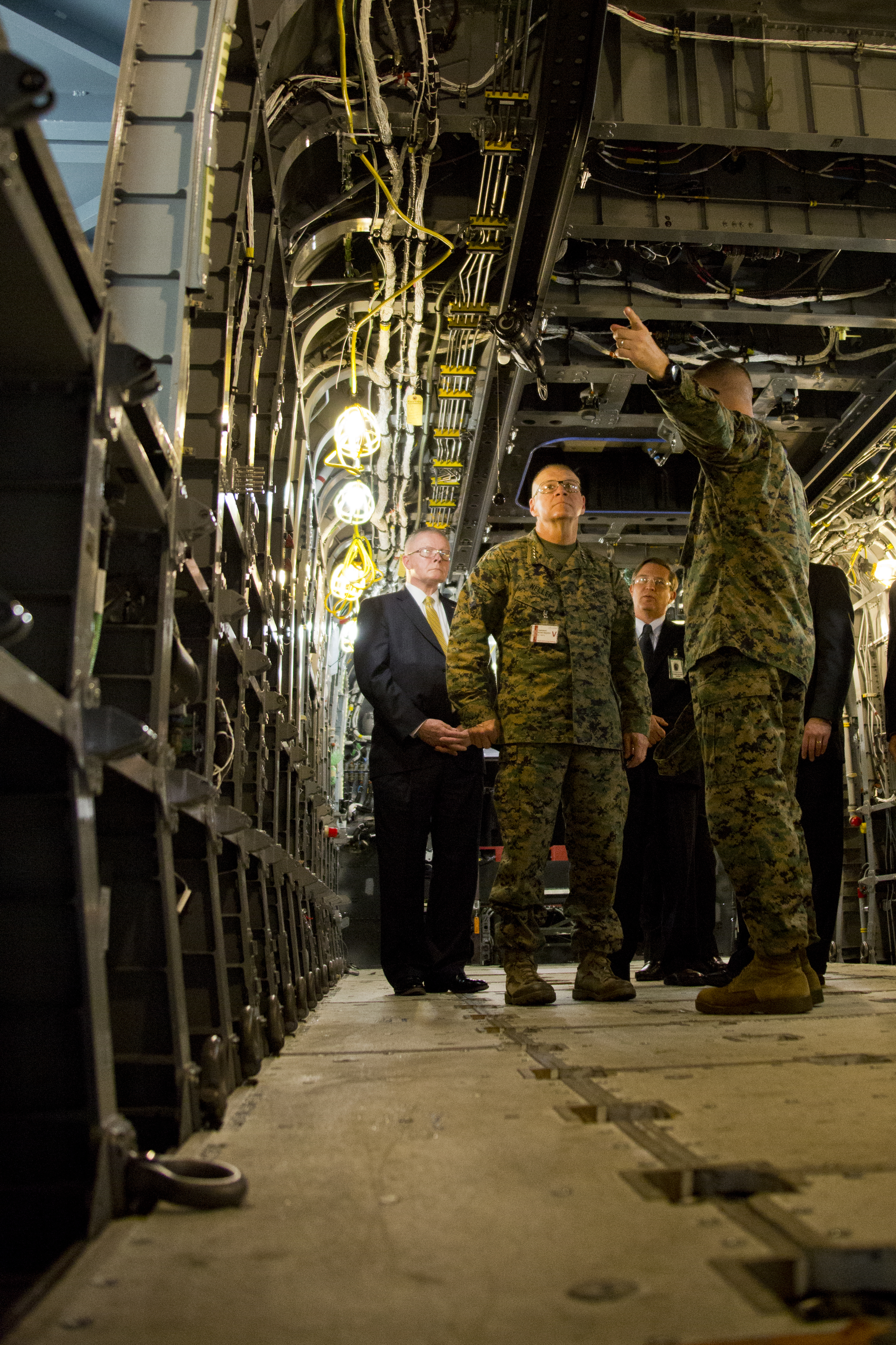
Commandant of the Marine Corps Gen. Robert B. Neller looks inside of a CH-53K King Stallion aircraft at Sikorsky’s Development Flight Center in West Palm Beach, Fla., March 8, 2016. Neller visited the facility to get an overview of the CH-53K program and visit Marines. (U.S. Marine Corps photo by Staff Sgt. Gabriela Garcia/Released)
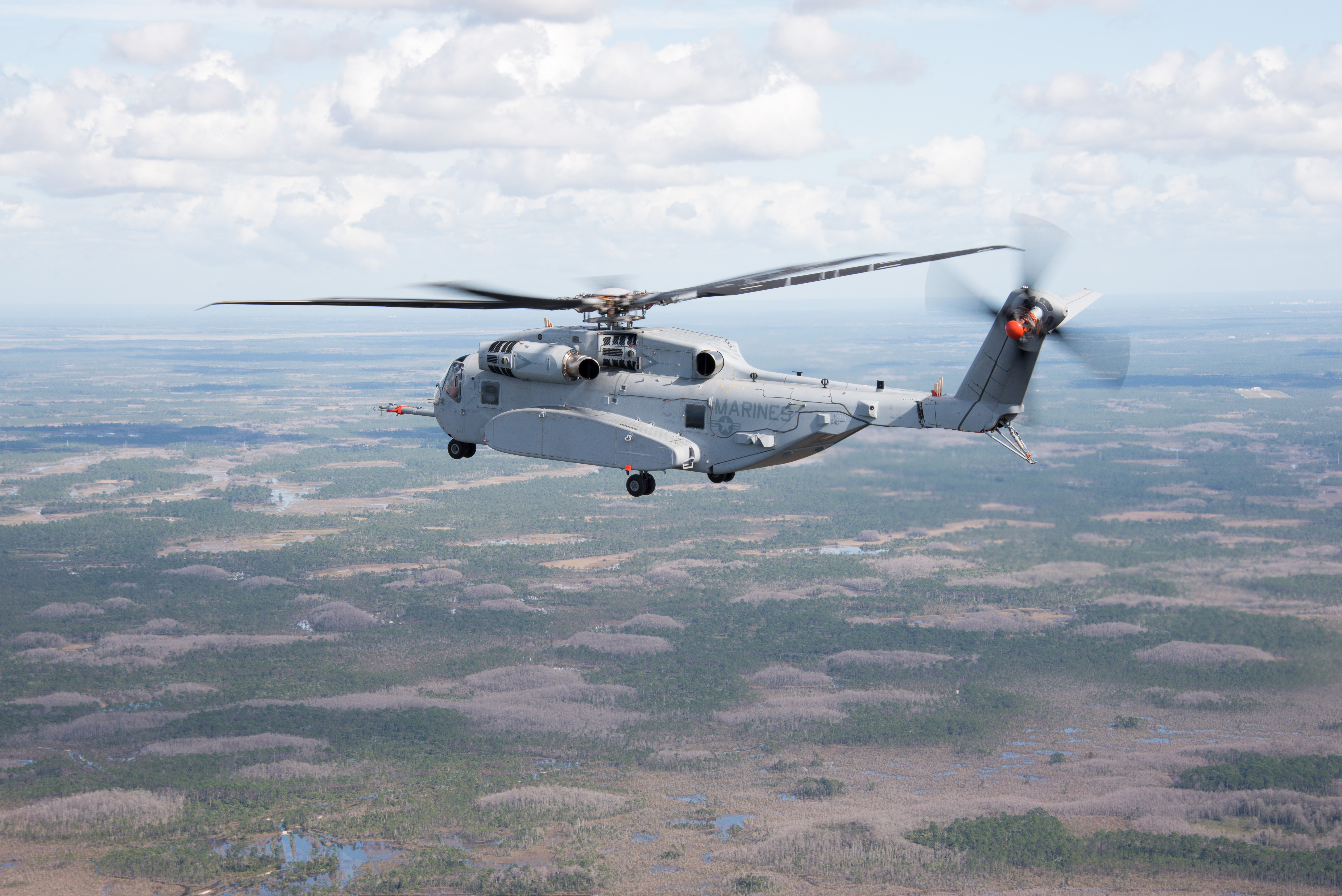
The CH-53K flight test program has logged over 35 flight test hours between two Engineering Development Model (EDM) aircraft and EDM 1 has successfully achieved flight envelope expansion to 120 knots. (Photo courtesy Sikorsky)