
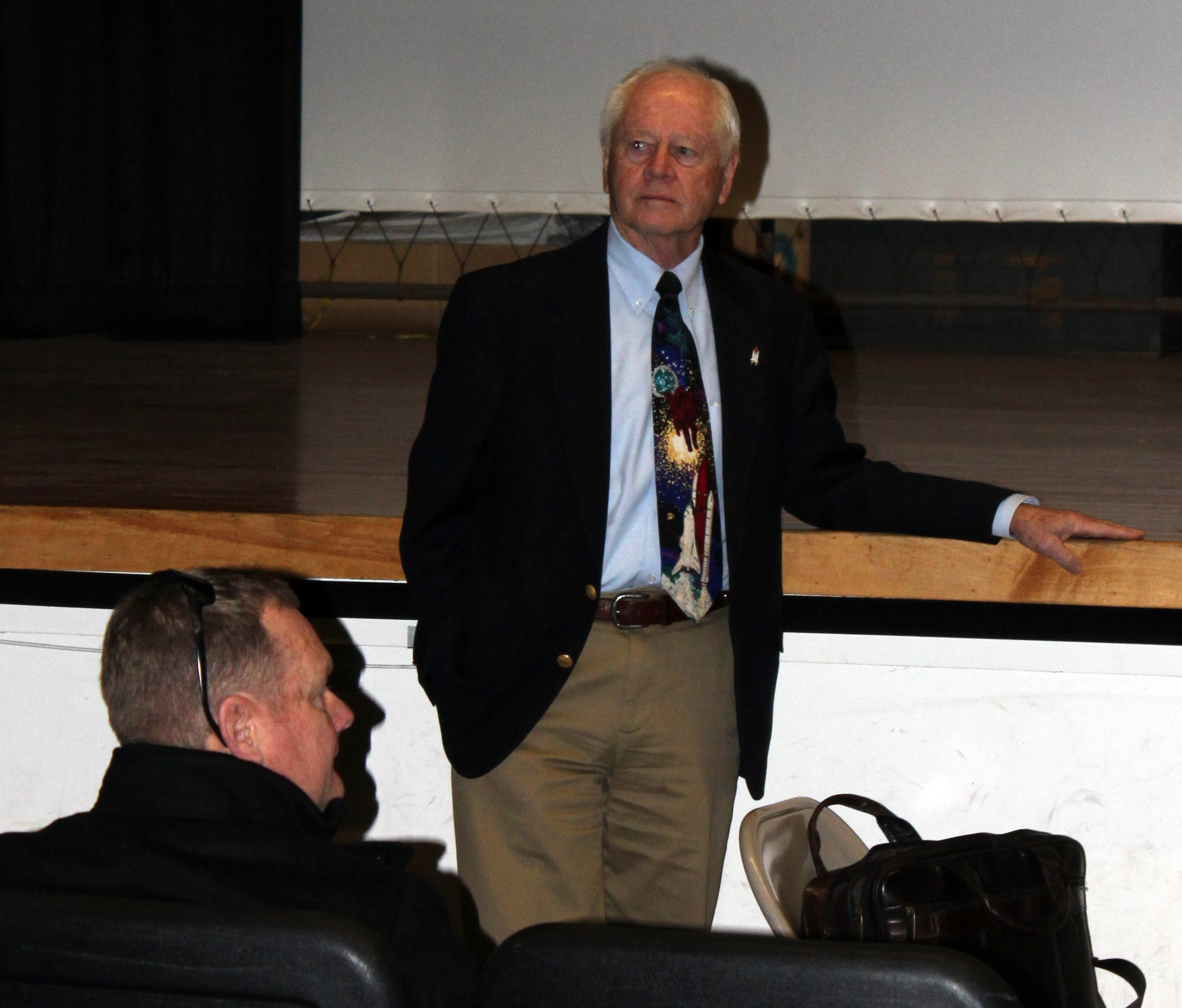
Allan J. McDonald addresses nearly 300 Sailors, civilians and contractors during a Naval Test Wing Pacific-hosted “Back in the Saddle” training in Point Mugu, California, Jan. 4. (U.S. Navy photo)
Safety, ethics and personal responsibility: NTWP and NAWCWD get back in the saddle
NAVAL AIR WARFARE CENTER WEAPONS DIVISION, POINT MUGU, California - Complacency.
Challenger. Columbia. Your neighbor backing up into your mailbox in the morning. Complacency is at the heart of disasters big and small; diligence, self-awareness and personal accountability are at the heart of prevention.
At least, that’s how Allan J. McDonald sees it.
McDonald, keynote speaker at Naval Test Wing Pacific’s two “Back in the Saddle” trainings Jan. 4 in Point Mugu and China Lake, California, was the director of the Space Shuttle Solid Rocket Motor Project at the time of the Challenger accident Jan. 28, 1986. Challenger exploded 73 seconds after takeoff, the result of the failure of an O-ring seal on one of its solid rocket boosters.
Nearly 300 Sailors, civilians and contractors listened as McDonald related the already familiar story of Challenger’s fatal final flight. An unexpected Florida freeze and O-ring seals not rated to withstand the low temperatures. NASA moving ahead with the launch. Seven astronauts, including the first civilian passenger, a teacher named Christa McAuliffe, lost.
“It was preventable,” McDonald said. His team tried to prevent it, recommending that the launch be delayed until temperatures were above 53 degrees Fahrenheit, or at least within the 40-90 degree range of tolerance they O-ring seals had been certified to handle.
“I wanted this to be addressed as a technical issue,” McDonald said. He gathered the engineers who knew the system best, and they agreed it would be dangerous to fly in the colder weather. The O-ring might fail. It had partially failed in cold weather once before.
Program managers and test directors overrode the recommendation, noting a lack of hard evidence the device would fail and pointing to 24 successful prior launches as proof of success.
“One of the problems with complacency,” McDonald noted, “is that you end up getting convinced that nothing can destroy you.”
The Challenger accident derailed NASA’s shuttle program for 18 months and triggered years of litigation and redesigns. Lessons learned were incorporated and processes changed.
Then, 17 years and more than 80 successful flights later, Columbia breaks apart on re-entry Feb. 1, 2013, the result of damage sustained during takeoff. The cause was determined to be foam insulation falling from the external tank. According to McDonald, at least six other flights had experienced damage from the foam falling in a similar manner. It was a well-known issue, but the concerns were minimized.
“Safety concerns cannot take a back seat to costs and schedules,” McDonald said. “We have to take pride and ownership in what we do and know the limitations of our equipment.”
Empowering employees and subject matter experts is key to ensuring safe operations, McDonald said. With Naval Air System Command personnel, that empowerment is codified by NAVAIRINST 3750.5, the NAVAIR Safety Program. The instruction empowers and requires every employee involved in an evolution to call a “safety timeout” when they believe continuing an event or test would be unsafe. The instruction also establishes the importance of “no-go” criteria and strict adherence to them. “No-gos” are built-in “tripwires” that trigger the immediate end of an evolution without question and without fail.
Following that guidance can be difficult, however, if complacency becomes a factor.
“We need to challenge assumptions. We have to ask, ‘What if we’re wrong?’” McDonald said.
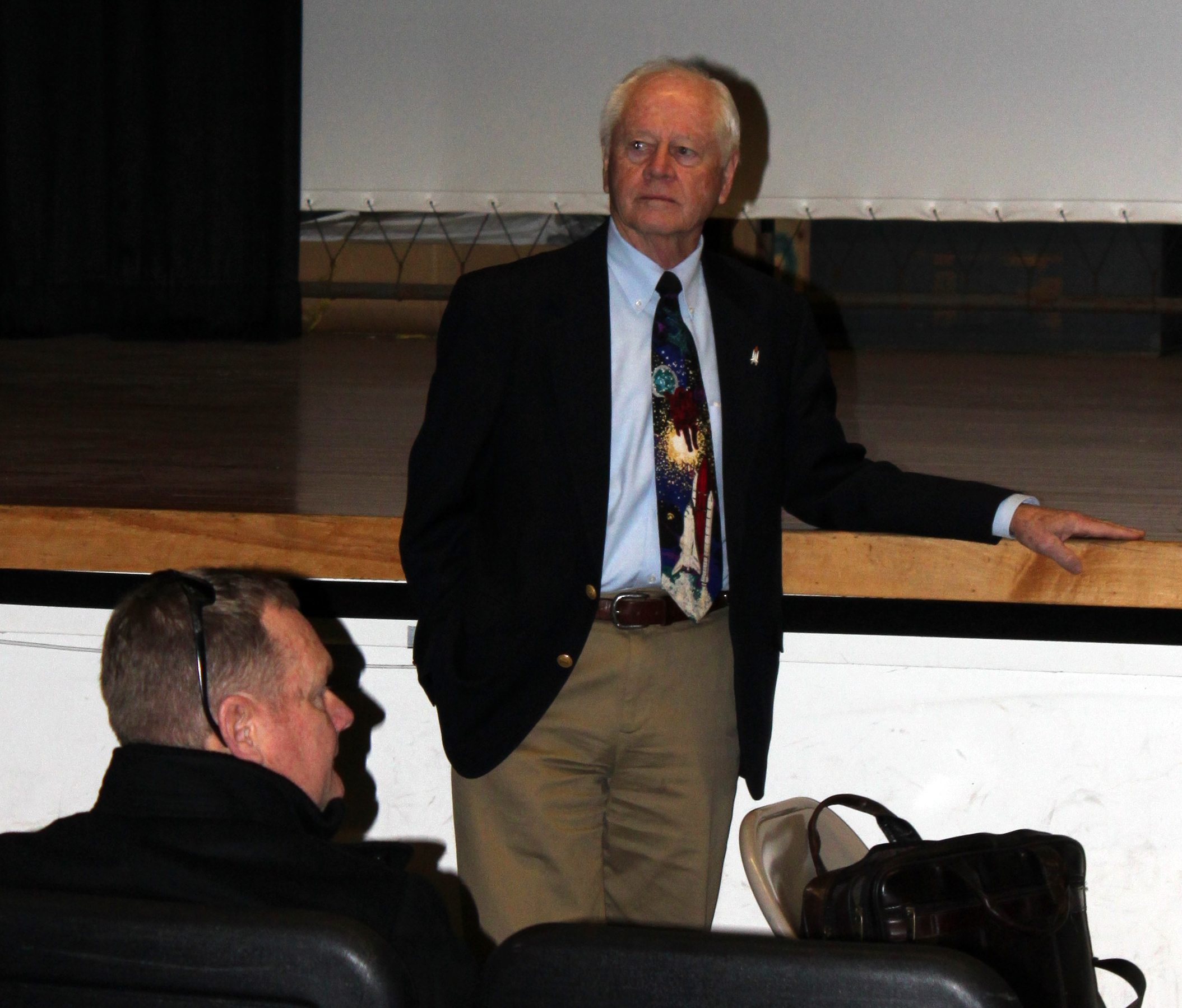
Allan J. McDonald addresses nearly 300 Sailors, civilians and contractors during a Naval Test Wing Pacific-hosted “Back in the Saddle” training in Point Mugu, California, Jan. 4. (U.S. Navy photo)