
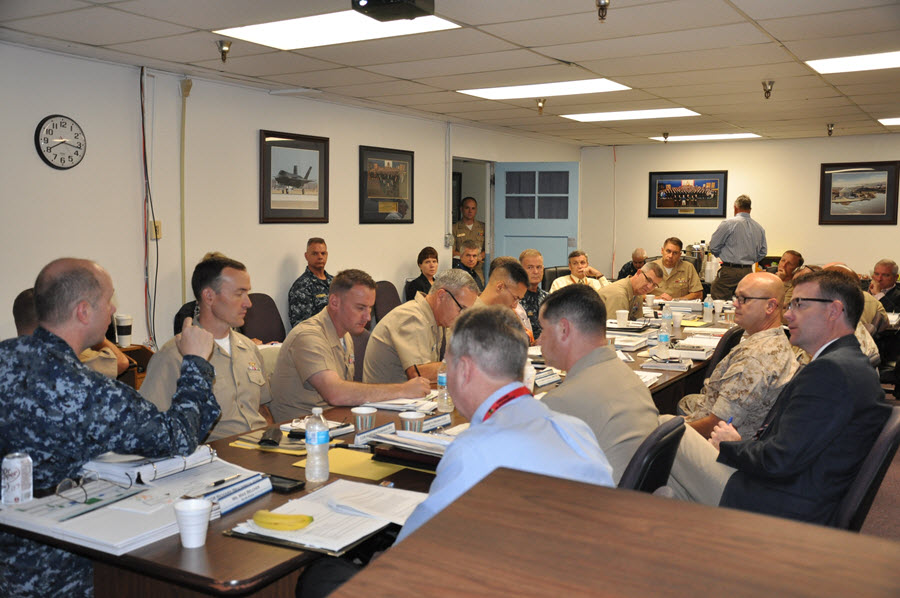
During the Commanding Officers’ Face-to-Face, leaders from around the Command, Fleet Readiness Centers (COMFRC),and Naval Air Systems Command Logistics and Industrial Operations (AIR 6.0) discuss ways to effectively and efficiently improve maintenance and readiness. The event was held at Fleet Readiness Center (FRC) Mid-Atlantic Detachment Patuxent River here Sept.29 - Oct. 1. (U.S. Navy photo)
COMFRC, AIR 6.0 Face-to-Face generates ideas, produces learning opportunities
NAVAL AIR SYSTEMS COMMAND, Patuxent River, Md. -- Even with the immediate availability of digital media, surveys have shown that face-to-face interaction is the preferred method of communication for all age groups and one which builds a clear organizational identity.
With that in mind, leadership, staff, commanding officers, executive officers and site production directors from across the Commander, Fleet Readiness Centers (COMFRC), and Naval Air Systems Command Logistics and Industrial Operations (AIR 6.0) gathered for Commanding Officer’s a Face-to-Face meeting Sept. 29 to Oct. 1 at Fleet Readiness Center (FRC) Mid-Atlantic Detachment Patuxent River here.
During the event, Cmdr. Kenneth “Jerry” Brown, Fleet Readiness Center West (FRCW) commanding officer, Lemoore, Calif., briefed FRCW's fiscal year 15- 16 production plan.
“I most enjoyed having the opportunity to discuss things that were of concern at my FRC and seeking insight from other leadership who may have experienced the issues before,” he said.
The team tackled many issues including how to pass knowledge to the next generation; defining skills sets needed in the future workforce; and readiness and sustainment challenges in light of ongoing defense cuts and budget shortfalls.
“Maintaining readiness across the spectrum of our diverse inventory of aircraft is a varsity sport, and we can only be successful when we work as a team,” said Cmdr. Mike Masica, director of Aircraft Material and Engineering for Commander, Naval Air Force Atlantic (CNAL)/ Commander, Naval Air Force, U.S. Pacific Fleet (CNAP) N421, who presented the Type Commander’s perspective brief to the group. “The Face-to-Face presented a very valuable opportunity for me to meet with the leadership of our Fleet Readiness Centers and listen and learn about their concerns and challenges while also communicating the Type Commander's perspective on aviation readiness.”
COMFRC Face-to-Face meetings are held regularly on a rotating basis at one of the Fleet Readiness Centers.
“FRCs are critical and essential components in sustaining our warfighter capabilities,” said Rear Adm. Paul Sohl, Commander, Fleet Readiness Centers, and AIR 6.0 assistant commander. “We are always looking for ways to share good ideas among our repair sites, and the Face-to-Face meetings are one way to accomplish this. Our job as leaders is to ensure that the best practices and most effective and efficient maintenance solutions are put into place across the command.”
Headquartered at NAS Patuxent River, COMFRC oversees eight Fleet Readiness Centers located on the U.S. East and West coasts and in Japan. COMFRC conducts maintenance, repair and overhaul of U.S. Navy and Marine Corps aircraft, engines, components and support equipment. Each year roughly 6,500 Sailors and Marines, along with more than 9,500 depot artisans at the FRCs overhaul and repair nearly 1,000 aircraft, thousands of engines and several hundred thousand components valued at approximately $4 billion.
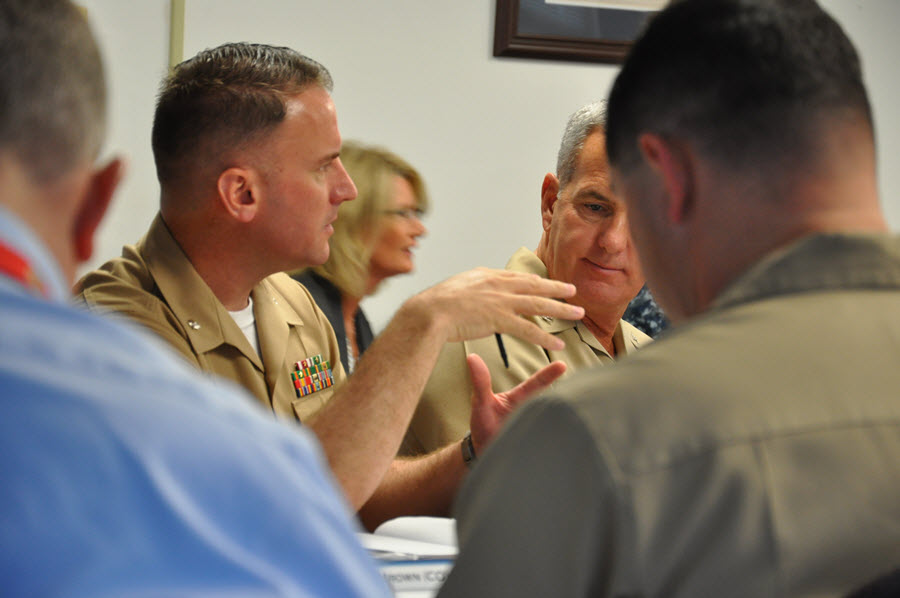
Lt. Col. Thomas Atkinson, commanding officer of the Fleet Readiness Center (FRC) Western Pacific, Atsugi, Japan, shares best practices and experiences during the Command, Fleet Readiness Centers (COMFRC) Commanding Officers’ Face-to-Face. The event was held at Fleet Readiness Center (FRC) Mid-Atlantic Detachment Patuxent River here Sept.29 - Oct. 1. (U.S. Navy photo)