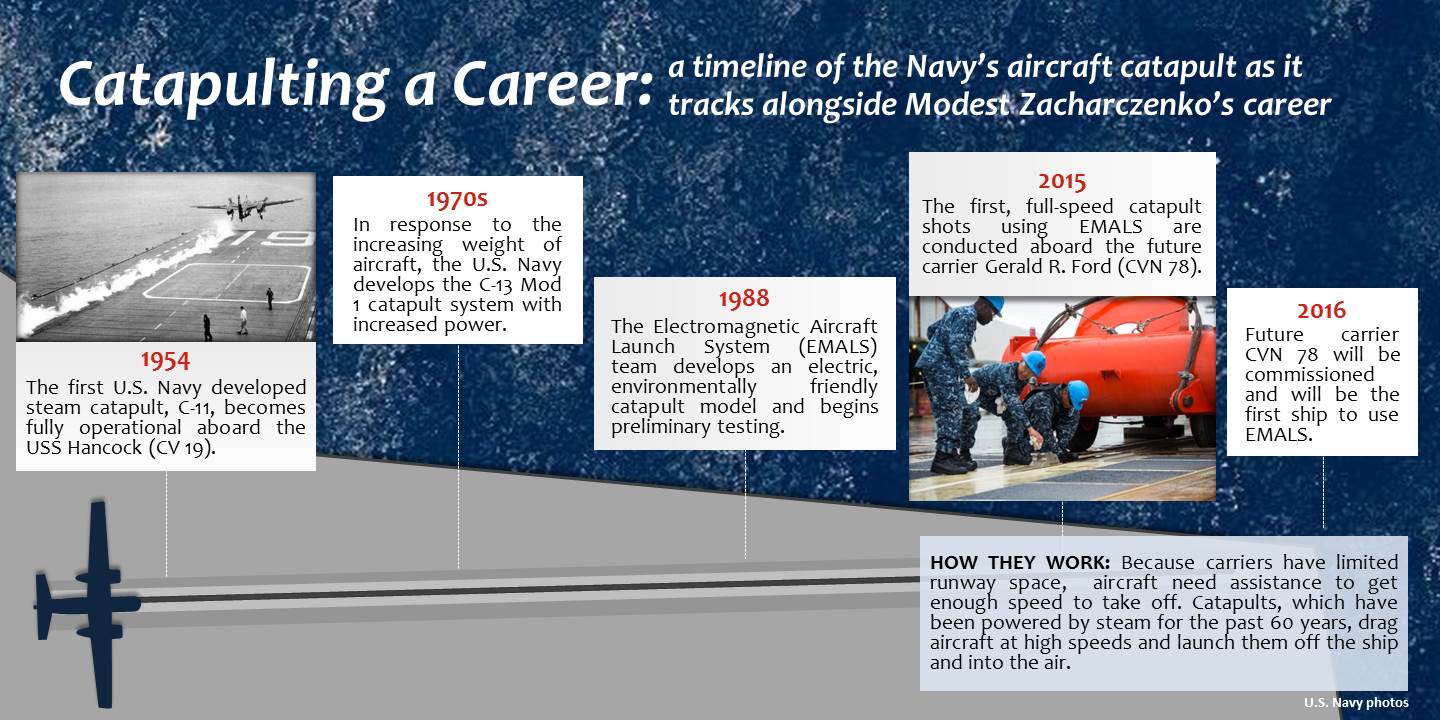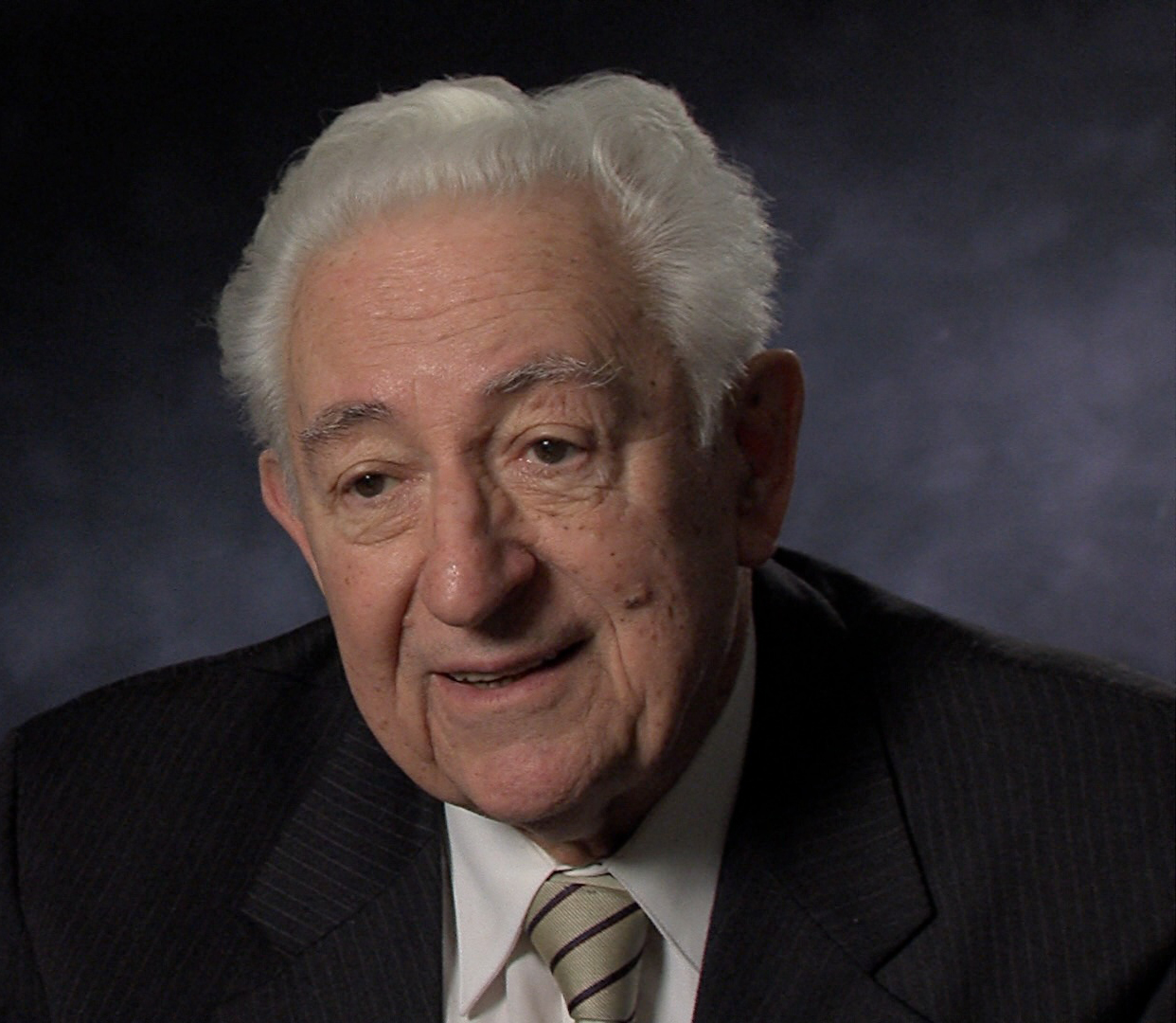
The deputy director for aviation systems at Program Executive Office (PEO) for Aircraft Carriers, Modest Zacharczenko’s 55-year naval career parallels the development of the Navy's launching systems/catapults. (U.S. Navy photo)
FULL STEAM AHEAD: Navy engineer's career tracks evolution of catapult used to launch naval aircraft
NAVAL AIR SYSTEMS COMMAND, PATUXENT RIVER, Md. — There's nothing "modest" about the Navy's new electromagnetic aircraft launch system (EMALS) — and perhaps one naval engineer knows this best.
80-year-old Modest (moh-DEST') Zacharczenko (za-kar-CHEN'-ko) has spent most of his 55-year career working on the Navy's aircraft launch and recovery systems, 43 of them in the Aircraft Launch and Recovery Equipment Program Office (PMA-251) at Naval Air Station (NAS) Patuxent River, Maryland.
Although the veteran engineer didn’t witness the June 5 EMALS test aboard pre-commissioning unit (PCU) Gerald R. Ford (CVN 78), he influenced the evolution of the catapult system that will eventually replace the current steam-powered version. EMALS will be installed on the Navy’s newest carrier, CVN 78, which is scheduled to be commissioned in March 2016.
Zacharczenko is the Aviation Ship Integration (ASI) Department’s deputy director for aviation systems at Program Executive Office (PEO) for Aircraft Carriers, a job ensuring the successful integration of the Navy’s aviation and shipboard systems. Although based at the Navy Yard in Washington, D.C., he is aligned under Naval Air Systems Command (NAVAIR).
Despite the complexities of working with different organizations, Zacharczenko said he “is simply focused on getting aircraft safely in the air and back on deck and providing support for every ship afloat.
“Without the installed aircraft catapults and arresting gear, there would be no naval tactical aviation as we know it,” he said. “The bottom line in aircraft carrier aviation is flight safety of manned and unmanned aircraft.”
For Zacharczenko, who calls EMALS the “Navy’s future workhorse,” the delivery of the Ford is also a harbinger of his eventual retirement.
“My goal is to see the Ford commissioned and go on the trials with EMALS onboard,” he said. “Then, my job will be done.”
For now, however, he is focused on ensuring the catapult’s transition from steam to electromagnetics. Although EMALS will eventually replace steam catapults on Ford class aircraft carriers, Zacharczenko said it deserved a salute.
"Steam has served us superbly," he said. “The Navy will use a mix of EMALS and steam catapults, with steam being used on Nimitz-class carriers and continue to be used until 2059."
According to the Navy, steam-powered catapults use about 125 gallons of water per launch, requiring the carrier to continuously generate fresh water, an essential commodity aboard a vessel. With nearly 5,000 Sailors aboard a typical carrier, water is needed to maintain a proper quality of life. Consequently, its use may be restricted during high sortie rates of up to 125 launches during a 12-hour operating day.
His first steam engine
Zacharczenko, who was born in Ukraine, said he was 8 years old when an uncle presented him with a small-scale working steam engine, piquing his interest in an eventual career. But the turmoil of war would steal his childhood.
Zacharczenko said he and his family were forced to flee the Ukraine during World War II to escape brutal Communist and Nazi forces that executed and deported millions of citizens.
“My granddad and father’s older brothers were all executed,” he said. “My father was on a hit list to be executed by the Communists. He was the only male survivor in his family.”
Eventually, Zacharczenko and his family made their way to New York City via a converted troop carrier ship. By then, he was 14. He graduated from high school and earned a scholarship to attend City College of New York. Along the way, he became a U.S. citizen in 1953 and said he was “proud to cast his first vote for Dwight D. Eisenhower for president.”
Upon graduation in 1959 and concurrent commissioning as a second lieutenant under the Army Reserve Officer Training Corps program, he landed a job as a development test engineer at then-Naval Air Test Facility, Lakehurst, New Jersey, starting a career in aircraft launch and recovery that would span more than 50 years. Zacharczenko later left Lakehurst for NAVAIR headquarters in Crystal City, Virginia, moving with the command to NAS Patuxent River, then to the Navy Yard.
During that time, he implemented significant advancements in the development of the catapult, making him more than just a footnote in its history. Recognizing the need to minimize demand for high-pressure steam and competition with the ship’s propulsion system, in 1982 he led the development of the low-pressure catapult, the C-13 Mod 2 “Fat Cat,” which reduced the frequency and extent of maintenance actions of the propulsion components aboard Nimitz-class carriers.
The effort saved the Navy more than $600 million and earned Zacharczenko NAVAIR’s Cost Reduction Achievement Award for a single action. Additionally, in 2003, he helped establish the ASI Department, which bridges the gap between the Navy’s aviation and maritime capabilities.
Focused on the future
As the Navy gears up for PCU Ford’s formal commissioning ceremony, Zacharczenko is also preparing his next steps, which began with recognition of his latest professional milestone — 55 years of service. In November, Vice Adm. David Dunaway, who leads NAVAIR, praised Zacharczenko for his “innovation, leadership and professional expertise” to the Navy.
“You have tackled every professional challenge with deliberate focus and steadfast determination,” Dunaway told family and friends who gathered at the Navy Yard to honor Zacharczenko. “Your Navy and your country have benefitted from your loyalty, technical knowledge and commitment. Thank you for your tireless service to this nation.”
As for what he will do when he eventually retires, Zacharczenko said he plans to spend time at his summer home, travel Europe with his wife of 50 years and, “from his veranda,” monitor the activities of his other love, the Navy’s catapults.
********************************************
To view a video about Zacharczenko’s career and the Navy’s catapult system, go to this link: https://www.youtube.com/watch?v=zK__zdCNHFQ.
ABOUT MODEST ZACHARCZENKO
TITLE: Deputy director for aviation at Program Executive Office (PEO) for Aircraft Carriers
BIO: Born in Ukraine, grew up in New York City. Upon graduation from college, he was commissioned as a Corps of Engineers Reserve Officer; married for more than 50 years, with one son.
RÉSUMÉ: Served as branch head, Launch and Recovery Equipment at NAVAIR from 1967-1984; from 1984-1992, led the Ship Suitability Branch, managing the interface between NAVAIR and NAVSEA in the Ship Installations Division (AIR-551); from 1992-2003, was the integrated product team lead for Ship Integration in the Aircraft Launch and Recovery Equipment Program Office (PMA-251); from 2003-2005, instrumental in organizing/establishing NAVAIR’s Aviation Ship Integration Department (AIR 1.2) and was its first deputy.
EDUCATION: Bachelor’s and master’s degrees in mechanical engineering from City College of New York; second master’s in naval warfare from the Navy War College
ADVICE FOR THE NEXT GENERATION: “Do what you love and it won’t feel like work. Ensure what you do is meaningful. In my case, it’s enhancing aviation in aircraft carriers for the U.S. Navy. This work is challenging and essential to this nation’s strength. I recommend this career to all young engineers who want to make a difference.”

Vice Adm. David Dunaway, NAVAIR’s commander, congratulates Modest Zacharczenko for 55 years of service to the U.S. Navy during a ceremony at the Navy Yard in November 2014. Zacharczenko is the Aviation Shipboard Integration Department’s (AIR 1.2) deputy director for aviation systems. He is assigned to the Program Executive Office (PEO) for Aircraft Carriers and works at the Navy Yard in Washington, D.C. (U.S. Navy photo)
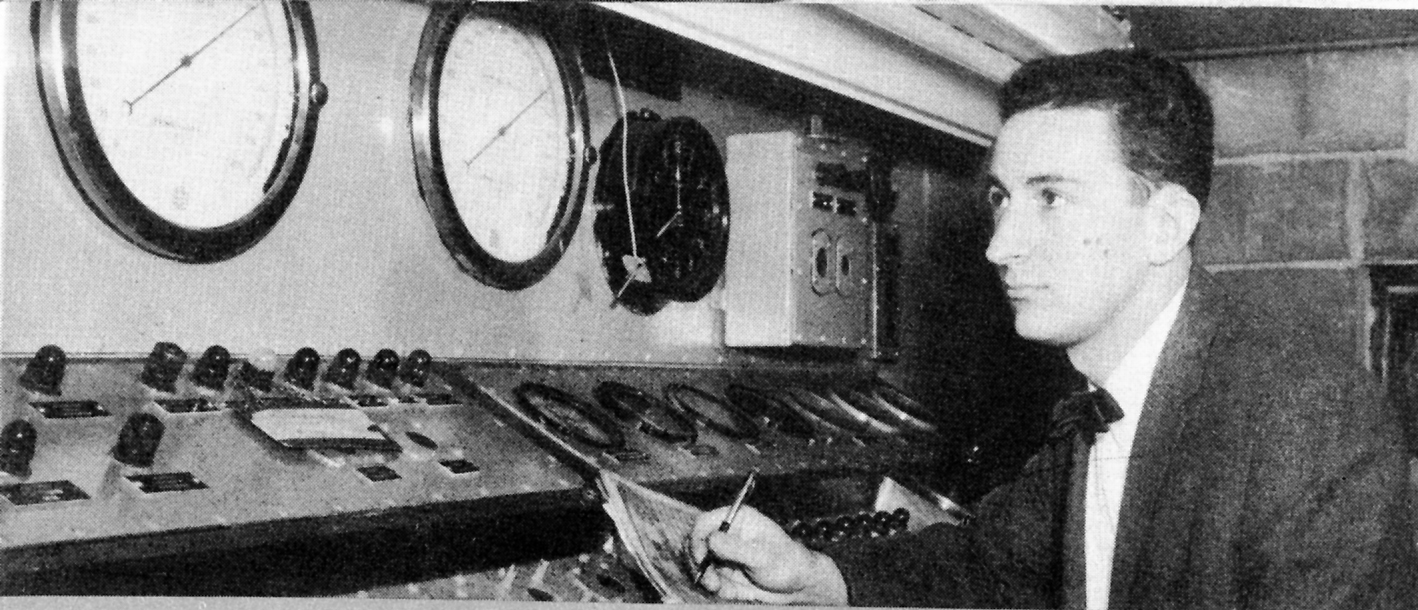
Modest Zacharczenko monitors steam accumulator pressure in the control room of the C-13 Mod 0 catapult at the land-based test site in Lakehurst, N.J., in 1960. (Courtesy photo)
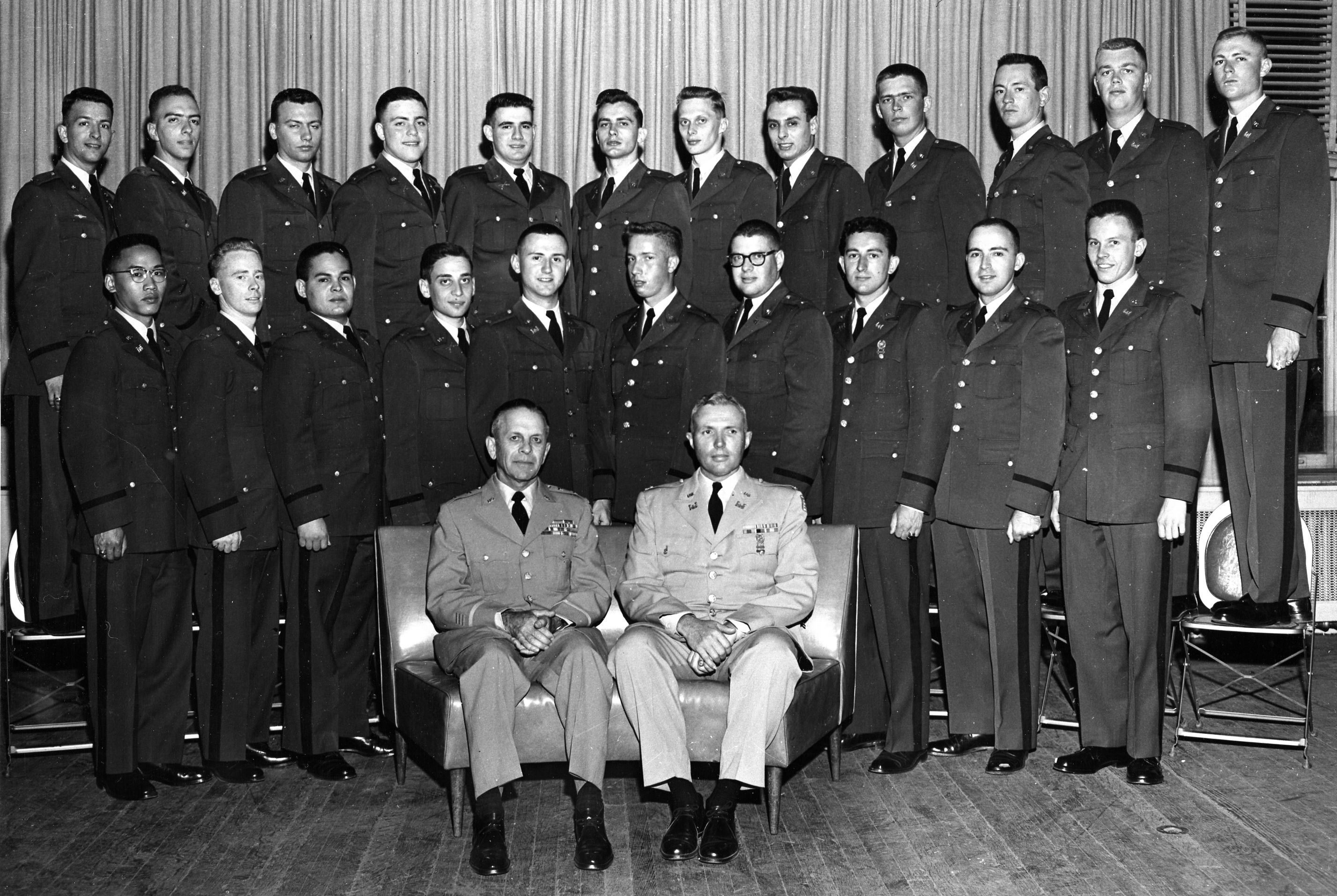
U.S. Army Reserve Lt. Modest Zacharczenko, first row, standing third from right, in a 1959 photo with his ROTC officer commissioning class. (Courtesy photo)