
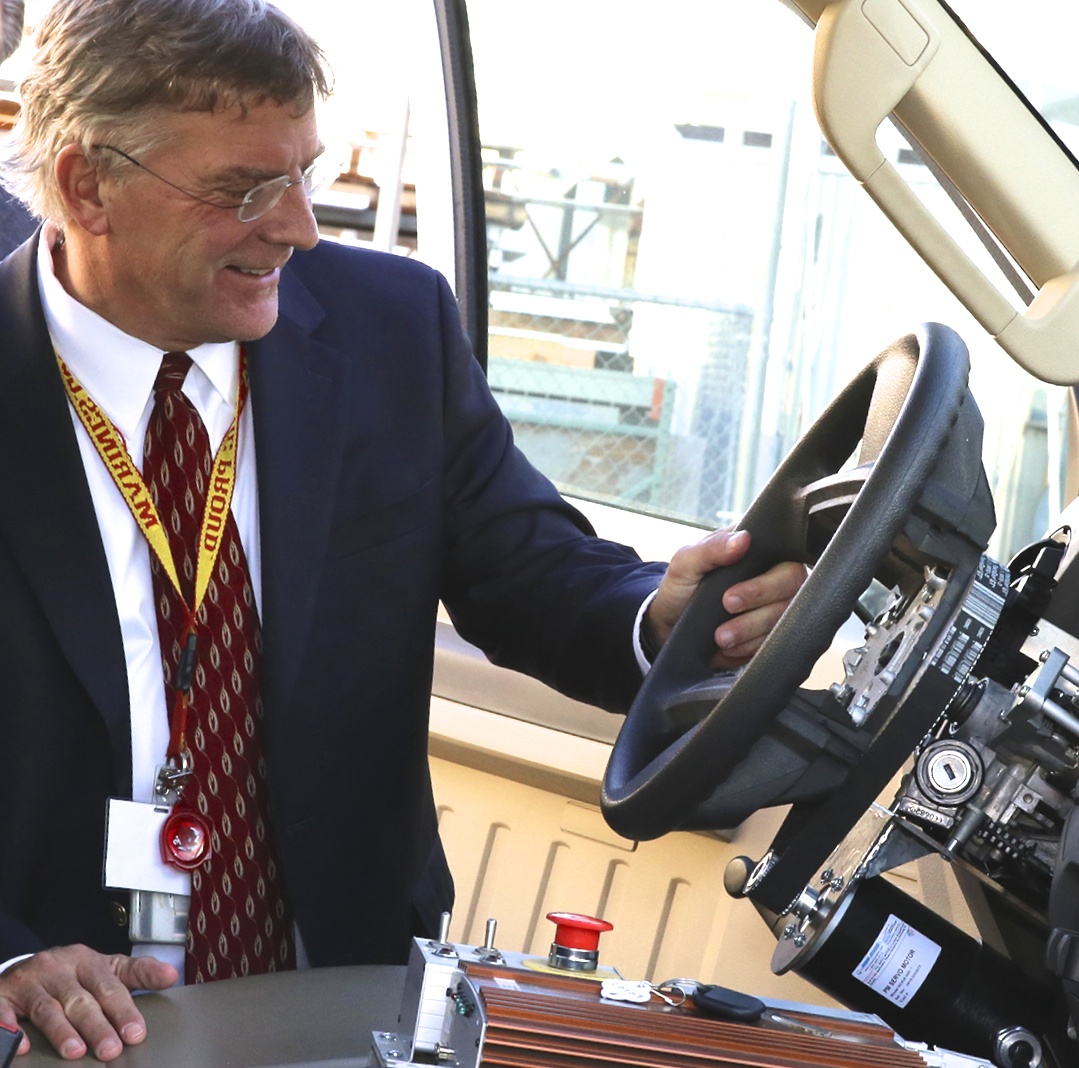
Dr. John Burrow gets behind the wheel of a driverless, Ford F-350 truck with software integrated by the Applied Manufacturing Technology Department at Naval Air Warfare Center Weapons Division China Lake. The department helps modify the trucks to pull targets during weapons testing. (U.S. Navy photo)
NAWCWD work attracts another senior Navy leader
NAVAL AIR WEAPONS STATION CHINA LAKE, Calif. - Dr. John Burrow, the newly appointed special assistant to senior Defense Department leader Sean Stackley, came out for a firsthand look at the breadth and depth of work being conducted at Naval Air Warfare Center Weapons Division on Jan. 5.
Burrow's two-day tour included briefings and demonstrations from project managers in over a dozen departments and programs for research, development, acquisition, and test and evaluation.
"There is tremendous technical talent and infrastructure here that's important for the government and the Navy to sustain," said Burrow. "Leadership's focus on understanding the science and engineering needed to build complex naval systems is taking place out here. We need to continue leveraging that work, encouraging it and creating it."
NAWCWD Executive Director Scott O' Neil accompanied Burrow as they looked into several of the command's leading advancements. The Weapons Division is known for its progress in unmanned systems, the Spike missile program, propulsion technologies, electronic warfare systems and development work for the F/A-18 and Joint Strike Fighter programs.
"The secret is to continue to do good work while preparing our people for the future," said O' Neil. "There's a lot of young talent out here being mentored by the more experienced engineers and scientists and doing hands-on work every day. Rear Admiral Moran and I are always proud to showcase their work, which is not only critical to addressing the complex naval problems of today, but necessary to capably handle those problems 10-15 years from now."
From the teams making super-capacitors out of a cow's femur at Michelson Laboratory to the advanced war games at the Integrated Battlespace Arena, Burrow engaged with leadership regarding their programs' costs, practical applications and future directions. Burrow, a certified level III acquisition professional, collaborated with several departments on approaching budgetary challenges and exploring new avenues to deliver capabilities at reduced cost.
"Capitalize on the investments currently in place today, and transition these things very quickly to give new capability to the fleet," said Burrow. "Some of the discoveries taking place here are new and early on, but it's important that they mature...that we learn from them, the successes and sometimes the failures, because that's what's going to aid the fleet 15 years from now."
Burrow is a member of the Senior Executive Service, and most recently served as the executive director of the Marine Corps Systems Command. He supports and advises the Assistant Secretary of the Navy for Research, Development and Acquisition on a number of high-priority topics and issues. This visit succeeds Stackley's trip to China Lake last year.
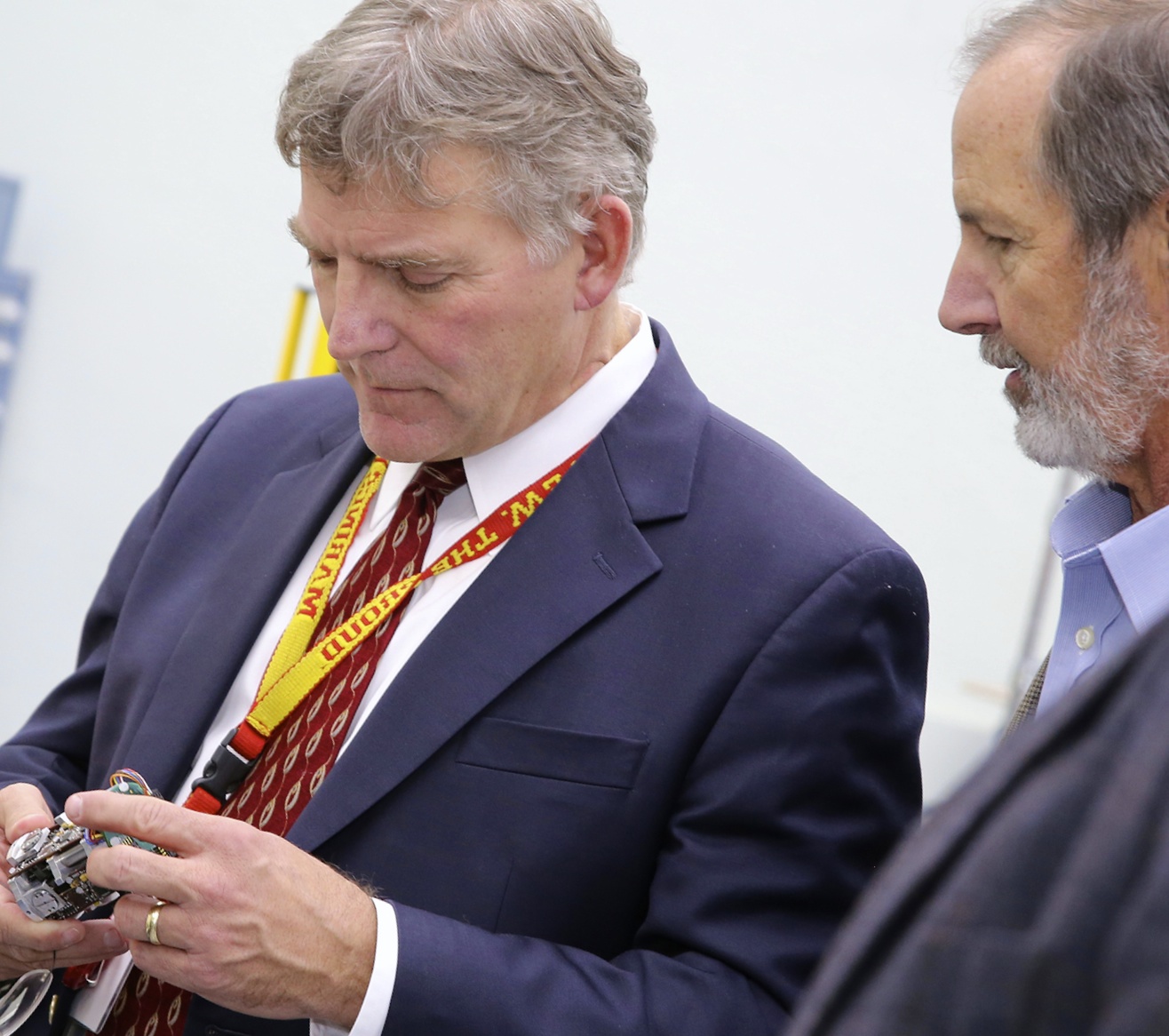
Executive Director Scott O’ Neil, right, hands a component to Dr. John Burrow to take a closer look at the intricate parts that are assembled and manufactured in-house at Naval Air Warfare Center Weapons Division China Lake. (U.S. Navy photo)
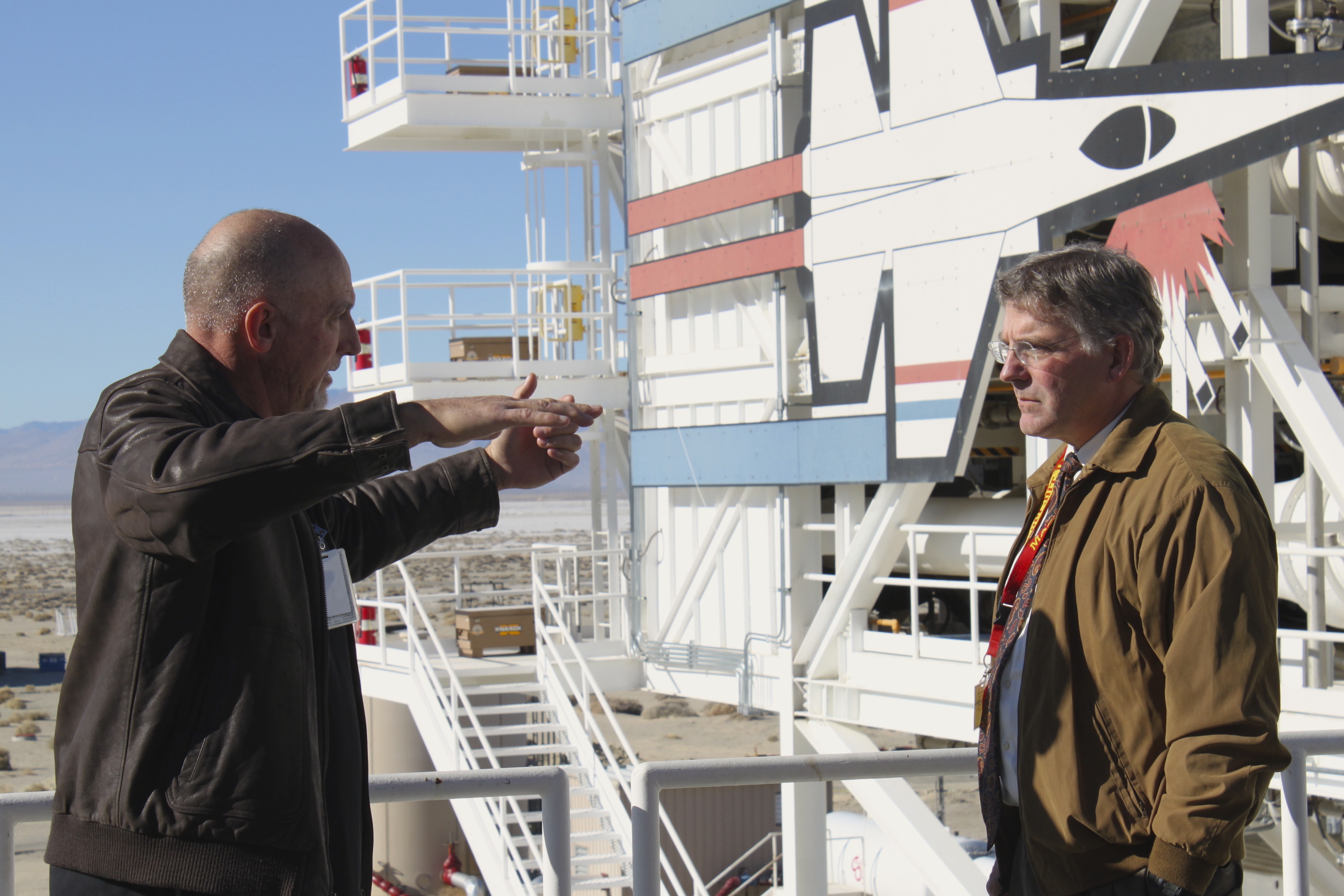
Jay Kovar, left, explains the types of tests run through a High-Velocity Airflow System at Naval Air Warfare Center Weapons Division China Lake to Dr. John Burrow. Behind them, nine silos can fire off enough rocket power to simulate realistic flight speeds without having to spend extra funds on live-fire or wind tunnel testing. (U.S. Navy photo)