

An E-2C Tactical Operational Flight Trainer, similar to this one was used to simulate the cross-platform warfighting capability known as Naval Integrated Fire Control-Counter Air, or NIFC-CA. The exercise, conducted at E-2 Systems Test and Evaluation Laboratory at Naval Air Station Patuxent River, Md., was the first time Airborne Command and Control Squadron (VAW) 125 aircrews participated in NIFC-CA training. (U.S. Navy photo)
Navy to share latest in virtual aviation training at key industry trade show
NAVAL AIR SYSTEMS COMMAND, PATUXENT RIVER, Md. — The Naval Aviation Training Systems Program Office (PMA-205) will discuss the service’s latest efforts to improve aircrew readiness at reduced costs during the 2014 Interservice/Industry Training Simulation and Education Conference (I/ITSEC), scheduled Dec. 1-5 in Orlando, Florida, a Navy official said.
Capt. Craig Dorrans, program manager for PMA-205, will share how Live, Virtual, Constructive (LVC) training, has become a game changer for naval aviation.
Launched in 2007, LVC offers naval aviation training at reduced costs, the program manager said. It’s a concept that integrates “live” flying aircraft; “virtual” videogames run by human operators; and “constructive” simulation with computer-generated actors programmed to operate autonomously.
“LVC reduces wear and tear on live assets and lowers fuel consumption because fewer live-threat systems and adversary aircraft will be needed,” said Dorrans, whose office is collaborating with various military and industry stakeholders to develop LVC. “Training events will not be as constrained by physical range limitations. The intent is to integrate all new aircraft systems and legacy systems, if feasible, into the LVC model.”
An LVC scenario would work like this: A live F/A-18 aircraft flies a strike mission using a training range. The aircrew has communications and is interoperable with E-2D aircraft simulators via the Navy Continuous Training Environment, a system that connects geographically dispersed simulators and systems with geographically separated forces and offers training on-demand. Using simulators, the aircrews are providing battle management support. Computer-generated enemy aircraft are being uploaded to the systems of both the live and simulated aircraft. The two platforms must work together to overtake the “adversaries” and complete the mission scenario.
Like the Navy, the Marine Corps has also invested in LVC. The service’s Aviation Distributed Virtual Training Environment (ADVTE) links virtual aircrew training systems and constructive players through Network Exercise Control Centers located at 2nd and 3rd Marine Aircraft Wing, Marine Aviation Training System Sites.
“ADVTE allows geographically dispersed Marines the capability to link together for training and mission rehearsals,” said Col. David Owen, PMA-205 Marine Corps training systems lead. “As with other simulation, ADVTE provides the opportunity for considerable savings. Since trainers can be linked during training, ADVTE can be viewed as a cost-savings multiplier.”
The Navy is already introducing elements of LVC today and will continue to add capability and increase fidelity in formal LVC training events through 2020.
According to the organization’s website, I/ITSEC promotes cooperation among the armed services, industry, academia and various government agencies in pursuit of improved training and education programs, identification of common training issues and development of multiservice programs.
You may view the video below or click here to watch.
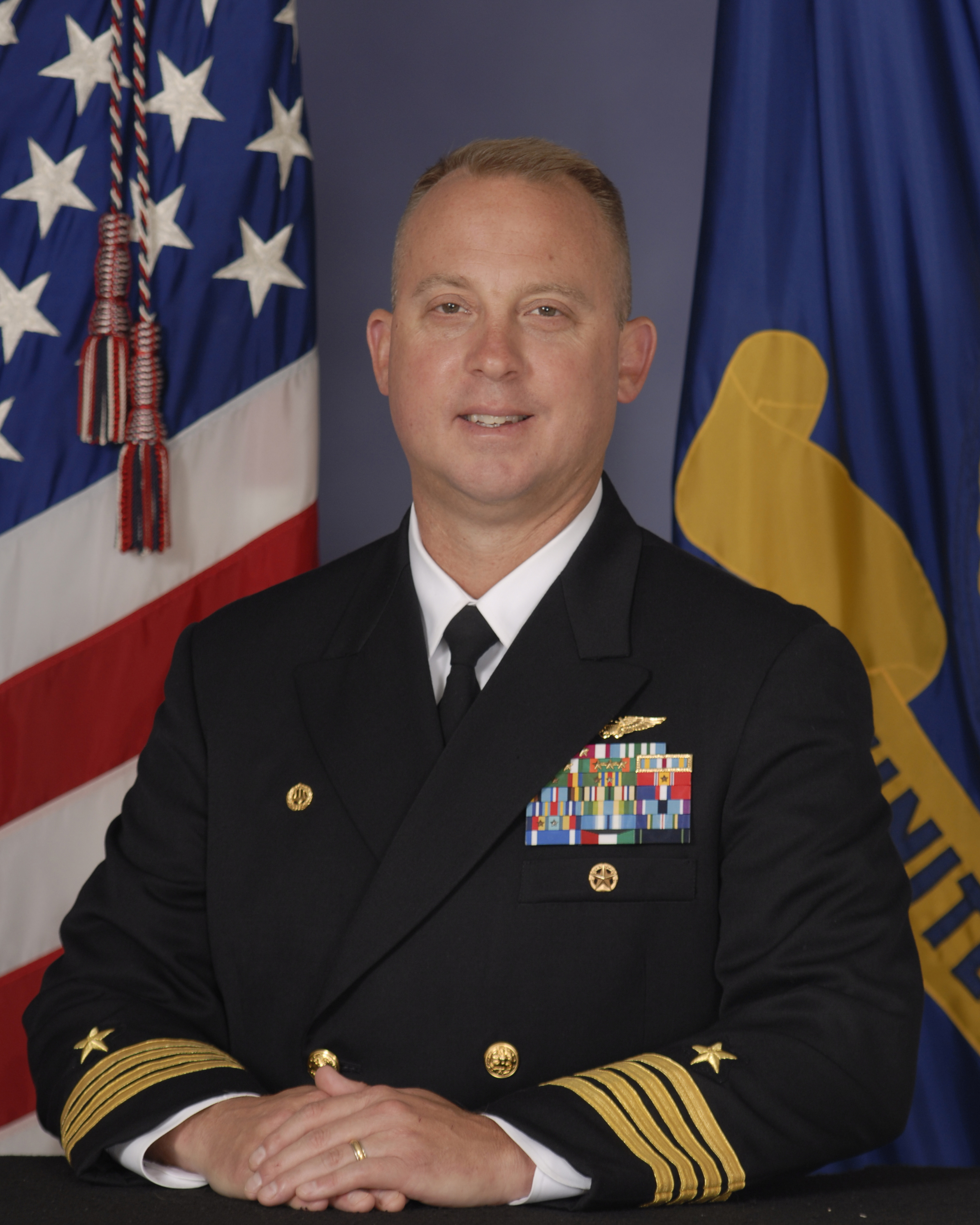
Capt. Craig Dorrans, who leads the Navy’s Naval Aviation Training Systems Program Office (PMA-205), will share how Live, Virtual, Constructive (LVC) training has become a game changer for naval aviation at the 2014 Interservice/Industry Training Simulation and Education Conference (I/ITSEC), scheduled Dec. 1-5 in Orlando, Fla. LVC is a concept that integrates “live” flying aircraft; “virtual” videogames run by human operators; and “constructive” simulation with computer-generated actors programmed to operate autonomously. (U.S. Navy photo)