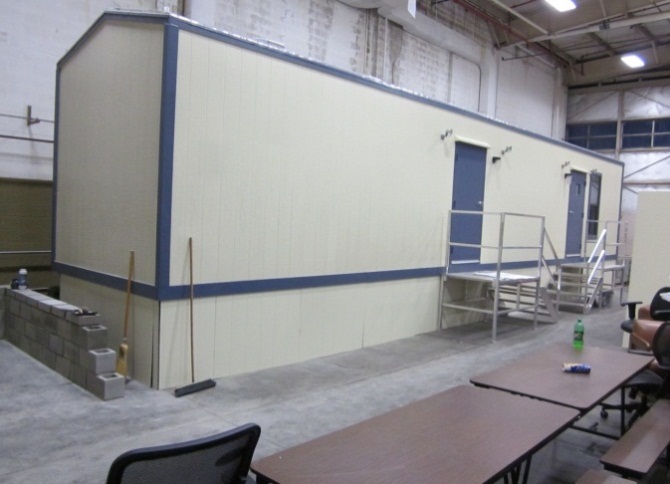
Fleet Readiness Center Mid-Atlantic installed a specially built trailer to protect its employees from heavy metal contamination. The self-contained trailer includes a dressing area, shower and restroom facilties and break/lunch room. (U.S. Navy photo)
Fleet Readiness Center Mid-Atlantic heavy metal abatement program improves safety for employees
FLEET READINESS CENTER MID-ATLANTIC, OCEANA, Va. -- For the last twelve months, the Aircraft Department of Fleet Readiness Center Mid-Atlantic (FRCMA) has been actively contributing to the development of a strategic partnership between the Department of the Navy (DON) and the Occupational Safety and Health Administration (OSHA). This developmental effort is being guided by Leslie Holland, Director, Occupational Safety and Health, Office of the Assistant Secretary of the Navy (Energy, Installations and Environment). Another active sponsor of the project has been Ken Pettersen, Director, Safety & Regulatory Compliance, Commander, Fleet Readiness Centers.
A primary focus of the partnership has been to identify the work processes that generate heavy metal dust and to implement effective methods to eliminate or control hazards to employees. Exposure can occur during the painting of aircraft exteriors, interiors or parts, and during the sanding and grinding of chromate-based coatings prevalent in naval aircraft. Heavy metals of concern have included lead, cadmium, beryllium, and hexavalent chromium (also known as chromium (VI)).
This partnership has resulted in the investment of more than $600 thousand in safety-related construction, equipment, and training for FRCMA.
Initial Project
The initial work processes identified for analysis of heavy metal dust generation and control were the H-60 helicopter Plastic Media Blast (PMB) and metal sanding operations in Hangar V-146 at Naval Station Norfolk, Va.
Part of the administrative control specification for PMB operations includes the requirement for operators to shower at work prior to donning personal clothing and returning home for the day. However, Hangar V-146 had no restroom or shower facilities and there were none available to FRCMA employees within a reasonable walking distance. Onsite restroom and shower facilities were also required by OSHA to combat potential cadmium and hexavalent chromium exposure above the Permissible Exposure Limit (PEL).
An Aircraft Department cross functional team consisting of Shawn Hurdle (Safety Specialist), Kevin Brinkman (Production Assistant), Brian Baumbach (H-60 IMP Metals Shop Supervisor) and additional subject matter experts tackled the task of identifying a cost effective decontamination facility. The team identified a 46 foot by 9 foot specially designed and built trailer that included a dressing area, separate shower and restroom facilities, as well as a break/lunch room. Other features included electrical, fresh water, and sewage disposal with a storage and spill mitigation system.
Additional Projects
After completion of the V-146 PMB facility improvements, the team identified other work processes and equipment capable of producing heavy metal dust emissions. The identified areas included the machine shop in Hangar 200 at Naval Air Station Oceana, Va., along with the mini shop, machine shop, and composite shop in Hangar V-147, as well as multiple on-aircraft repair processes. Equipment identified included floor or bench mounted sanders and grinders, bead blasters, band saws, drill presses, and drill bit sharpeners.
The team’s approach was to identify abatement policies and equipment that were replicable in each of the identified work processes. The team’s initial step was to segregate the dust generating equipment from other equipment within the identified work areas. Physical segregation methods included construction of knee walls and installation of industrial curtains. A common visual segregation method included highly visible and distinguishable deck (floor) painting.
The team also designed and installed a dust removal system, which included High-Efficiency Particulate Air (HEPA) filtered vacuums and interconnected systems of plumbing and hoses to capture dust generated by each piece of equipment.
Personnel decontamination stations were also installed in each of these areas, which contained disposable coverall suits, booties, gloves, and heavy metal absorbent wipes, along with cleaning and disposal instructions for respirators and other Personal Protective Equipment (PPE). Additionally, downdraft tables that capture dust at the source of generation, also known as “point source control” devices, were inspected for proper operation and upgraded or replaced, as necessary.
Work Force Safety
Ensuring the health and well-being of our work force was the driving factor for the heavy metal abatement improvement program. The effort directly aligns with the Department of the Navy objective of “Taking Care of Our People.”
Technology, infrastructure, and equipment such as PPE, along with trained personnel that have the right tool in good operating condition for the job, will continue to maximize our efforts.
Additional policies related to work force safety included: a robust cleaning program; the use of sticky mats to minimize the potential of tracking dust to other work areas; the use of HEPA vacuums as a replacement for all sweeping operations; designated buffer zones of at least six feet surrounding aircraft maintenance that involves heavy metal dust generation; and the continuation of Industrial Hygiene monitoring and sampling to ensure that annual surveys define the PPE necessary to protect employees from exposure.
FRCMA’s success is directly related to our work force, their experience, training, skills, and abilities.
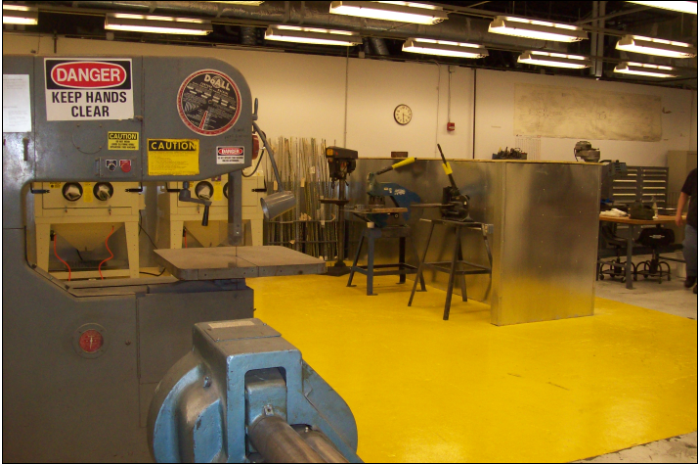
In order to protect employees from heavy metal contamination, Fleet Readiness Center Mid-Atlantic made modifications to a shop area. Modifications included the construction of knee walls, installation of industrial curtains and the floor was painted with a highly visible color. (U.S. Navy photo)