
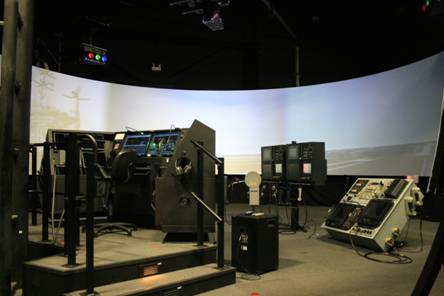
Developed by the Naval Aviation Training Systems Program Office (PMA-205) at Naval Air Station (NAS) Patuxent River, Md., the Landing Signal Officer trainer at NAS Oceana, Va., received a facelift on March 7 with the installation of projectors, which will improve the 270-degree visuals for trainees practicing procedures used in aircraft recovery aboard naval vessels. (U.S. Navy photo)
New outlook for Landing Signal Officer trainers
NAVAL AIR SYSTEMS COMMAND, PATUXENT RIVER, Md. – The Landing Signal Officer (LSO) trainer at Naval Air Station Oceana, Va., received a facelift March 7 with the installation of projectors, which will improve the 270-degree visuals for trainees practicing procedures used in aircraft recovery aboard naval vessels.
Developed by the Naval Aviation Training Systems Program Office (PMA-205) based here at NAS Patuxent River, Md., students from around the world use the device to simulate a variety of emergency conditions and malfunctions without putting pilots or aircraft at risk. The only device of its kind, the trainer simulates the look and feel of standing on the flight deck of an aircraft carrier.
The visuals display approaching aircraft, the carrier deck, the environment at sea and more. The visual system provides primary perceptual cues the LSO is required to know and use in actual operations. LSOs assist with thousands of carrier landings annually, and the training they receive at the schoolhouse at NAS Oceana has steadily improved the safety of carrier landings during the past 50 years.
An LSO is a Navy or Marine Corps pilot whose primary responsibility is the safe and expeditious recovery of nonvertical, short take-off and landing aircraft aboard U.S. aircraft carriers. In addition, the LSO is directly responsible for training pilots in shipboard approaches and carrier-landing techniques; shipboard flight deck procedures; Field Carrier Landing Practice; and training other LSOs.