
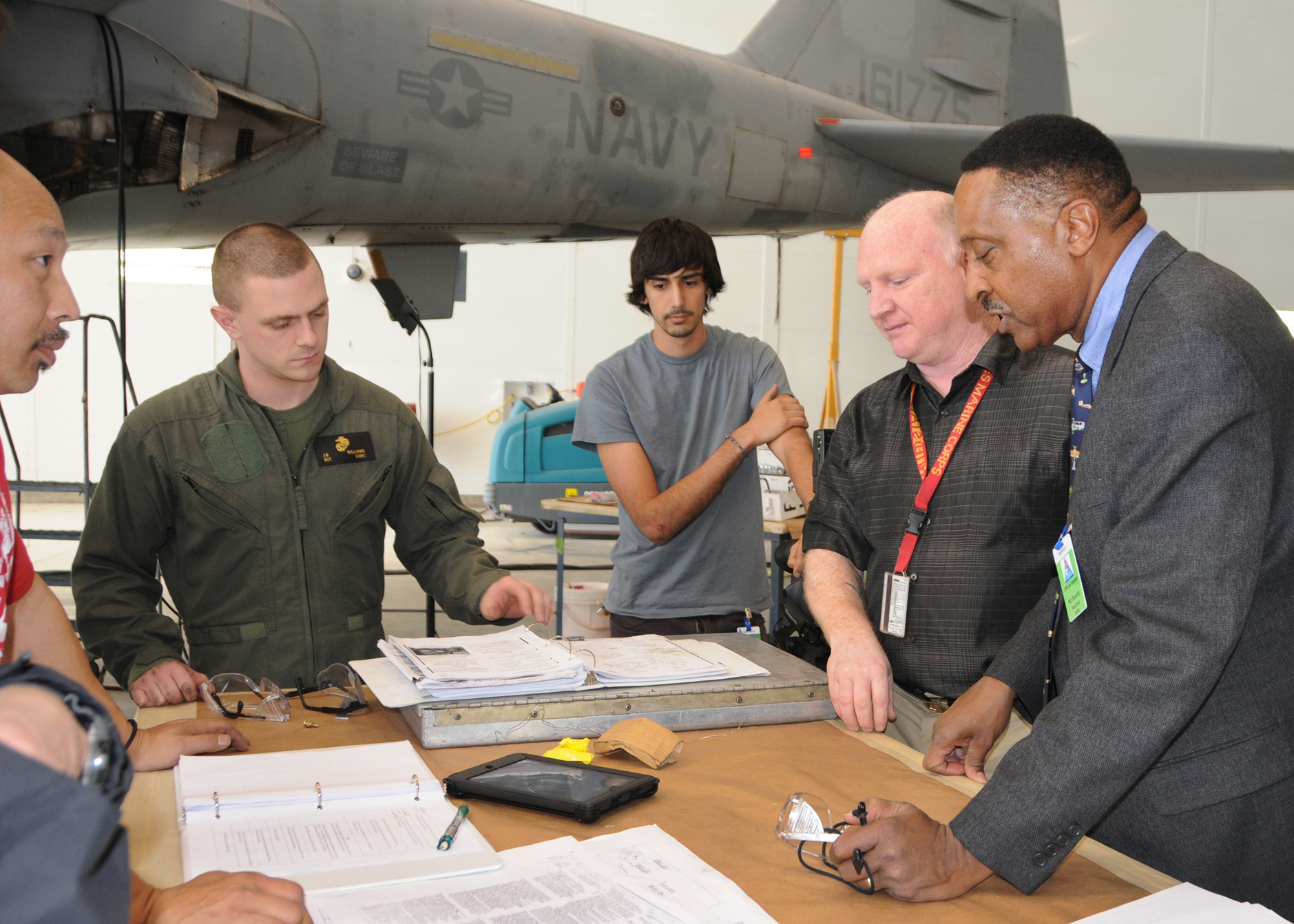
Ken Nakanishi (from left), film segment executive producer; Sgt. Jonathan B. Williams, a U.S. Marine airframe mechanic; Nick Solorzano, a videographer; Air Vehicle, Deputy Assistant Program Manager, Logistics Andy Porter with Program Manager Air (PMA) 234; and Winston E. Scott, a retired Navy captain and former astronaut, discuss the technical aspects of videotaping maintenance procedures on an EA-6B Prowler at Fleet Readiness Center Southeast Jan. 31. A team of Navy and Marine Corps specialists gathered to document repairs and update technical publications for a multimedia training aid to enhance Fleet maintainers’ skills. (U.S. Navy photo/Released)
Training aid filmed at FRCSE to improve Fleet maintainer skills
JACKSONVILLE, Fla. –Video cameras began rolling Jan. 22 at Fleet Readiness Center Southeast (FRCSE) as airframe mechanics, engineers and technical experts collaborated to document the exacting work required to maintain and repair sophisticated military aircraft.
Specialists from FRCSE, Airborne Electronic Attack/EA-6B Program Manager Air (PMA-234), Marine Tactical Electronic Warfare Squadron ONE (VMAQ-1), Naval Air Technical Data & Engineering Service Command (NATEC) and Job Performance Associates (JPA)concluded a two-week effort to videotape rigging procedures for the main landing gear of an EA-6B Prowler Feb. 1.
The Navy is creating multimedia training aids to provide Fleet maintainers—Sailors and Marines—with visual tools to augment text-based instruction, predicted to reduce repair errors and improve mission readiness.
Engineer Becky Thacker, the P-8 Poseidon Fleet Support Team (FST) lead, said this integrated technology is the “wave of the future.”
Thacker worked closely with Andy Porter, PMA 234 Air Vehicle, Deputy Assistant Program Manager, Logistics (DAPML), who she said “did the heavy lifting for the manpower and support.”
“We brought a team of two Marines from Cherry Point,” said Porter. “We’ve been having issues with (Prowler) nose and main landing gears for quite a while. We are relying on the expertise of the FRCSE artisans. This airplane is 30 years old. The training track is robust, but students can’t possibly cover all aircraft subsystems in a three-week period.”
Sgt. Jonathan B. Williams and Cpl. Victor H. Lopez, both airframe mechanics with VMAQ-1 at Marine Corps Air Station Cherry Point, N.C., demonstrated the maintenance procedures as the video cameras rolled.
Lopez said the aids will clarify some of the more detailed aspects involved in rigging landing gear and provide a better understanding of specific techniques not covered extensively in the military trade school or technical publications.
Matt Waters, JPA chief executive officer, said his company has been creating job performance aids for the Navy contracted through the Defense Logistics Agency (Document Services) since 2004. He said JPA puts visual and audio tools at the fingertips of the maintainer to improve accuracy, save time and reduce cost.
“This is the first effort at Jax, but we’ve been doing JPAs at Cherry Point for a long time,” said Waters. “The Marine Corps is one of the most aggressive agencies. We are collaborating to introduce the same kinds of learning tools for the Navy. We are leveraging so much from FRCSE’s expertise. We are capturing knowledge from experts for mentoring segments and turning text-based manuals into multimedia tools, step by step, to read, see, hear and do.”
NATEC field service representative, Bob Szarmach who has worked with the Marines as a civilian since 1995 at Cherry Point, said the team laid out “step by step” rigging procedures for the main landing gear before each session and conducted a dry run before filming each day.
“We targeted 19 paragraphs in one work package with one add-on,” said Szarmach of the team’s efforts to update the technical publications.
Steve Faulk, the FRCSE EA-6B FST lead, who arranged for the shoot in Jacksonville, said the location rested on the availability of a Prowler that could be used during filming.
“We couldn’t get a Fleet aircraft set aside for two weeks,” said Faulk. “It was all about availability. This aircraft wasn’t in work here; prior to being removed from service, it was being used for a landing gear engineering investigation.”
Faulk said the Prowler used for this effort will soon be struck from the Fleet. He is locating another so the team can reassemble this summer to film the nose landing gear rigging procedures.
On the last day of filming at FRCSE, Winston E. Scott, a retired Navy captain and former astronaut, met with the team to observe the technical aspects and JPA filming efforts headed by the executive producer for the segment, Ken Nakanishi and videotaped by Nick Solorzano.
Scott reported to the military depot in 1985 as an aerospace engineering duty officer assigned as the F/A-18 Hornet strike fighter project officer and production test pilot flying F/A-18, F-14 Tomcat and A-7 Corsair aircraft.
Today, Scott serves as the senior vice president for external relations and economic development at Florida Institute of Technology in Melbourne, Fla. He hopes to integrate the training tools at the private technical university.
The Navy's multimedia training aid is scheduled for release to Fleet maintainers at the end of 2013.
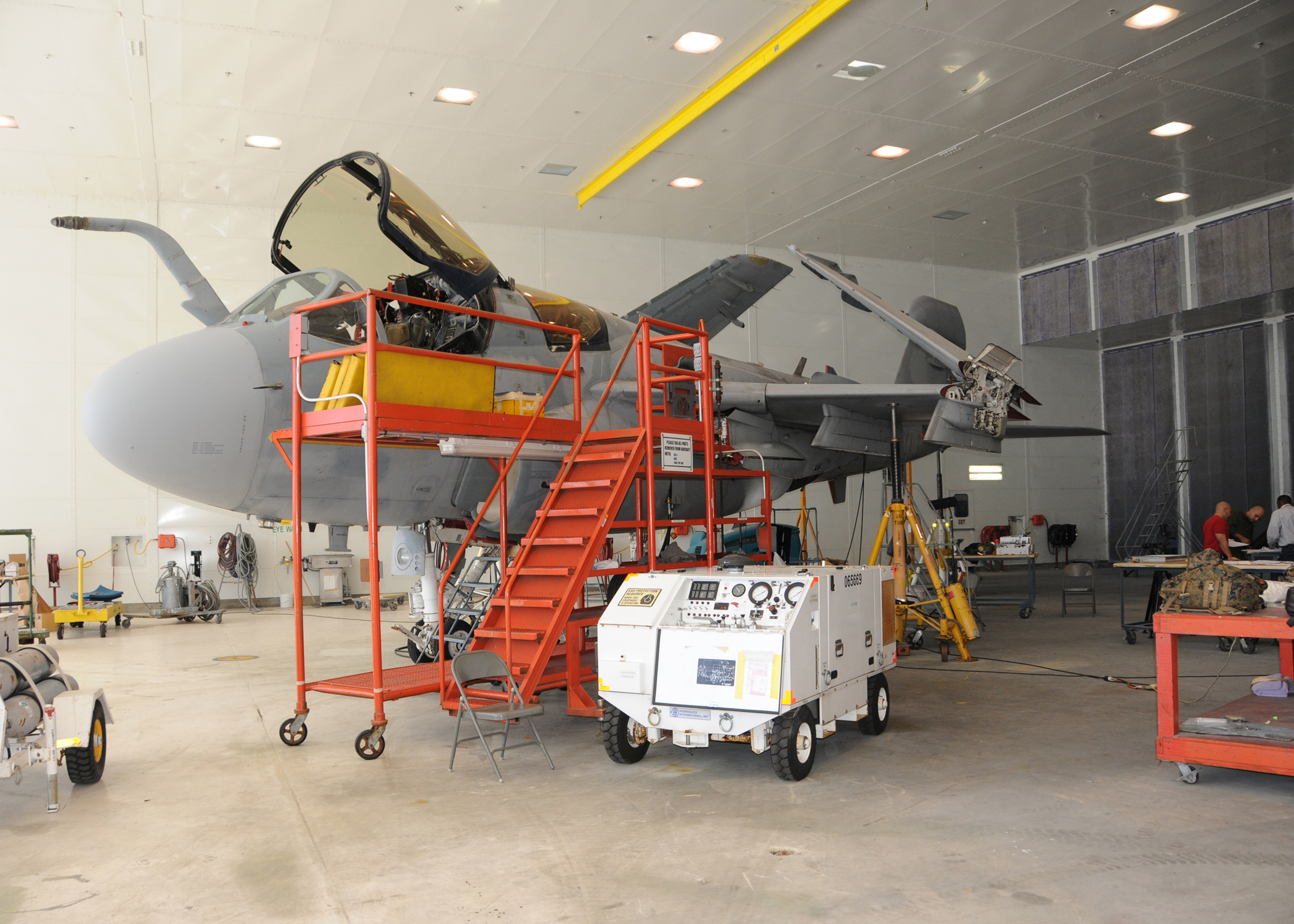
A team of U.S. Navy and Marine Corps specialists collaborated from Jan. 22 to Feb. 1 to film maintenance procedures using an EA-6B Prowler Electronic Attack aircraft awaiting demilitarization at Fleet Readiness Center Southeast (FRCSE). The team is documenting current maintenance procedures using the expertise of FRCSE artisans and NATEC personnel to update technical publications used by Fleet maintainers to repair military aircraft. Job Performance Associates located in Jacksonville, Fla., was contracted by Defense Logistics Agency (Documents Services) to produce a multimedia training aid for use with the Navy manuals. (U.S. Navy photo/Released)