
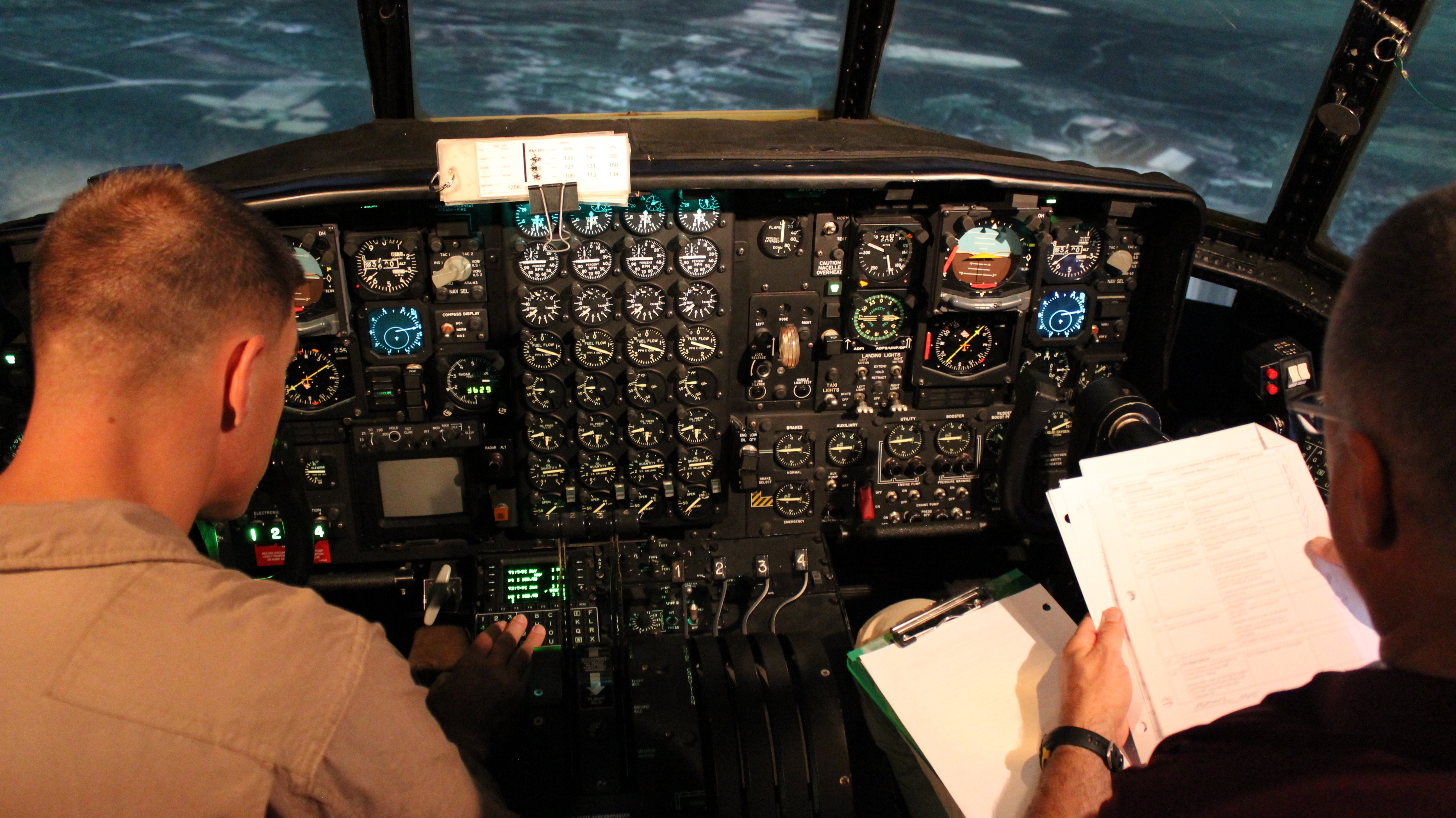
Marine Corps Capt. David Girardot, (left) and Mike Allen, Naval Air Warfare Center Training Systems Division KC-130 lead systems engineer, run through the tests for the government final inspection and acceptance of the modified KC-130T training device at Naval Air Station Fort Worth Joint Reserve Base, Texas. (U.S. Navy photo)
Marine Corps Reserve simulator upgrades improve vision
NAVAL AIR SYSTEMS COMMAND, Patuxent River, Md.— Upgrades to the KC-130T cockpit simulator enhance training exercises for student pilots at Naval Air Station Fort Worth Joint Reserve Base, Texas.
During a ceremony July 27 at NAS Fort Worth JRB, the Marine Corps Reserve’s KC-130T aircrew procedures trainer was declared “ready for training” after undergoing upgrades to its visual system, reflective memory interface boards and night vision capabilities.
“Upgrades to the visual system allow both the pilot and co-pilot to view scenes from the same perspective, and improvements to the reflective memory interface, or behind-the-scenes software, now provide a more realistic cockpit environment,” said John Fuller, Naval Aviation Training Systems program (PMA-205), KC-130 training team lead at NAVAIR.
Hillary Freidman, Naval Air Warfare Center Training Systems Division (NAWCTSD) KC-130T project manager, said the device is designed to teach the pilot, co-pilot and flight engineer how to fly the aircraft from takeoff to landing and how to operate as a crew within the cockpit environment.
The trainer is capable of simulating all ground, takeoff, flight, operational and landing characteristics of the KC-130T aircraft. Onboard aircraft systems are simulated and/or stimulated for both normal and emergency operating procedures.
“As part of an initial pilot training requirement, having the most accurate equipment and most realistic scenarios is crucial to maintaining fleet readiness, and I am very pleased we were able to provide this capability to Reserve students,” said Capt. John Feeney, Naval Aviation Training Systems program manager whose office oversaw the design and development of the upgrades.
The improvements, coordinated in conjunction with Naval Aviation Training Systems Program Office, Patuxent River; NAWCTSD, Orlando, Fla.; and prime contractor AVT Simulation, also added 70 new databases consisting of runways and geographical information from across the country, to include the Fort Worth area.
Fuller said the aircrew procedures trainer is one of two simulators available to the Navy and Marine Corps Reserve students at NAS Fort Worth JRB. It is primarily used by the Marines but will be available to the Navy Reserve students later this fall when their C/KC-130T Operational Flight Trainer (OFT), device, undergoes major upgrades.
The U.S. Marine Corps KC-130T is a multirole, multimission tactical tanker/transport aircraft that provides in-flight refueling as well as rapid ground refueling and transportation of personnel and cargo. Common missions for Hercules aircraft are to provide aerial delivery of troops and cargo, emergency re-supply into unimproved landing zones, emergency medical evacuation, aerial refueling and emergency evacuation of personnel and key equipment.
(Tactical Airlift, Adversary and Support Aircraft Program Office (PMA-207) communications support contributed to this article.)