
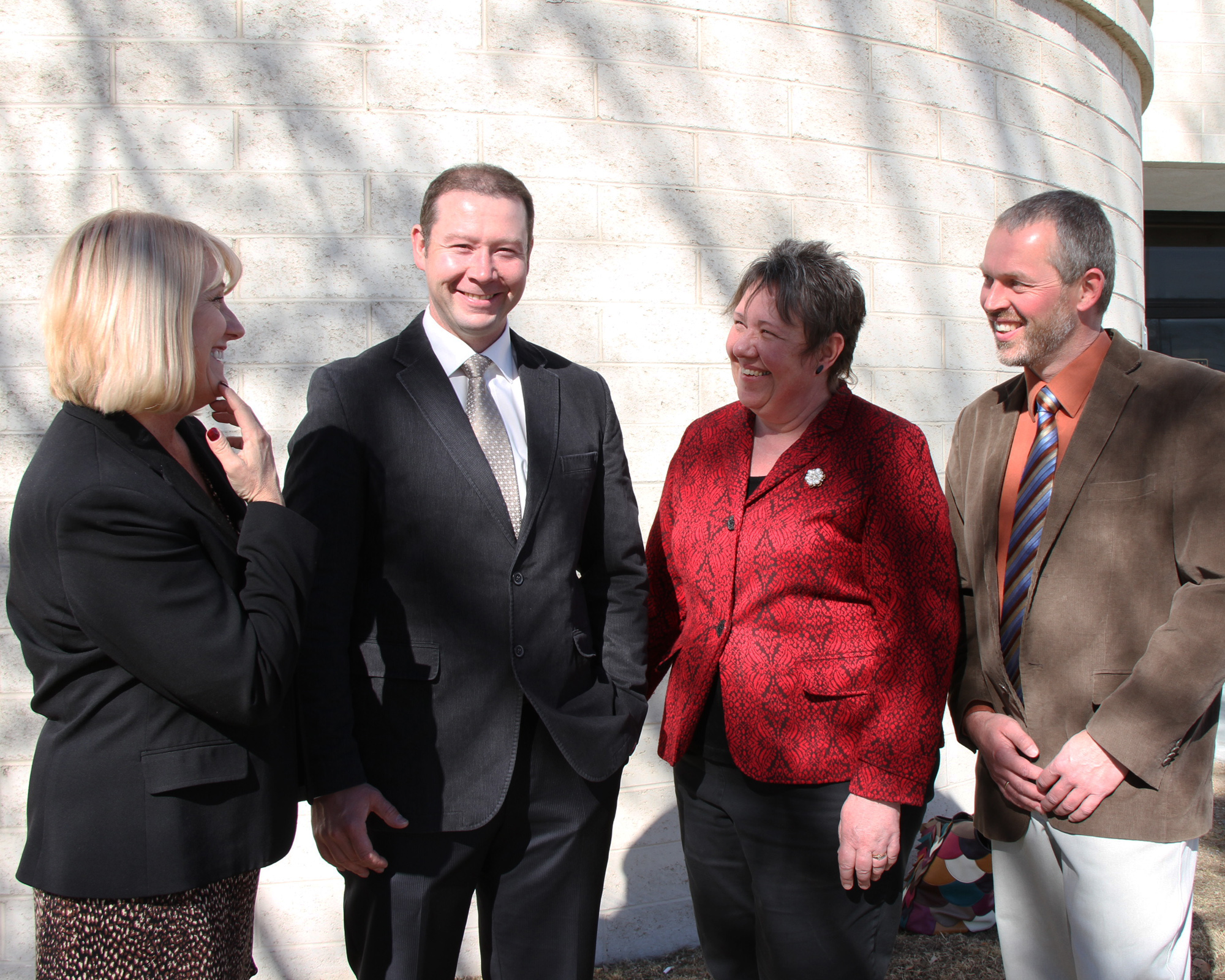
Kelly McDonald, left, and Joni Pentony, second from right, chat with German exchange engineers Milan Weyer, second from left, and Arne Krueger. McDonald and Pentony helped implement the Engineering and Scientist Exchange Program at NAWCWD. (U.S. Navy photo)
NAWCWD hosts German engineers through exchange program
CHINA LAKE, Calif., – Naval Air Warfare Center Weapons Division (NAWCWD) recently became a little more international with the addition of two engineers from Germany. Milan Weyer from Koblenz, and Arne Krueger from Bremen moved to Ridgecrest in October 2011, for a one to two-year assignment through the Engineering and Scientist Exchange (ESE) program at NAWCWD. The ESE program provides mid-level career engineers and scientists an opportunity to work alongside their U.S. counterparts. After their tour, foreign participants are expected to return to their government defense jobs in their own country enhanced by their U.S. experience and lessons learned.
The ESE program is sponsored by the Navy International Programs Office (NIPO) in Washington, D.C. and is coordinated by NAWCWD’s International Technology Cooperation Office (ITCO). NIPO and ITCO work together to review the list of nominated participants and find potential matches between work efforts and supervisors within NAWCWD. Acceptance letters are then signed by the NAWCWD commanding officer to sponsor the nominees to work in the United States. Until now, NAWCWD has had limited participation in this program, hosting only a few foreign engineers in the past 10 years.
Kelly McDonald from the ITCO office said, “We hope that the future will provide more international collaborative work opportunities by exchanging engineers and scientists, both here and with our own participants in foreign countries.”
NAWCWD benefits from the opportunity to see how individuals from other countries work on technical problems. Their work provides a unique perspective, potential collaboration opportunities with international partners, and softens labor expenses, since the sponsoring country pays the labor for its participants.
The foreign engineers gain insight into U.S. military research and development techniques and acquisition processes, in addition to exchanging ideas and techniques relating to weapons system development. An added benefit is the opportunity to improve their language skills.
Weyer and Krueger work for Joni Pentony in the Research and Intelligence department on a variety of topics that include designing a gimbal mount for an optical system and developing a multi-national radio for humanitarian assistance missions.
Pentony has taken the lead to provide research topics to ITCO which may benefit both the United States and Germany and lead to additional collaboration opportunities.
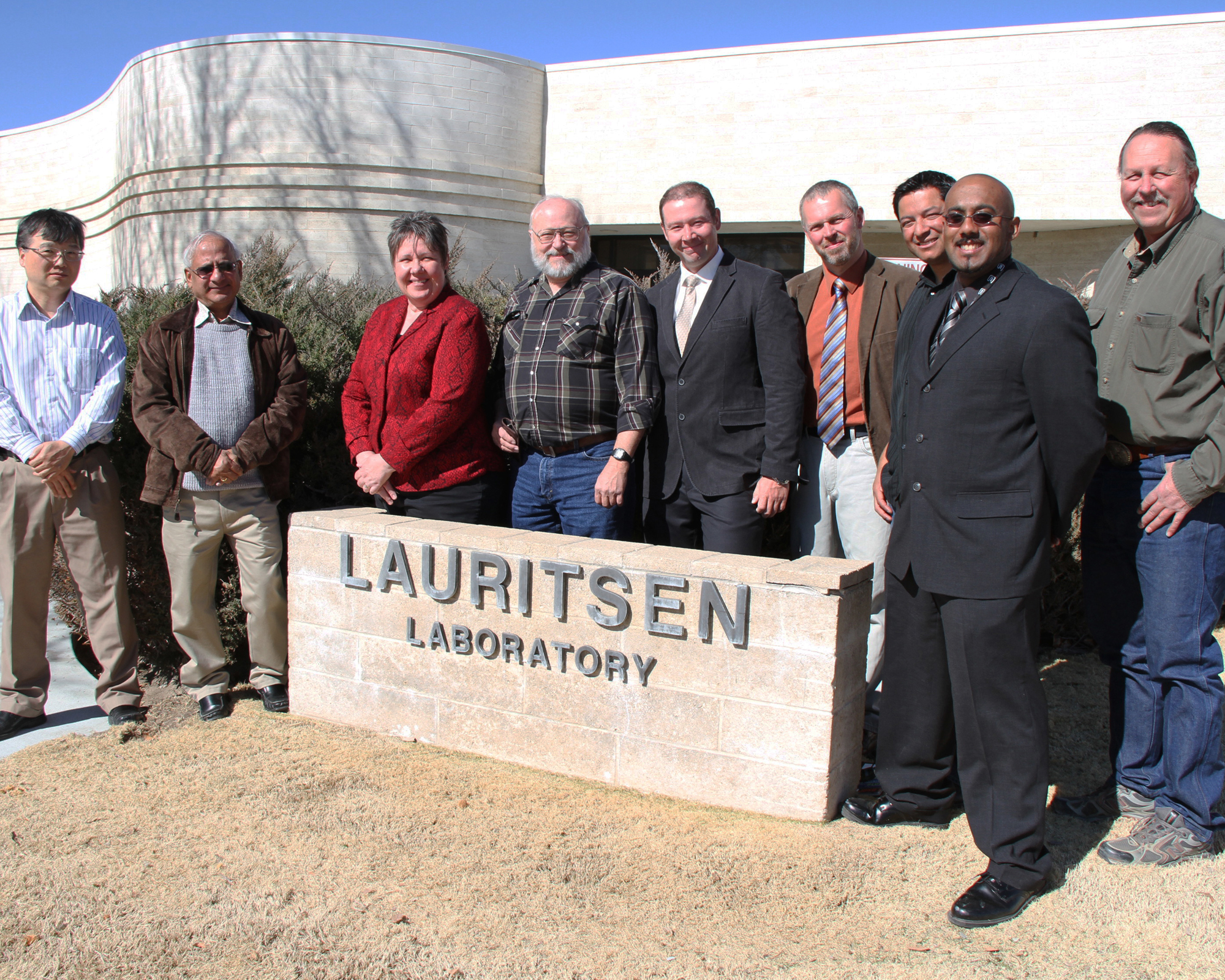
Joni Pentony, third from left, is joined by German engineers participating in the Engineering and Scientist Exchange Program and several team members from the physics division that she manages at NAWCWD. (U.S. Navy photo)
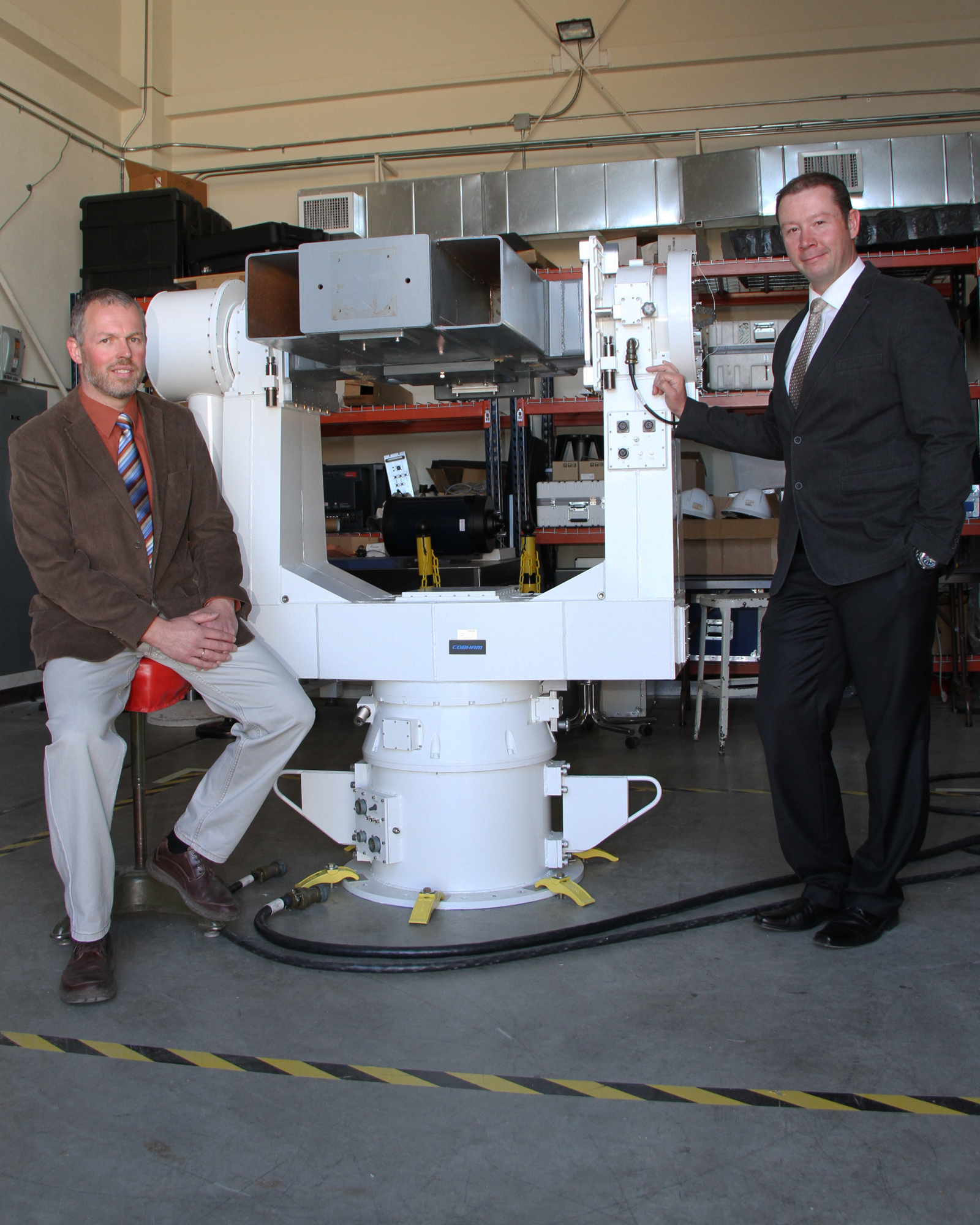
Arne Krueger, left, and Milan Weyer, participants in the Engineering and Scientist Exchange Program, currently work for Joni Pentony in NAWCWD’s Research and Intelligence Department on a variety of project that include designing a gimbal mount for an optical system, and developing hardware to measure the change in index of refractions at different temperatures. (U.S. Navy photo)