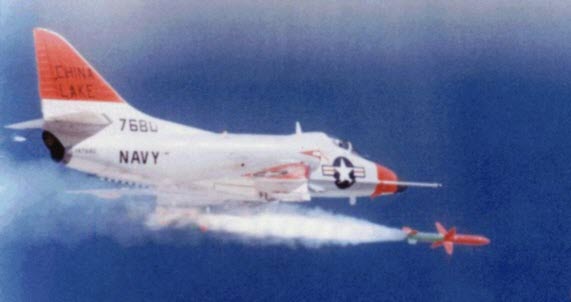
The A-4 Skyhawk shown firing a Shrike missile in the 1960s. (U.S. Navy photo)
Retro-inspired paint scheme for CoNA is a wrap
CHINA LAKE, Calif. – During 2011, Naval Air Warfare Center Weapons Division (NAWCWD) celebrated the Centennial of Naval Aviation (CoNA) with “green” vinyl wrap applications on historic aircraft displays. Being mindful of environmental impact and cost efficiency, both NAWCWD sites at China Lake and Point Mugu elected to wrap their historic static aircraft displays, in lieu of expensive and time-consuming traditional paint applications.
A Ridgecrest, Calif., graphic studio was contracted to complete the printing and application of the paint wraps for both aircraft. The A-4 Skyhawk at China Lake’s main entrance traffic circle was the first project; then the F-4 static display near the entrance at Point Mugu received a wrap soon afterward.
Aaron Podell, a paint wrap expert explained, “The first advantage of this wrap is the zero footprint on the ozone. The second advantage is the cost savings. A third advantage is that the graphics can be changed at any time.”
Using vinyl material that is printed with non-toxic, water-based latex paint, the two aircraft were ‘wrapped’ in printed vinyl that replicates retro paint schemes. The wrapping process is less expensive and faster to complete than a total repainting of the aircraft would have been, and it’s healthier for the environment, too. There are no solvents used in this process; it is non-flammable, no extra ventilation is needed, and it uses no hazardous materials.
Each aircraft wrap took about 125 hours to complete. The difficulties encountered along the way were minor – the desert wind made it too difficult to work one day at China Lake and the cold mornings and moisture presented challenges at Point Mugu.
To ensure the longest possible lifespan for the wrap, 10-year premium vinyl and the longest lasting latex ink was used. The exterior surface was then laminated.
Worldwide, the Navy is utilizing natural resources to minimize the global impact on the environment. China Lake, using natural geothermal resources on the base, operates a geothermal power plant and sells the energy for commercial use. In addition, the base harnesses the sun’s power with photovoltaic solar panels on carport covers that generate energy while providing parking lot shade. Biofuel development and testing is being conducted at China Lake, as well, for fleet wide applications.
While closing the CoNA chapter of 100 years of naval aviation, the Navy looks to the future in choosing methodologies like the paint wrapping of display aircraft that reduce environmental impact on our world. In this and other ways, NAWCWD and the Navy is living up to its motto “Global Force for Good.”
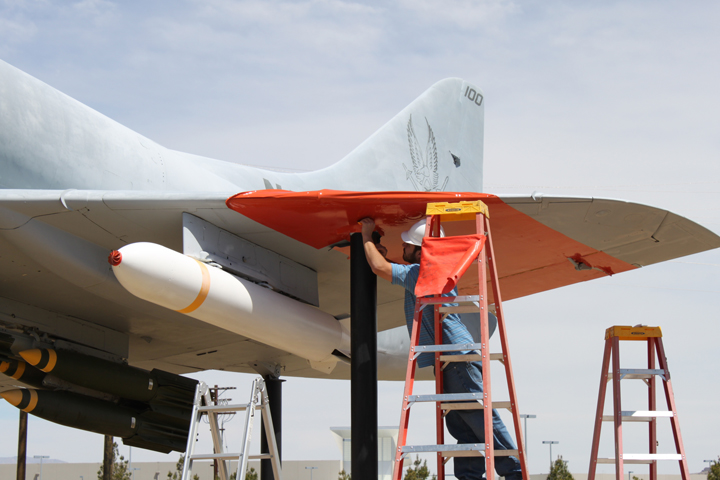
The A-4 Skyhawk at China Lake’s main entrance traffic circle was the first retro paint “wrap” project during the Centennial of Naval Aviation.
 (U.S. Navy photo)
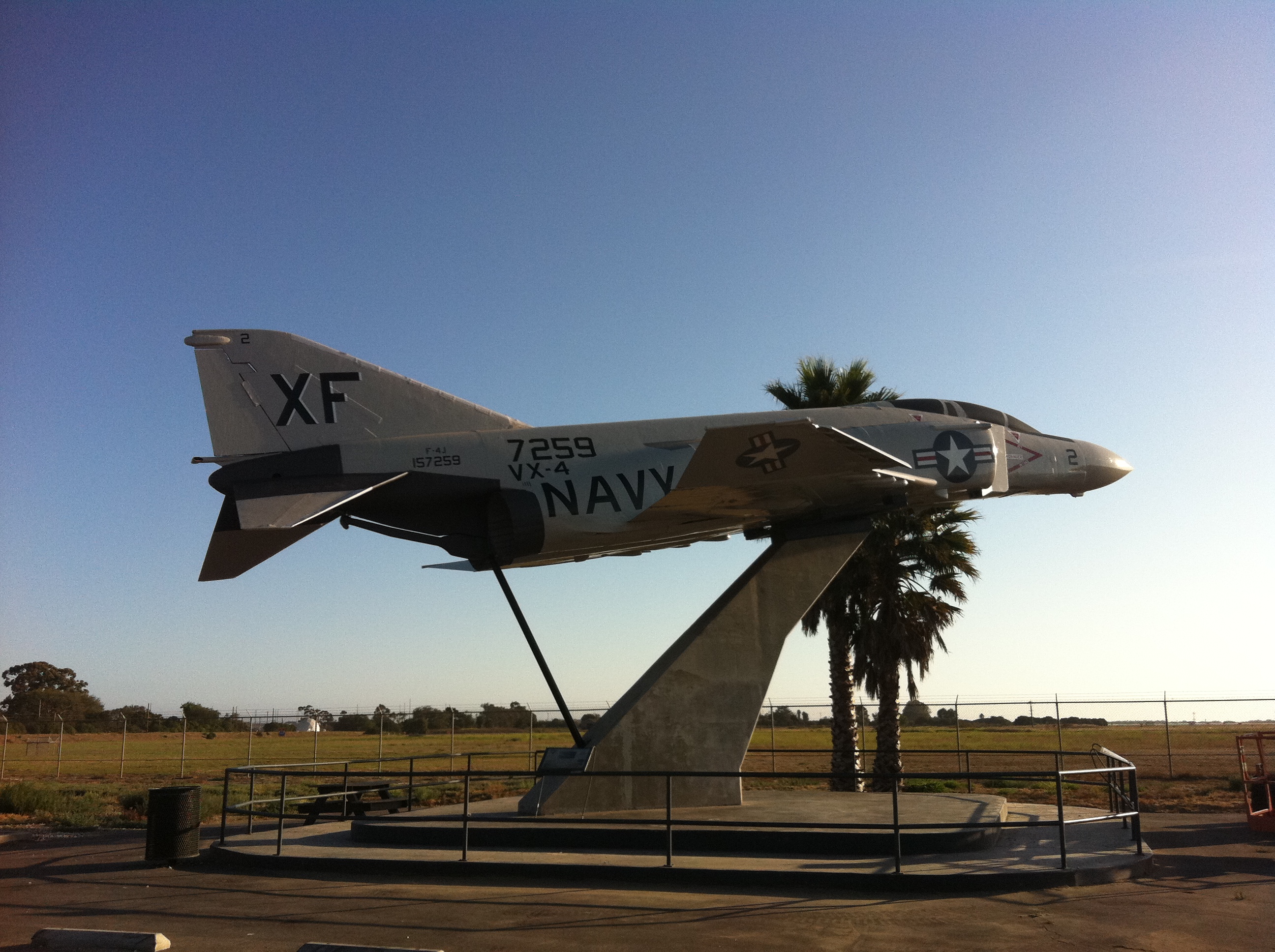
The F-4 Phantom static display near the entrance at Point Mugu received a retro paint wrap during the 2011 Centennial of Naval Aviation. (U.S. Navy photo)