
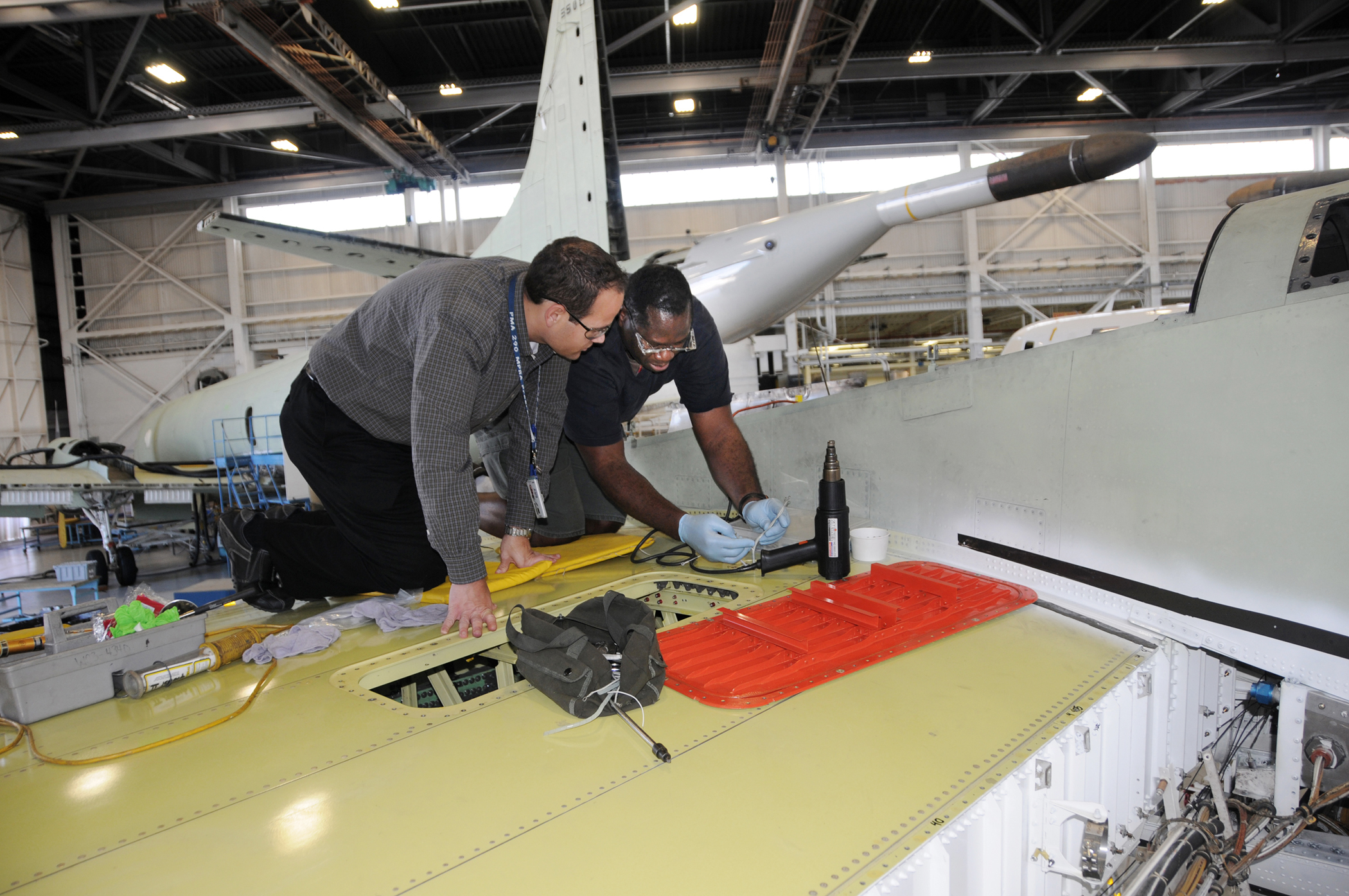
Aerospace Engineer John Herzberg (left) assigned to Fleet Support Team One Structures Engineering and Aircraft Electrician Anthony Dennis discuss the wiring of a fuel quantity system on the wing of a P-3 Orion maritime patrol aircraft at Fleet Readiness Center Southeast (FRCSE) Dec. 19. The facility is adding service life to the legacy aircraft by replacing old wings with new. Herzberg wrote the original instructions for the wing removal and rewing. (U.S. Navy photo by Victor Pitts/Released)
FRCSE artisans rewing legacy P-3 Orion patrol aircraft to extend service life
JACKSONVILLE, Fla. – Artisans at Fleet Readiness Center Southeast (FRCSE) completed the installation of the first new set of wings on a P-3C Orion aircraft at the facility in November to replace a structurally fatigued pair with nearly 30 years of service to the Fleet.
The wings, manufactured by Lockheed Martin Aeronautics Company in Marietta, Ga., will extend the service life of the aircraft according to Aerospace Engineer John Herzberg assigned to Fleet Support Team Structures Engineering.
“Wings are a big driver for fatigue life,” said Herzberg. “The aircraft are used for a variety of missions, and due to the ‘Red-stripe’ causing a shortage, the ones that are in service are being used more extensively. The new wings will add 7500 flight hours before a structural inspection is required.”
The term “Red-stripe” comes from the diagonal red stripe on the Airworthiness Bulletin that grounded 39 P-3C Orion aircraft in December 2007 for structural fatigue concerns on a portion of the lower outer wing called Zone 5.
The 39 aircraft comprised about one quarter of the P-3C fleet, many of which had been flying for more than 25 years. The groundings were not the result of an aircraft incident but rather the result of ongoing analysis obtained through the P-3C Fatigue Life Management Program.
Nearly 300 FRCSE artisans, engineers, logisticians, planners and estimators, production controllers and a host of other support personnel developed an extensive depot-level Zone 5 repair to quickly return the critical assets to combat commanders.
In addition, Program Manager Air (PMA) 290 with oversight for the Maritime Surveillance Program worked closely with FRCSE to pilot a donor “wing-off” program. PMA-290 funded a sling specially designed to flip and move aircraft wings between fixtures. Rather than performing labor-intensive overhead “wing on” repairs, artisans could perform “wing off” repairs safely and with greater ease using ergonomic work stands.
Wings removed from P-3 Orion aircraft stored at the Arizona “boneyard” were trucked to Jacksonville in 2008. Donor wings underwent special structural inspection, Planned Maintenance Intervals I and II, and Zone 5 repairs before installation on P-3 aircraft.
P-3 Orion Program Manager Clinton Batten said the artisans were still conducting Zone 5 repairs to the lower outer wing planks and the lower aft wing spar, but they were running into repair issues on the upper planks of the donor wings.
“It’s still old tired metal,” said Batten. “The Fleet is not getting as good a product.”
Artisans continue to complete work on “donor” wings as colleagues in adjoining production cells work on the installation of newly manufactured wings.
It is proving more cost effective to install new wings because of the many unknowns associated with refurbishing the old ones according to Cmdr. Stephen Tedford, PMA-290 P-3 Sustainment Integrated Product Team Lead.
An upper wing surface analysis performed in September 2009 determined that corrosion on the upper surface and not fatigue was the primary concern for the P-3 fleet.
“The procuring of new Outer Wing Assemblies (OWAs) focuses on installing new wings on those P-3 airframes scheduled to remain in service the longest,” he said. “The new OWAs will provide sufficient service life for the P-3 aircraft to reach the fleet's transition goals to its replacement aircraft, the P-8A (Poseidon)."
Lockheed Martin is building the 46-foot wings from blueprints using original tooling designed three decades ago. The challenge is to find new methods to assemble the wings since the older artisans have long retired. FRCSE artisans who are currently performing the work are providing valuable feedback to the manufacturer.
Logistics Management Specialist Steve Roberts said the oversized loads require special handling before, during and after arrival at Naval Air Station Jacksonville, Fla.
“Each set weighs 25,000 pounds,” he said. “Each wing is 16 feet wide and 46 feet long. Larry Peterson, an industrial engineer, designed a special tow bar and castors to move the crates. The whole evolution involved a lot of activities on base and a lot of people.”
Artisans inducted the first P-3 slated for rewing in January 2011. In the production hangar, special mate/demate fixtures built at the facility were used to properly align the wing with the fuselage. Industrial engineers prepared lift plans for two cranes to assist riggers with attaching the slings to move the wings.
Cell 3 Production Line Supervisor Joey Hetu said there was a learning curve to overcome when attaching the new wings, but “it wasn’t that difficult.” He said the Zone 5 repairs proved more tedious.
The biggest obstacle to overcome was properly aligning the new wings’ nacelles to hard points on the propellers. If not done properly, the wings could require extensive and expensive rework.
“The nacelles were tricky thorns in our side,” he said, “matching the old to the new. It takes 400 calendar days from induction to Ready For Issue (RFI) to complete an aircraft. This includes not only the wing installation but also avionics modifications, the lower center wing replacement, wet checks, ground turns and paint.”
Hetu said he is proud of his fellow artisans who he predicts will deliver the first aircraft ahead of schedule in early 2012.
The P-3 Orion continues to prove its value to the Fleet. The four-engine turboprop aircraft was designed as a land-based, long-range, anti-submarine warfare patrol aircraft. Its mission has evolved to include surveillance of the battlespace, either at seas or over land.
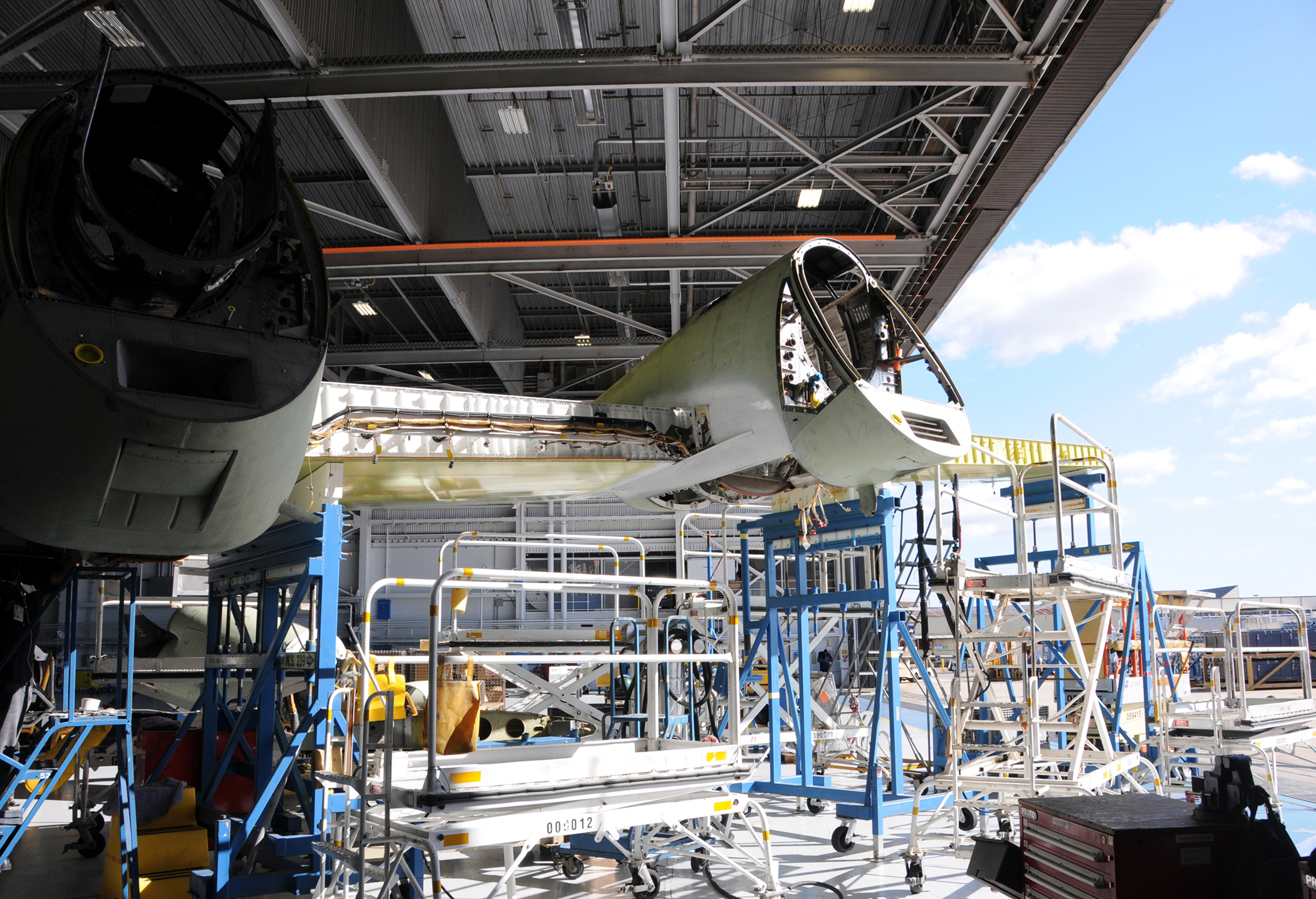
A newly manufactured wing recently installed on a P-3C Orion maritime patrol aircraft gleams in the sunlight while undergoing modifications and repairs in the P-3 production hangar at Fleet Readiness Center Southeast Dec. 19. Artisans are rewinging the aircraft to extend the service life by 7500 flight hours. Further, artisans will paint the aircraft to protect it from structural corrosion. (U.S. Navy photo by Victor Pitts/Released)
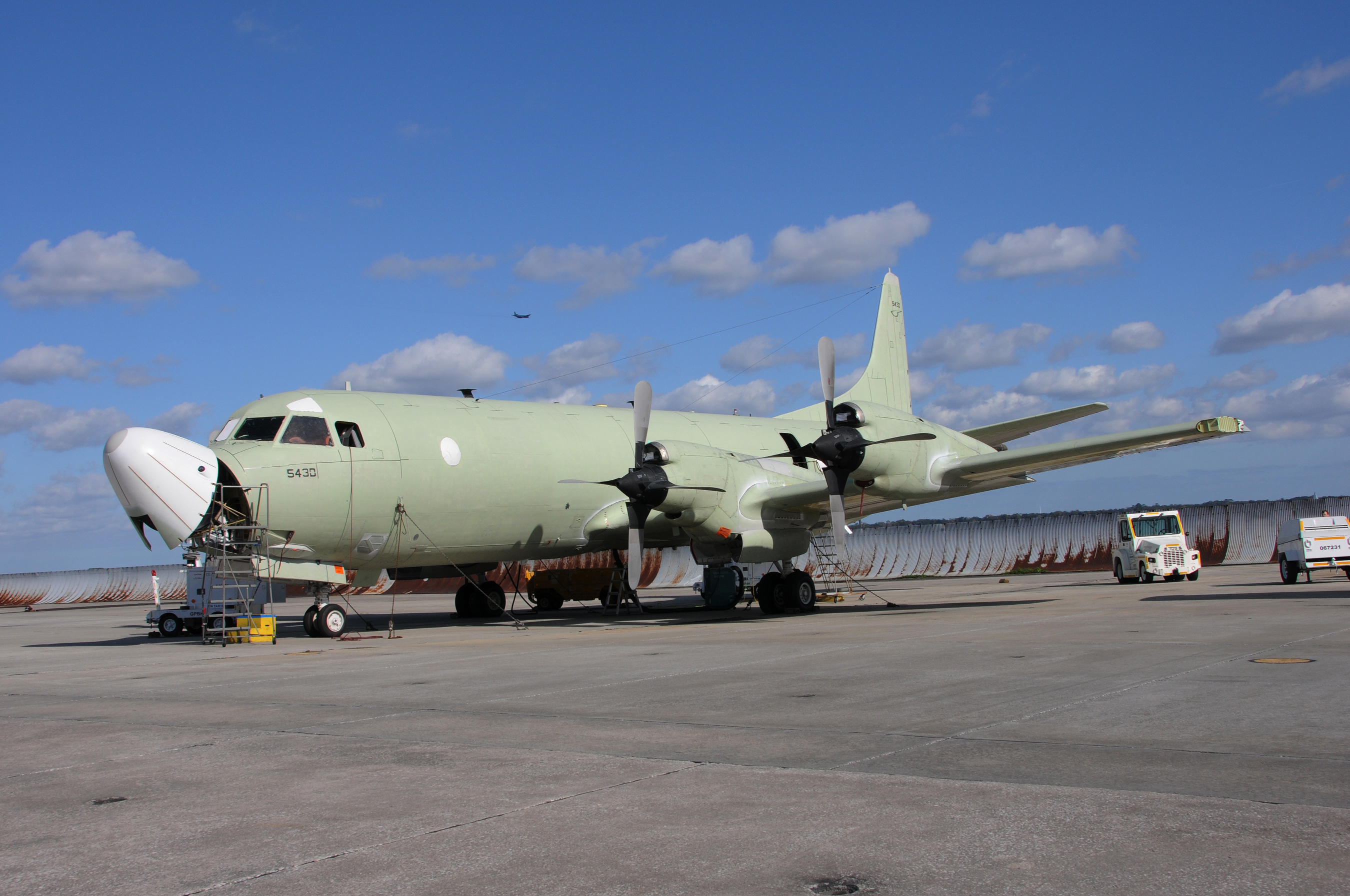
A rewinged P-3C Orion maritime patrol aircraft sits near the seawall at Naval Air Station Jacksonville as artisans perform a “wet check” on the fuel systems Dec. 19. (U.S. Navy photo by Victor Pitts/Released)
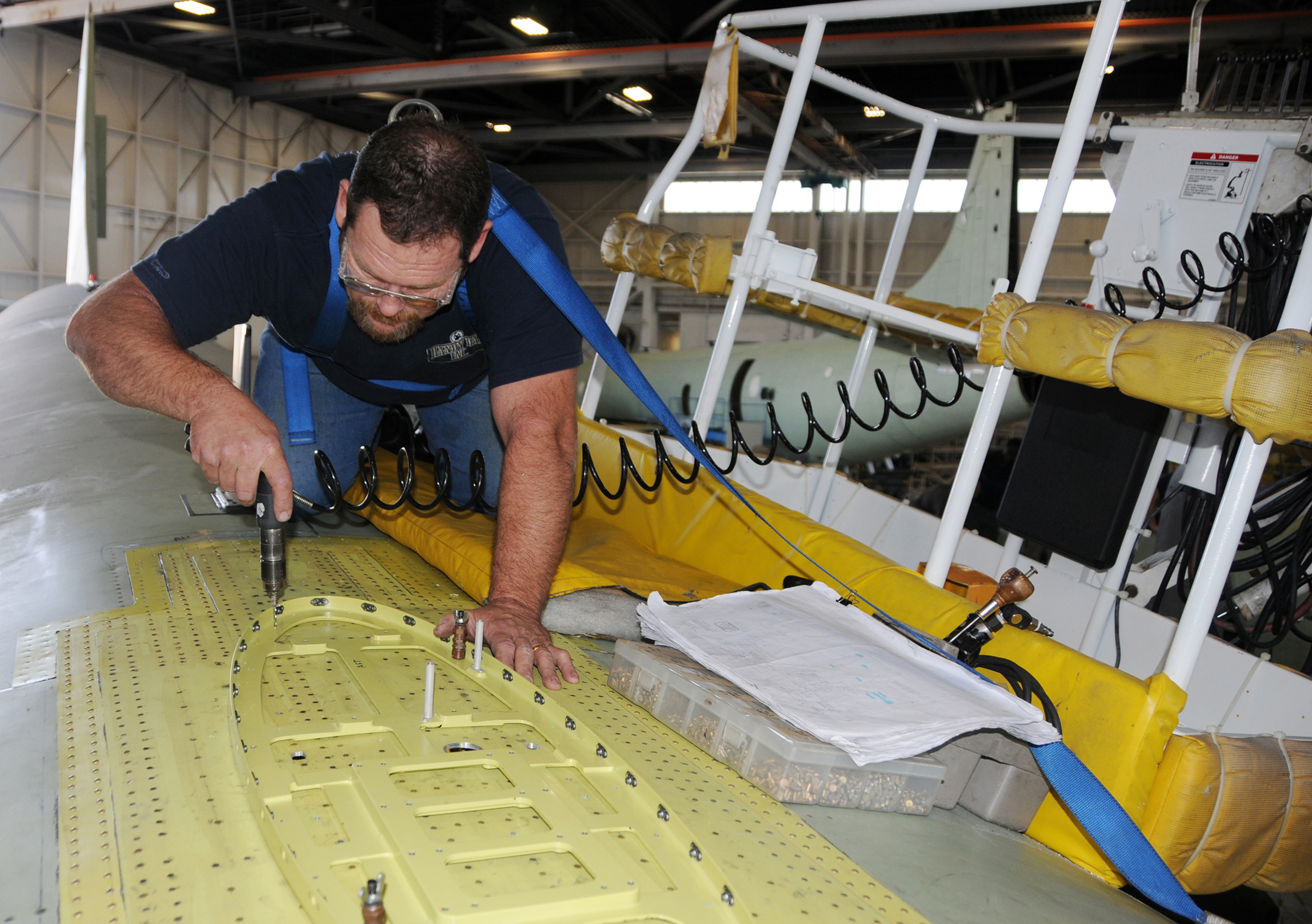
Aircraft Structural Mechanic Marvin Thiele installs an antenna rack atop the fuselage of a P-3C Orion maritime patrol aircraft at Fleet Readiness Center Southeast Dec. 19. The Orion is getting a C4 structural modification, while artisans install a set of new wings manufactured by Lockheed Martin Aeronautics Company in Marietta, Ga. (U.S. Navy photo by Victor Pitts/Released)
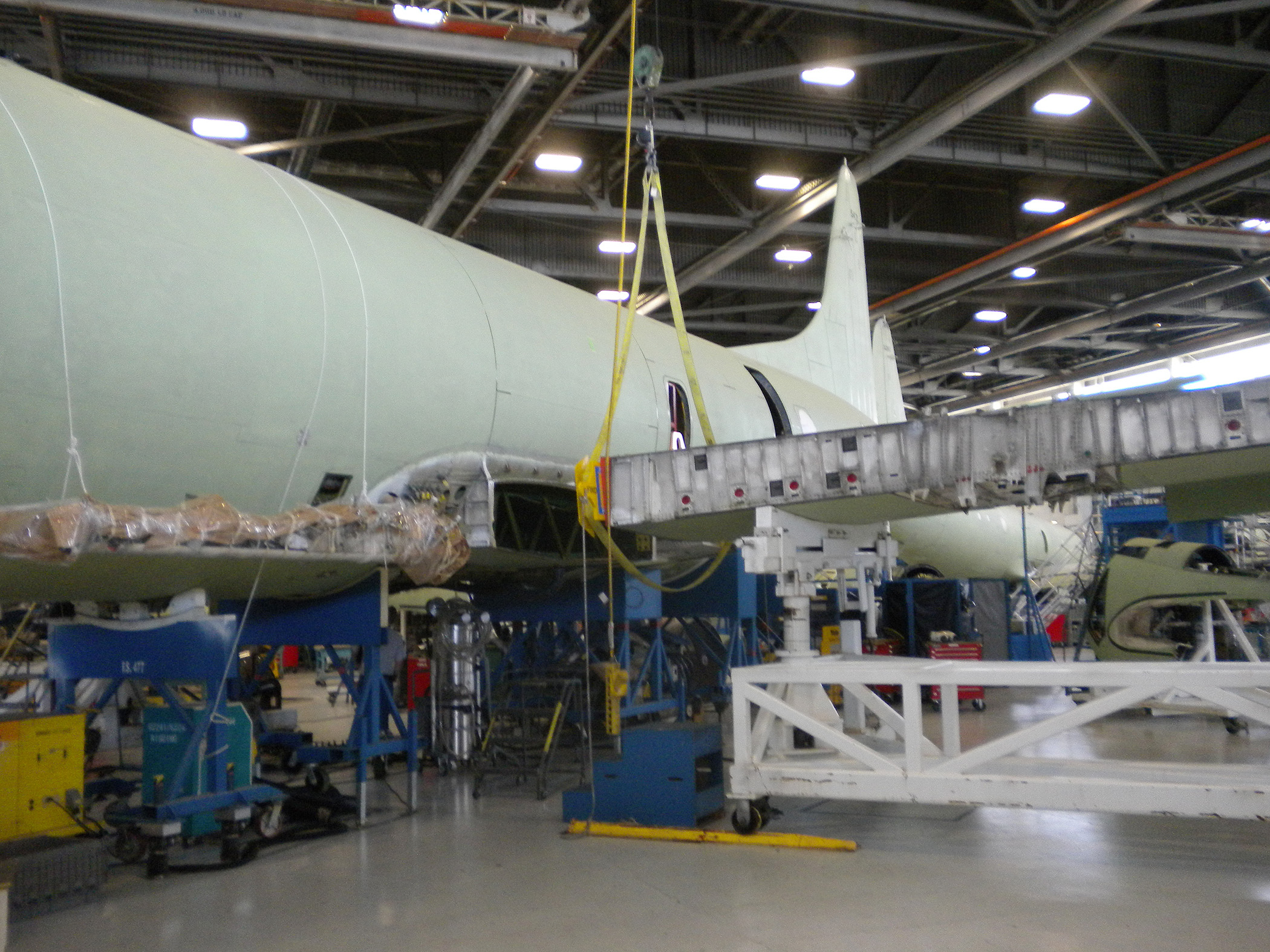
A newly manufactured P-3C Orion wing rests in a mating fixture awaiting installation to the aircraft’s fuselage at Fleet Readiness Center Southeast in May 2011. (Photo courtesy Tara Cochran)
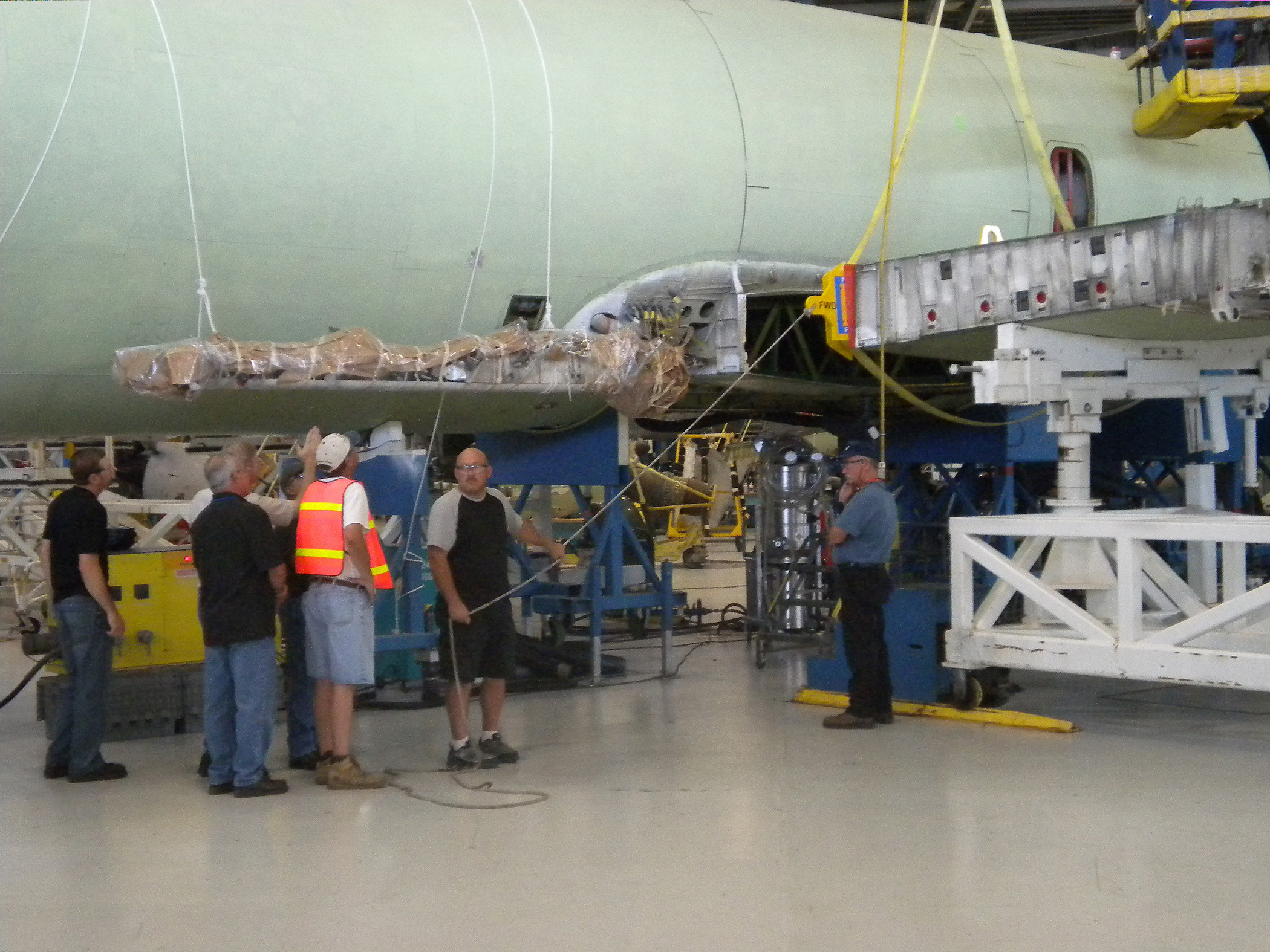
Artisans at Fleet Readiness Center Southeast prepare to install the first of two new wings on a P-3C Orion aircraft at Fleet Readiness Center Southeast Nov. 5, 2011. The aircraft is receiving new wings to add 7500 flight hours to the aircraft. (Photo courtesy Tara Cochran)
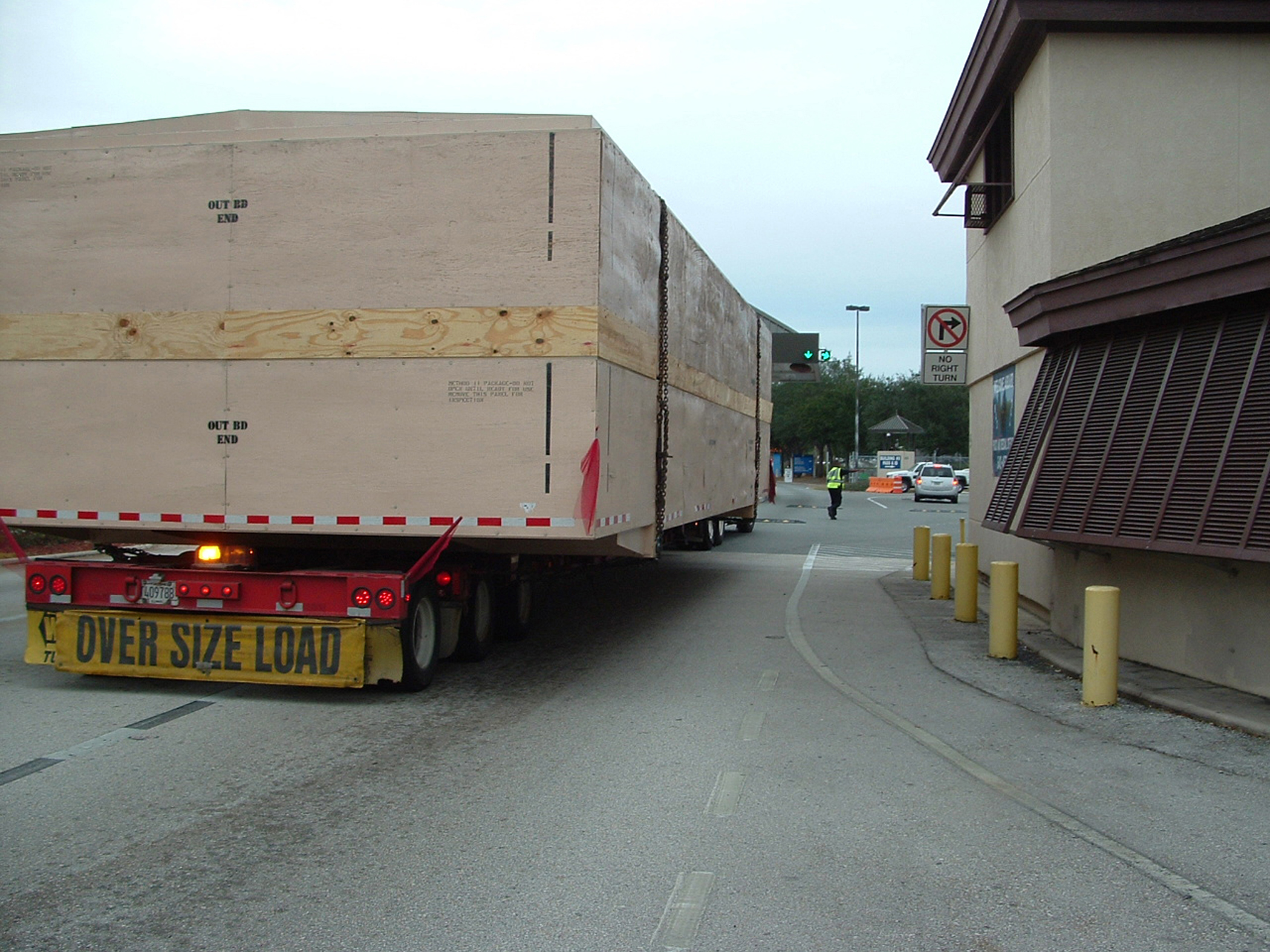
Two sets of P-3 Orion maritime patrol aircraft wings arrive at the main gate of Naval Air Station Jacksonville, Fla., Dec. 18, 2010. The oversized load was trucked from Lockheed Martin Aeronautics Company in Marietta, Ga., where the wings were made. (Photo courtesy Jim Weiss)
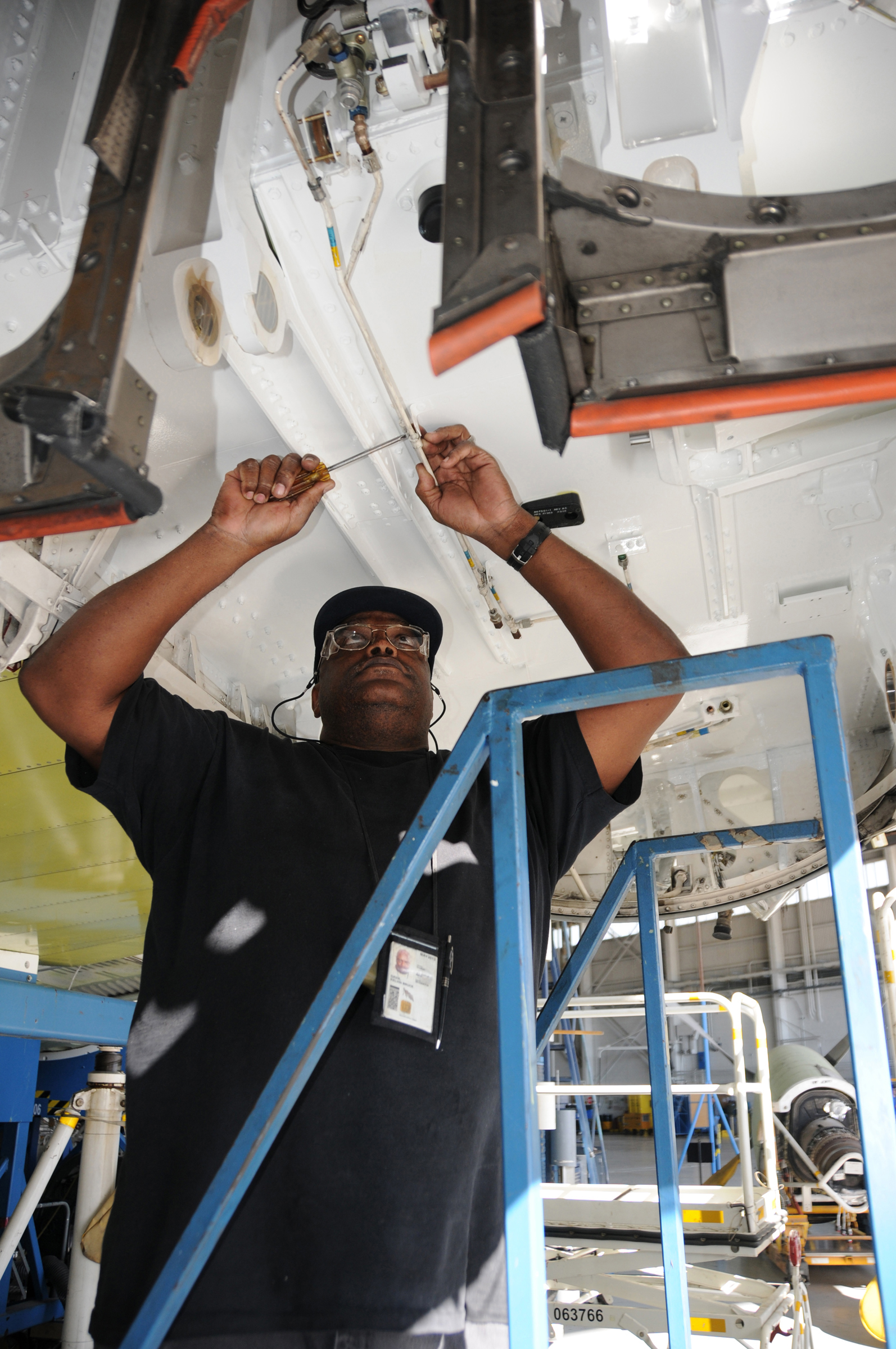
Aircraft Mechanic Kelvin Davis installs hydraulic lines on a newly manufactured P-3C Orion aircraft wing at Fleet Readiness Center Southeast Dec. 19. This is the second of three aircraft to receive a pair of wings at the facility. FRCSE maintains, repairs and overhauls these patrol aircraft while the Fleet waits for the arrival of the platform's replacement, the P-8A Poseidon. (U.S. Navy photo by Victor Pitts/Released)
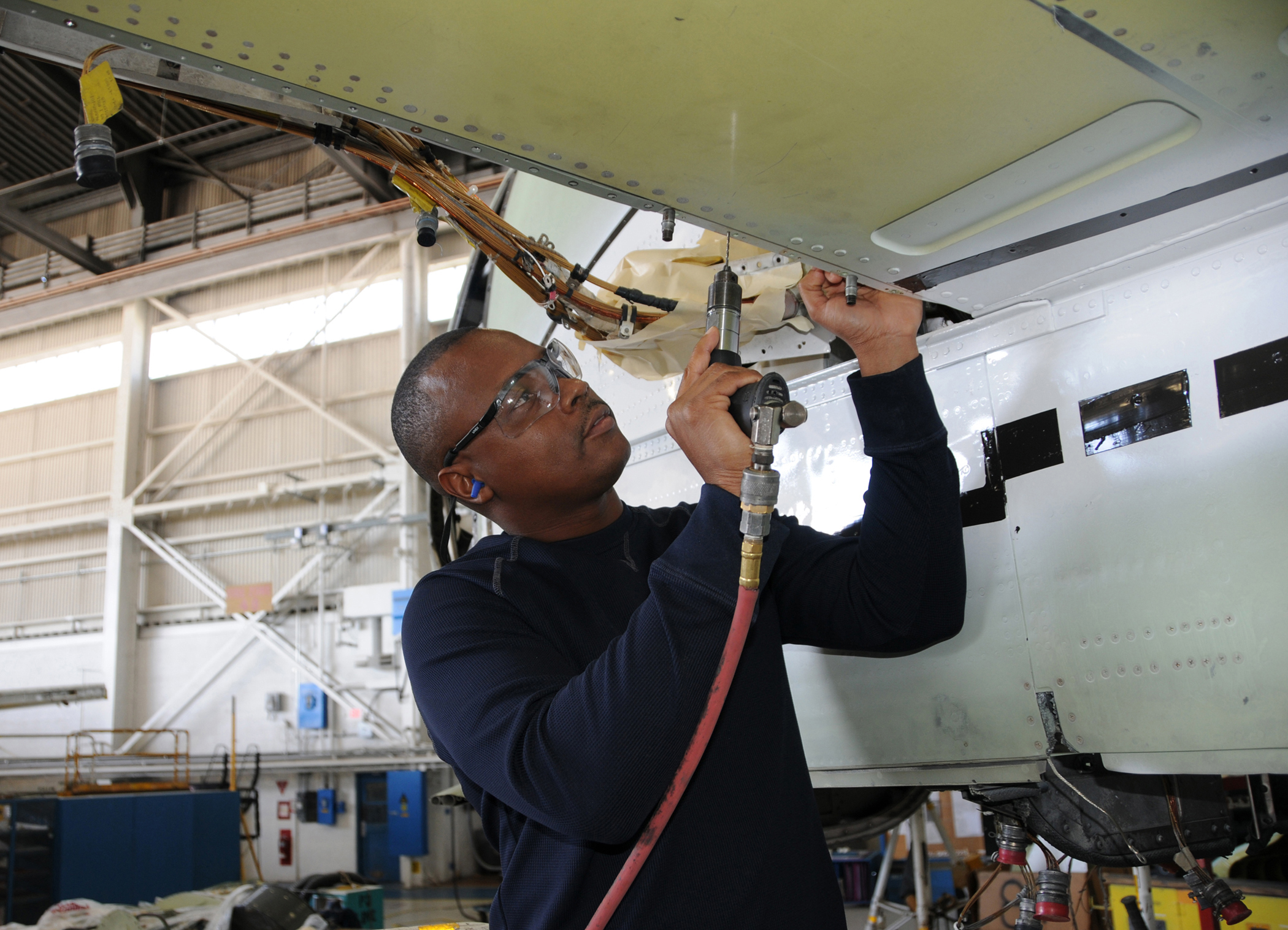
Sheet Metal Mechanic Marcus Wright drills holes to countersink fasteners for attaching the leading edge on a P-3C Orion aircraft “donor” wing at Fleet Readiness Center Southeast Dec. 19. The donor wings arrived from the Arizona “boneyard” for installation, but Program Manager Air 290 later concluded it was more cost effective to purchase new sets than to repair the extensive structural damage found on the mothballed wings from the desert. (U.S. Navy photo by Victor Pitts/Released)
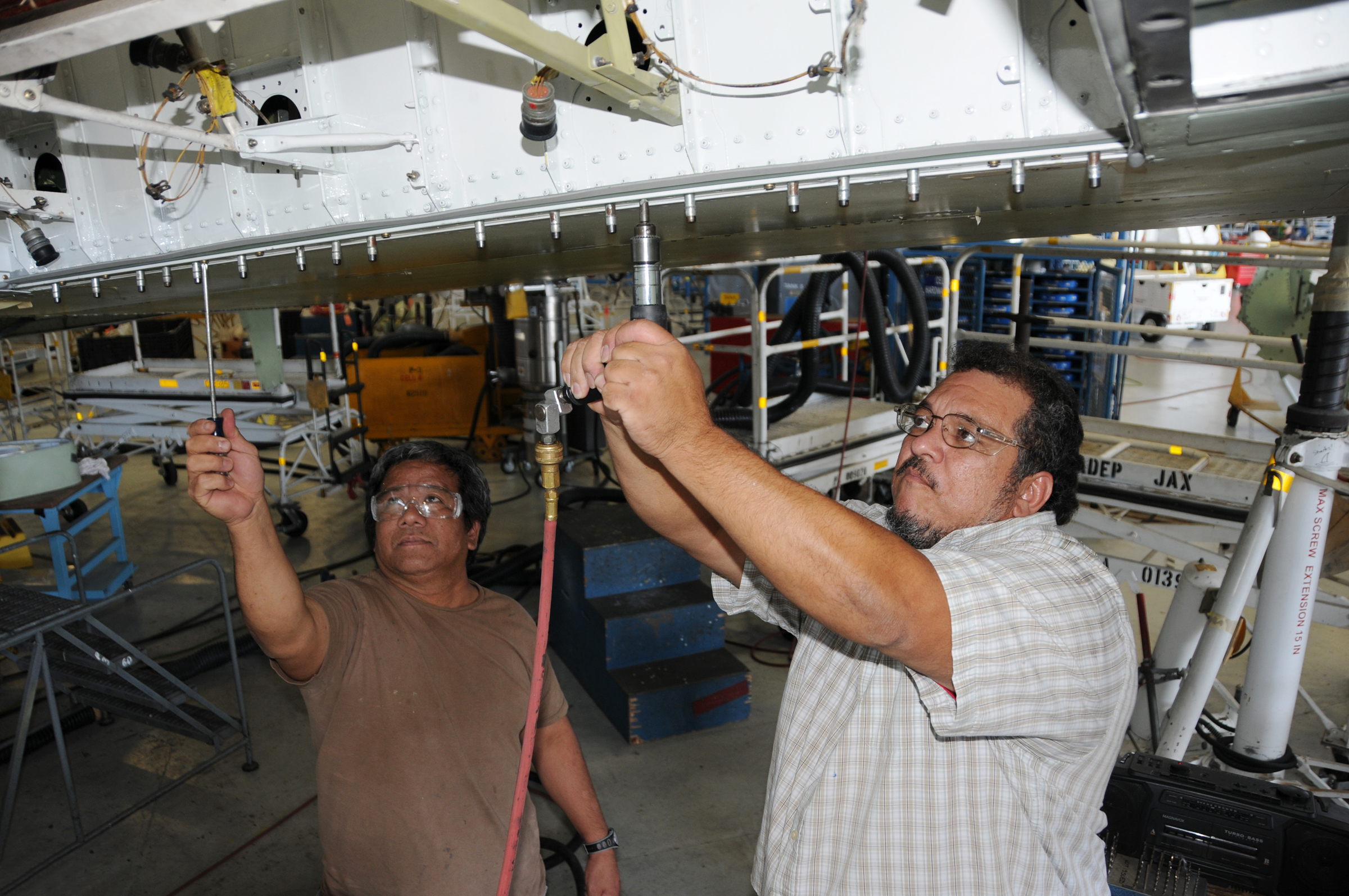
Sheet Metal Mechanics Tony Morales (left) and Dan Ariaga (right) drill and countersink fastener holes on the leading edge of a salvaged P-3C Orion wing at Fleet Readiness Center Southeast Dec. 19. The donor wings were removed from a P-3 stored in the Arizona desert and recently applied at the facility to extend the service life of the aircraft. (U.S. Navy photo by Victor Pitts/Released)
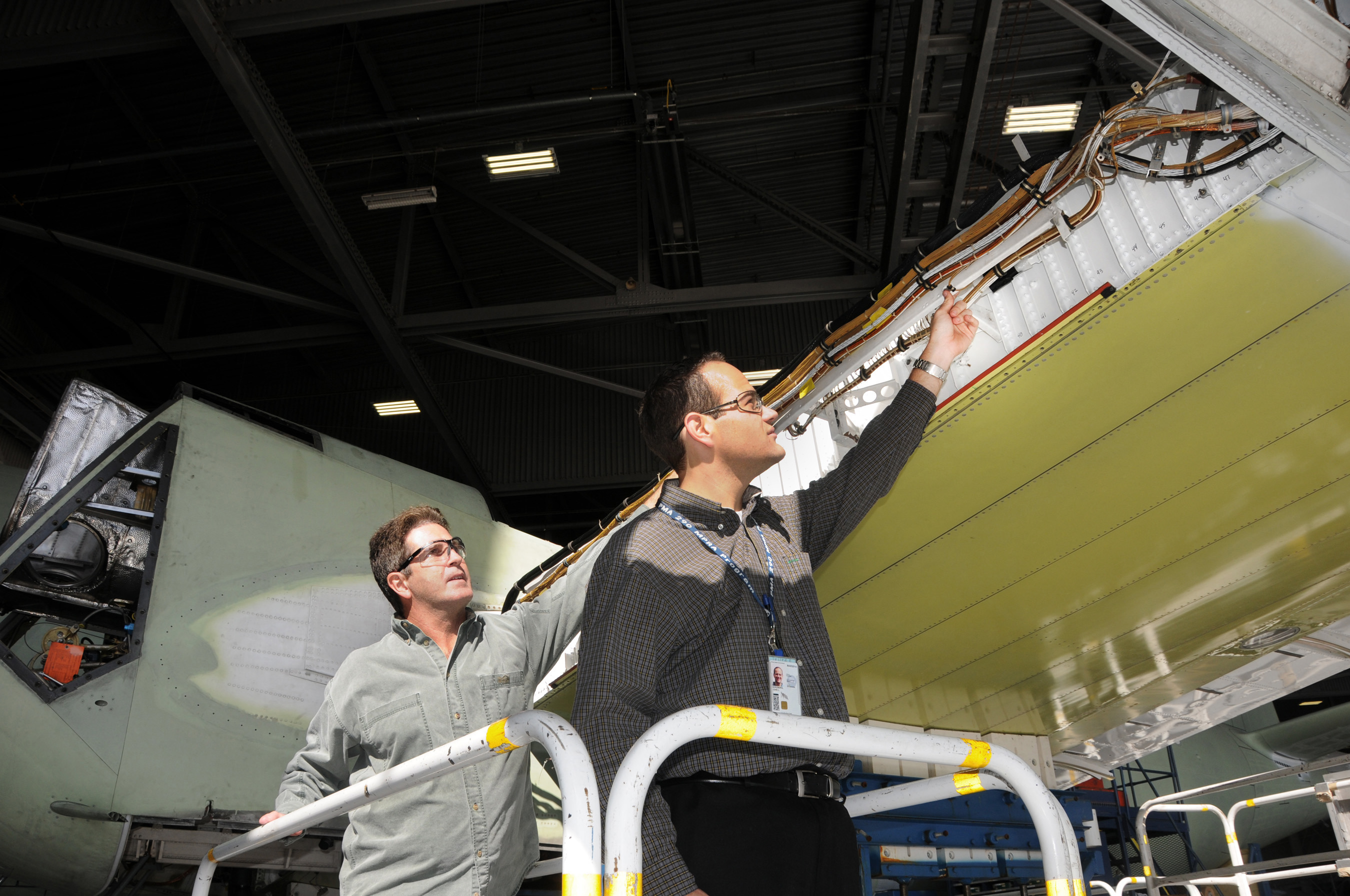
On Dec. 19, Aircraft Examiner Carlton Ancelet (left) and Aerospace Engineer John Herzberg (right) check an electrical wire bundle tray on a P-3 Orion wing recently installed at Fleet Readiness Center Southeast. (U.S. Navy photo by Victor Pitts/Released)
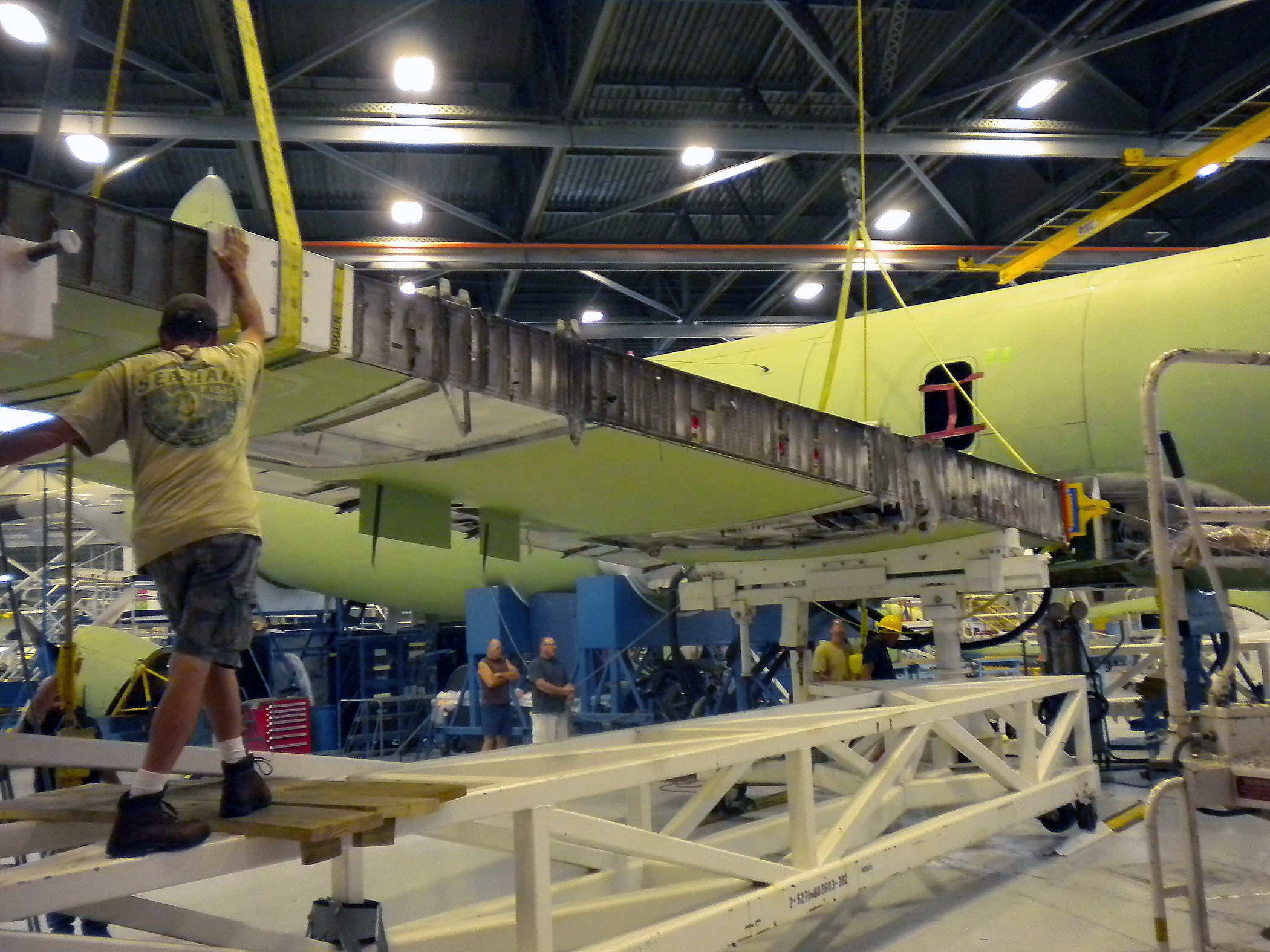
An artisan steadies a P-3 Orion wing as it is lowered onto the demating fixture following removal from the fuselage at Fleet Readiness Center Southeast May 6, 2011. (Photo courtesy Tara Cochran)
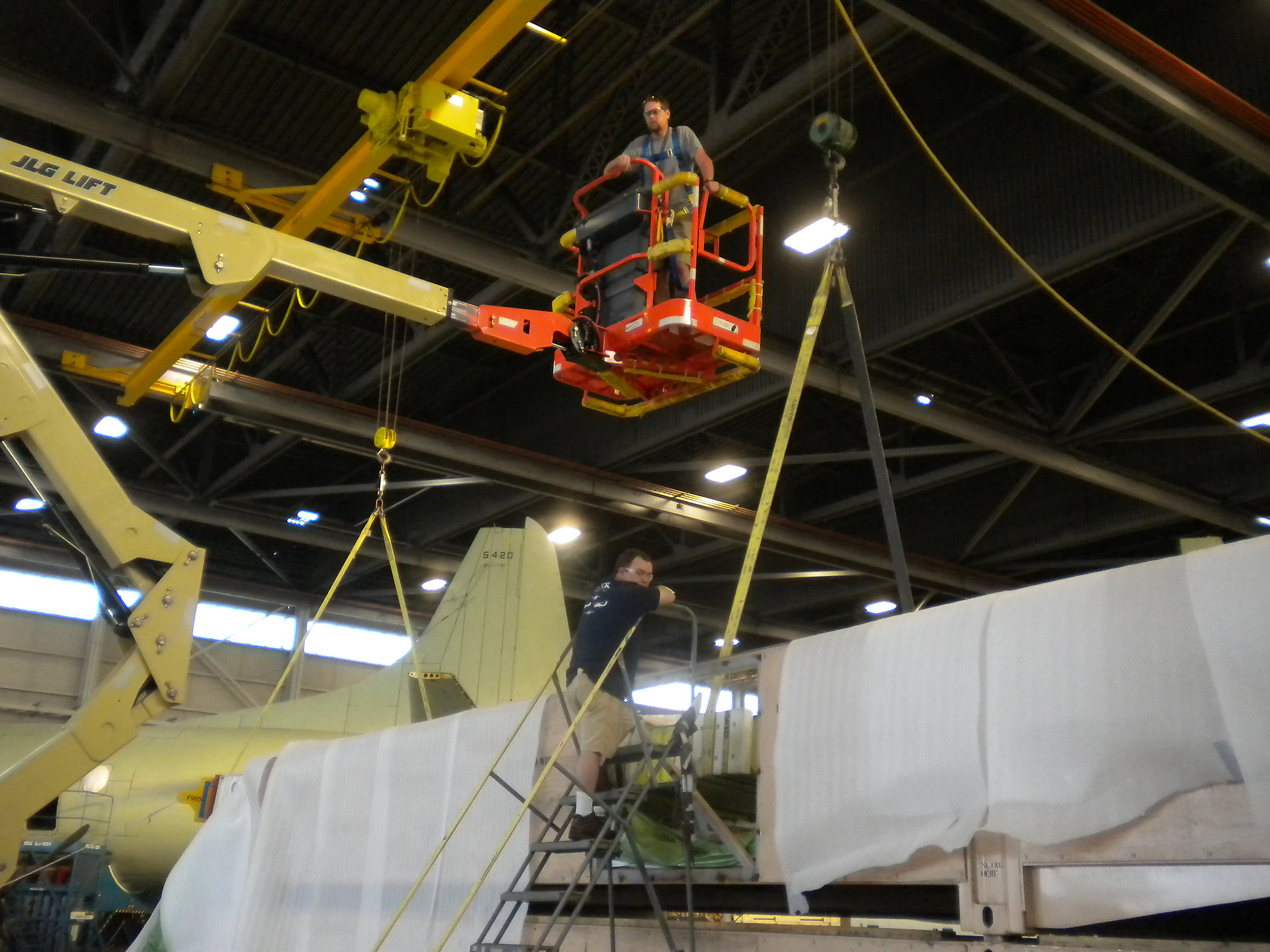
Sheet Metal Mechanic Jon Shepherd perches in a basket at the end of a crane to check a dynamometer used for measuring tension, traction and weight as crane operators remove a P-3 Orion wing from its shipping crate at Fleet Readiness Center Southeast May 12, 2011. (Photo courtesy Tara Cochran)