
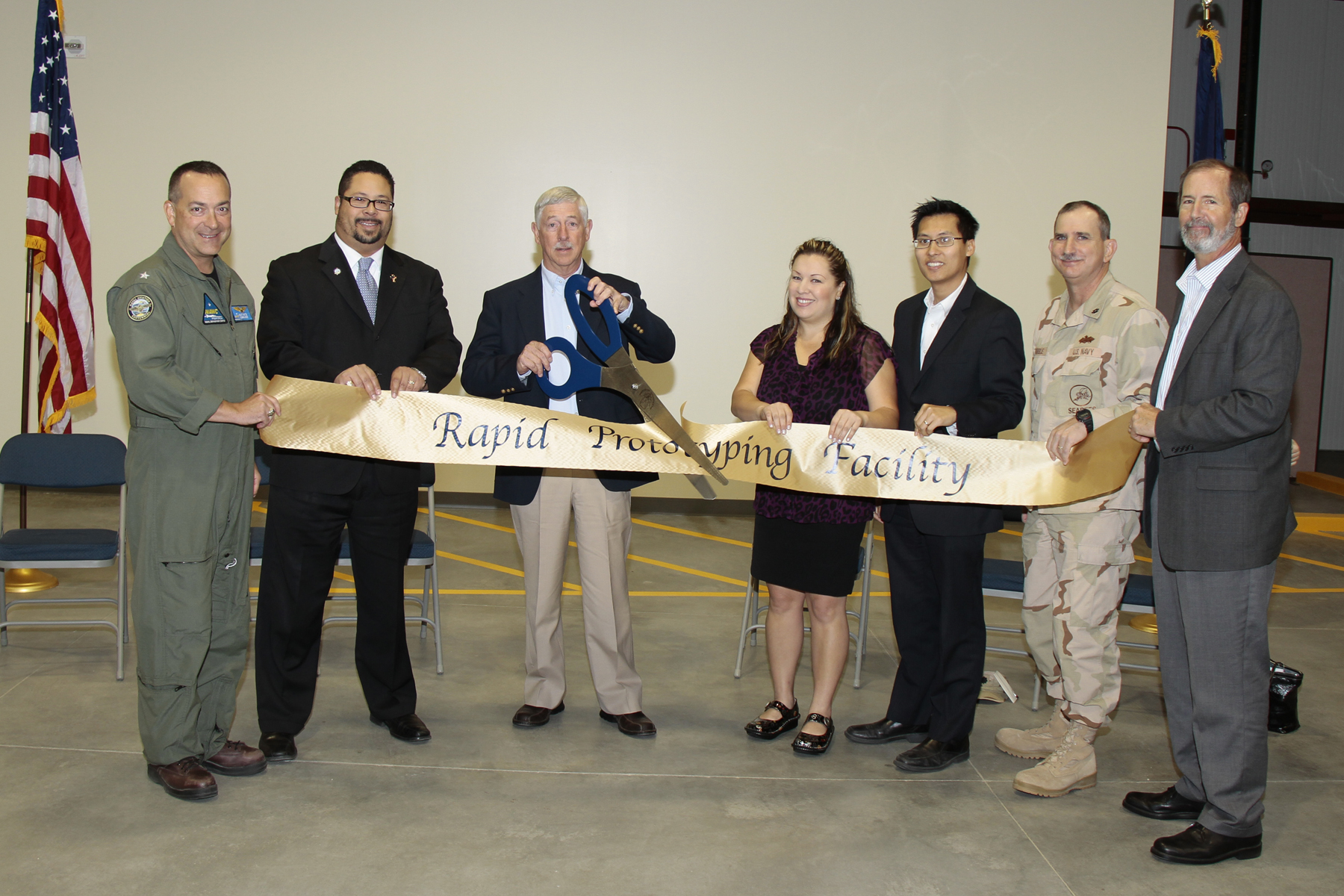
Left to right, NAWCWD commander Rear Adm. Mat Winter, Jason Patin, Barry Douglas, Carrie Ord, Vince Fong, Cmdr. Rod Tribble, and Scott O’Neil are on hand as Barry Douglas “cuts the ribbon” to the Rapid Prototyping Facility. (U.S. Navy photo)
Rapid Prototyping Facility ribbon cutting ceremony held Oct. 5
CHINA LAKE, Calif. – Naval Air Warfare Center Weapons Division (NAWCWD) commander Rear Adm. Mat Winter and Naval Air Weapons Station commanding officer Capt. Jeffrey Dodson presided over the Rapid Prototyping Facility (RPF) ribbon cutting that took place Wednesday, Oct. 5.
Approximately 60 guests attended the ceremony that was held in a restricted area on Naval Air Weapons Station, China Lake, Calif. Dignitaries included Vince Fong, the district director for Congressman Kevin McCarthy, City of Ridgecrest councilman Jason Patin, Navy Region Southwest Public Works officer Cmdr. Rod Tribble, as well as Pacific West Builders who constructed the facility, President/CEO Patricia Romero and project manager, Carrie Ord.
According to Barry Douglas, director of Fleet Support and Rapid Prototyping, the RPF is a 9,000 square-foot building that was designed to be a turn-key facility with airfield access for rapidly prototyping systems for our warfighters.
Douglas said, “The USA is engaged in an asymmetric war with non-state actors and conventional methods sometimes are not the best method for this fight. This facility is part of an overarching design to ensure our warfighters get the weapons systems they need to fight today’s fight. This facility will allow us to rapidly prototype systems or integrate tested systems to exploit new capabilities that will better control battle field dominance and ensure the safe return of our troops.”
There are two additional buildings in the RPF compound, the Systems Integration Laboratory and the Weaponization Laboratory. The Systems Integration Laboratory is a 15,000 square-foot facility south of the RPF. West of the RFP is a 5,000 square-foot laboratory that is currently being used for unmanned systems.
Winter stated, “We have the ability to make rapid changes to prototypes and safely employ them in tactical situations on ranges that emulate our combat locales of today. There is no better place to perform rapid warfighter response than right here — a place that is environmentally sound and controlled for this rapid warfighter response development.”
Tim Silberberg, director of Facilities and Space for Research and Engineering was approached in 2006 to create a UxS capability at China Lake for weaponization, systems integration, and rapid prototyping.
Silberberg said, “Using special legislation funding granted by Congress, we built a moderate capability compound totaling 29,000 square feet of space, which included the new 9,000 square-foot rapid prototyping facility.”
This project was collaborative. Navy Region Southwest upgraded the power, NAVAIR headquarters repaired the roads and, using special funding, NAWCWD had new IT and telephone lines brought in. “This,” according to Silberberg, “equated to about 6.3 million dollars in investment.”
Douglas added, “We at NAWCWD are excited to bring this capability on line and to continue following the rudder from NAVAIRSYSCOM to provide rapid warfighting response to our troops fighting today’s fight.”
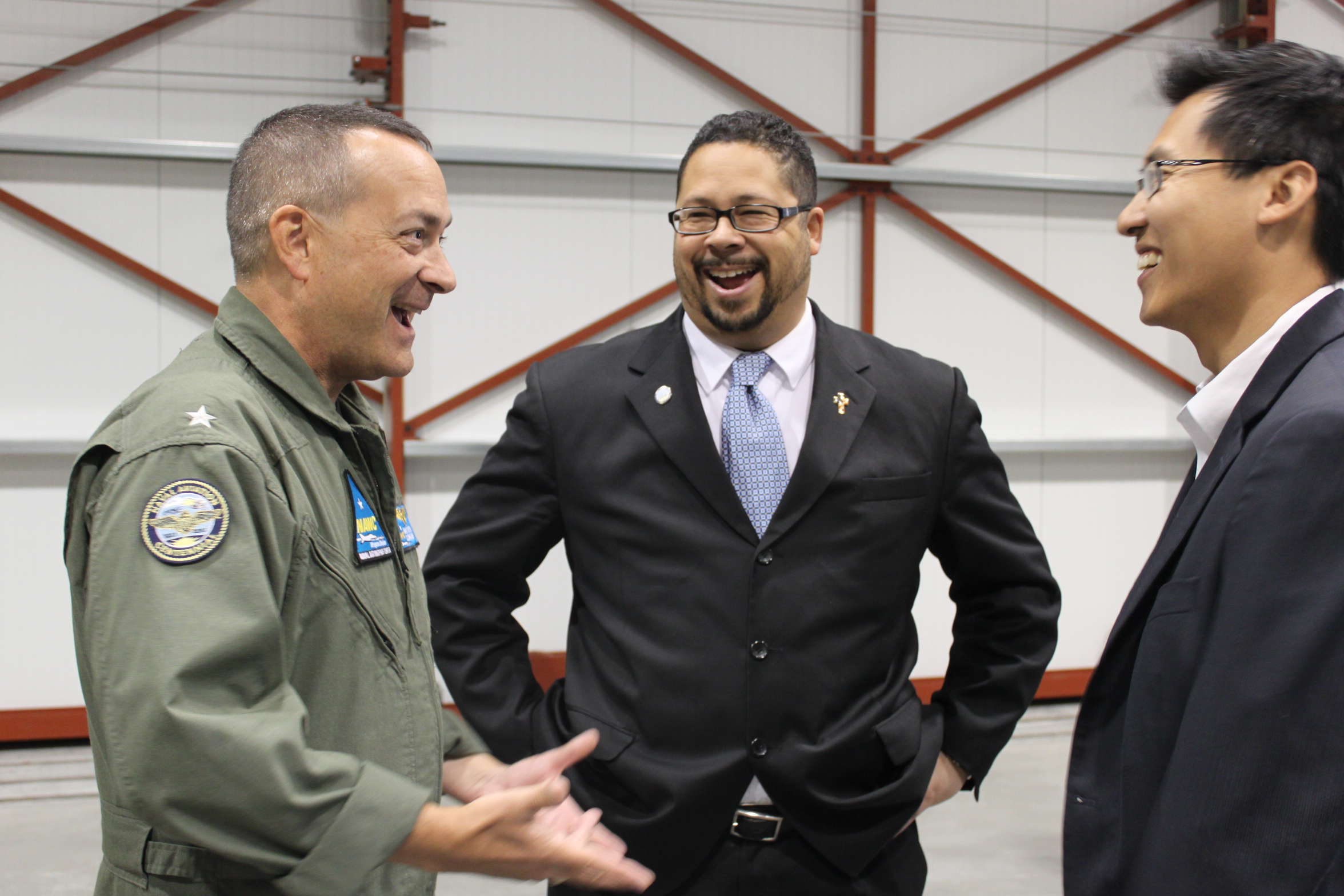
Left to right, NAWCWD commander Rear Adm. Mat Winter spent time with visiting guests, City of Ridgecrest councilman Jason Patin and Vince Fong, regional representative for Senator Kevin McCarthy. (U.S. Navy photo)
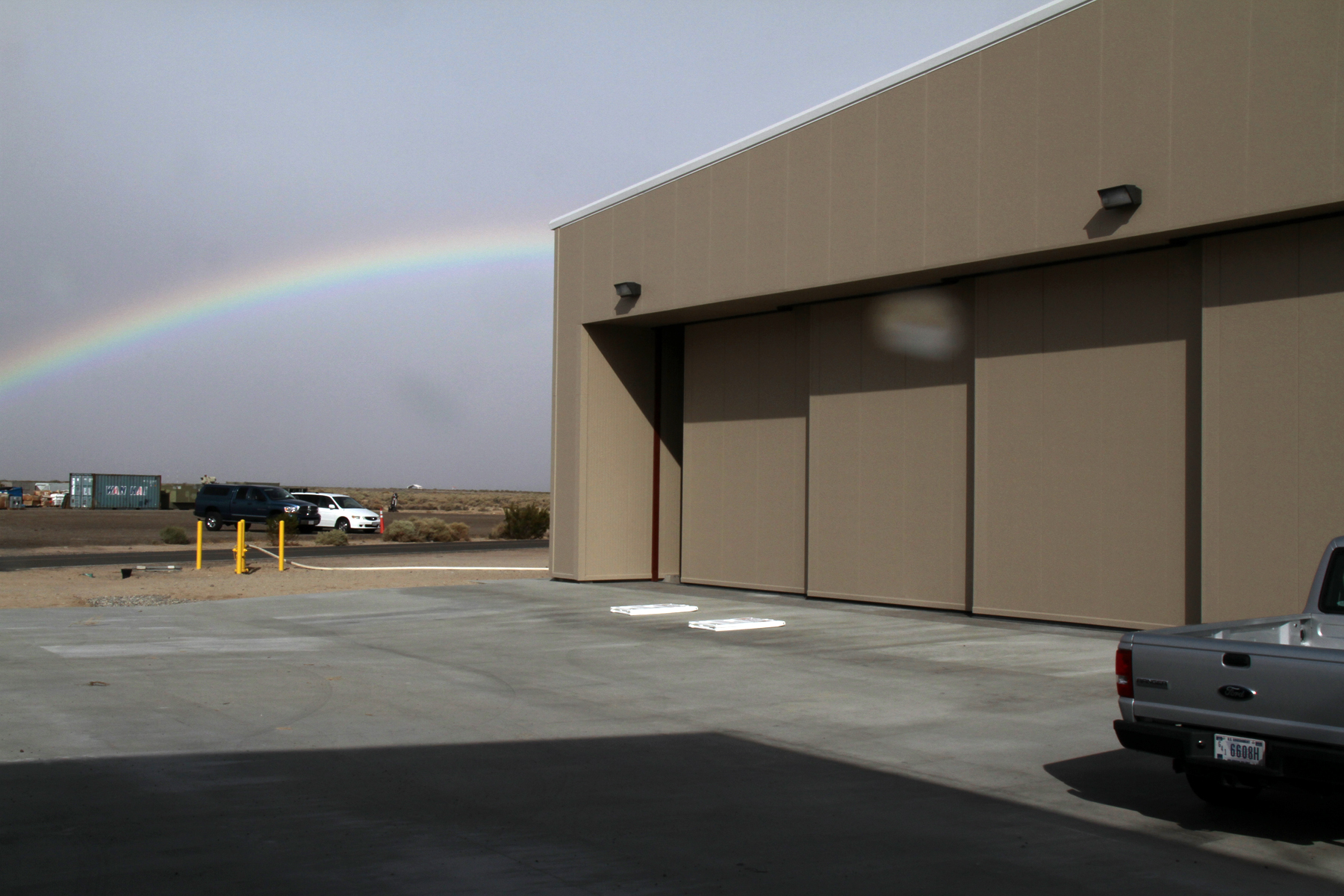
In spite of inclement weather, a rainbow heralded the Rapid Prototyping Facility (RPF) ribbon cutting ceremony that took place Wednesday, Oct. 5 in a restricted area on Naval Air Weapons Station, China Lake, Calif. (U.S. Navy photo)
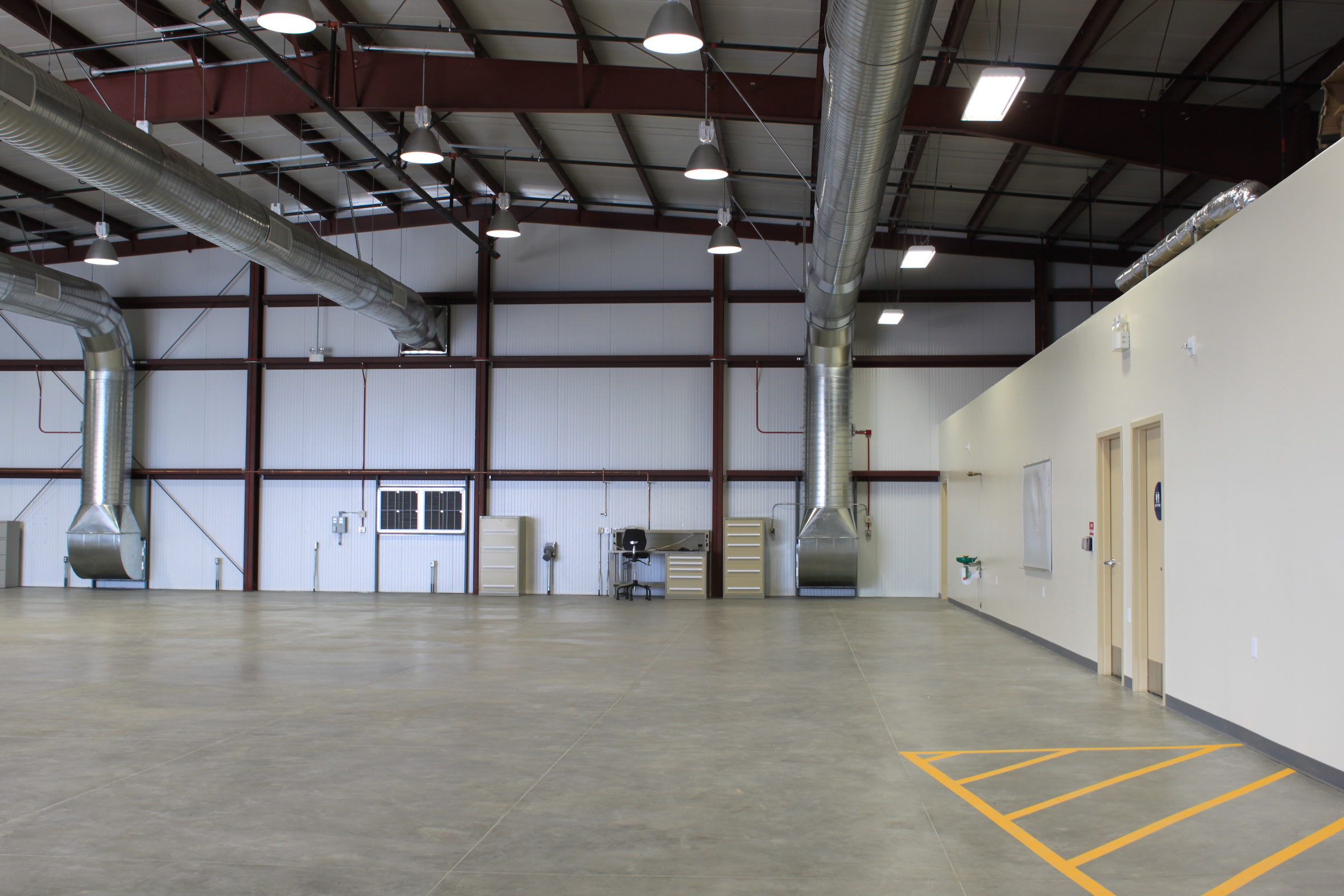
The 9,000 square-foot building (with airfield access) was designed to be a turn-key facility to allow for rapidly prototyping systems for our warfighters. (U.S. Navy photo)