
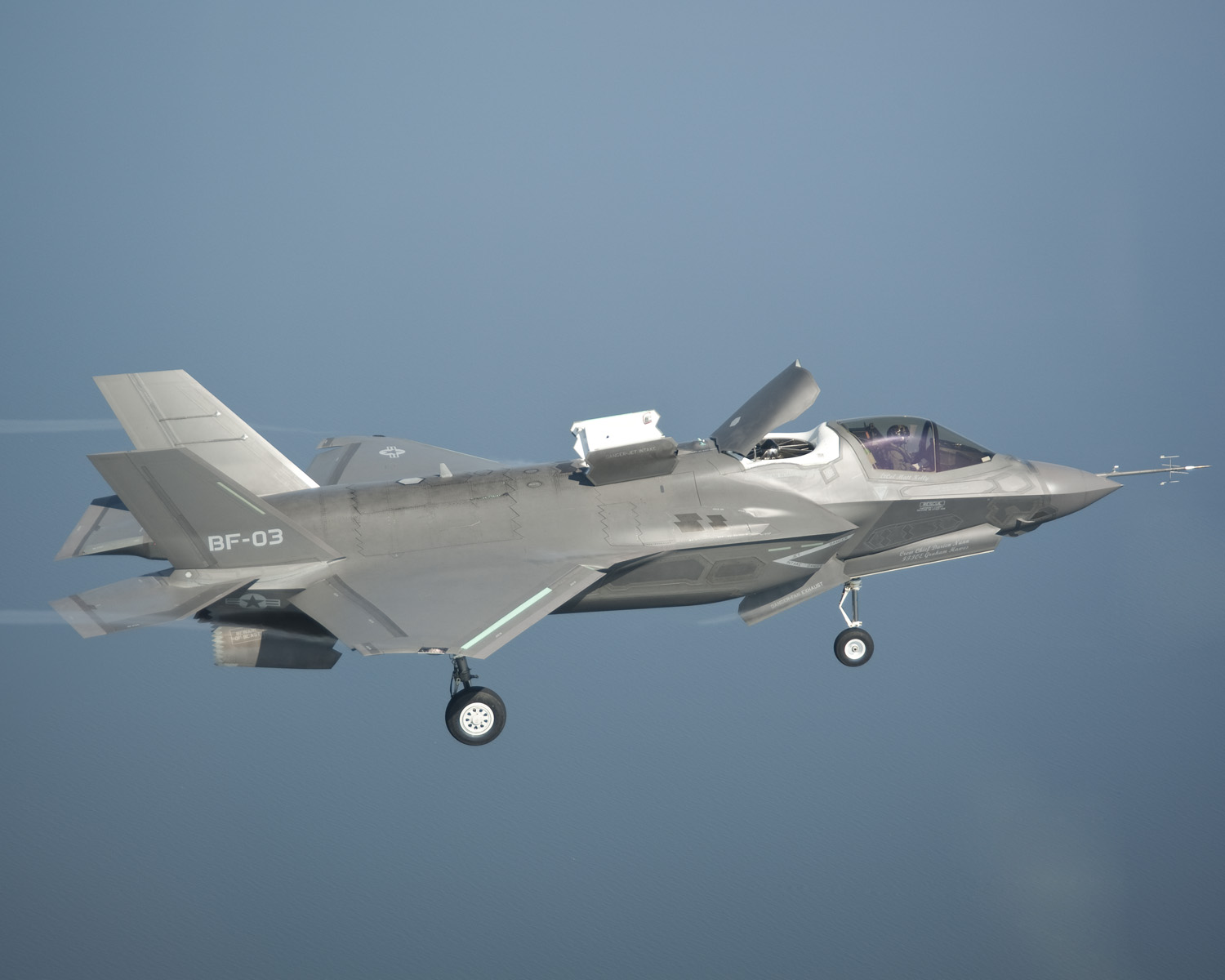
NAVAL AIR SYSTEMS COMMAND, PATUXENT RIVER, Md. – Lockheed Martin test pilot David “Doc” Nelson flies F-35B test aircraft BF-3 on its first flight in short take-off and vertical landing mode (STOVL) in an Atlantic operating area April 25, 2011. BF-3 is a test aircraft dedicated to structural loads evaluation; its first STOVL flight and subsequent first vertical landing April 29 demonstrated growing maturity in STOVL mode flight for the F-35B. The F-35B is a supersonic stealth fighter with next generation mission systems capable of short take-offs and vertical landings suitable for the U.S. Marine Corps expeditionary environment. The F-35B is undergoing test and evaluation at NAS Patuxent River in preparation for delivery to the fleet. (Photo courtesy of Lockheed Martin)
F-35B demonstrates maturity in STOVL operations
NAVAL AIR SYSTEMS COMMAND, PATUXENT RIVER, Md. – Short take-off and vertical landing (STOVL) capability for the F-35B Joint Strike Fighter reached a milestone in maturity last week.
On April 25, Lockheed Martin test pilot David “Doc” Nelson flew structural loads test aircraft BF-3 on its first flight in STOVL mode followed by its first vertical landing on April 29; and on April 27, U.S. Marine Corps test pilot Lt. Col. Fred “Tinman” Schenk completed the first vertical landing in mission systems test aircraft BF-4.
“We’re making good progress in preparing for shipboard testing later this year,” said Schenk. “We’ve completed all the vertical landings and more than eighty percent of the short take-offs we need for shipboard testing.”
Currently there are four F-35B test aircraft at NAS Patuxent River, and all four have now flown in STOVL mode with airborne conversions between STOVL and conventional take-off and landing (CTOL), slow take offs, slow landings, and vertical landings, a significant sign of maturity as only test aircraft BF-1 is primarily tasked for STOVL flight envelope expansion.
“Individually, these are great milestones for the aircraft and their crews, but when you put them all together with the experience we have on BF-1 and BF-2, we’re proving that STOVL flight in the F-35B is really maturing,” said Nelson.
Other requirements for shipboard testing are still in progress and on track, including logistics and maintenance preparations.
The F-35B Marine Corps variant is undergoing test and evaluation at NAS Patuxent River in preparation for shipboard testing and the start of squadron training at Eglin Air Force Base this year and eventual delivery to the fleet.
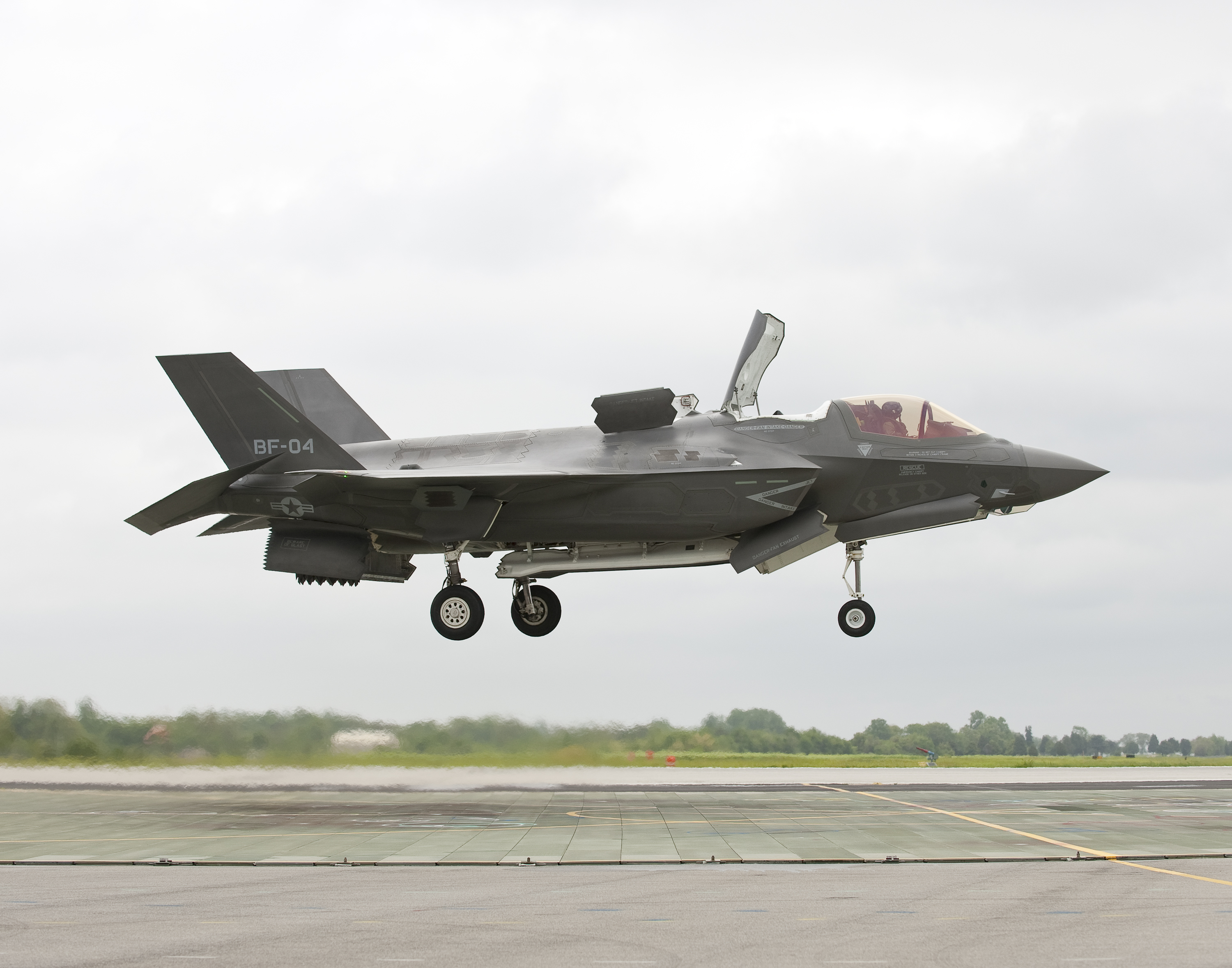
NAVAL AIR SYSTEMS COMMAND, PATUXENT RIVER, Md. – U.S. Marine Corps test pilot Lt. Col. Fred “Tinman” Schenk lands F-35B test aircraft BF-4 on its first vertical landing April 27, 2011. BF-4 is a test aircraft dedicated to evaluating mission systems and currently flies with Block 1.0 software. With this milestone, the F-35B test aircraft at NAS Patuxent River demonstrated growing maturity in short take-off and vertical landing (STOVL) mode flight with all four aircraft completing STOVL flights. The integrated test force at NAS Patuxent River has completed all of the vertical landings and more than eighty percent of the short take-offs needed for upcoming shipboard testing this year. The F-35B is a supersonic stealth fighter with next generation mission systems capable of short take-offs and vertical landings suitable for the U.S. Marine Corps expeditionary environment. The F-35B is undergoing test and evaluation at NAS Patuxent River in preparation for delivery to the fleet. (Photo courtesy of Lockheed Martin)