
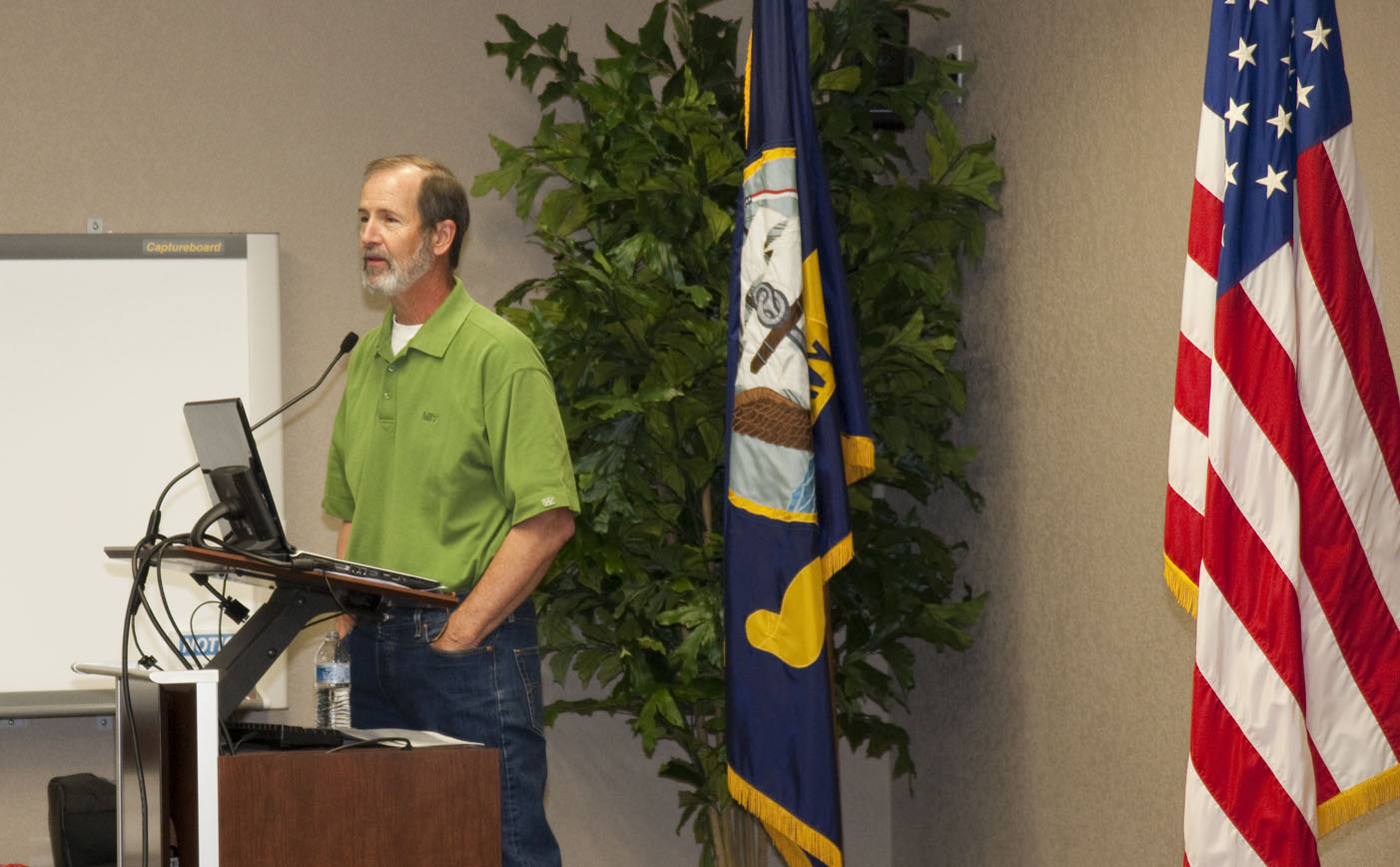
Scott O’Neil, NAWCWD executive director, welcomes students to the second annual Young Engineers and Scientists (YES!) of Ridgecrest conference, held inside McLean Lab at China Lake, Calif., April 12. (U.S. Navy photo)
McLean Lab hosts Young Engineers and Scientists
Young Engineers and Scientists (YES!) of Ridgecrest, successfully completed its second annual conference April 12. The YES! program, geared toward boys in grades sixth through eighth, saw increased participation from 96 students in 2010 to 127 this year. Students came from seven cities, extending from Fallbrook to Tuolumne, Calif., and 15 public and private schools.
Scott O’Neil, NAWCWD executive director, welcomed the students to the conference that was held inside one of China Lake’s newest facilities, McLean Laboratory. “Innovation is the engine of our country,” O’Neil said. “Specifically, technical innovation that comes from training in science, engineering, and math – those are the underpinnings of ideas and dreams that come to fruition. Our country is great because of young people like all of you who are pursuing your interests in math and science and love innovation.”
After observing and working with the all-girl science and math-based conference, Expanding Your Horizons, Kristy Visconti, NAWCWD mechanical engineer and president of YES!, assembled a core team of eight volunteers to assist her in the creation of the educational outreach organization for boys. A 50-person team of volunteers composed of scientists, engineers, technicians and logisticians from all areas of NAWCWD mission operations acted as organizers, workshop leaders, student chaperones and general function volunteers.
Rear Adm. Mat Winter, NAWCWD commander, told the boys that of the nearly 5,000 employees who work at the Weapons Division, many are engineers, scientists, logisticians and technicians who use math, science and engineering every day to provide warfighting capabilities to the fleet.
“In the Navy, we use the term shipmate,” Winter said, “and that indicates a person who shares the same common purpose and common goal as you do. Today, your purpose and goal is to have fun experimenting in these workshops and see for yourself what math and science can do for you and for your shipmates.”
Students got to choose from 14 different workshops that included demonstrating quick sand, building electric motors, launching projectiles from a catapult, bridge building (that demonstrated the strength of edible Vermicelli as a support structure), creating aerodynamic deceleration equipment (parachutes), making ice cream from thin air, creating slime, working with robots, blasting off rockets, and many others.
“One of the most popular workshops this year was ‘Quicksand’ in which the students saw how a non-Newtonian fluid worked,” said volunteer Erica Beeler, NAWCWD program manager for Hazardous Material Control. “They got to stick their hands in it and run across it without sinking in.”
Another experience unique to the China Lake conference was a “gadget talk” by Lt. Cmdr. Matthew “Cube” Menza from Air Test and Evaluation Squadron (VX) 31, who entertained the youngsters with stories and a slide show about his experience as an EA-18G “Growler” pilot. Menza helped a student don flight gear while explaining the equipment and its functions to his young audience.
From the volunteers’ point of view, seeing the students get excited about what they learned was the most rewarding part of the conference.
“If we have helped these students get excited about the core competencies that evolve from science, math and engineering with ‘fun’ demonstrations like these, we have made a positive impact that, we hope, will have a far-reaching impact on their education and interests,” Beeler said.
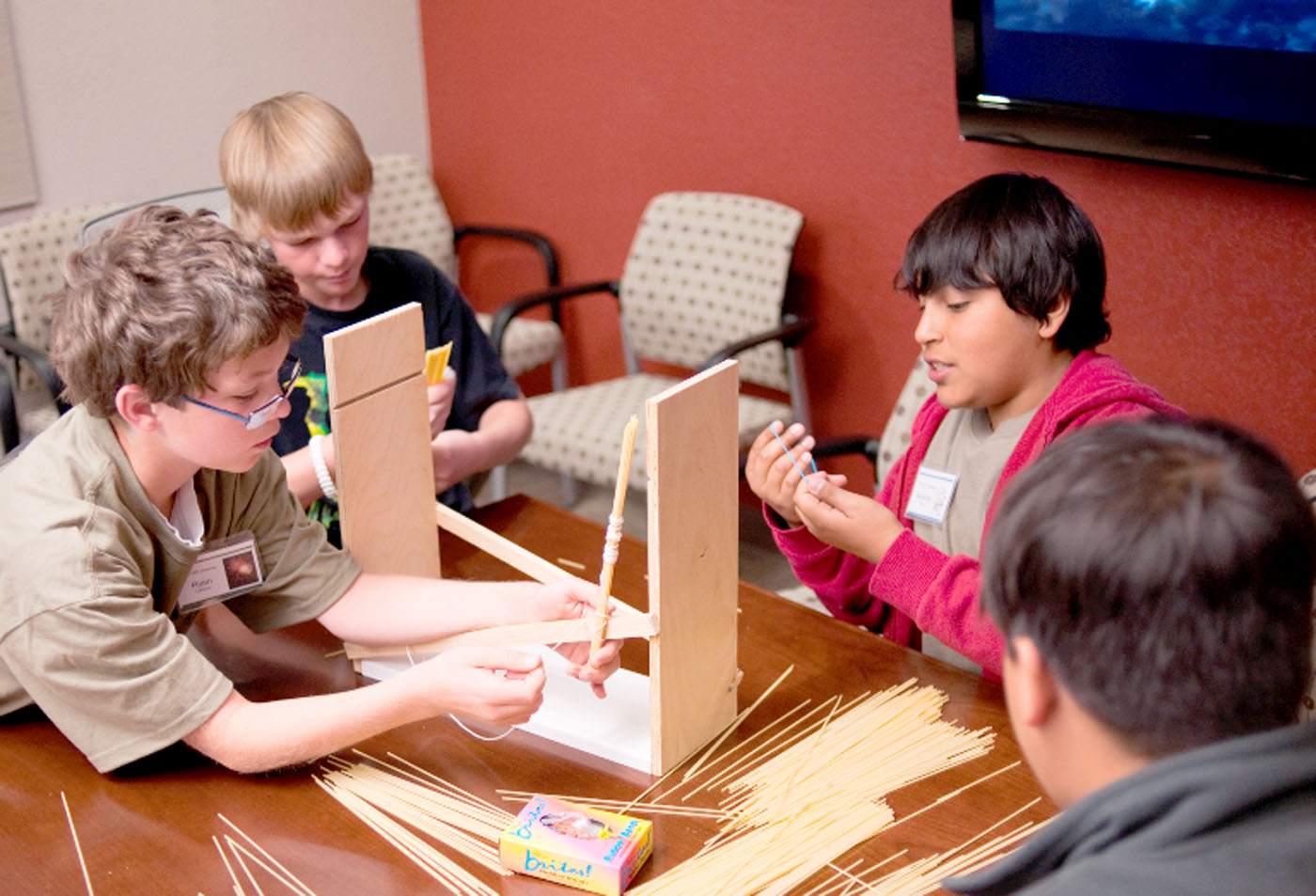
Students investigate basic material science and engineering by building a bridge made of spaghetti. (U.S. Navy photo)
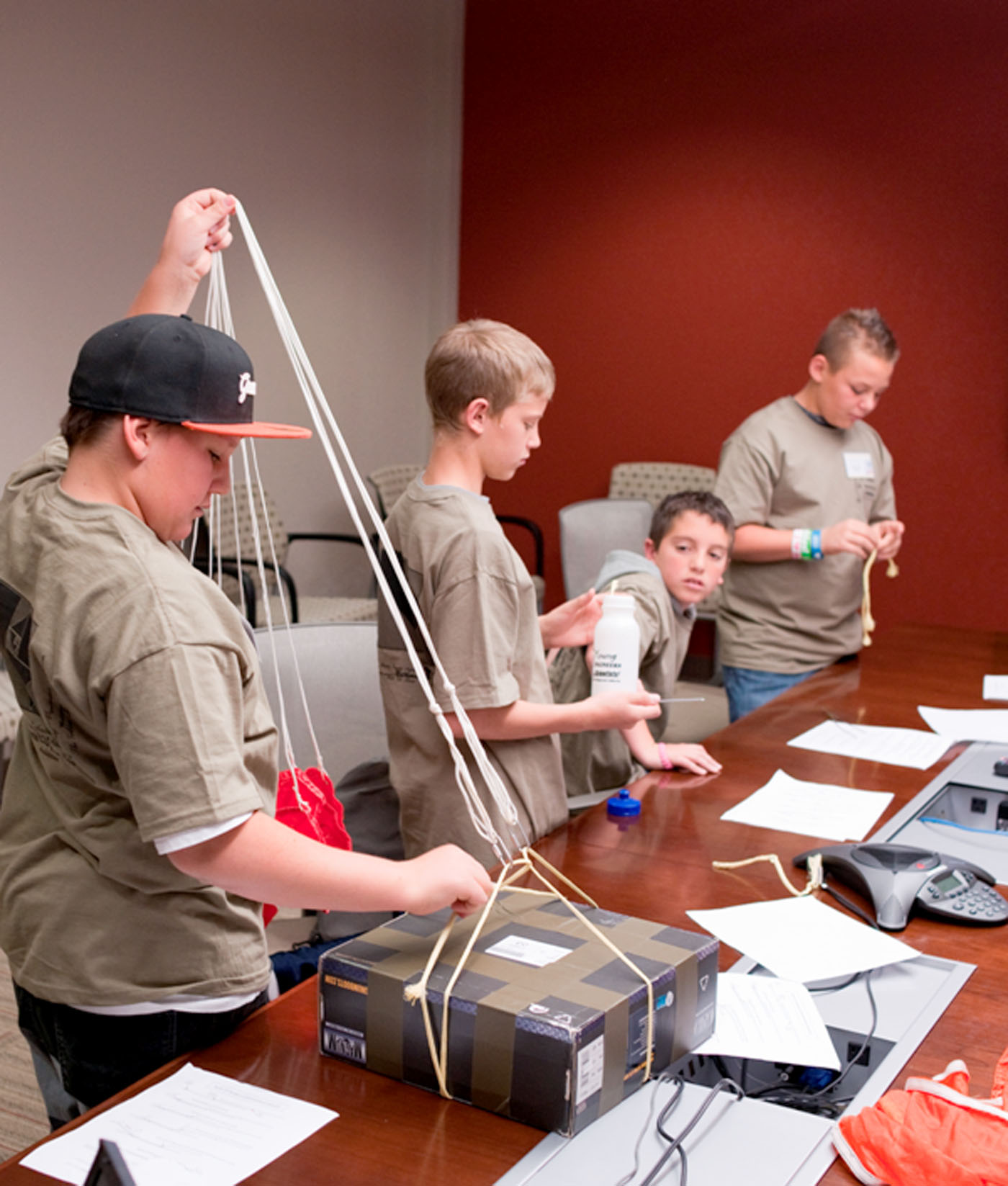
Students design their own parachutes while learning the basic principles of aerodynamics. (U.S. Navy photo)
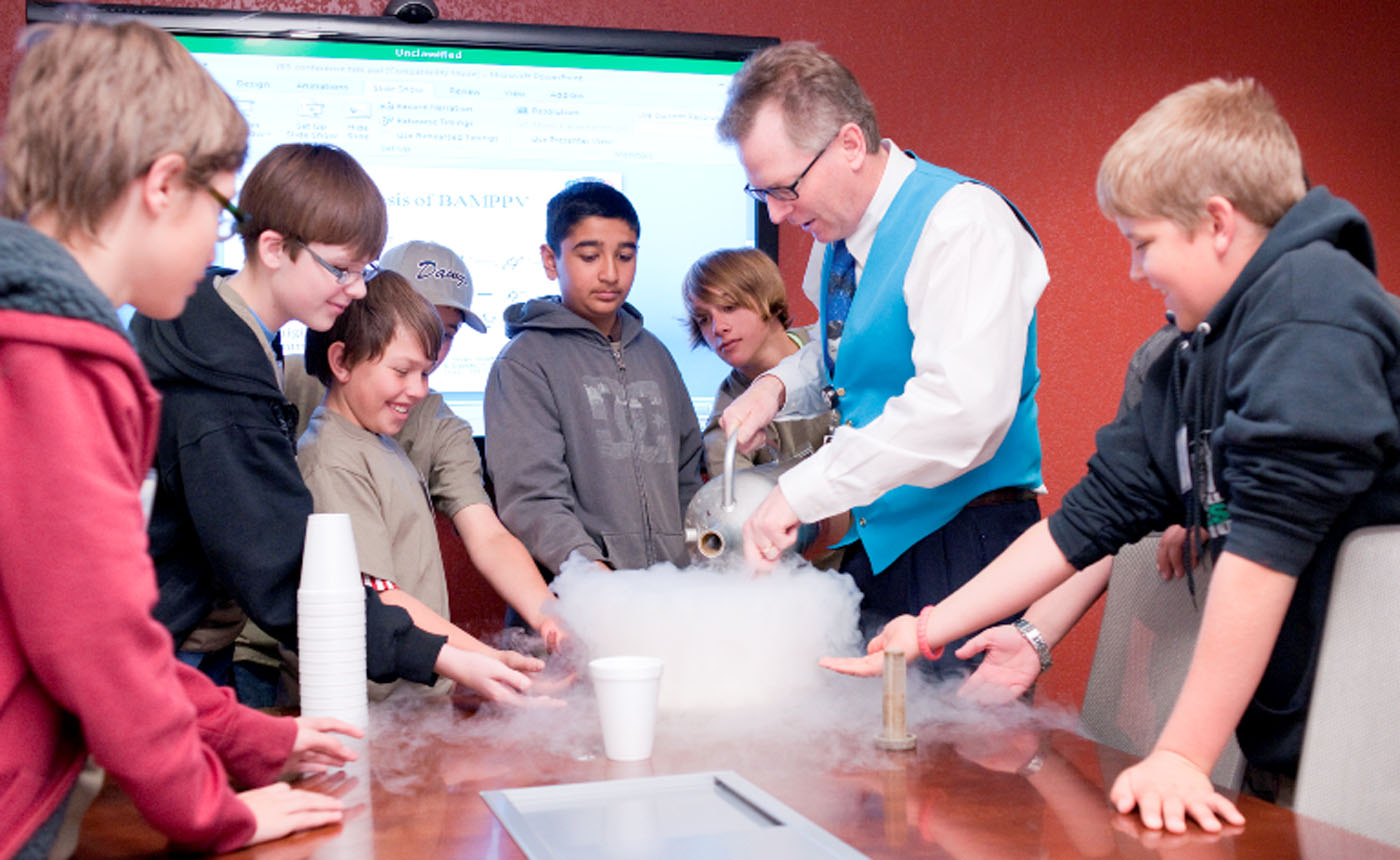
NAWCWD chemist John Stenger-Smith creates ice cream from thin air, delighting his student audience. (U.S. Navy photo)
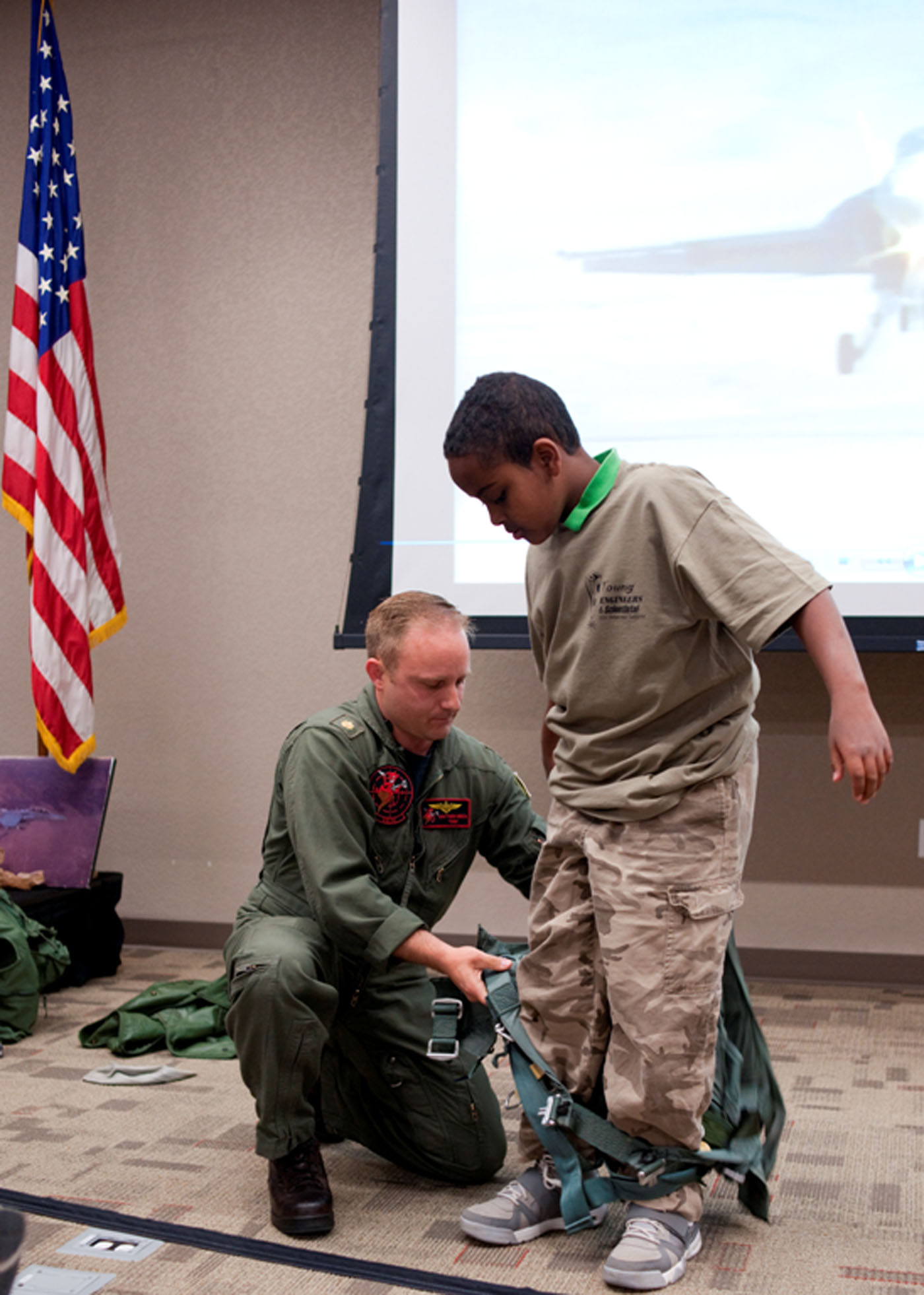
Lt. Cmdr. Matthew “Cube” Menza helps a youngster don flight gear and explains the functionality of each piece. (U.S. Navy photo)
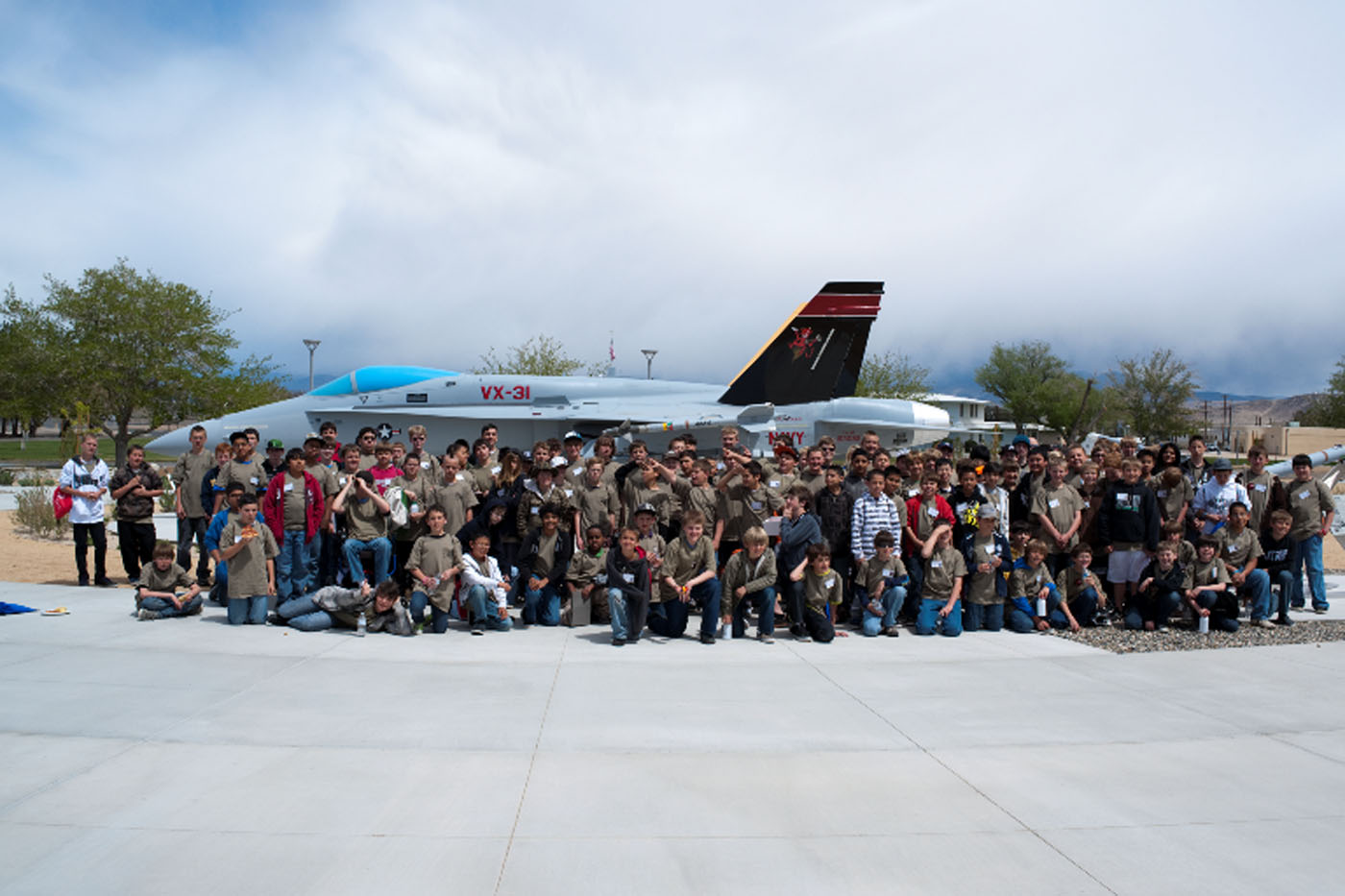
One-hundred and twenty-seven students attended the second annual Young Engineers and Scientists of Ridgecrest conference. (U.S. Navy photo)
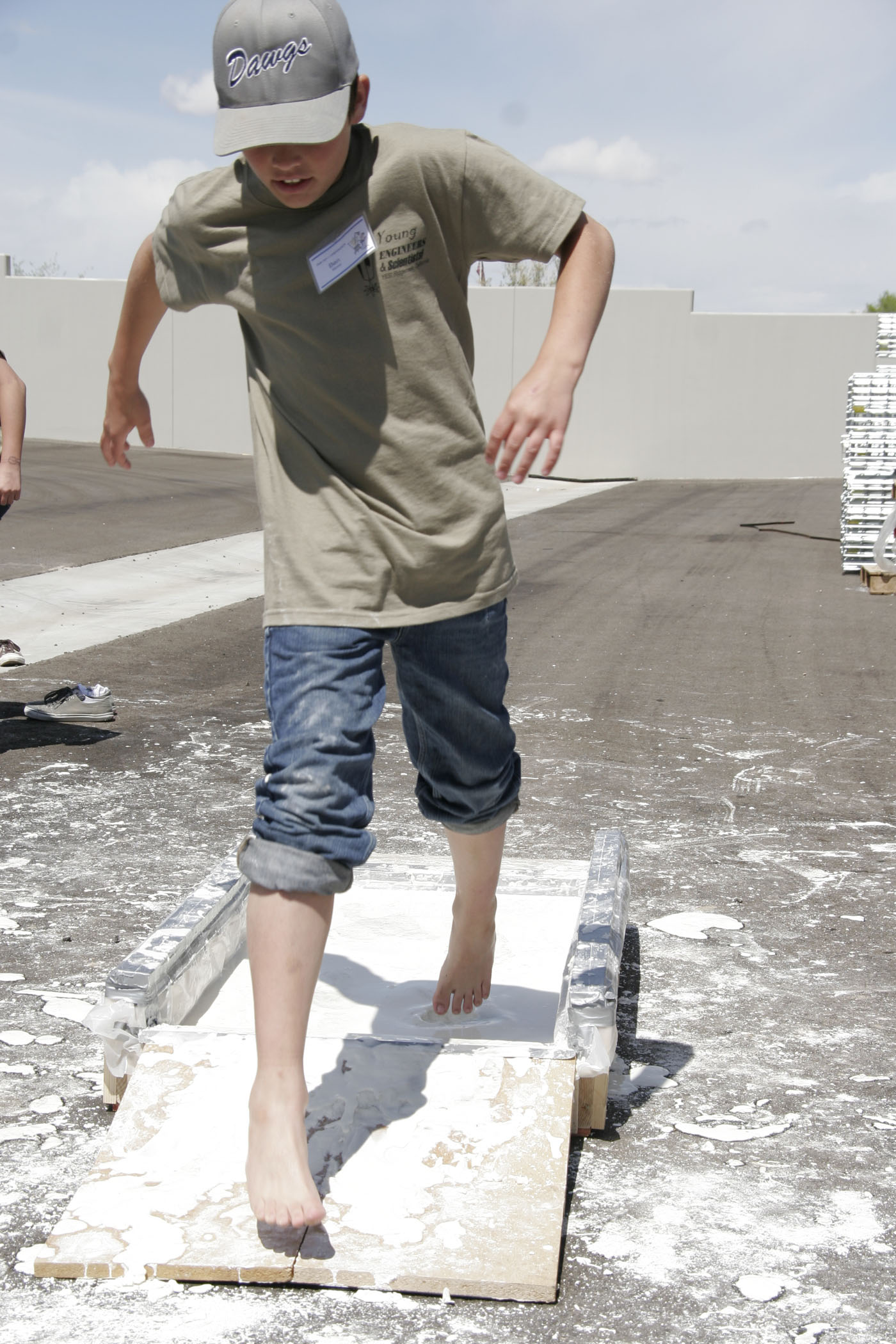
A youngster sprints through a non-Newtonian fluid that acts like quicksand. (U.S. Navy photo)