
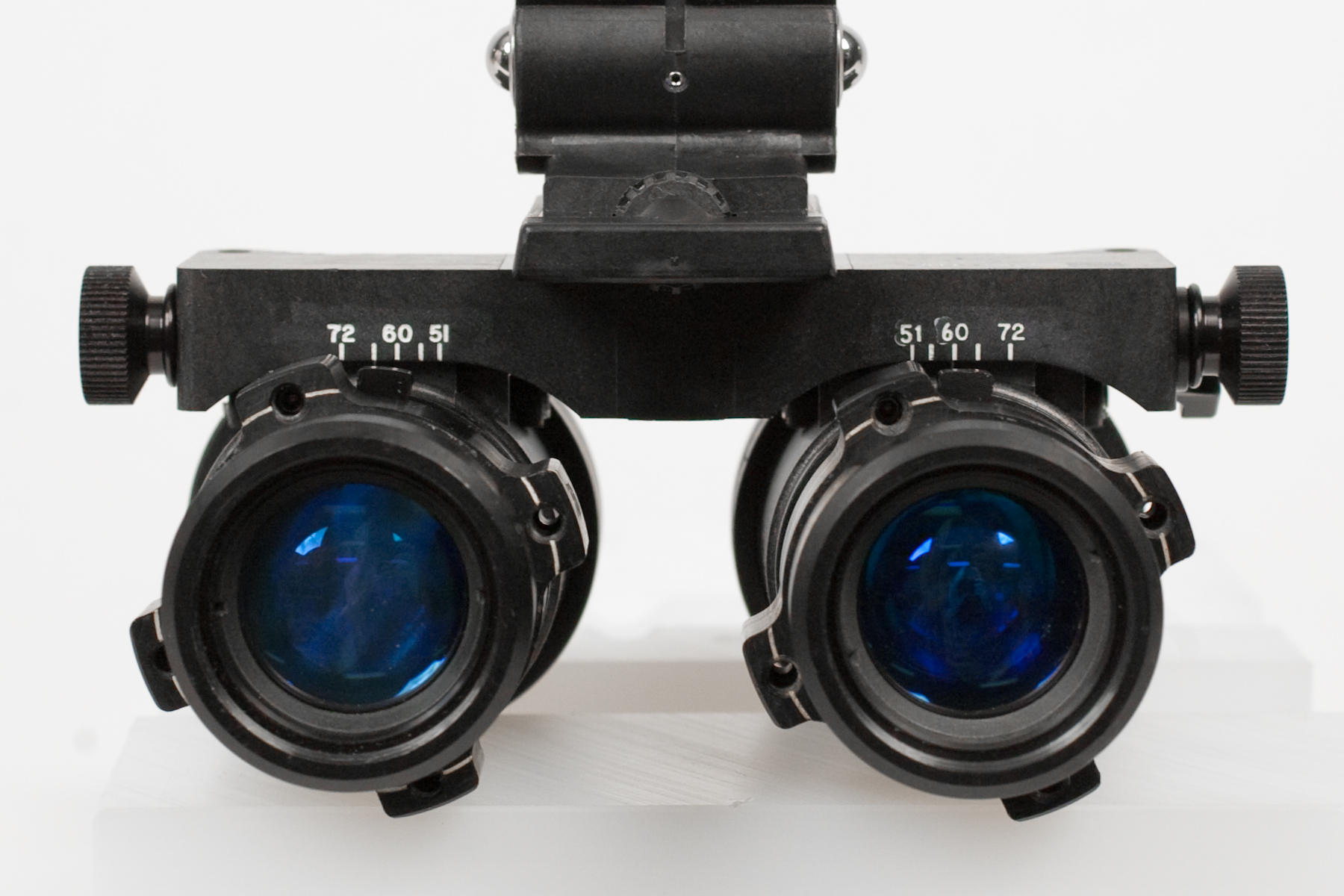
A new screening process for AN/AVS-9 Night Vision Goggle (NVG) tubes is projected to provide a cost avoidance to the Navy of more than $2 million annually. U.S. Navy photo.
New screening process saves Navy millions in night vision systems
NAVAL AIR SYSTEMS COMMAND, PATUXENT RIVER, Md. -- The Aircrew Systems Program Office (PMA-202) here and its Night Vision Systems In-Service Support Center (ISSC) at the Naval Surface Warfare Center Crane, Ind., have developed a new screening process for AN/AVS-9 Night Vision Goggle (NVG) tubes that is projected to provide a cost avoidance to the Navy of more than $2 million annually.
“NVG Tubes that were previously tested at the intermediate maintenance level and rejected, were retested using more sophisticated test equipment and techniques developed by the Aircrew Systems ISSC,” said Capt. Roger Ligon, Aircrew Systems program manager, PMA-202. “These new and more accurate testing methods found that 70 percent of the previously rejected tubes actually meet their performance specifications and could be placed back in service.”
Organizational level maintenance performs a routine inspection on the AN/AVS-9 NVGs, in which the tubes are installed, on a 90 day schedule. If the NVG fails to pass their testing, it is sent for further testing by the Intermediate level maintenance personnel. If an NVG fails the Intermediate level’s more accurate testing, the tubes are removed from the NVG’s and returned to the ISSC at NSWC Crane. Only at NSWC Crane are the tubes independently tested on equipment specifically designed to test the tubes.
“We plan to introduce an improved training curriculum for Intermediate level technicians to reduce the number of fleet false positives. This improved training along with Night Vision Systems ISSC continued support will pay big dividends to fleet readiness” said Ligon.
“Originally the night vision goggle tubes were categorized as “consumables” so when the tubes failed, they were demilitarized,” said Tom Hock, PMA-202’s Night Vision Systems ISSC lead at NSWC Crane. “Now, working with our Army counterparts, who are the Department of Defense lead for night vision systems, we are updating the process to make night vision goggle tubes ‘“repairable”’ items. We can reissue these rescreened night vision goggle tubes to the fleet, keeping this vital capability where it’s needed most.”
"The ISSC is always looking for new and creative ways to reduce costs,” said Hock. New AN/AVS-9 night vision goggle tubes cost $2,500 each while the rescreened tubes cost $800, saving the fleet more than $1,700 per tube.
Night Vision Goggles (NVG) are used by the U.S. military to gain tactical advantage. Warfighters speak of “owning the night” because of their ability to use the most advanced night vision devices in the world to their advantage in the current theaters of operation.