
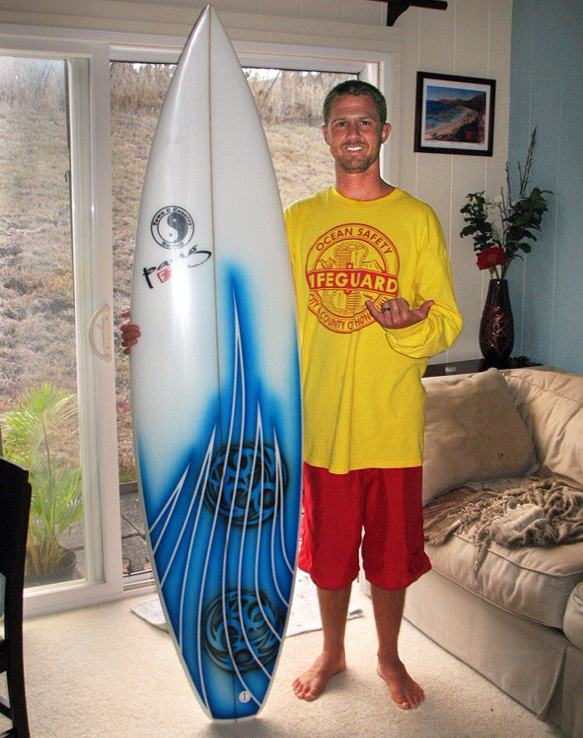
“Surfer Sean Brislin, a lifeguard for the city and county of Honolulu, found the orange Deployable Flight Incident Recorder Set last December on a beach near Bellows Air Force Station on Oahu, Hawaii. The flight data recorder came from an F/A-18F Super Hornet lost at sea nearly six years earlier and had floated more than four thousand miles across the Pacific Ocean.” U.S. Navy photo.
Surfer finds 21st century ‘message in a bottle’ on Hawaii beach
NAVAL AIR SYSTEMS COMMAND, PATUXENT RIVER, Md. -- A 21st century, digital version of the castaway’s message in a bottle was discovered by a surfer in December as he walked along a beach near Bellows Air Force Station on Oahu, Hawaii.
“I was checking the beach for hazards when I saw it,” said Sean Brislin, who works as a lifeguard for the city and county of Honolulu.
Brislin said the mysterious, sand covered orange box he found, which held the bottle, had a label in four languages that said the box belonged to the U.S. Navy. There was also listed a phone number that directed to call “for instructions.” The word REWARD was printed boldly after the phone number in each language.
“I thought at first it was from RIMPAC,” he said, referring to the Rim of the Pacific naval exercises held near Hawaii.
But when he called the number, he learned he had found the flight data recorder from an F/A-18F Super Hornet lost at sea nearly six years earlier and 4,000 miles away. The plane had plunged into the Pacific in Jan. 2005 when an arresting cable broke while it was landing on the USS Kitty Hawk (CV 63) off Atsugi, Japan.
The pilot and crew ejected and were recovered safely. But the recorder, known as the Deployable Flight Incident Recorder Set (DFIRS), was not.
When Brislin called the number on the label, the call was answered by Dave Clark of the Naval Safety Center in Norfolk, Va. “He described what he had, and I told him to hold onto it,” Clark said.
The safety center quickly arranged for Brislin to ship the recorder to NAVAIR’s flight data download facility, the Common Flight Information Recorder Lab (CFIRAL) at Patuxent River, Md. The CFIRAL downloads data from F/A-18s and other Navy aircraft to help analyze the cause of mishaps.
Remarkably, there was very little damage to the recorder, that “had drifted well over four thousand miles and was exposed to sea, sun and sand for almost six years,” said Brenna Mitchell, the lead systems engineer who oversees the CFIRAL for the PMA-209 Fleet Avionics Sustainment and Support Team (FASST) here.
Water had leaked underneath the lid and caused some corrosion, she said, but the sealed memory module was intact. “When we went to download the data, it worked perfectly.”
Other flight data recorders sink to the bottom with the plane after a crash. But the DFIRS deploys automatically during ejection and floats.
“Navy planes spend most of their time over water,” Mitchell said. “It’s much easier to retrieve data when you can scoop the recorder off the surface instead of recovering it from two miles down.”
The DFIRS resides on the left upper surface of the aircraft fuselage between the vertical stabilizers in a shallow compartment covered with a skin panel. When the canopy ejects, the panel is blown off, and the DFIRS flies free. The sides of the box flare outward to form a tapered, lifting-body shape with modest gliding ability that reduces the impact of landing. A beacon emits a continual pulsing signal to guide search crews to the box for recovery.
Ironically, no procedure had been set up to disburse the reward. The DFIRS from the Kitty Hawk incident was the first ever returned from the public. “This has never happened before,” Clark said. “Sean was very helpful, very cooperative. He definitely deserves something.”
It took a few weeks to set up the right mechanism to disburse the reward, but officials at the office of Commander Naval Air Forces (CNAF) say Brislin can expect to receive a check for $500.
The easygoing surfer doesn’t mind the wait. “The whole process” has been an enjoyable experience, he said. “I didn’t expect to find out what had happened, but when I did, I thought it was really cool."
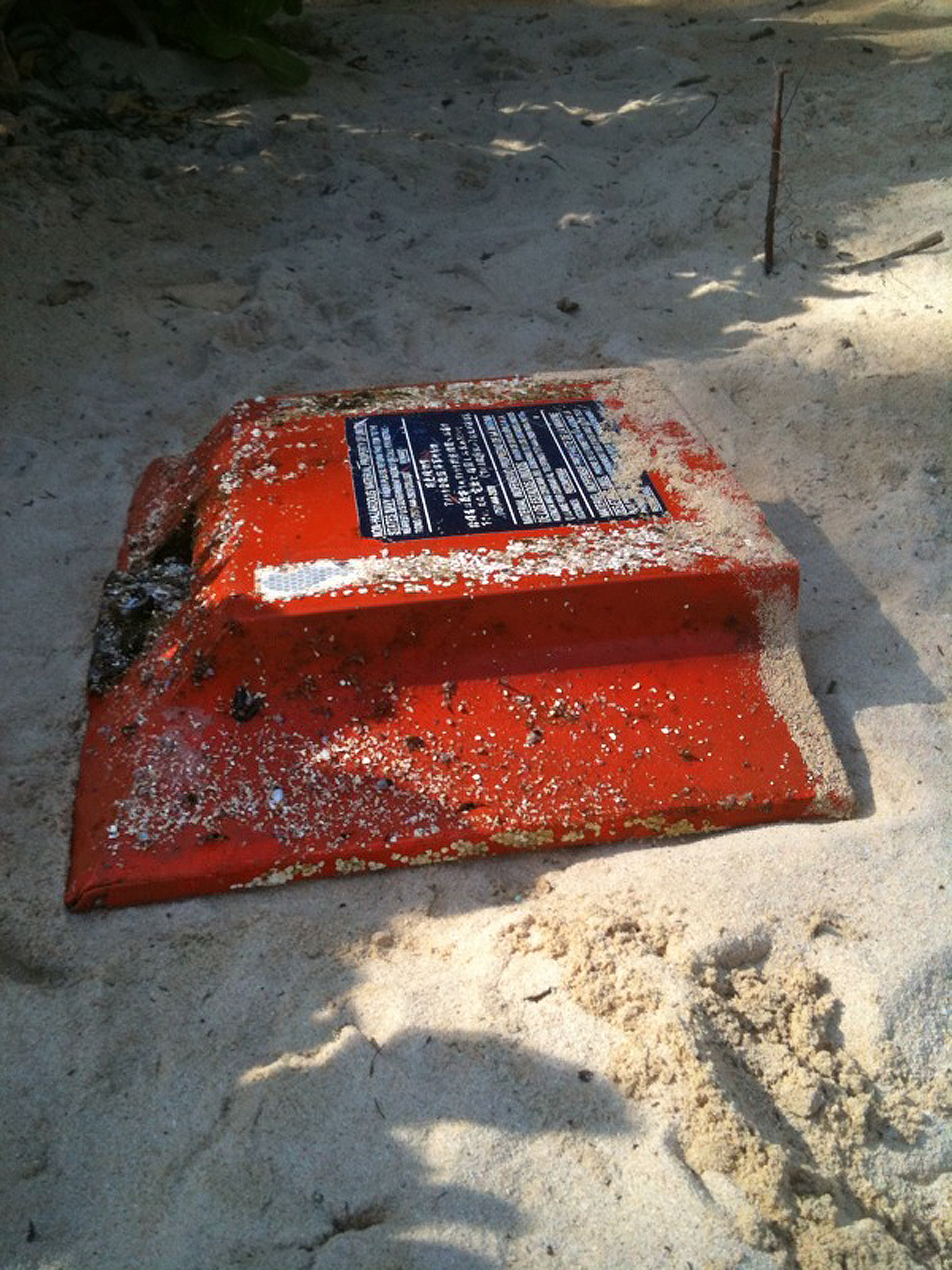
“The orange Deployable Flight Incident Recorder Set found last December on a beach near Bellows Air Force Station on Oahu, Hawaii. The flight data recorder came from an F/A-18F Super Hornet lost at sea nearly six years earlier and had floated more than four thousand miles across the Pacific Ocean.” U.S. Navy photo.
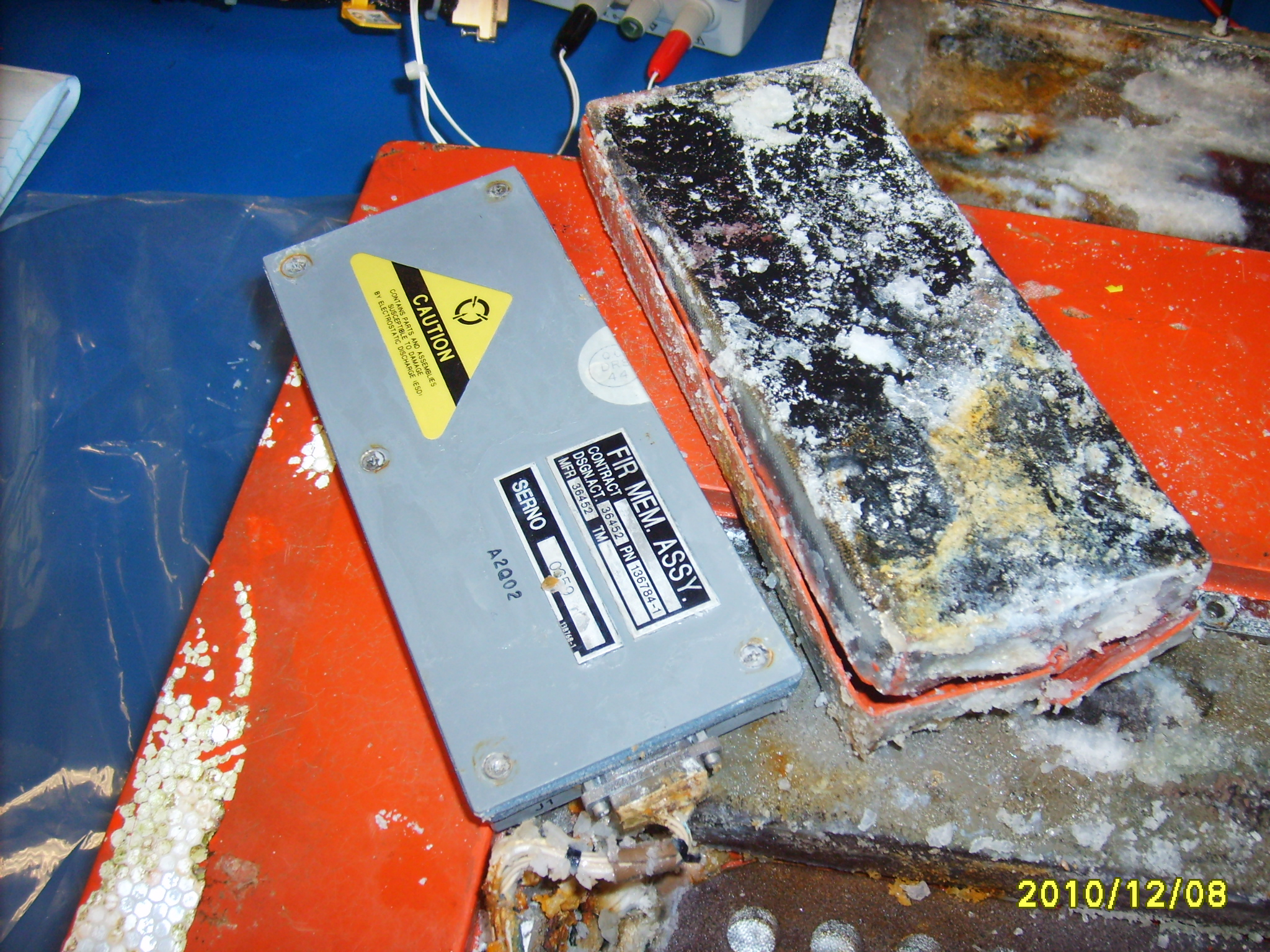
"The sealed memory module of the Deployable Flight Incident Recorder Set found last December on a beach near Bellows Air Force Station on Oahu, Hawaii worked perfectly and was able to download its data. The flight data recorder came from an F/A-18F Super Hornet lost at sea nearly six years earlier and had floated more than four thousand miles across the Pacific Ocean.” U.S. Navy photo.
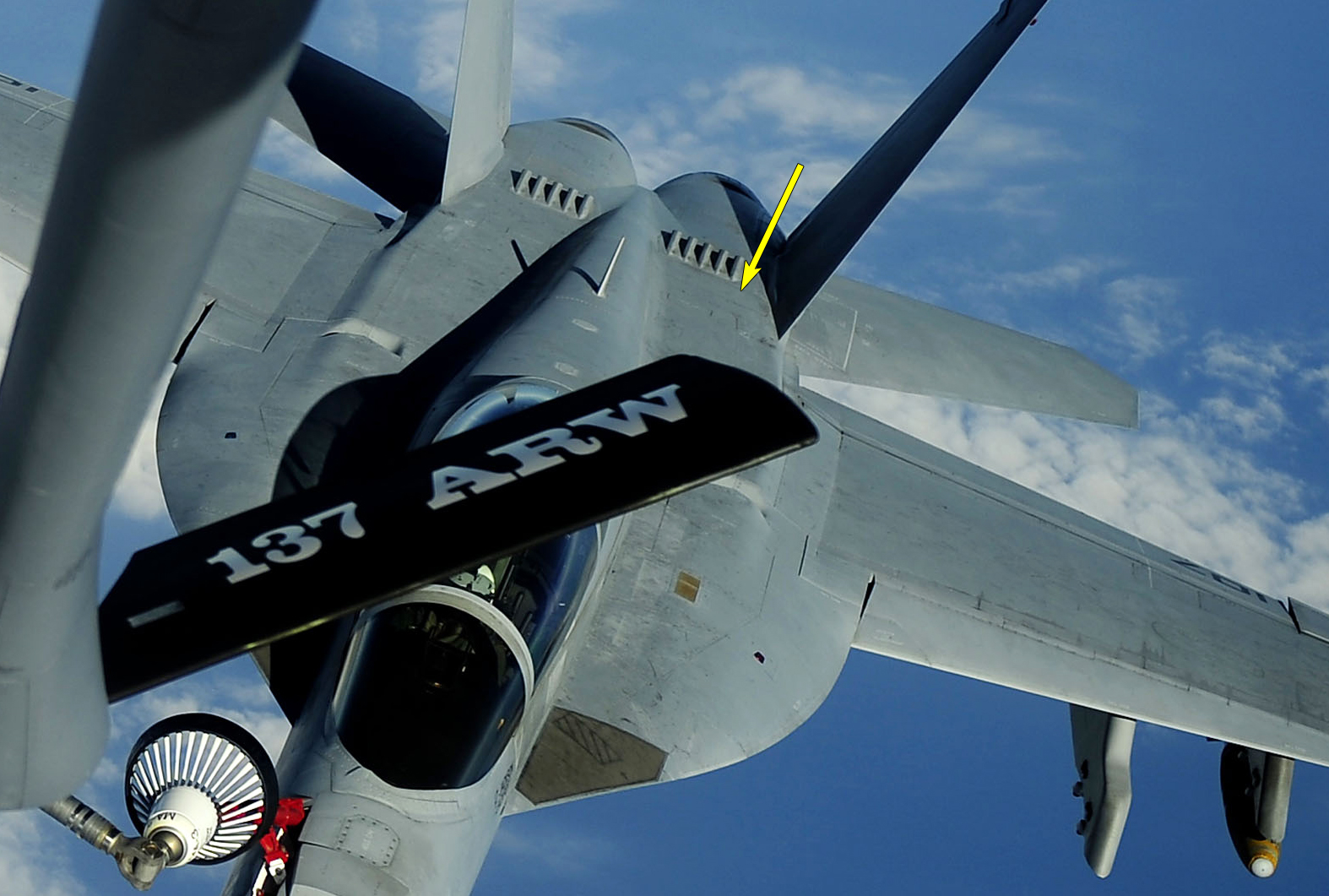
“The Deployable Flight Incident Recorder Set on the F/A-18F Super Hornet resides on the left upper surface of the aircraft fuselage between the vertical stabilizers in a shallow compartment covered with a skin panel (see arrow). When the canopy ejects, the panel is blown off, and the DFIRS flies free.” U.S. Navy photo.