
U.S. Navy graphic
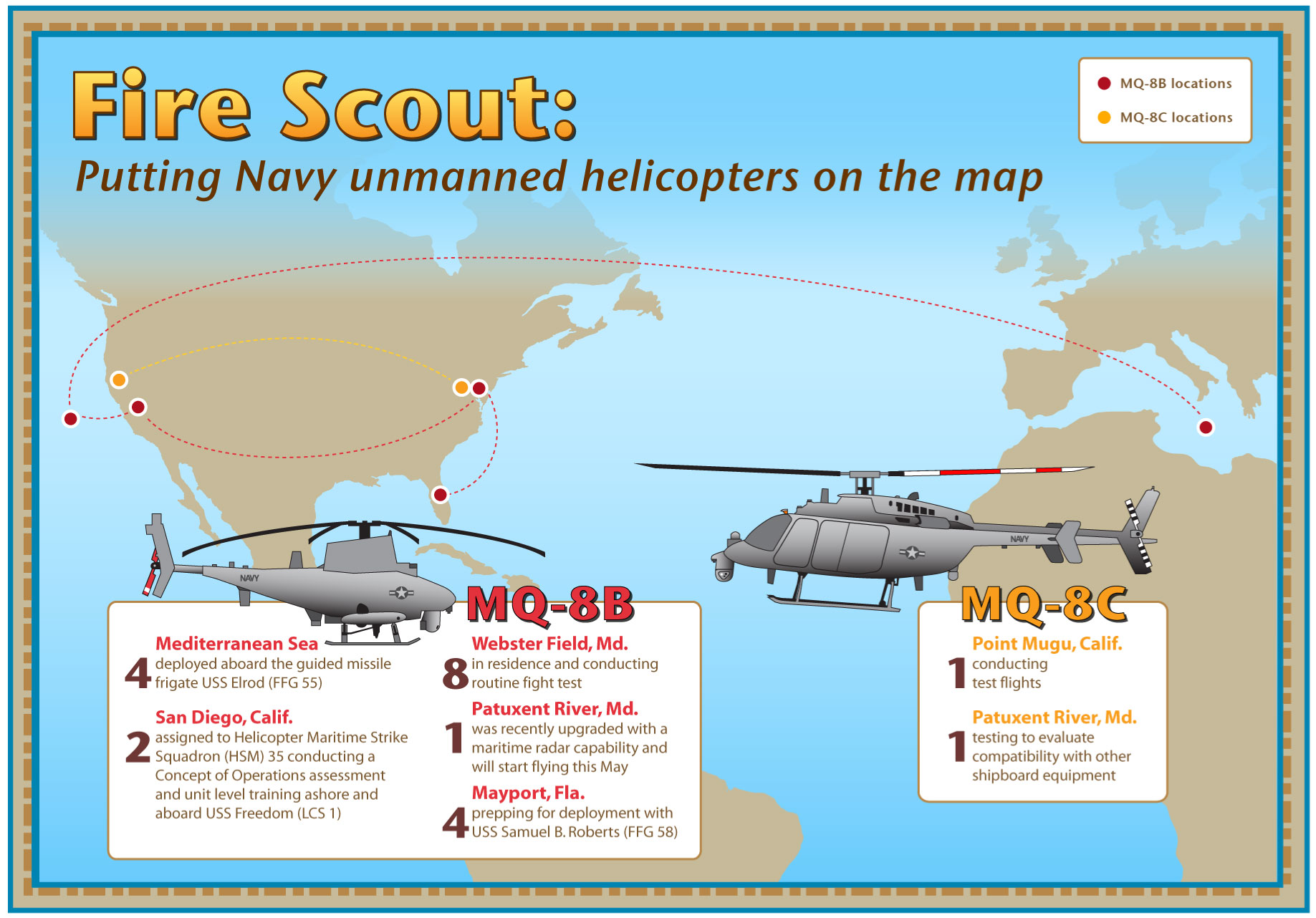
Infographic: Fire Scout operates across the U.S., overseas
NAVAL AIR SYSTEMS COMMAND, PATUXENT RIVER, Md. – With Fire Scout's first deployment aboard a Littoral Combat Ship (LCS) on the horizon, the Navy is now focused on increasing the capability of the unmanned helicopter for future operational missions.
From conducting the first-ever cooperative operations with a manned helicopter aboard USS Freedom (LCS 1) in the Pacific Ocean to flying with a new, maritime search radar over the Chesapeake Bay, Fire Scout operations are underway in multiple locations across the U.S. and overseas.
Since 2009, the MQ-8 Fire Scout has flown more than 11,000 operational hours, primarily in the Mediterranean, Afghanistan and Horn of Africa regions, providing intelligence, surveillance and reconnaissance support to operational forces.
With the new, larger MQ-8C air vehicle in development and test, the unmanned helicopter's range, endurance and payload capacity will be greater than its predecessor.
Sailors are testing and training with the two MQ-8 systems in preparation for upcoming deployments. The MQ-8B air vehicle will continue to support guided missile frigate deployments and will get underway with USS Fort Worth (LCS 3) in the fall.
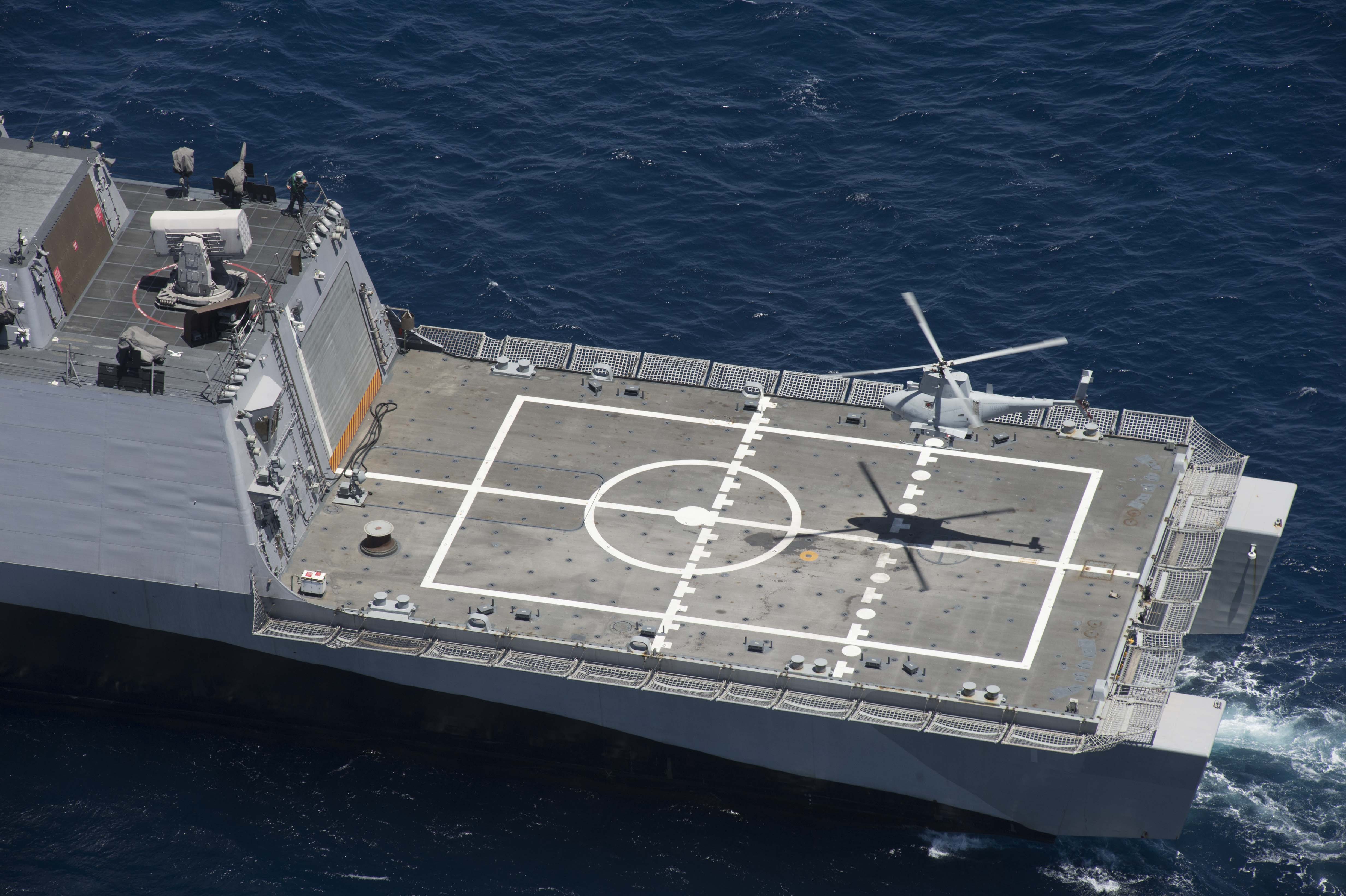
An MQ-8B Fire Scout unmanned helicopter assigned to Helicopter Maritime Strike Squadron (HSM) 35 prepares to land on the littoral combat ship USS Freedom (LCS 1)May 12 during visit, board, search and seizure (VBSS) training off the coast of Southern California. The training marked the first time a littoral combat ship, an MQ-8B Fire Scout unmanned helicopter and an SH-60R Sea Hawk helicopter conducted integrated VBSS training. (U.S. Navy photo)