Depot modification program saves money, time for Fleet
By Rocco DeFilippis
NAVAIR Depot Cherry Point PAO
Technology has grown exponentially since 1964 when the H-46 helicopter was introduced as the Marine Corps’ newest assault-support helicopter.
To keep the Corps’ invaluable aircraft up-to-date with the latest in avionics technology, countless modifications have been incorporated into the H-46 airframe.
From flight controls and system diagnostics to survivability and reliability technology, the artisans and engineers who work to keep the ‘Phrogs’ flying continue to develop new and better ways to support the Fleet.
In the past, several modifications have been installed by contractors after an aircraft has left the depot, but prior to returning to the operating forces.
However, recently NAVAIR Depot Cherry Point, working in conjunction with NAVAIR’s program manager for the H-46 program (PMA-226), successfully completed a prototype for three modifications done here during scheduled depot-level maintenance.
“The prototype cut the total time involved drastically,” said Stephen Taylor, electrical work leader. “When the aircraft come to the depot for scheduled maintenance, they are first disassembled, so our set up enables us to install the modifications without having to take the plane apart again.”
Since the first prototype, four additional aircraft have had the modifications completed here.
Maj. Mark A. Pickett, H-46 program officer, said that the total allocated hours for the four aircraft that required modification was about 1,752, and the total allocated funds for the mods was just over $170, 250. The actual expended hours for the mod work was only 900 hours, and the actual cost was more than $87,700, which left a savings of more than $82,500 for PMA-226 to fund additional aircraft.
As a result of PMA and depot cooperation, five modifications will now be included in the remaining H-46s that enter the depot and require updating.
The modifications include the Engine Condition Control System (ECCS) block modification, the Aircraft Survivability Equipment modification, the Automatic Flight Control System (AFCS) wiring installation, the Aircraft Integrated Maintenance System (AIMS) block modification and the AFC-521 Hydraulic modification.
Both the ECCS and ASE modifications were first installed exclusively by field contractors. Each modification required an average turnaround time of three weeks.
“The depot would troubleshoot and test planned maintenance system aircraft, only to fly them directly to contractors to be modified,” Pickett said. “That resulted in six additional weeks a squadron would have to wait to put an aircraft back in service.”
Since an H-46 must have certain mods to go into the Operation Iraqi Freedom/Operation Enduring Freedom theaters, turnaround time is key for successful deployment preparations.
“Incorporation of all the modifications will result in an expected 14-day turnaround time based on the first fully modified prototype,” Pickett said. “We can reduce ‘out of service’ time to the Fleet Marine Force by as much as three months, depending on the level of modification work required.”
Pickett credits the success of the new program to the hard work and vast experience of the men and women working each day on the ‘46 line.’ From the electricians and artisans to the engineers and examination and evaluation team members, Pickett said no one can do it better than the depot’s H-46 team.
“It’s a combination of hard work and team effort,” Taylor said. “The people involved with this program are doing a tremendous job of saving the Fleet time and money. It’s good to know we are giving them a safer, more reliable product that is easier to use, plus we are doing it in almost half the time.”
----------------------------------------------------------------------------------------------------
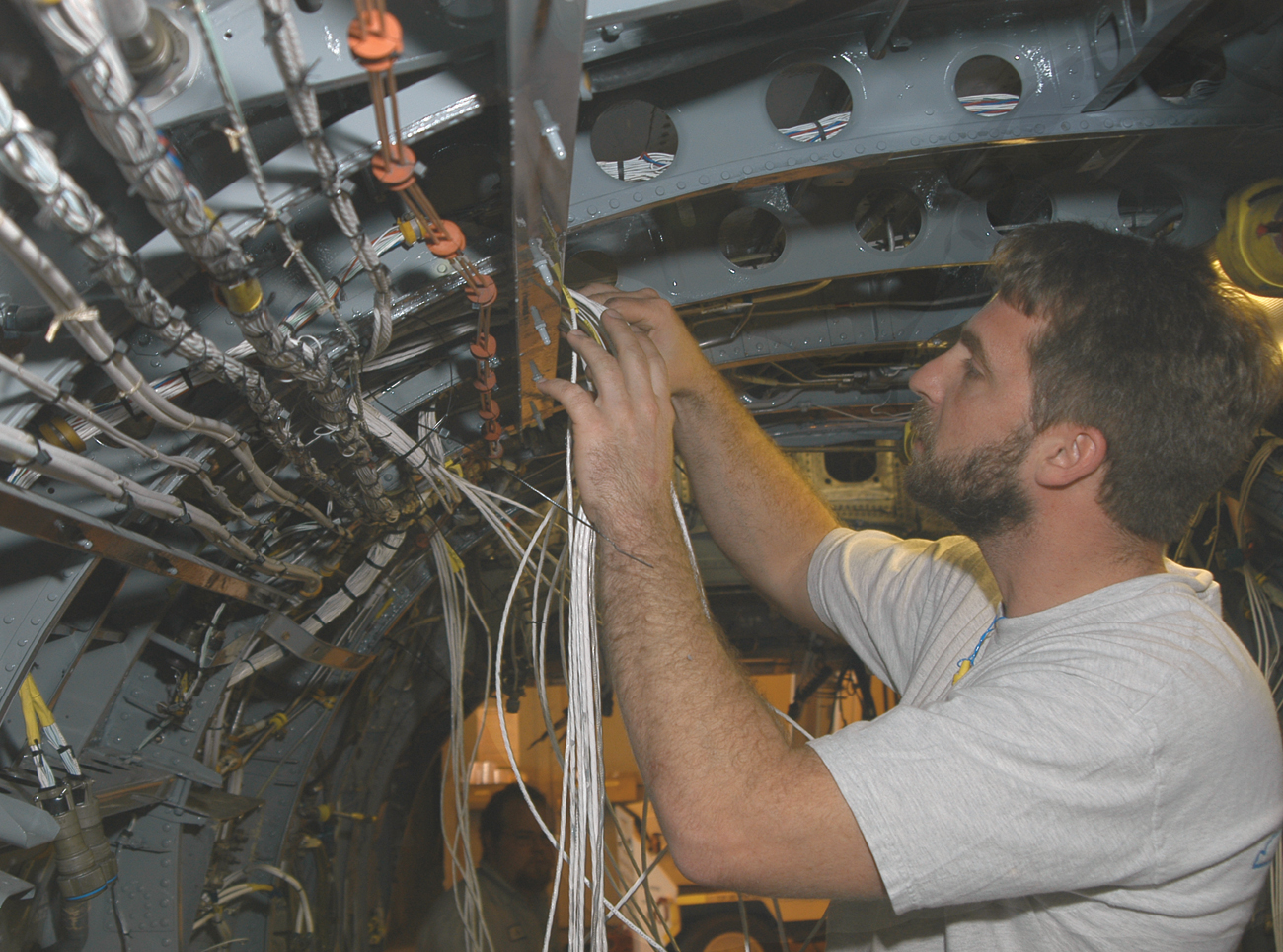
Photo: Stephen Taylor, electrical work lead, reroutes existing wires to make room for new ones during the installation of the Aircraft Integrated Maintenance System (AIMS) block modification. Photo by Rocco DeFilippis.