NADEP Cherry Point AV-8B program uses AIRSpeed tools to increase productivity
By Elizabeth Poe
AIRSpeed has transformed more than the physical appearance of the Naval Air Depot Cherry Point AV-8B program. It has also energized the AV-8B team psychologically.
The implementation of AIRSpeed tools by the AV-8B core team has helped to increase the AV-8B program’s productivity on the hangar floor and reach its goal of returning 12 aircraft to the fleet this year.
The depot AIRSpeed office, led by Mike Bogdahn, assisted in the endeavor by engaging a consultant team that provided training, facilitation and mentoring to the program. In addition, the office ensured the knowledge transfer from the external experts to depot personnel so the journey can be continued when the consultants are no longer on board.
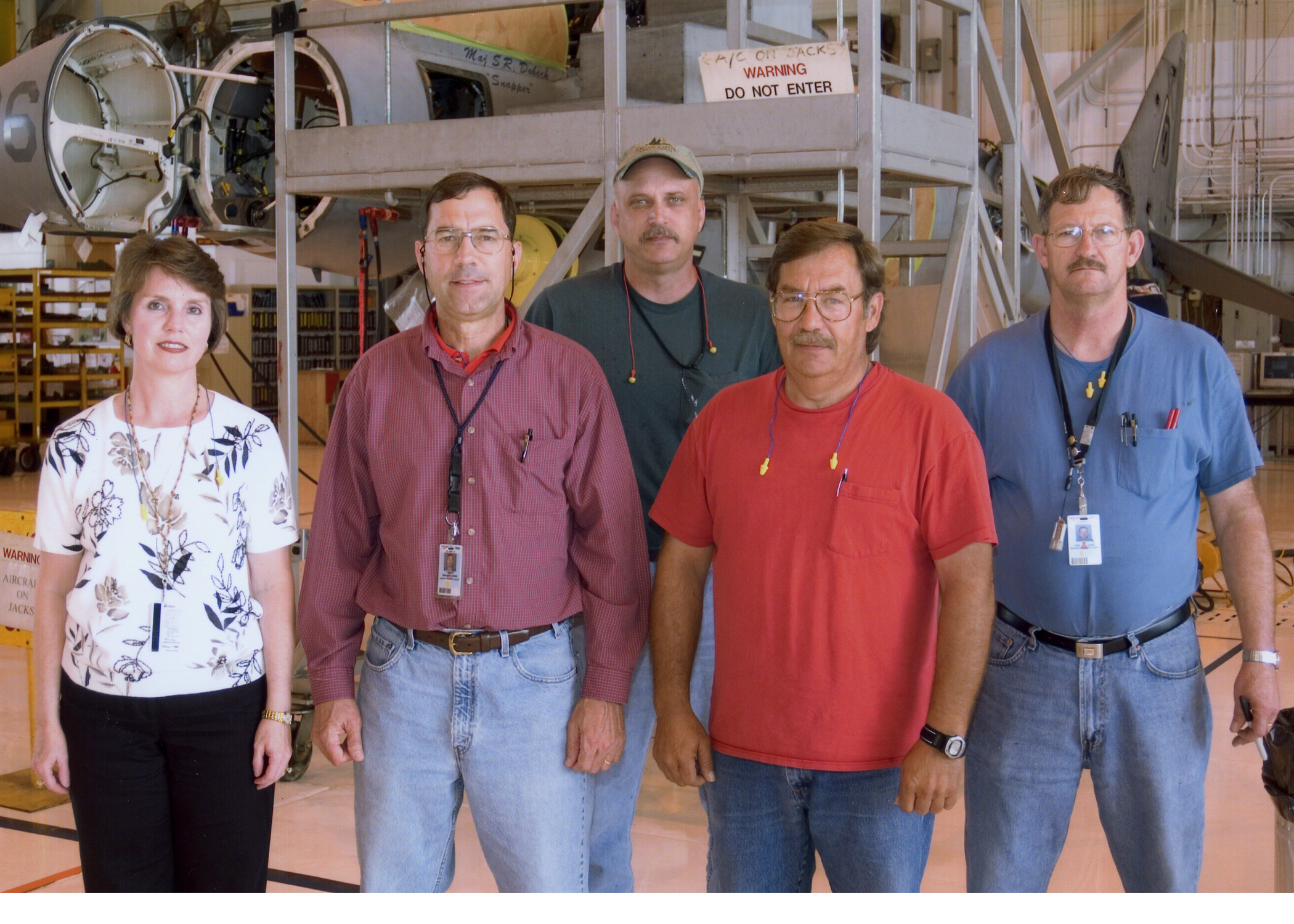
Aircraft electrician mechanic Dwight Cribb is the AV-8B core team leader. Cribb was selected because of his experience and motivation to make improvements to the AV-8B program. The team co-lead is Carl Jones, a sheet metal mechanic, who works on integrating the 5S activities. Bobby Sykes is an airframe mechanic who contributes to the AV-8B kitting process. Charlie Daniels, an aircraft electrician mechanic, and Patti Edwards, an industrial engineering technician, work with the sequencing team. Deanna Russell, of the AIRSpeed team, has been instrumental in assisting and coordinating the team efforts.
The core team began by determining what work processes were required to repair the aircraft and the estimated time it would take to accomplish individual tasks. The team then had to determine how to take the waste out of the process as part of Leaning the operation.
By asking the experts - the artisans - what they needed to improve the process, the core team has been able to reconfigure the hangar into an orderly workspace with clearly defined cells. Input from the artisans working with airframes, electrical and sheet metal has resulted in changes that make the work processes more efficient.
The core team, artisans, middle management, integrated quality teams command leaders and support personnel have worked together to modify the workspace in the AV-8B hangar deck to create a more expeditious depot during several AIRSpeed Kaizen events this year. Kaizen is a Japanese phrase that means to break apart (Kai) and make better (Zen). Kaizen events are characterized by intense weeklong events requiring preparatory work completed by the AIRSpeed team, core team and other support personnel. The other participants work only on the project and are relieved of other responsibilities during the event.
AV-8B program AIRSpeed events have focused on eliminating clutter in the hangar; creating clearly defined cells for aircraft disassembly, repair and reassembly; and introducing parallel tasking to allow artisans such as electricians, airframe and sheet metal mechanics to work simultaneously. By using AIRSpeed “point of use” principles, tools in the hangar have been organized by kits and placed where artisans need them. This has eliminated thousands of miles of unnecessary steps. Previously the artisans were spending too much time walking, searching, hunting and gathering the tools and components they needed to perform their jobs. The reorganization of the tools has allowed them to spend more time working on the aircraft.
Another improvement is the creation of display boards, which indicate the stage of repair for aircraft, in the work centers. These boards also provide a visual of progress, holdups and the status of the assembly cell.
Kaizen event tasks have included producing a daily tasking work sequence for the Mod/Build-up cell in the AV-8B hangar, converting a cell into use for discrepancy repair only, and creating a “5-S plus 1” policy.
5-S plus 1 is Sort, Straighten, Shine, Standardize, Sustain plus Safety. Sort involves organization and determining which items are needed and which should be eliminated. Straighten is orderliness, with a space dedicated for all items and everything in its place. Shine is keeping all items clean and developing and posting a cleaning schedule. Standardize is maintaining and monitoring for adherence. Sustain is ensuring that the procedures are being followed. Safety is maintaining a safe workplace.
At first glance, the “war room” of the AV-8B core team appears a bit chaotic with walls covered with matrixes, charts and drawings as well as sticky notes with ideas. In fact, this paper trail contains the pieces in the puzzle that outline each step required in the process of repairing AV-8 aircraft at NADEP.
Cribb said he is still getting accustomed to the idea that, according to industry standards, most work processes contain about 95 percent waste prior to business process improvement efforts.
“That’s a pretty hard pill to swallow,” he said.
The AV-8B team believes that it will be impossible to eliminate all the waste; however, even small reductions can amount to significant savings in dollars and time.
Future AIRSpeed plans include the integration of the newly defined processes with the AIRSpeed Theory of Constraint efforts, which began in 1999.
Mike Bogdahn contributed to this story.
Cutline: The NADEP Cherry Point AV-8B core team are (from l-r) Patti Edwards, an industrial engineering technician; AV-8B core team leader Dwight Cribb, aircraft electrician mechanic; Bobby Sykes, an airframe mechanic; Charlie Daniels, an aircraft electrician mechanic; and team co-lead Carl Jones, a sheet metal mechanic.
Photo by Larry Conley
-30-